A Gráfica — Center of Artistic Creativity
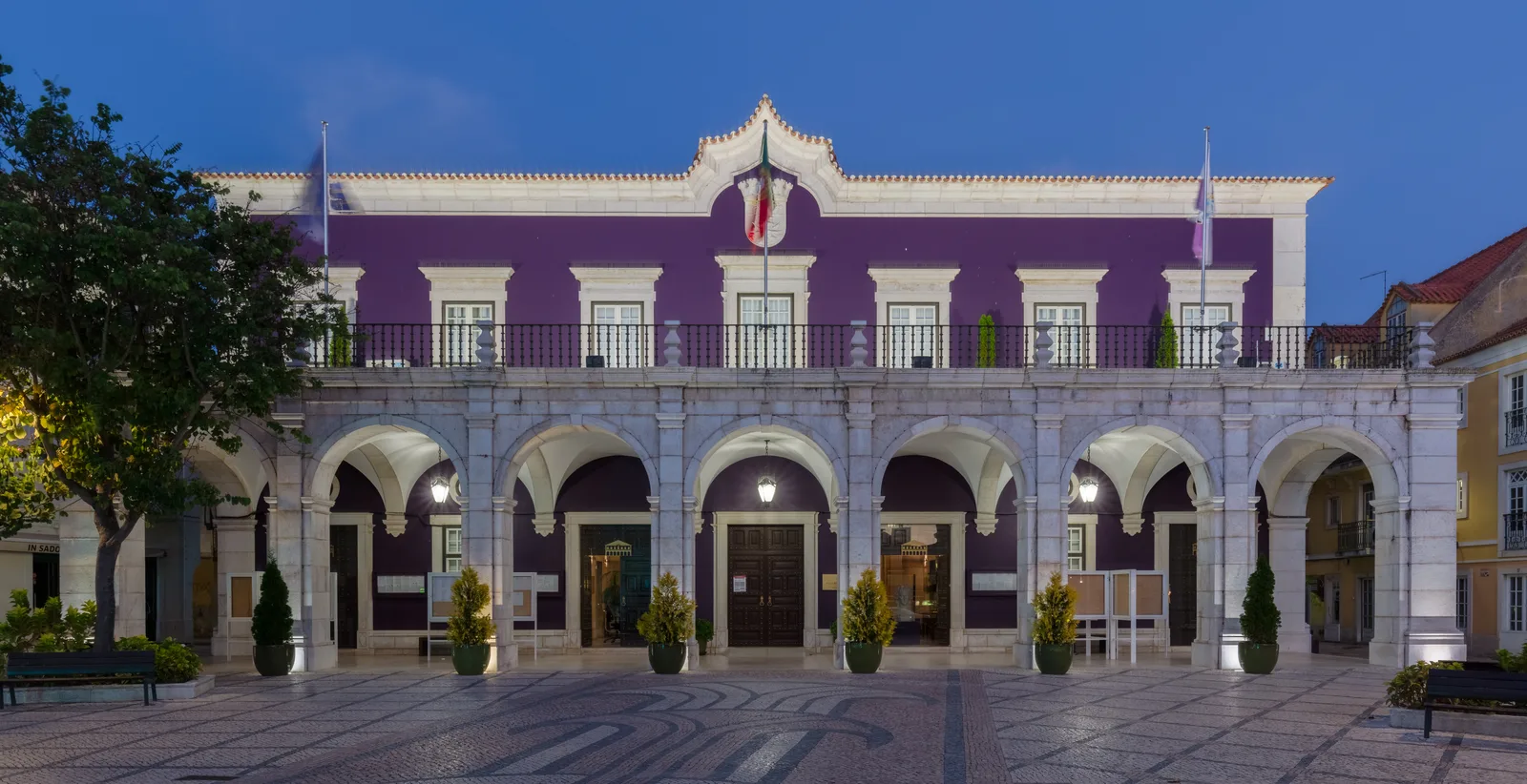
📷 Image credit
Photo: Diego Delso / Wikimedia Commons / CC BY-SA 4.0
On the quiet street Ladeira da Ponte de São Sebastião, in the former warehouses of a paper company, the art of the future is born. A Gráfica is not a museum and not a gallery, but a living laboratory where artists receive space, time, and support for creating the new. Here visual art meets digital culture, and performance meets architecture.
History of the Building
Armazéns Papéis do Sado
The building where A Gráfica is located has its own industrial history. These are the former warehouses of the Sado paper company (Armazéns Papéis do Sado) — a production facility connected with the trade of paper and printing materials. The name “A Gráfica” (literally — “The Print Shop,” “Graphics”) refers to this printing past.
The location of the warehouses — on Ladeira da Ponte de São Sebastião (the slope of São Sebastião bridge) — places the center in the historical context of industrial Setúbal: the district has traditionally been connected with port and trading activity.
Conversion and Requalification
The transformation of industrial warehouses into a center of artistic creativity is an example of conversion of industrial heritage, characteristic of Setúbal’s contemporary cultural policy. Just as the Michel Giacometti Museum of Labor was housed in a former canning factory, A Gráfica gave new life to old warehouse space.
The municipality of Setúbal conducted requalification (reconstruction and adaptation) of the building, preserving its industrial character — high ceilings, open spaces, rough wall texture — and simultaneously equipping it with modern infrastructure for artistic work.
Concept
City of Artistic Creativity
A Gráfica was created by the municipality of Setúbal as part of a strategy to build a “City of Artistic Creativity” (Cidade de Criação Artística). This strategy assumes that Setúbal can and should be not only a consumer of culture but also a center of its production — a place where artists create new works, not just display ready-made ones.
The center is focused on artist support: providing space for work, artistic residencies at national and international levels, scholarships and grants for creating works.
Interdisciplinarity
The key principle of A Gráfica is interdisciplinarity. The center is not tied to one form of art; within its walls coexist and interact:
- Visual arts — painting, sculpture, installations, photography
- Performative arts — theater, dance, performance
- Design — graphic, industrial, textile
- Literature — writers’ residencies, poetic events
- Digital culture — media art, interactive installations, video art
- Architecture — design research, exhibitions of architectural concepts
This combination of disciplines in one space creates conditions for cross-pollination of ideas — situations where a sculptor works next to a programmer, and a choreographer next to a graphic designer.
Space
Five Warehouse Spaces
A Gráfica occupies five warehouse spaces (naves), each of which can function as an independent working or exhibition space. The industrial architecture of the warehouses — with their high ceilings, spacious open plans, and natural light — is ideal for large-scale artistic work.
The space configuration is flexible: the warehouses can be used simultaneously for different projects or combined for large exhibitions and events. This flexibility is one of the key advantages of industrial conversion: the former warehouse building provides artists with freedom that is impossible to obtain in traditional gallery or office space.
Support Programs
Bolsas de Criação Artística
One of the central programs of A Gráfica is Bolsas de Criação Artística (Artistic Creation Grants). The municipality of Setúbal provides scholarships to artists to work on projects within the center’s walls. The grant includes financial support, access to space and equipment, and in some cases — housing assistance.
The grant program is open to artists of various disciplines and is aimed at supporting both beginning and experienced authors. Selection criteria include artistic quality of the project, its originality, and connection with the cultural context of Setúbal or the region.
Artistic Residencies
A Gráfica regularly hosts artists as part of national and international artistic residencies. A residency involves living and working in Setúbal for a certain period (usually from several weeks to several months), during which the artist creates a new work or develops an ongoing project.
Residencies play a dual role: they enrich the local cultural environment, bringing new artistic practices and perspectives, and simultaneously allow invited artists to become acquainted with the unique context of Setúbal — its history, nature, working culture.
Exhibitions and Events
Exhibition Program
A Gráfica regularly holds exhibitions presenting the results of residents’ and grant recipients’ work, as well as thematic group projects. The exhibition program reflects the interdisciplinary character of the center — exhibitions may include painting, sculpture, video art, installations, and performance documentation.
Among significant events are exhibitions of the “Rasgo Criativo” (Creative Breakthrough) project, presenting works of young artists.
Festivals and Events
A Gráfica participates in city cultural events and festivals. In October an illustration festival is held here, gathering illustrator-artists and combining exhibitions, master classes, and presentations.
Workshops and Educational Programs
The center conducts workshops, seminars, and open lectures, making contemporary art accessible to a wide audience. The educational program is aimed at both professional artists and amateurs and youth.
A Gráfica in the Context of Setúbal’s Cultural Policy
Conversion Strategy
The creation of A Gráfica is part of a consistent municipal strategy for converting industrial buildings into cultural spaces. This strategy includes:
- Museu do Trabalho Michel Giacometti — former canning factory that became a labor museum
- A Gráfica — former paper warehouses that became a center of artistic creativity
- Auditório José Afonso — cultural venue integrated into the urban fabric
This strategy allows simultaneously solving several tasks: preserving industrial heritage, creating cultural infrastructure, and revitalizing urban districts.
Connection with Community
Unlike elitist artistic institutions, A Gráfica emphasizes its connection with the local community and cultural agents. The center strives to be an open space where Setúbal residents can come in contact with contemporary art — through exhibitions, workshops, and open events.
This orientation toward community corresponds to the general philosophy of Setúbal’s cultural policy, which is characterized by working-class identity and traditions of collective participation rooted in the history of the workers’ movement of the city.
Practical Information
- Address: Ladeira da Ponte de São Sebastião, 2900-543 Setúbal
- Management: Câmara Municipal de Setúbal
- Admission: generally free (for exhibitions and open events)
- Current program: published on the Setúbal municipality website and on the center’s social networks
See Also
- Fórum Luísa Todi — Setúbal’s main concert venue
- Street Art and the TAUS Program — another direction of the city’s artistic life
- Michel Giacometti Museum of Labor — example of industrial building conversion
- Canning Industry — industrial heritage in the context of which A Gráfica emerged
If this article was useful — help us write the next one.
☕ Support on Ko-fi