Azulejos of Setúbal — The City's Tile Heritage
📷 Image credit
Photo: GualdimG / Wikimedia Commons / CC BY-SA 4.0
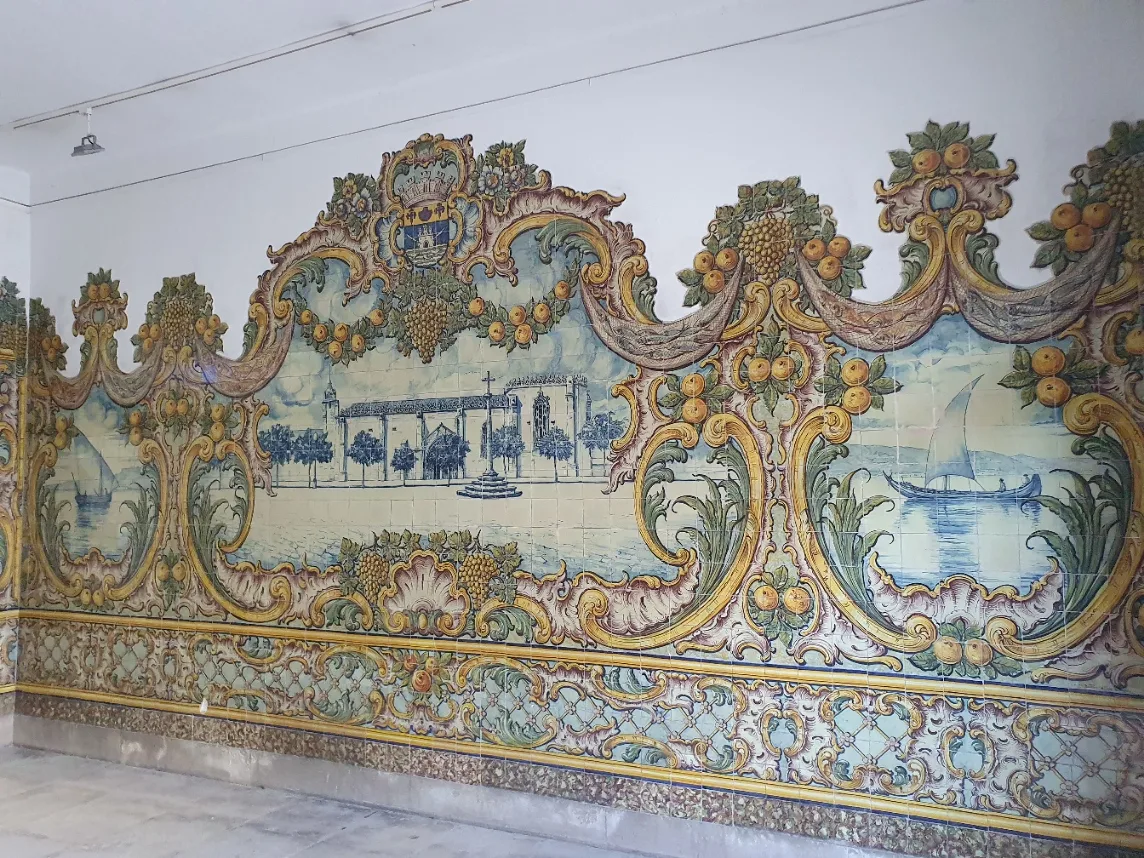
Azulejos – glazed ceramic tiles – are one of the most recognisable symbols of Portuguese culture. In Setúbal, the tile heritage spans five centuries: from 15th-century Sevillian ceramics in the Monastery of Jesus to the Art Nouveau panels of 1929 at the Livramento Market.
Periods
Early period (15th–16th centuries)
The oldest azulejos in Setúbal survive in the chancel of the Church of the Monastery of Jesus – green and white tiles, presumably of Sevillian manufacture (cuerda seca technique). The Cathedral (Igreja de Santa Maria da Graça) contains nationally produced majolica from the late 16th century.
Baroque period (17th–18th centuries)
The golden age of azulejos in Setúbal:
| Year | Location | Master | Subject |
|---|---|---|---|
| 1714 | Casa do Corpo Santo | P.M.P. (Padre Manuel Pereira) | Hunting, daily life, “invitation figures” |
| 1736 | Chapel of Fort São Filipe | Policarpo de Oliveira Bernardes | Life of St Philip, Marian themes |
| 1766 | Cathedral | Sebastião de Almeida (attrib.) | 14 panels from the life of the Virgin |
| 1781 | Church of the Monastery of Jesus | Unknown | Litany of the Virgin (19 panels) |
| c. 1790 | Church of São Julião | Unknown | Life of Ss. Julian and Basilissa |
Art Nouveau period (1929–1944)
The Livramento Market is clad in 5,700 tiles by José António Jorge Pinto and Pedro Pinto (1929), depicting fishing, olive harvesting and salt production. In 1944, Rosa Rodrigues added panels with townscapes to the north entrance.
Key locations
Church of the Monastery of Jesus
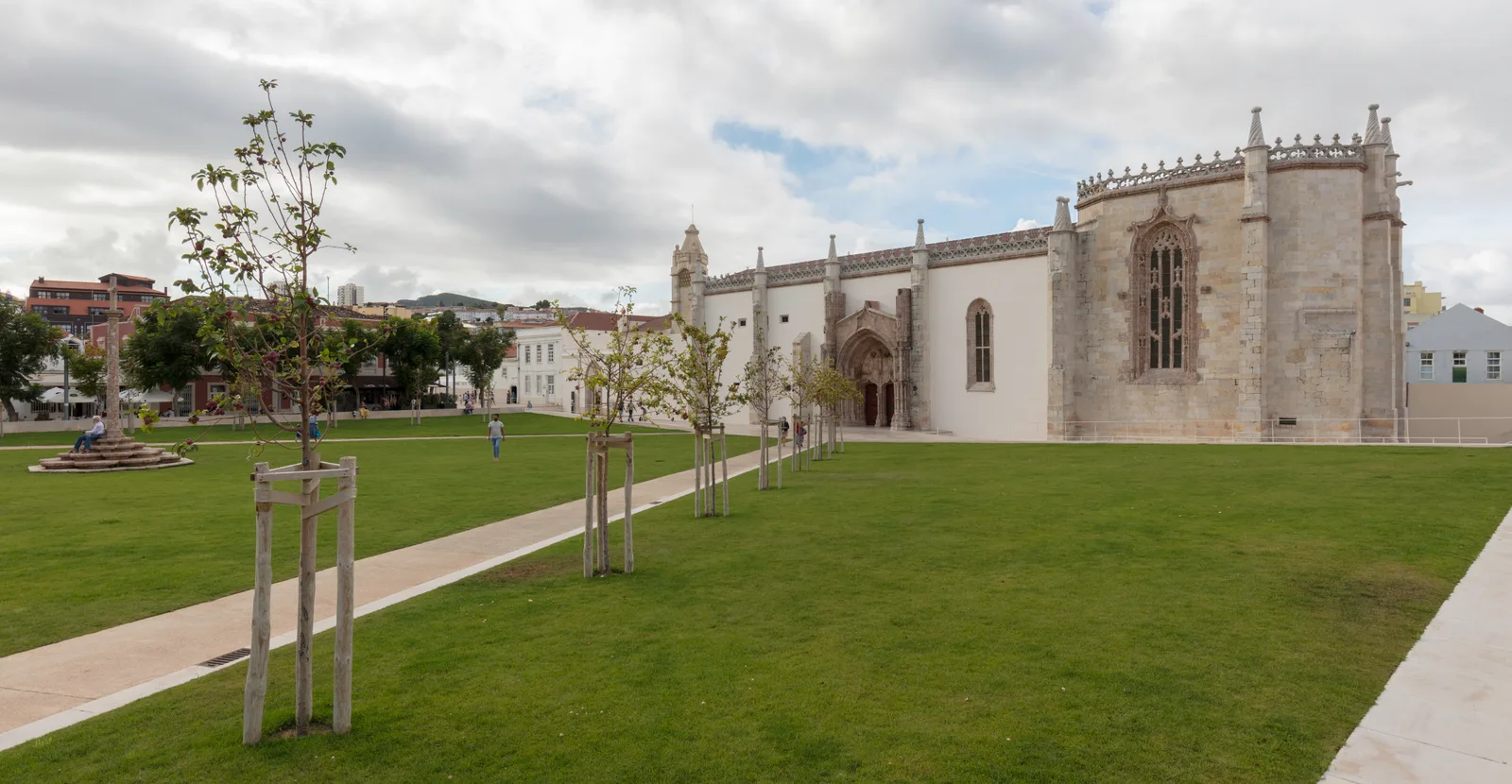
A layered tile heritage: from 15th–16th-century green-and-white tiles to a programme of 19 panels (1781) based on engravings from Elogia Mariana by A.C. Redelius (Augsburg, 1732). Blue-and-white figurative panels with polychrome Rococo borders. Of the original 19, 15 survive.
Casa do Corpo Santo
The seat of the Brotherhood of Fishermen and Seafarers, founded in the 14th century. The courtyard and staircase walls are lined with cobalt-blue tiles (1714). This is where “invitation figures” (figuras de convite) first appeared – cut-out panels depicting a life-size doorman in livery. The device, invented by master P.M.P., later became a nationwide tradition in the 18th–19th centuries.
Chapel of Fort São Filipe
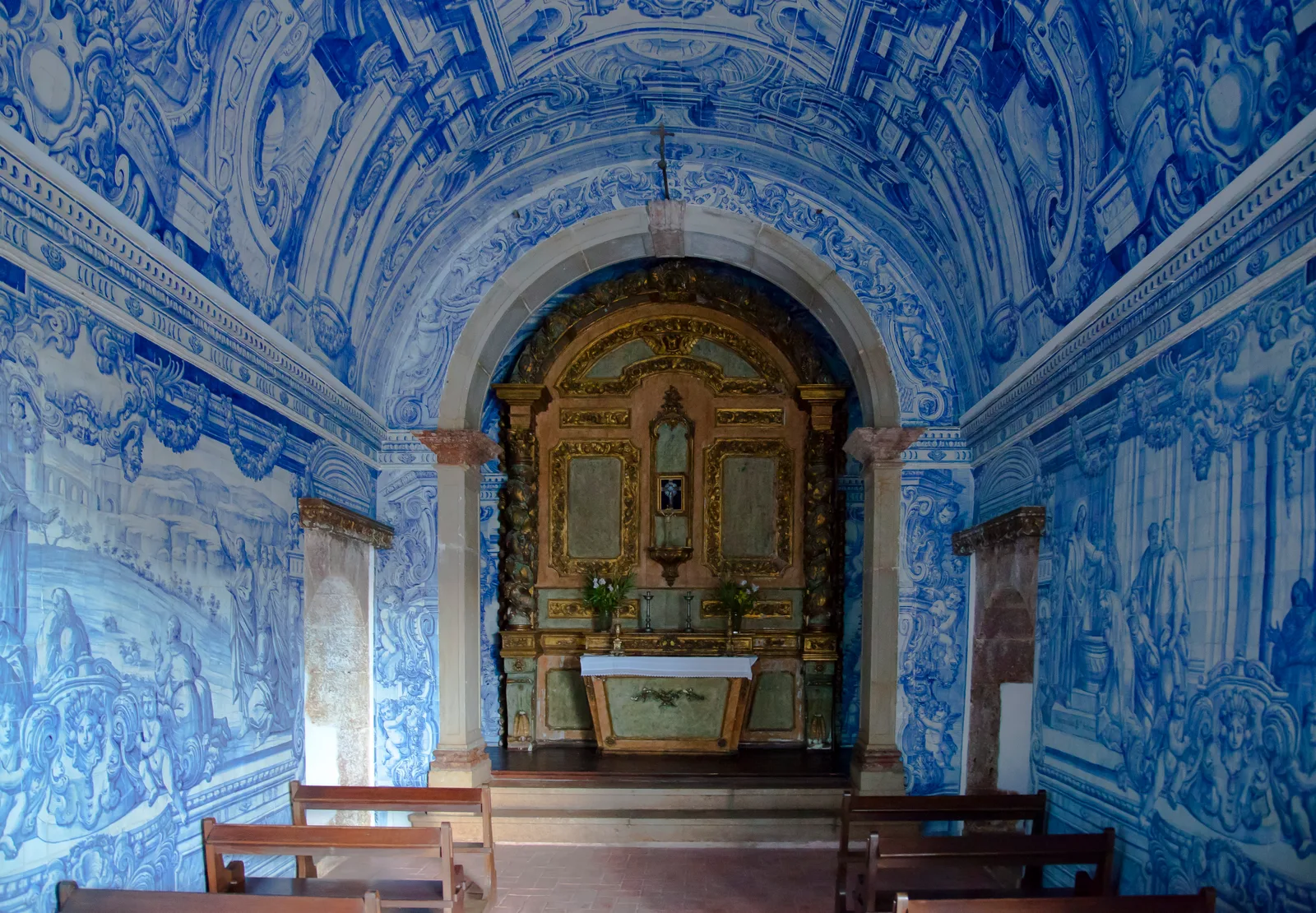
The baroque chapel inside Fort São Filipe is entirely clad in blue-and-white panels by Policarpo de Oliveira Bernardes (1695–1778), signed and dated 1736. Policarpo was the son of the famous António de Oliveira Bernardes and a leading master of the “Cycle of the Masters” – the golden age of Portuguese azulejo.
Cathedral (Sé)
14 panels of 1766 depicting episodes from the life of the Virgin, attributed to Sebastião Inácio de Almeida (1727–1779), second artistic director of the Royal Faience Factory (Real Fábrica de Louça do Rato).
Church of São Julião
Rebuilt after the 1755 earthquake. The nave and chapel walls are clad in panels (c. 1790) with polychrome Rococo borders, depicting the lives of the early Christian martyrs Saints Julian and Basilissa. The artist is unknown.
Masters
| Master | Dates | Work in Setúbal | Significance |
|---|---|---|---|
| P.M.P. (Padre Manuel Pereira) | early 18th c. | Casa do Corpo Santo, 1714 | Inventor of “invitation figures” |
| Policarpo de Oliveira Bernardes | 1695–1778 | Fort São Filipe, 1736 | “Cycle of the Masters” |
| Sebastião de Almeida | 1727–1779 | Cathedral, 1766 | Director of Royal Factory |
| José A. Jorge Pinto | early 20th c. | Livramento Market, 1929 | Art Nouveau |
| Pedro Pinto | early 20th c. | Livramento Market, 1929 | Art Nouveau |
Themes
- Religious scenes – life of the Virgin, saints, litanies
- Maritime themes – fishing, harbour scenes (Livramento Market)
- Economic activities – salt production, olive harvesting
- Daily life – hunting, aristocratic pastimes (Casa do Corpo Santo)
- Geometric patterns – early works, 15th–17th centuries
Conservation
Convent of Jesus
A comprehensive restoration costing approximately €9 million (50% municipal + 50% EU funds). The Museum of Setúbal reopened on 30 November 2024 after more than a decade of closure. Among 500+ exhibits are restored tile panels.
SOS Azulejo project
A national programme running since 2007, aimed at combating the theft of historic tiles. It has reduced thefts by over 80%. In 2017 a dedicated law on azulejo protection was passed. The project received the Europa Nostra Award (2013).
Azeitão workshops
In Azeitão (Setúbal district), the workshops Azulejos de Azeitão and S. Simão Arte reproduce antique designs using traditional techniques and offer classes for visitors.
📷 Image credit
Photo: Diego Delso / Wikimedia Commons / CC BY-SA 4.0
📷 Image credit
Photo: Diego Delso / Wikimedia Commons / CC BY-SA 3.0
See also
All our knowledge is free. Creating it is not.
☕ Support on Ko-fi