Setúbal as a Creative City
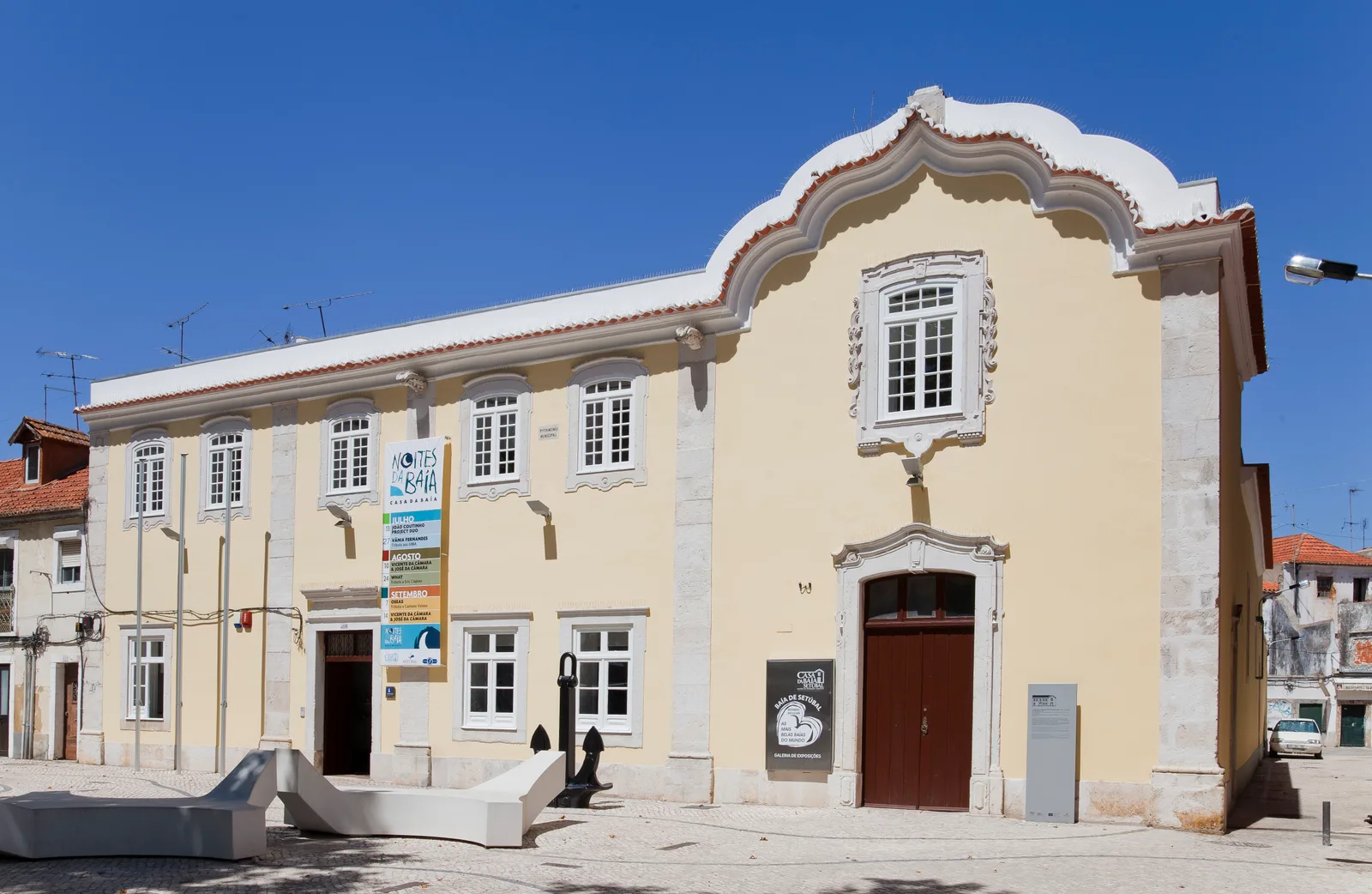
📷 Image credit
Photo: Diego Delso / Wikimedia Commons / CC BY-SA 3.0
Setúbal is an industrial city that is deliberately building an identity as a “city of artistic creation”. Municipal conversion of former factories into cultural spaces, artist grants, international festivals and one of Portugal’s oldest contemporary dance academies — all this makes Setúbal a cultural centre far from the stereotype of a “Lisbon commuter town”.
Strategy: Cidade de Criação Artística
The Setúbal municipality has consistently promoted the concept of a “City of Artistic Creation” (Cidade de Criação Artística). Its key elements:
- Industrial building conversion: former factories and warehouses transformed into cultural spaces — A Gráfica, the Museum of Labour, Casa da Cultura
- Grant programme Bolsas de Criação Artística — artist stipends with access to studios
- National and international residencies at A Gráfica
- The TAUS programme — a municipal street art initiative with community participation
In 2021, Setúbal received the “Município do Ano” title in the Culture category for promoting contemporary artistic creation. The city is a member of the UNESCO Global Network of Learning Cities.
Setúbal is not part of the UNESCO Creative Cities Network (Portugal is represented by Óbidos, Braga, Idanha-a-Nova and others).
Performing arts
Teatro Animação de Setúbal (TAS)
TAS is a professional theatre company founded in 1976, shortly after the Carnation Revolution. Founders: Carlos César, Carlos Daniel, António Assunção, Francisco Costa. Carlos César directed the company until his death in 2001. TAS has operated continuously since 1976 — one of the oldest theatre companies in Portugal.
Academia de Dança Contemporânea de Setúbal (ADCS)
Founded in 1982 by Maria Bessa and António Rodrigues (both graduates of Ballet Gulbenkian). ADCS was the first school in Portugal to offer professional dancer training through articulated education (grades 5–12, 8-year programme) — the first private dance academy officially recognised by the Ministry of Education (from 1986).
Teatro O Bando (Palmela)
The cooperative was formally established on 10 April 1979 (the group had been active since 1974). Founders: João Brites, Jaqueline Tison and others. Since 2000, its headquarters have been at Vale dos Barris, Palmela — 80 hectares within the Arrábida Nature Reserve. It is one of the oldest cultural cooperatives in Portugal with 24 members.
Festa do Teatro
The International Theatre Festival of Setúbal brings together ~41 events across various venues: Fórum Luísa Todi, Casa da Cultura, A Gráfica, Jardins do Bonfim, Casa da Baía. Participants come from Portugal, Spain, France, Brazil, Colombia, Romania and Chile.
Musical map
Festivals
| Festival | Genre | Location | Season | Since |
|---|---|---|---|---|
| Festival Internacional de Música de Setúbal (FIMS) | Classical, jazz, world music | Setúbal | Spring | 2011 |
| Festival Luísa Todi — Canto Lírico | Lyrical singing | Setúbal | January | ~2022 |
| Super Bock Super Rock | Rock, pop, electronica | Sesimbra | July | 1995 |
| SeixalJazz | Jazz | Seixal | Autumn | 1996 |
| FMM Sines | World music | Sines (~120 km) | July | 1999 |
FIMS was founded in 2010–2011 as a partnership between the municipality and the Helen Hamlyn Trust (UK), artistic director Ian Ritchie. Distinctive feature: up to 10,000 local residents have participated as creators and performers since 2010.
Festival Luísa Todi marks the birth anniversary of the opera singer (9 January 1753) and includes staged concerts, children’s opera and masterclasses.
Super Bock Super Rock — one of Portugal’s largest rock festivals — takes place at Herdade do Cabeço da Flauta near Praia do Meco (Sesimbra). SeixalJazz is an international jazz festival with 5,000+ spectators annually and a 26-year history.
Live music venues
- Fórum Luísa Todi — main hall (640 seats), inaugurated in 1960
- Auditório José Afonso — intimate venue
- Casa da Cultura — Sala José Afonso (63 m²), main hall (44 m²), gallery (134 m²), recording studio (35 m²)
- Bar Absurdo — iconic live music bar (since 1988)
- La Bohemia — fado, jazz, indie
Visual arts
Galleries and museums
Galeria Municipal do Banco de Portugal — the former Bank of Portugal branch (1917–1994), opened as a gallery in 2013. Art Nouveau building (architect Arnaldo Adães Bermudes). The collection includes 14 paintings from the workshop of Jorge Afonso (16th century), regional painting (Fauvism, Modernism) and sculpture.
Setúbal Museum / Convento de Jesus — 500 years of history and art, the “Primitives of Setúbal” — the Church of Jesus altarpiece.
Casa da Baía — an 18th-century building combining a tourist office, café, art gallery, maritime life museum and wine shop.
A Gráfica — Centre for Artistic Creation
Five former warehouse bays (naves) converted into a space for residencies, grants and exhibitions. Investment in requalification: ~EUR 400,000. The programme includes the “Rasgo Criativo” (Creative Breakthrough) project for young artists and an annual illustration festival (October).
Education: IPS
Instituto Politécnico de Setúbal (IPS) — the region’s largest educational institution:
| Parameter | Value |
|---|---|
| Founded | 14 October 1979 |
| Students | ~7,000 |
| Courses | 85+ (CTeSP, bachelor’s, master’s) |
| Schools | 5 (technology, education, business, health, Barreiro technology) |
For the creative sector, the Escola Superior de Educação (ESE) is especially significant, offering a bachelor’s degree in “Animação e Intervenção Sociocultural” — a 3-year course training specialists in cultural mediation and cultural project management.
Hip-hop: Margem Sul
The Setúbal District (Margem Sul — the “South Bank” of the Tagus) is considered the cradle of Portuguese hip-hop. The compilation “Rapública” (1994, Sony) — the first anthology of Portuguese rap (15,000+ copies) — was recorded predominantly by artists from Almada, Seixal and Setúbal. The neighbourhood of Miratejo (Seixal) was called “Portugal’s Bronx”.
Slow J (João Batista Coelho, b. 1992) is the first world-class artist born in the city of Setúbal itself. His album “Afro Fado” (2023) became the most-streamed Portuguese album in its first 24 hours.
Da Weasel (Almada, since 1993) won the MTV Europe Music Award for Best Portuguese Act (2004) and received the Gold Medal of the City of Almada.
Creative economy
Co-working and incubators
- Sítio Work Setúbal — co-working space in the city centre
- 22cowork — hub for startups and freelancers
- Gabinete de Apoio ao Empreendedor — municipal entrepreneurship support office and incubator
Setúbal attracts digital nomads and freelancers: ~40 minutes from Lisbon, well-developed cultural infrastructure and more affordable rents.
“Nosso Bairro, Nossa Cidade” programme (since 2012)
A municipal urban regeneration programme covering the neighbourhoods of Alameda das Palmeiras, Bela Vista, Forte da Bela Vista, Manteigadas and Quinta de Santo António. Housing rehabilitation for 820+ families. Art — including murals and the Cara ou Coroa festival (2017) — is used as a tool for social cohesion.
See also
- Fórum Luísa Todi
- Street Art and the TAUS Programme
- A Gráfica — Centre for Artistic Creation
- Slow J and Hip-Hop Culture
- Fado in Setúbal
- The Canning Industry
All our knowledge is free. Creating it is not.
☕ Support on Ko-fi