Modernist Architecture of the Setúbal District
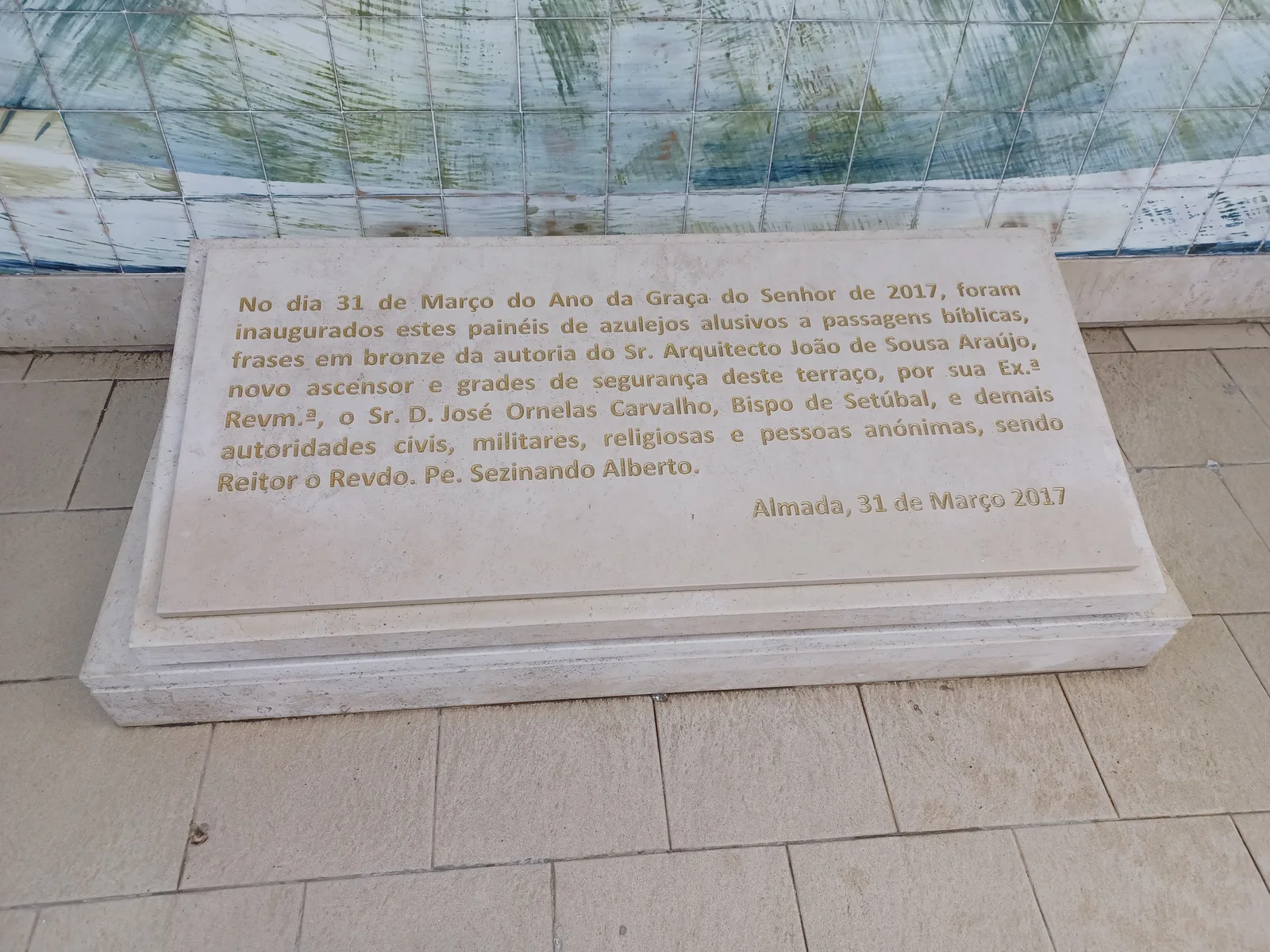
📷 Image credit
Photo: Simon Burchell / Wikimedia Commons / CC BY-SA 4.0
The architectural landscape of the Setúbal District — from the monumental Cristo Rei (110 m) and the 25 de Abril suspension bridge to the SAAL social housing designed by Gonçalo Byrne — reflects the key stages of 20th-century Portuguese history: the Estado Novo, the revolution, and democracy.
The SAAL process (1974–1976)
Overview
SAAL (Serviço Ambulatório de Apoio Local) was a social housing programme created after the Carnation Revolution of 25 April 1974. In 26 months, ~170 projects were developed, covering more than 40,000 families. A total of 75 neighbourhoods were built across Portugal. Architects worked in technical brigades alongside local residents.
Casal das Figueiras (Setúbal)
The only fully realised SAAL project in Setúbal.
| Parameter | Value |
|---|---|
| Architect | Gonçalo Byrne |
| Brigade | Ana Ferreira Rebocho, Berta Sá Caetano |
| Residents’ association | founded 30 October 1975 |
| Design | from July 1975 |
| Construction | October 1976 – 1979 |
| Scale | 420 housing units |
The site on the western edge of Setúbal, at the foot of the Serra da Arrábida, had a 36% gradient. Byrne placed rows of single-family houses with interior courtyards perpendicular to the contour lines — a typology requested by the fishermen-residents. The project was exhibited at the Canadian Centre for Architecture (CCA).
Gonçalo Byrne
- Born 17 January 1941, Alcobaça
- Education: Lisbon School of Fine Arts (1968)
- Awards: AICA Award (1988), Valmor Award (2000), Gold Medal of the Académie d’architecture française (2000), Piranesi Prix de Rome (2014)
- Other works: Bank of Portugal headquarters, Teatro Thalia (Lisbon), Machado de Castro Museum (Coimbra)
Plano Integrado de Setúbal (PIS)
A state social housing programme initiated by the Housing Development Fund (FFH) in the early 1970s. Coordinator: architect José Charters Monteiro. Area: 600 hectares east of the historic city. The master plan was approved in May 1978. First phase: 1,458 housing units.
The key PIS project was Bairro Bela Vista (1976–1989): 45 buildings, 840 apartments in 3–5-storey blocks. In 1976, Charters Monteiro invited Aldo Rossi to design a building in Bela Vista — the project was never built but became a significant theoretical statement.
Landmark buildings
Fórum Municipal Luísa Todi
| Parameter | Value |
|---|---|
| Architect | Fernando Silva |
| Style | modernism |
| Inauguration | 25 July 1960 |
| Transfer to municipality | 1990 |
| Renovation | 2009–2012 (Paulo Ramos, Cidália Worm) |
| Capacity | 640 seats |
Built on the site of the Teatro Rainha D. Amélia and opened by President Américo Tomás to mark the centenary of Setúbal receiving city status. Fernando Silva also designed the Cinema São Jorge and Hotel Sheraton in Lisbon.
Auditório José Afonso
- Architect: Manuel Salgado
- Programme: Viver Setúbal — POLIS (2000–2006)
- Inauguration: November 2005
- Capacity: 2,500 spectators
- Cost: €4.3 million
- An open-air amphitheatre with a semi-submerged structure and motorised screen; mural “O Rapaz dos Pássaros” by Odeith (2014)
Cristo Rei (Almada)
| Parameter | Value |
|---|---|
| Pedestal architect | António Lino |
| Sculptor | Francisco Franco de Sousa |
| Inauguration | 17 May 1959 |
| Total height | 110 m (pedestal 82 m + statue 28 m) |
| Arm span | 28 m |
| Material | ~40,000 tonnes of reinforced concrete |
Inspired by the Christ the Redeemer statue in Rio de Janeiro. Construction was approved at the bishops’ conference in Fátima on 20 April 1940 — a prayer to spare Portugal from the Second World War. Over 300,000 people attended the inauguration.
The 25 de Abril Bridge
| Parameter | Value |
|---|---|
| Designers | Steinman, Boynton, Gronquist and London (New York); Tudor Engineering (San Francisco) |
| Construction start | 5 November 1962 |
| Inauguration | 6 August 1966 |
| Length | 2,278 m |
| Main span | 1,013 m |
| Pylon height | 190 m |
The bridge connects Lisbon with Almada (Setúbal District). It carries the A2 motorway and the Fertagus railway line to Setúbal.
Contemporary architecture
Teatro Municipal de Almada (Teatro Azul)
- Architects: Manuel Graça Dias, Egas José Vieira, Gonçalo Afonso Dias
- Construction: 1998–2005
- Opening: 17 July 2005
- Also known as Teatro Municipal Joaquim Benite — one of the most notable works of contemporary architecture in the district
Industrial conversion
The Museu do Trabalho Michel Giacometti (1995) — the conversion of the abandoned five-storey Perienes canning factory into a museum was one of the earliest examples of industrial conversion in Portugal. In 1998 it received an honourable mention from the Council of Europe (European Museum of the Year Award).
Historic centre rehabilitation
Setúbal has been designated a priority ARU (Área de Reabilitação Urbana). In recent years, the reconstruction of historic centre buildings has intensified — harmoniously combining heritage with contemporary design.
Timeline
| Year | Building | Architect |
|---|---|---|
| 1930 | Mercado do Livramento | Cisneiros de Faria |
| 1959 | Cristo Rei | A. Lino / F. Franco de Sousa |
| 1960 | Fórum Luísa Todi | Fernando Silva |
| 1966 | Ponte 25 de Abril | Steinman et al. |
| 1975–1979 | SAAL Casal das Figueiras | Gonçalo Byrne |
| 1976–1989 | Bairro Bela Vista (PIS) | J. Charters Monteiro |
| 1995 | Museu do Trabalho | adaptive restoration |
| 1997 | Fórum Romeu Correia (Almada) | — |
| 2005 | Teatro Azul (Almada) | M. Graça Dias et al. |
| 2005 | Auditório José Afonso | Manuel Salgado |
| 2012 | Fórum Luísa Todi renovation | Paulo Ramos, C. Worm |
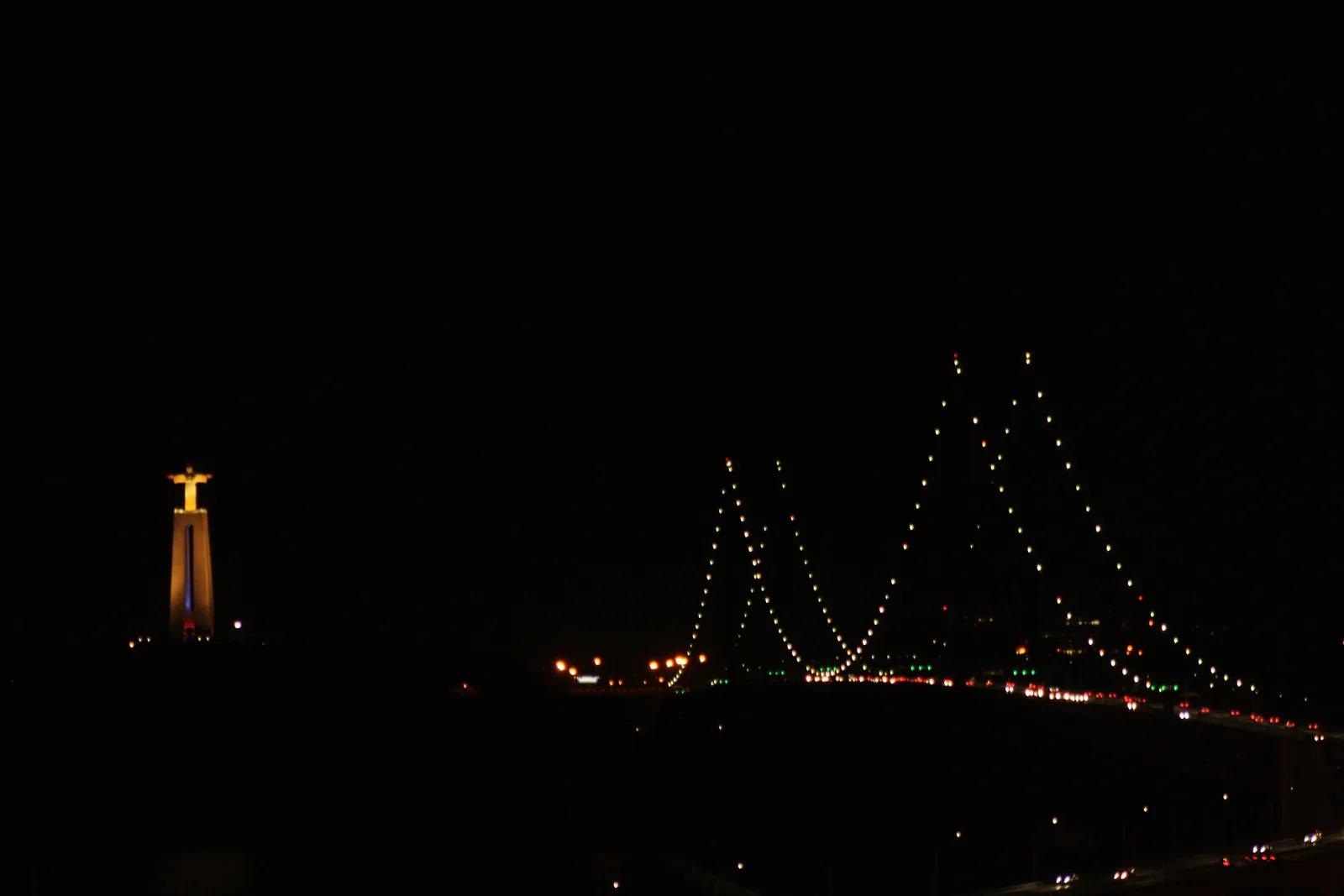
📷 Image credit
Photo: MonicaHenriquesT / Wikimedia Commons / CC BY-SA 4.0
See also
- Social Housing and the SAAL Programme
- Multicultural Neighbourhoods
- Auditório José Afonso
- Museu do Trabalho
- The Carnation Revolution
All our knowledge is free. Creating it is not.
☕ Support on Ko-fi