The Cement Industry: Secil and the Outão Plant
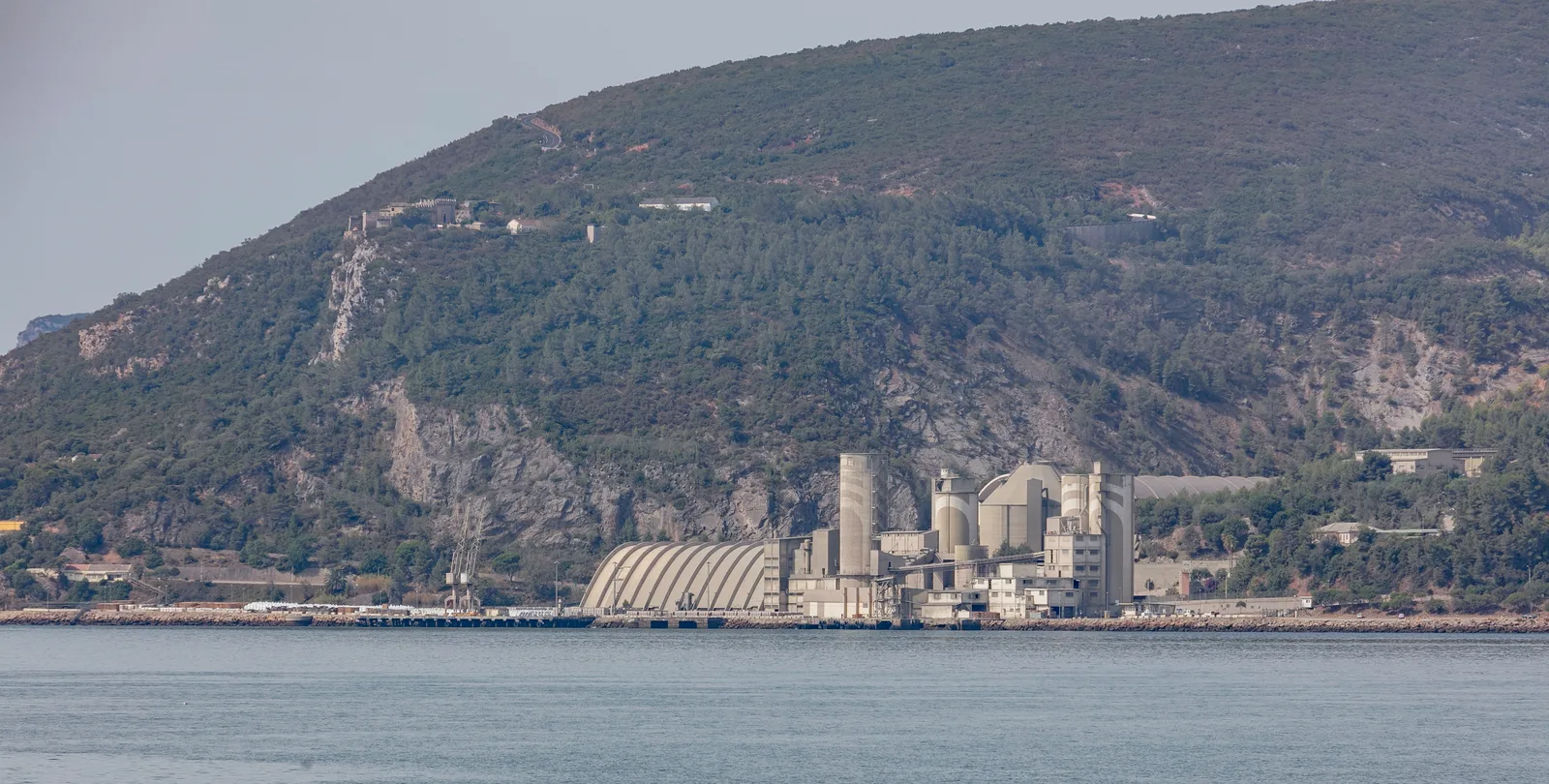
📷 Image credit
Photo: Diego Delso / Wikimedia Commons / CC BY-SA 4.0
The Secil-Outão plant at the foot of the Serra da Arrábida has been operating since 1906, producing ~2 million tonnes of cement per year and accounting for ~93% of Portugal’s cement exports. Its history mirrors the nation’s own: from monarchy through nationalisation to global competition and the environmental challenges of the 21st century.
Origins: from natural cement to Portland
In 1904, Companhia de Cimentos de Portugal was founded and established a small factory — Fábrica da Rasca — at Outão (Setúbal). Two vertical kilns produced 10,000 tonnes per year of natural cement. In 1906, the plant began manufacturing artificial Portland cement under the brands “Tenaz” and “Audaz”.
The location was no accident: the Jurassic limestones and marls of the Serra da Arrábida provided ideal raw material, and the proximity to the sea ensured transport.
On 18 June 1930, the merger of Companhia Geral de Cal e Cimento and Secil created Secil — Companhia Geral de Cal e Cimento, Lda. — the company that exists to this day.
Nationalisation and privatisation
- 15 April 1975 — the fourth provisional government after the Carnation Revolution nationalised the cement sector, including Secil
- 1994 — the holding company Semapa won the privatisation tender, acquiring 51% of Secil
- 2004 — Irish CRH acquired 49% for EUR 329 million
- 2012 — Semapa bought out CRH’s stake, becoming the sole owner (100%)
- December 2025 — Spanish Cementos Molins announced the acquisition of 100% of Secil for EUR 1.4 billion; closing expected in Q1 2026
Semapa is listed on Euronext Lisbon and controlled by the Queiroz Pereira family.
The Secil-Outão plant today
| Parameter | Value |
|---|---|
| Location | At the foot of Serra da Arrábida, inside the Natural Park and Natura 2000 zone |
| Capacity | ~2 million tonnes of cement/year |
| White cement | 120,000 t/year — the only producer in Portugal |
| Quarry area | ~99 hectares |
| Exports | ~1.5 million tonnes to 20+ countries via a dedicated pier |
| Share of Port of Setúbal cargo | ~31% |
| Share of Portugal’s cement exports | ~93% |
The plant produces grey cement (CEM I 42.5R, CEM I 52.5R) and white cement (LUMEN, ARCHITEK brands) — all certified to EN 197-1.
The 2020–2023 modernisation
The largest investment project, worth EUR 86 million (CCL — Clean Cement Line), was carried out by thyssenkrupp Industrial Solutions (Polysius):
- New AS-MSC calciner with Prepol SC-S system for alternative fuels (minimum 85% fossil fuel substitution)
- Polytrack 7T/5-3R grate cooler
- First clinker on the upgraded line — April 2023
- CO₂ reduction of 20%
In parallel, a waste heat recovery (WHR/ORC) system was launched with Italian CTP Team: a Turboden turbine rated at 7.2 MW, recovering up to 29 MW of heat, generating ~50,000 MWh/year — over 30% of the plant’s electricity needs.
Since July 2024, clinker capacity has been expanded by 10%, and the share of alternative fuels has risen to 40% (target: 50% by 2030).
The Secil Group: international presence
Besides Outão, the Portuguese plants Maceira-Liz (Leiria, since 1923) and Cibra-Pataias (Alcobaça, since 1950) are also in operation.
| Country | Company | Details |
|---|---|---|
| Tunisia | Société des Ciments de Gabès | ~1.4 Mt/year |
| Lebanon | Ciments de Sibline | 50.5% (since 2007) |
| Angola | Secil Lobito | 51% |
| Cape Verde | Secil Cabo Verde | Since 2005, all islands |
| Brazil | Supremo Secil Cimentos | 100% since 2015; plants in Pomerode and Adrianópolis (1.8 Mt/year) |
Total group capacity: 9.75 million tonnes/year across 8 plants in 8 countries on 4 continents.
In Portugal, Secil owns Unibetão (30 ready-mix concrete plants), Secil Britas (12 quarries), Secil Prebetão (precast concrete) and Argibetão.
The environmental conflict
The plant is located inside the Arrábida Natural Park and Natura 2000 territory — a unique situation for a cement works.
The quarry problem
Secil applied to merge the Vale de Mós A and Vale de Mós B quarries, expanding by 18.5 hectares (to 117.2 ha). The Park Management Plan explicitly prohibits new quarries and the expansion of existing ones. The Setúbal Municipal Council ruled the expansion “incompatible with applicable territorial management instruments”. The NGO ZERO called it “impossible and unacceptable”.
The 2023 open letter
In July 2023, seven of Portugal’s leading environmental organisations — LPN, ANP|WWF, FAPAS, GEOTA, Quercus, SPEA, ZERO — sent an open letter demanding:
- A plan for the deactivation of quarries in Arrábida
- The closure of the Outão plant with dismantling and renaturalisation
Background: the limestone reserves in Vale de Mós B are already insufficient; Secil has resorted to transporting raw material from quarries in Sesimbra.
Rehabilitation
Since 1983, a progressive revegetation programme has used drought-resistant Mediterranean species: carob tree (Ceratonia siliqua), wild olive (Olea europaea var. sylvestris), and mastic tree (Pistacia lentiscus). Since 2007, a faunal component has been integrated into the rehabilitation plan (University of Évora).
Cimpor: absent from the district
Cimpor (Portugal’s second-largest cement producer) has no plants in the Setúbal District. Its factories are located in Alhandra (Lisbon), Souselas (Coimbra) and Loulé (Algarve). Since 2024, Cimpor has been owned by Taiwan Cement Corporation (TCC), which acquired 100% for ~EUR 480 million.
Timeline
| Year | Event |
|---|---|
| 1904 | Founding of Companhia de Cimentos de Portugal; Fábrica da Rasca |
| 1906 | Start of Portland cement production at Outão |
| 1930 | Merger creating Secil — Companhia Geral de Cal e Cimento |
| 1975 | Nationalisation of the cement sector |
| 1994 | Privatisation: Semapa acquires 51% |
| 2004 | CRH buys 49% for EUR 329 million |
| 2012 | Semapa becomes 100% owner |
| 2020–2023 | EUR 86 million modernisation (Clean Cement Line) |
| 2023 | Open letter from environmental NGOs demanding closure |
| 2025 | Cementos Molins announces acquisition of Secil for EUR 1.4 billion |
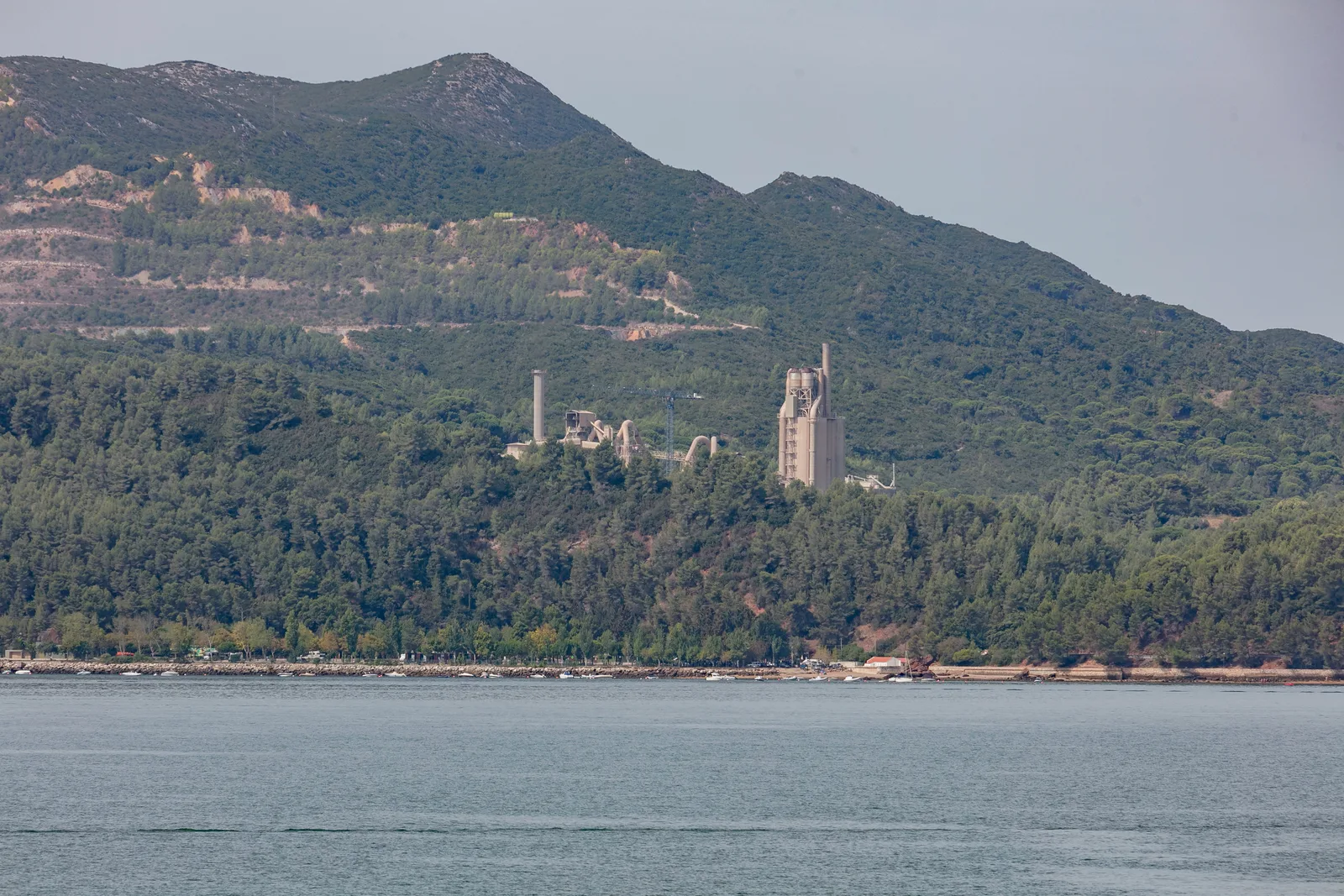
📷 Image credit
Photo: Diego Delso / Wikimedia Commons / CC BY-SA 4.0
See also
The light is on for free. But someone has to clean the lantern.
☕ Support on Ko-fi