Cooperatives and Small Business
The cooperative movement in Setúbal is not merely a form of economic organisation — it reflects a deep social tradition. The “Red City” with its working-class past, left-wing municipalities and Carnation Revolution legacy created one of the densest cooperative networks in Portugal — from wine-making adegas to housing associations.
Wine cooperatives
SIVIPA — Sociedade Vinícola de Palmela
SIVIPA was founded in 1964 by a group of winegrowers on the Setúbal Peninsula to bottle and market their own wines. In the 1990s, the Cardoso family joined the cooperative with 400 hectares of vineyards, significantly expanding its production base.
Today, SIVIPA specialises in Moscatel de Setúbal wines, including aged 10-year Moscatel Roxo, and is one of the recognised brands of the wine region.
Adega Cooperativa de Palmela
The largest wine cooperative in the region:
| Parameter | Value |
|---|---|
| Founded | 1955 (as Adega Cooperativa da Região do Moscatel de Setúbal) |
| Operations began | 1958 |
| Initial membership | 50 members, 1.5 million litres/year |
| Today | 200+ members, >8 million litres/year |
| Specialisation | Largest producer of Castelão wines |
The cooperative played a key role in developing Palmela DOC — a Portuguese wine region where red wines from Castelão form the base (minimum 67% by law). White wines are made from Fernão Pires and Moscatel de Setúbal.
The fame of Moscatel beyond Portugal began in the second half of the 14th century, when England’s King Richard II became a frequent importer of the wine.
Fishing cooperatives
Setúbal is one of Portugal’s main fishing centres with a centuries-old tradition (see Fishing Culture). During the Estado Novo era, the state centralised fishing organisation, encouraged cooperative formation and controlled supplies.
After the Carnation Revolution, fishing cooperatives gained greater autonomy but faced new challenges: declining sardine stocks, competition from industrial fishing, and young people leaving the industry.
[UNVERIFIED] Specific names and current status of Setúbal fishing cooperatives require additional verification from local sources.
The cooperative movement after the Carnation Revolution
The 1974 Revolution gave a powerful impetus to the cooperative movement in the region. The Portuguese Communist Party, which won over half the vote in Setúbal in post-revolutionary elections, organised thousands of peasants and workers into cooperatives.
In the agrarian reform zone (ZIRA — Zona de Intervenção da Reforma Agrária), Collective Production Units (Unidades Colectivas de Produção, UCP) were established. In October 1975, district committees, factory committees, soldiers’ committees and peasant cooperatives in Setúbal united into a central coordinating committee.
Over time, many UCPs were dissolved, but cooperative culture became deeply rooted in the region. The Setúbal district has the greatest diversity of housing cooperatives in Portugal — a fact confirmed by a 2006 study.
Social cooperatives
CERCI
The CERCI movement (Cooperativas de Educação e Reabilitação de Cidadãos Inadaptados) emerged in the mid-1970s as the first wave of social cooperatives in Portugal. CERCIs focus on education, rehabilitation and social inclusion for people with disabilities. Several such organisations operate in the Setúbal district.
Housing cooperatives
The Setúbal district has historically led Portugal in the diversity of housing cooperatives. The national representative body is FENACHE (founded 1980), grouping 32 cooperatives.
In 2023, Setúbal municipality announced a pilot cooperative housing project — construction of ~50 affordable apartments, drawing on a national €250 million financing line. The project reflects renewed interest in the cooperative model as a response to the housing crisis.
Craftsmanship and workshops
The Setúbal region maintains living craft traditions:
- Cork — family farms offer tours of cork harvesting and processing. Products include bags, wallets, shoes and jewellery
- Ceramics — a southern Portuguese tradition, including painted tiles (azulejos)
- Textiles — embroidery and weaving in rural workshops
- Workshops — many studios offer classes for tourists: tile painting, ceramics, cork work
Markets and trade
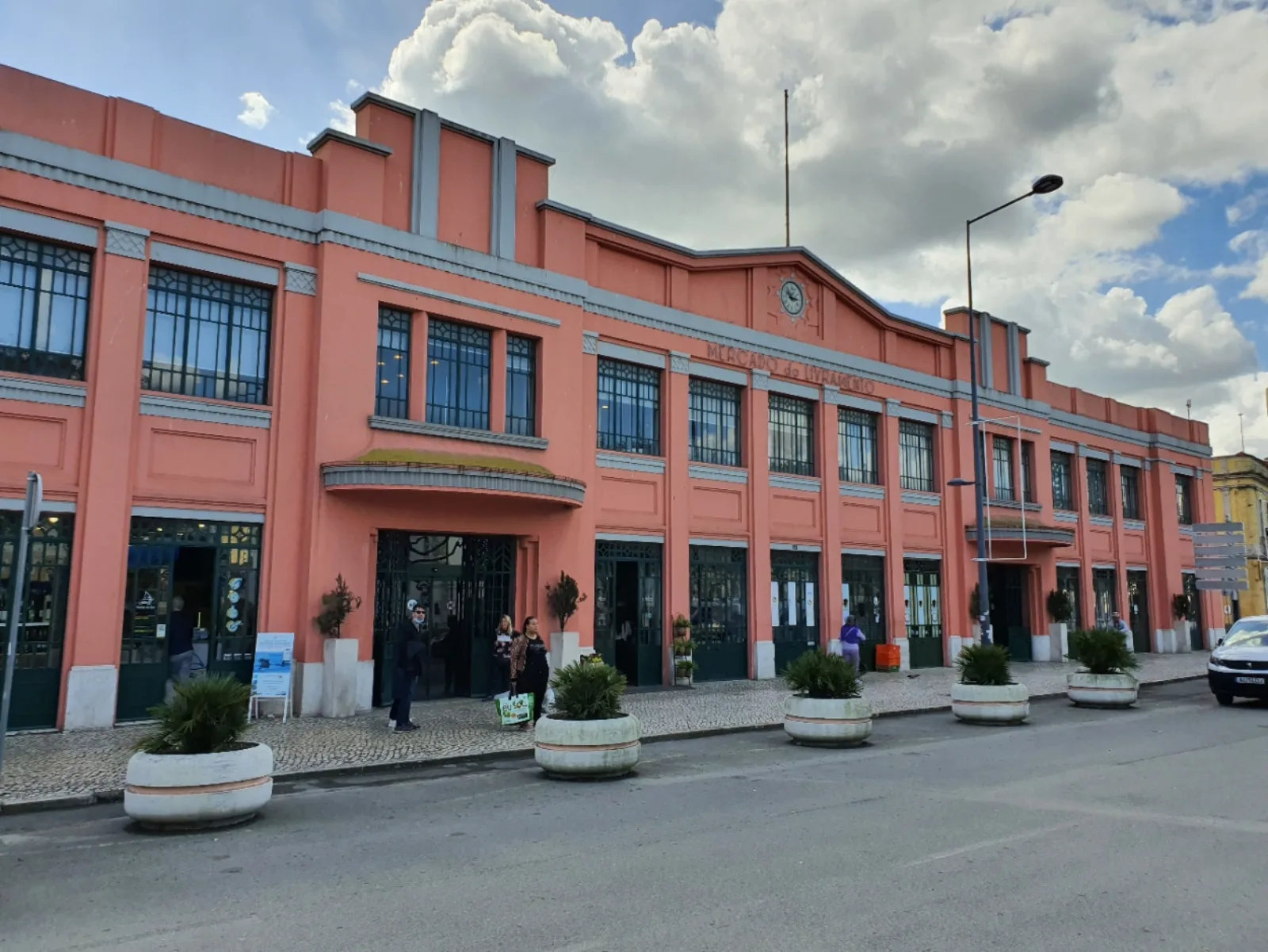
The Livramento Market is the city’s main food market with 350 vendors. Beyond it, the Mercado do Rio Azul is a smaller fish market by the docks.
The Feira de Santiago is the largest commercial event south of the Tagus, established by royal decree in 1582. Hundreds of exhibitors of crafts, local associations and gastronomic stands. Originally a purely economic fair, it has acquired a strong cultural dimension over the centuries.
Small business: challenges and prospects
Setúbal’s main commercial streets are Avenida Luísa Todi and Rua 1º de Maio (near the Livramento Market). The historic centre retains a dense fabric of small retail: cafés, restaurants, speciality shops.
Key challenges for small business:
- Competition from large shopping centres (Alegro Setúbal)
- Shift of consumers to online shopping
- Rising rents in the historic centre
- Seasonal tourist flows
The municipality supports small business through digitalisation programmes and creative initiatives.
See also
- Moscatel de Setúbal
- Regional Wines
- Fishing Culture
- The Carnation Revolution in Setúbal
- The “Red City”
- Feira de Santiago
- Livramento Market
Image sources
- mercado-livramento-cooperatives.webp — Mercado do Livramento, Setúbal. Author: GualdimG. License: CC BY-SA 4.0. Source
If this article was useful — help us write the next one.
☕ Support on Ko-fi