Setúbal's Tourism Industry
Setúbal long remained in the shadow of Lisbon and the Algarve on Portugal’s tourism map. But in recent years, the picture has been changing: Arrábida Natural Park, the Sado dolphins, gastronomy and wine are drawing ever more travellers. In 2024, the Setúbal Peninsula became one of the fastest-growing tourism regions in the country — overnight stays rose by 8.1%, and Azeitão was awarded “Best Tourism Village” status by the UNWTO.
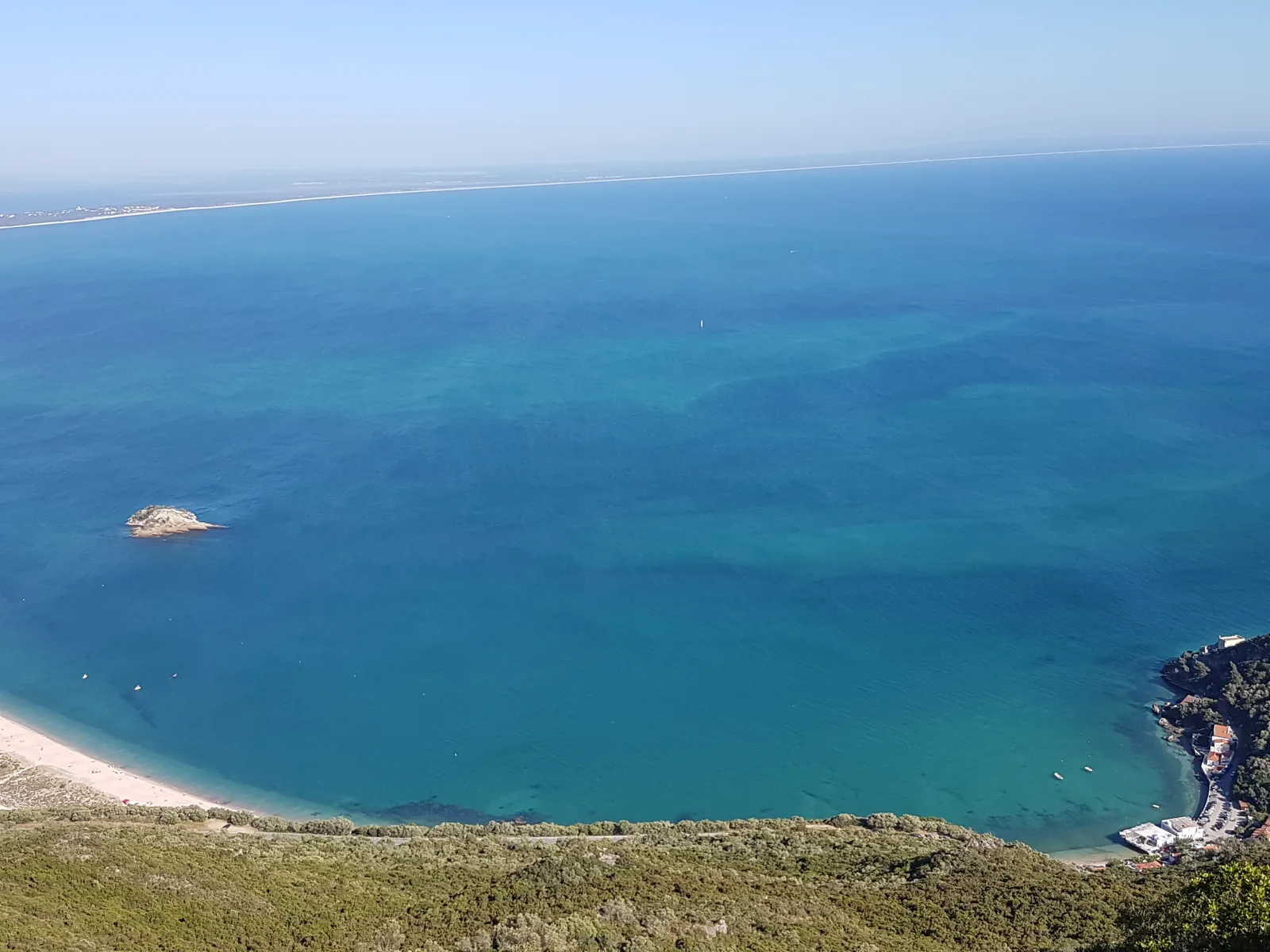
Types of tourism
Setúbal’s tourism industry is diverse, drawing on the region’s unique natural and cultural assets.
Nature tourism
The primary draw is Arrábida Natural Park with its turquoise coves, Mediterranean forests and Galapinhos beach, named Europe’s best. Watching the Sado dolphins is the second most popular attraction: several operators offer estuary tours.
Food and wine tourism
The Livramento Market, recognised by USA Today as one of the world’s best, attracts gourmets from around the globe. Moscatel de Setúbal, Queijo de Azeitão and choco frito are the region’s gastronomic icons. Wine routes wind through the quintas of Azeitão and Palmela. See also: Gastro-Tourism.
Cultural tourism
The Monastery of Jesus — a Manueline masterpiece. Fort São Filipe, the Roman ruins of Tróia, the Museum of Work, TAUS street art — the cultural offering is deep and varied.
Religious tourism
Cabo Espichel with its Sanctuary of Our Lady has been a pilgrimage site since the 15th century. Annual religious ceremonies (March–April, August–September) attract the faithful from across Portugal.
Active and sports tourism
Water sports, trail running and cycling, kayaking — Arrábida and the Sado estuary offer ideal conditions. Sailing is growing thanks to the marina and yacht clubs.
Statistics and trends
Regional data (INE)
| Indicator | 2023 | 2024 |
|---|---|---|
| Overnight stay trend | −0.9% vs 2019 | +8.1% vs 2023 |
| Seasonality coefficient | 42.5% | |
| Dependence on top 3 markets | Lowest among all regions | — |
In 2023, the Setúbal Peninsula was the only region (alongside the Algarve) where overnight stays had not yet returned to pre-pandemic levels (−0.9% vs 2019). But 2024 was a breakthrough year: overnight stays grew by 8.1%, with October seeing 8.9% growth and November 19.3% (second-highest in the country after the Centre region).
Exact absolute visitor numbers for Setúbal municipality are not published — INE reports data for the Península de Setúbal sub-region as a whole.
Seasonality
The beach season (June–September) concentrates the main flow. A seasonality coefficient of 42.5% — the second-highest in the country — indicates dependence on the summer peak. The municipality is working to develop year-round products: wine and gastro-tourism, cultural itineraries, birdwatching in the Sado estuary.
Infrastructure
Casa da Baía
Setúbal’s main tourism centre is Casa da Baía, opened in 2011 on Avenida Luísa Todi. The building, resembling an old convent, combines:
- Tourist information office
- Café with a courtyard
- Shop selling regional wines and products
- Interpretation centre dedicated to the Sado dolphins
- A glass floor revealing the remains of a Roman fish-sauce factory below
Open daily from 9 am to 8 pm. Guided tours available.
Marina
The Fontainhas Recreation Dock in the Port of Setúbal accommodates around 320 vessels, including berths for visiting yachts, with modern facilities (water, electricity, sanitary blocks).
Tróia Marina — 184 berths for vessels from 6 to 18 metres.
Clube Naval Setubalense — 29 berths for vessels from 6 to 11 metres.
Under development — a new Setúbal marina project with capacity for 600 vessels, including superyachts up to 50 metres.
Accommodation
The exact number of hotels and guest houses in the municipality is not published. Main types of accommodation:
- Hotels (Hotel Casa Palmela — the first luxury hotel in Arrábida park, with a sustainability programme)
- Guest houses and B&Bs
- Airbnb (growing in recent years, especially in the historic centre)
- Campsites and rural tourism estates (turismo rural)
Challenges and strategy
Pressure on Arrábida
Over the past decade, Arrábida has experienced “intense and exponential tourism development”. Over 50% of municipal territory is a protected area. The municipality is seeking solutions to relieve pressure on Arrábida’s beaches, redirecting part of the flow to the Tróia Peninsula.
Since 2022, the “Arrábida O2 — Arrábida Without Cars” programme runs from June to September: beach access is organised via public transport, with private vehicles restricted.
Smart Tourism Destinations
Setúbal was selected among 50 European destinations for the European Commission’s Smart Tourism Destinations programme (from 500 applications). The programme aims to implement digital innovations for more sustainable and accessible tourism.
Azeitão — world’s best tourism village
In 2025, Vila Nogueira de Azeitão received Best Tourism Village status from the UN World Tourism Organization (UNWTO) — for its exceptional cultural and natural assets, as well as its commitment to sustainability and innovation.
See also
- Arrábida Natural Park
- The Sado Dolphins
- Galapinhos Beach
- Moscatel de Setúbal
- Gastro-Tourism
- Livramento Market
- Tróia Peninsula
Image sources
- portinho-arrabida-tourism.webp — Portinho da Arrábida, Arrábida Natural Park. Author: Pepolino83. License: CC BY-SA 4.0. Source
The light is on for free. But someone has to clean the lantern.
☕ Support on Ko-fi