Medieval Fair of Palmela (Feira Medieval de Palmela)
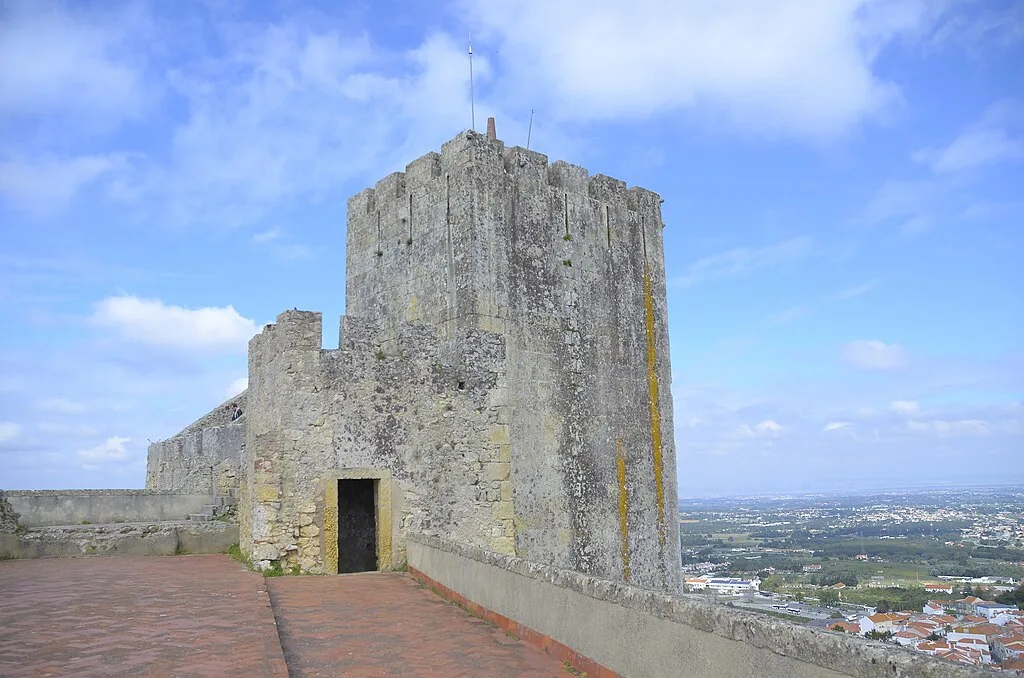 Photo: M.a Teresa Sousa, CC BY-SA 4.0. Wikimedia Commons.
Behind medieval fortress walls, atop a hill overlooking vineyards and the Sado estuary, time turns back: Knights of the Order of Santiago warm up before a tournament, falconers prepare birds for flight, and craftsmen in 15th-century workshops hammer and spin pottery wheels—the Medieval Fair of Palmela transforms the castle and historic center for three days into a living backdrop of the age of great discoveries.
About the Fair
The Medieval Fair of Palmela (Feira Medieval de Palmela) is one of the largest medieval reenactment events in Portugal. The fair is held annually in late September at Palmela Castle (Castelo de Palmela) and in the historic center of the town. The organizer is the Câmara Municipal de Palmela.
In 2025, the 10th anniversary edition took place from September 26-28. The anniversary edition attracted about 20,000 visitors, confirming the fair’s status as one of the most popular cultural events on the Setúbal peninsula.
Historical Theme: Expedition to Ceuta
Context
Each edition of the fair is dedicated to a specific historical period. In 2025, the theme was “Palmela no Tempo da Expedição de Ceuta” (“Palmela at the Time of the Expedition to Ceuta”), recreating the atmosphere of 1414-1415—the period of preparation and execution of the conquest of Ceuta on the North African coast.
Historical Significance of Ceuta
The capture of Ceuta on August 21, 1415, under the leadership of King João I (D. João I), is considered the beginning of Portugal’s Age of Discoveries. The expedition involved infantes Duarte, Pedro, and Henrique (the future Henry the Navigator). This event was a turning point for all European history—the first step toward creating the Portuguese maritime empire.
Connection to Palmela
Palmela played a significant role in preparing for the expedition. The Order of Santiago, whose residence was at Palmela Castle, was one of the military orders that supported the royal plan. Knights of the order participated in the conquest of Ceuta, and the castle itself, situated at a strategic height overlooking the Tagus estuary (from where the armada departed), could serve as a point of preparation and observation.
Thus, the 2025 theme was not arbitrary: it reflected Palmela’s real historical connection to one of the key events in Portuguese history.
Order of Santiago at Palmela Castle
Arrival of the Order
The Order of Santiago (Ordem de Santiago da Espada)—a military-monastic order that played a decisive role in the Reconquista of the Iberian Peninsula. In Portugal, the order established itself in the 12th century and controlled vast territories south of the Tagus River. Palmela Castle became one of the order’s key fortresses.
Establishment of Residence in 1482
In 1482, Palmela Castle was officially transferred to the Order of Santiago, and the Convento da Ordem de Santiago (Convent of the Order of Santiago)—a monastery of the order’s knight-monks—was founded here. This event established Palmela as the spiritual and administrative center of the order in Portugal.
The monastery, partially preserved to this day, became the site of chapter meetings, decisions on military campaigns, and management of vast holdings. Today, within its walls is a historic inn (Pousada Histórica), one of the most unusual in Portugal.
Tours of the Monastery
As part of the Medieval Fair, tours of the former monastery of the knight-monks of the Order of Santiago are conducted—a unique opportunity to see rooms usually closed to the general public. Guides tell about the order’s history, monastery architecture, and daily life of the knight-monks.
Fair Program
Entertainment and Spectacles
The fair offers a rich set of entertainment immersing visitors in the atmosphere of the 15th century:
- Knight tournaments—staged duels with swords and lances taking place in an arena by the castle walls. Professional reenactors in armor recreate the spirit of medieval competitions
- Weapons demonstrations—display of medieval weaponry—swords, halberds, crossbows, shields—with explanations of their purpose and usage techniques
- Falconry (falcoaria)—demonstrations of birds of prey in free flight. Falconry was one of the most important entertainments of medieval nobility, and Palmela with its hills and fields provided ideal conditions for this art
- Aerial dances (danças aéreas)—acrobatic performances on silk fabrics, stylized to medieval aesthetics
- Medieval music—ensembles perform period music on authentic or stylized instruments: viol, lute, drums, bagpipes
- Processions—theatrical processions through the historic center streets
- Castle assault—staged attack using climbing and rappelling techniques, imitating fortress siege
- Thematic camps—tents and pavilions set up on castle grounds, recreating the life of a medieval military camp
Crafts and Market
A medieval market operates on the fair grounds with dozens of stalls where craftsmen demonstrate and sell their products:
- Pottery and ceramics
- Blacksmithing
- Weaving and basketry
- Leatherwork
- Candle making
- Medieval-style jewelry
- Herbs and spices
- Wooden products
Many craftsmen work in front of visitors, allowing observation of the creation process—from lighting the forge fire to firing clay pottery.
Gastronomy
Medieval gastronomy is an important part of the program. Restaurants and stalls offer dishes stylized to medieval cuisine:
- Spit-roasted meat
- Porridges and stews
- Pies with fillings
- Bread baked in wood-fired ovens
- Honey and sweets
- Wine from the Palmela region
How accurately the recipes reproduce 15th-century cuisine versus being creative interpretation is difficult to say—historical cooking allows considerable degree of conventionality.
Workshops
For visitors of all ages, workshops are held where one can try medieval crafts and skills: calligraphy, archery, weaving, pottery. Children’s workshops offer adapted versions of these activities.
Inclusive Program
A novelty of the 10th edition was the inclusive route “Ver com Outros Olhos” (“See with Other Eyes”)—a walk through the fair for people with visual impairments, as well as a guided walking tour of the historic center.
Historical Context: Palmela in 1414-1415
Expedition Preparation
To appreciate the theme of the 10th edition, it’s useful to understand what Palmela looked like at that historical moment. In 1414, Portugal under King João I of the Avis dynasty was experiencing internal stability and growing ambitions. Peace concluded with Castile in 1411 freed military potential that needed direction—and the idea of conquering Ceuta, a strategic port on the African shore of the Strait of Gibraltar, became the answer.
Preparation proceeded in strictest secrecy. Even Portugal’s allies didn’t know the fleet’s final destination, gathering in Lisbon port. Military orders—Christ, Avis, and Santiago—provided significant part of the military contingent. Knights of the Order of Santiago, whose headquarters was at Palmela Castle, were among those preparing to cross the Mediterranean.
Role of Infante Henrique
Among expedition participants was Infante Henrique (Henry the Navigator), who was 21 at the time of Ceuta’s assault. His first combat experience capturing the city is believed to have awakened his interest in exploring Africa and maritime expeditions, which later led to the Age of Discoveries. Thus, the 2025 fair theme connects Palmela not only to the specific 1415 event but to the beginning of a global transformation that changed the world.
Daily Life in the Castle
The fair recreates not only military aspects of the era but also daily life of a medieval castle: work of the kitchen, weaving workshops, forge, infirmary. Thematic camps show how knights, squires, monks, servants, and craftsmen lived and prepared for campaigns—an entire microcosm of medieval society.
Palmela Castle as Venue
Architecture and Atmosphere
Palmela Castle is one of the most impressive medieval fortresses in the Lisbon area. Located at an elevation of about 240 meters above sea level, it dominates the surrounding landscape and offers panoramic views of vineyards, the Sado estuary, Arrábida, and—on clear days—Lisbon and the 25 de Abril Bridge.
Stone walls, towers, inner courtyard, and adjacent monastery create a natural backdrop for medieval reenactment. Torches on walls, fires in the courtyard, banners on towers—all this requires no large-scale sets, as the architecture itself transports visitors six centuries back.
Historic Center
The fair program extends beyond the castle—into Palmela’s historic center, where narrow cobblestone streets, white houses, and medieval churches complement the atmosphere. Craft workshops, food stalls, and musicians are placed along the entire route from the castle to the central square.
Practical Information
- Dates: Last weekend of September (in 2025—September 26-28)
- Location: Palmela Castle and historic center
- Hours:
- Friday: 5:00 PM—midnight
- Saturday: 2:00 PM—midnight
- Sunday: 2:00 PM—11:00 PM
- Tickets: 4 euros for 1 day or 8 euros for 3 days; children under 12—free (with required bracelet)
- How to get there: Palmela is 12 km from Setúbal; TST bus or car; parking in center is limited, recommended to arrive early
- Recommendations: Wear comfortable shoes (castle on hill, cobblestone roads); arrive at 5:00 PM Friday for calm viewing; Saturday—most events but also most people
Notes
[UNVERIFIED] The first edition of the fair presumably took place around 2015-2016, but the exact launch date and circumstances require additional verification. The tenth edition in 2025 indicates a start around 2015-2016, but possible breaks (including due to COVID-19 pandemic) must be considered.
[DISPUTED] Historical reenactments always balance between accuracy and spectacle. The Medieval Fair of Palmela, like similar events throughout Europe, inevitably contains elements of simplification and artistic fiction—for example, mixing artifacts from different eras, stylized music, and conventional “medieval cuisine.” However, organizers strive for historical plausibility, engaging consultants and using the theme of a specific historical period (1414-1415).
See Also
The light is on for free. But someone has to clean the lantern.
☕ Support on Ko-fi