Sardine Gastronomic Week (Semana da Sardinha)
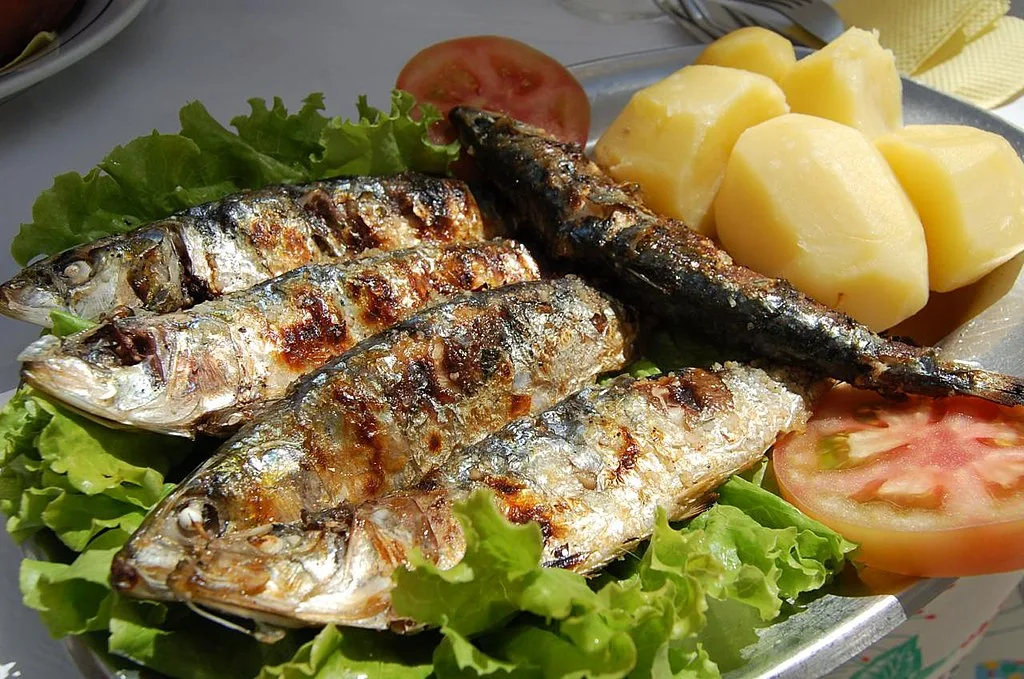 Photo: Yusuke Kawasaki, CC BY 2.0. Wikimedia Commons.
When the first sardines of the new catch are laid on the sizzling coals along Setúbal’s waterfront, and from more than fifty restaurants across the city the scent of fish prepared in dozens of different ways wafts out – from classic grilling to signature delicacies – the city enters its main gastronomic week, dedicated to the small silver fish that shaped its destiny for centuries.
About the Festival
The Sardine Gastronomic Week (Semana Gastronómica da Sardinha) is an annual festival held in Setúbal in late June to early July, typically from June 27 to July 6. The event is organised by the Setúbal Municipal Council (Câmara Municipal de Setúbal) as part of the “Setúbal, Terra de Peixe” (“Setúbal, Land of Fish”) initiative, which brings together a series of gastronomic events throughout the year.
The festival’s idea is simple yet ambitious: to unite the municipality’s restaurants around a single product – the sardine – and to offer visitors both traditional and innovative ways of preparing it. This is not merely a gourmet event but a tool for promoting regional identity and supporting local fishing.
Scale and Participants
Restaurants
More than 50 restaurants across the Setúbal municipality participate in the festival – from simple tascas (taverns) on the waterfront to high-end establishments in the city centre. In some years, the number of participants has approached 60. Each restaurant develops a special menu featuring the sardine as the main ingredient.
The diversity of approaches is impressive:
- Traditional recipes – charcoal-grilled sardines (sardinhas assadas), marinated sardines (sardinhas de escabeche), sardines in cornbread (sardinhas em pão de milho)
- Signature cuisine – sardine tartare, cream soup with sardine, sardine in tempura batter, sardine risotto
- Desserts and appetisers – pâtés, mousses, sardine tapas
- Pairing with local wines – restaurants often suggest gastronomic pairings: sardine + white wine from the Palmela region or Moscatel de Setúbal
Parallel Events
The Gastronomic Week extends beyond restaurant walls. The programme includes:
- Educational workshops – including children’s activities aimed at introducing the younger generation to the cultural heritage of fishing
- Tastings guided by experts
- Gastronomic tours of participating restaurants
- Cultural events – exhibitions, film screenings, lectures on fishing traditions
- Presentations at the Setúbal Municipal Public Library
In 2025, the official opening took place on June 27 at 3:30 PM at the Municipal Library with a children’s educational workshop based on the tale “Sardinha, a Rainha dos Santos Populares” (“Sardine, the Queen of the Popular Saints”).
The Sardine in Setúbal’s Culture
Historical Role
The sardine is not merely a fish for Setúbal but an economic and cultural symbol. From the late 19th century, Setúbal became one of Portugal’s largest canning industry centres. Dozens of factories processed sardines, providing jobs for thousands of residents – predominantly women, who manually packed the fish into tins. The heyday of the canning industry came in the first half of the 20th century and largely defined the city’s social and economic character.
Although by the late 20th century most factories had closed, the memory of the sardine as the foundation of the city’s economy lives on. The Gastronomic Week is one of the ways to preserve this memory and pass it to new generations.
“7 Wonders of Portuguese Gastronomy”
In 2011, charcoal-grilled sardine (Sardinha Assada) was recognised as one of the “7 Wonders of Portuguese Gastronomy” (7 Maravilhas da Gastronomia) in the “Fish” category. Voting ran from May to September 2011, collecting 899,069 votes. The winners’ ceremony took place on September 10, 2011 in Santarém.
Notably, Lisbon and Setúbal were featured in the nomination as the regions most associated with this dish. The jury and voters highlighted the specifics of preparation: the way the coals are arranged, positioning sardines belly-inward, slow grilling over moderate heat with turning on a double rack – all of this makes the sardine a calling card of Setúbal’s gastronomy.
Other winners of the competition included Alheira de Mirandela, Queijo Serra da Estrela, Caldo Verde, Arroz de Marisco, Leitão da Bairrada, and Pastel de Belém.
The “Setúbal, Terra de Peixe” Initiative
Concept
The Sardine Gastronomic Week is part of a broader strategy called “Setúbal, Terra de Peixe” (“Setúbal, Land of Fish”), implemented by the Municipal Council. The strategy aims to promote Setúbal as a leading gastronomic destination in Portugal, specialising in fish and seafood.
As part of the initiative, several themed gastronomic weeks are held throughout the year, each dedicated to a specific product:
- Sardine Week (June – July)
- Seafood Week – reportedly held in autumn, but exact dates require clarification
- Other themed events timed to the seasons of various fish species
Economic Impact
The strategy pursues several goals:
- Supporting local fishermen – stimulating demand for fresh local fish
- Developing the restaurant business – attracting visitors between major tourist events
- Gastronomic tourism – positioning Setúbal on the map of culinary travel
- Preserving traditions – passing on knowledge of traditional fish preparation methods
According to municipal estimates, gastronomic weeks attract tens of thousands of additional visitors to the city’s restaurants, though precise economic impact figures are not published in open sources.
A Typical Festival Day
During the Sardine Gastronomic Week, the rhythm of the city changes somewhat. During lunch and evening hours, participating restaurants display special flags and festival menus. Visitors are offered a route map to navigate among the dozens of participants.
A typical gourmet itinerary might look like this:
- Morning – visit to the Livramento Market (Mercado do Livramento), where you can see the fresh catch and buy sardines for home cooking
- Lunch – tasting signature sardine dishes at one of the participating restaurants
- Afternoon – participating in a workshop or tasting
- Dinner – a second restaurant for comparing preparation approaches
A special atmosphere is created by the festival’s overlap with Santos Populares: late June is a time when gastronomic pleasures merge with folk celebrations, and the sardine transforms from a restaurant dish into a symbol of the nationwide festival.
Sardine Biology and Seasonality
Why June?
The timing of the festival is no accident. The Atlantic sardine (Sardina pilchardus) reaches its best flavour qualities precisely in the summer months – from June to September. During this period, the fish accumulates its maximum fat content, making it juicy and aromatic when grilled over coals.
The waters off the coast of Setúbal – in the Sado estuary and the adjacent Atlantic – have long been considered one of the best places for sardine fishing. The temperature regime, currents, and plankton-rich environment create ideal conditions for shoals of this fish.
Life Cycle and Fishing
The Atlantic sardine makes seasonal migrations along the coast of the Iberian Peninsula. In spring and summer, shoals rise to the surface and approach the shore, making them accessible to traditional fishing. It is precisely during this period that the fish, actively feeding on plankton, accumulates fat mass – fat content can reach 20% of body weight.
For Setúbal’s fishermen, sardine season traditionally began on Saint Anthony’s Day (June 13) – there is even a saying that before Santo António’s day, it is not worth catching sardines. This folk observation essentially reflects biological reality: by mid-June, the sardine reaches optimal condition.
Sustainable Fishing
In recent years, festival organisers have been paying attention to sustainable fishing issues, emphasising the need to preserve the sardine population. The European Union periodically introduces quotas on sardine catches in the Atlantic waters of the Iberian Peninsula, which affects catch volumes and prices. However, specific measures taken within the framework of the festival to promote sustainable consumption require additional verification.
The Livramento Market and Fish Trade
The Heart of Fish Setúbal
Although the Sardine Gastronomic Week is primarily a restaurant festival, it is impossible to speak of sardines in Setúbal without mentioning the Livramento Market (Mercado do Livramento) – one of the finest food markets in Portugal. Every morning, its counters display the fresh catch from the Sado estuary and the Atlantic: sardines, mackerel, sea bass, sea bream, octopus, and dozens of other fish and seafood species.
During the festival, the market becomes the starting point of the gastronomic route. Here you can not only buy fresh sardines but also chat with the fish sellers (peixeiras) – women who have been involved in the fish trade for generations and are keepers of unique knowledge about quality, seasonality, and methods of fish preparation.
Tradition and Modernity
The peixeiras (fish sellers) of Setúbal are a vivid cultural figure, celebrated in popular marches and literature. Their loud voices calling out to customers, their specific jargon, and their skill in filleting fish are part of the city’s intangible heritage. The Gastronomic Week indirectly supports this tradition by stimulating demand for fresh fish and drawing attention to the market’s role in city life.
Setúbal in the Context of Gastronomic Tourism
Regional Positioning
The Sardine Gastronomic Week is one expression of Setúbal’s strategic course towards developing gastronomic tourism. The city possesses a number of advantages making it an attractive destination for food lovers:
- Proximity to Lisbon (40 km) – allows for a day trip
- Seafood diversity – the Sado estuary and the Atlantic provide exceptional variety of species
- Wine-producing region – Moscatel and Palmela wines create ideal gastronomic pairings
- Living fishing culture – not a museum exhibit but real and active
- Affordable prices – compared to Lisbon, Setúbal’s restaurants offer excellent value for money
The Sardine Gastronomic Week, along with other initiatives of the “Setúbal, Terra de Peixe” programme, helps cement this image in the minds of Portuguese and international tourists.
Practical Information
- Dates: Late June – early July (usually June 27 – July 6)
- Location: Restaurants throughout the Setúbal municipality
- Format: Special menus at participating restaurants + parallel events
- Cost: Depends on the specific restaurant; parallel events are often free
- Recommendations: Book tables in advance, especially for weekends; ask about the special festival menu; try both traditional and signature versions
Notes
[DISPUTED] Some critics note a contradiction between the gastronomic promotion of sardines and the problems of declining sardine populations in the Atlantic. In response, organisers emphasise that the festival promotes conscious consumption and the cultural value of traditional fishing, rather than reckless exploitation of the resource.
See Also
- Sardine: Queen of the Setúbal Table
- Fishing Culture of Setúbal
- Canning Industry of Setúbal
- Popular Saints in Setúbal
- Seafood Cuisine of Setúbal
If this article was useful — help us write the next one.
☕ Support on Ko-fi