Choco Frito — Setubal's Fried Cuttlefish
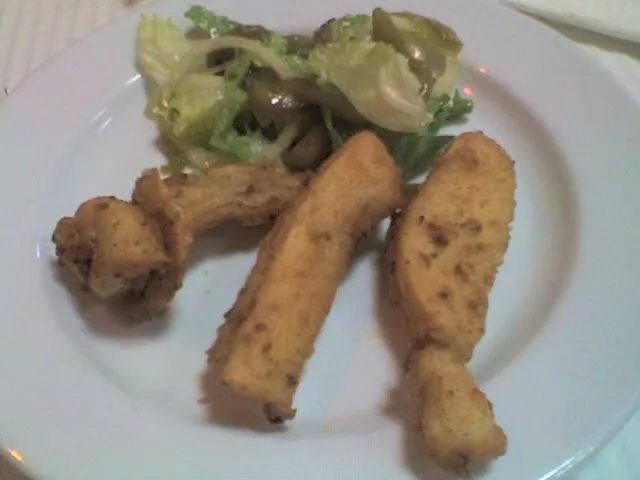
Choco Frito (Portuguese for “fried cuttlefish”) is the signature dish of Setubal: strips of cuttlefish coated in seasoned cornmeal and deep-fried to a crisp golden crust. The dish is so inseparable from the city that it has become its culinary emblem. As the locals say, “Setubal is not only choco frito, but choco frito is Setubal.”
History
Origins of the Dish
Choco Frito was born from the fishing culture of the Sado estuary. Fishermen working the waters south of the Tagus – from the Sado estuary down to Sines – hauled in large quantities of cuttlefish that had no commercial value. There were two reasons: their small size and damage inflicted by larger marine predators. According to one account, dolphins ate only the tender parts of the cuttlefish, leaving the tougher pieces for the fishermen to collect.
Unable to sell this catch, the fishermen brought the cuttlefish to the harbour taverns where, after a day’s work, they would tally their take, swap stories, and drink wine. The cuttlefish were cut into strips and fried – a simple but satisfying accompaniment to a glass of wine.
[FOLKLORE] According to local legend, one fisherman, weary of the hardships of life at sea, saved enough money to open his own tavern. Every morning he still went down to the harbour, bought fresh cuttlefish from the fishermen, and served it fried alongside wine. The tavern became enormously popular precisely because of this pairing, and the dish gradually came to symbolise all of Setubal.
Setubal’s Fishing Traditions
The region’s fishing history reaches back to the Roman era. Fish salting was a key sector of Setubal’s economy from the first century AD onward. Port activity expanded vigorously in the fifteenth century, and by the nineteenth century the city had become a centre of the fish canning industry. Cuttlefish were caught in the Sado estuary from small traditional boats using artisanal techniques – nets and traps.
Brightly painted fishing boats can still be seen in the harbour today, and fishermen continue to mend their nets in the ports of Setubal and Sesimbra, preserving methods handed down through the generations.
Description
Ingredients
- Cuttlefish (choco in the Setubal dialect)
- Cornmeal (farinha de milho) – the principal breading ingredient
- Garlic
- Bay leaf
- White wine
- Lemon juice
- Salt and spices
- Vegetable oil for deep-frying
Preparation
The preparation of choco frito involves several stages:
- Boiling. The cuttlefish is boiled with garlic and bay leaf until tender.
- Marinating. The boiled cuttlefish is marinated in a mixture of white wine and lemon juice, which lends the meat a characteristic tartness and tenderness.
- Breading. The marinated pieces are coated in seasoned cornmeal. The use of cornmeal rather than wheat flour is a defining feature of the Setubal recipe: it produces a crispier texture and, as a bonus, makes the dish gluten-free.
- Frying. The cuttlefish is deep-fried until golden and crisp.
Properly made choco frito should be succulent and meaty on the inside and crunchy on the outside. It is traditionally served with fried potatoes, a wedge of lemon, and often a salad. The classic pairing is choco frito with a glass of local white wine.
Other Cuttlefish Dishes
Beyond choco frito, Setubal’s kitchens prepare a variety of other cuttlefish dishes:
- Choco frigideira – cuttlefish braised in a pan with onion, garlic, and white wine
- Choco grelhado – grilled cuttlefish
- Cuttlefish in risotto, salads, and various stews
Cultural Significance
Choco frito is not simply a dish; it is a symbol of Setubal’s identity. Its role in the city’s culture is comparable to that of the pastel de nata for Lisbon or the francesinha for Porto.
The Link to Fishing Culture
The dish embodies the resourcefulness and thrift of Setubal’s fishermen, who transformed a by-product of the catch into a culinary treasure. Choco frito was born not in restaurant kitchens but in harbourside taverns – it is democratic, unpretentious food, rooted in the sea and in hard work.
Semana do Choco (Cuttlefish Week)
Each year, Setubal hosts the Semana do Choco – Cuttlefish Week, a gastronomic festival organised by the Setubal municipality. The event typically takes place in April. In 2025, the festival ran from 4 to 13 April with the participation of around 50 of the city’s restaurants.
The festival programme includes:
- Special menus featuring a variety of cuttlefish dishes at all participating restaurants
- Guided tastings with commentary by chefs
- Educational workshops on cuttlefish and the ecosystem of the Sado estuary
- Walking tours of the historic centre
- Cultural events, including fado performances
Where to Try It
Historic Establishments
-
Casa Santiago – O Rei do Choco Frito (Avenida Luisa Todi). Founded in 1974 by Virgilio Santiago, who gave the establishment the subtitle “The King of Choco Frito” – a bold claim in a city that prides itself on the dish, yet one the locals endorse. Reservations are not accepted; queues at lunchtime are common. This restaurant also served as the springboard for several other well-known establishments: Santiago’s sons opened Cais 56 and Adega do Ze.
-
O Baluarte do Sado – one of the city’s most traditional restaurants, a regular fixture on lists of the best places for choco frito.
-
Kefish – a restaurant tucked into the alleyways of Setubal’s old centre.
-
Tasca Xico da Cana – a traditional establishment that uses exclusively cornmeal for its breading.
-
Galeao (Portinho da Arrabida) – known for generous portions and a zesty breading.
-
Casa do Castelo (Palmela) – a restaurant with views of the castle.
Recommendations
The best time to discover choco frito is during the Semana do Choco in April, when the city’s entire gastronomic scene revolves around the dish. At any other time of year, choco frito is available in virtually every restaurant in Setubal – it is a year-round staple, not tied to any particular season.
Interesting Facts
- The word choco in the Setubal dialect means “cuttlefish.” To foreign visitors, the name of the dish often sounds like “fried chocolate” – an association that never fails to amuse the locals.
- Setubal’s fish market, the Mercado do Livramento, is considered one of the largest seafood markets in Portugal. Fresh cuttlefish and dozens of other species of fish and shellfish can be found there.
- The Cais Palafitico da Carrasqueira – a wooden stilt pier in the Sado estuary built by fishermen in the 1950s and 1960s – is one of the last structures of its kind in Europe, a living monument to the region’s fishing culture.
- The dish’s journey from “poor man’s food” to gastronomic symbol and the city’s top tourist attraction follows a path typical of many great dishes in world cuisine.
Image sources
- choco-frito.webp — Choco frito — fried cuttlefish, Setubal’s signature dish. Author: Wikimedia Commons. License: CC BY-SA 4.0. Source
See also
- Moscatel de Setubal – the fortified wine that has traditionally accompanied cuttlefish in the taverns
- Queijo de Azeitao – the famous cheese from nearby Azeitao
- Fishing Culture
- The Sado Estuary
- Mercado do Livramento
If this article was useful — help us write the next one.
☕ Support on Ko-fi