Moscatel de Setubal — Fortified Wine
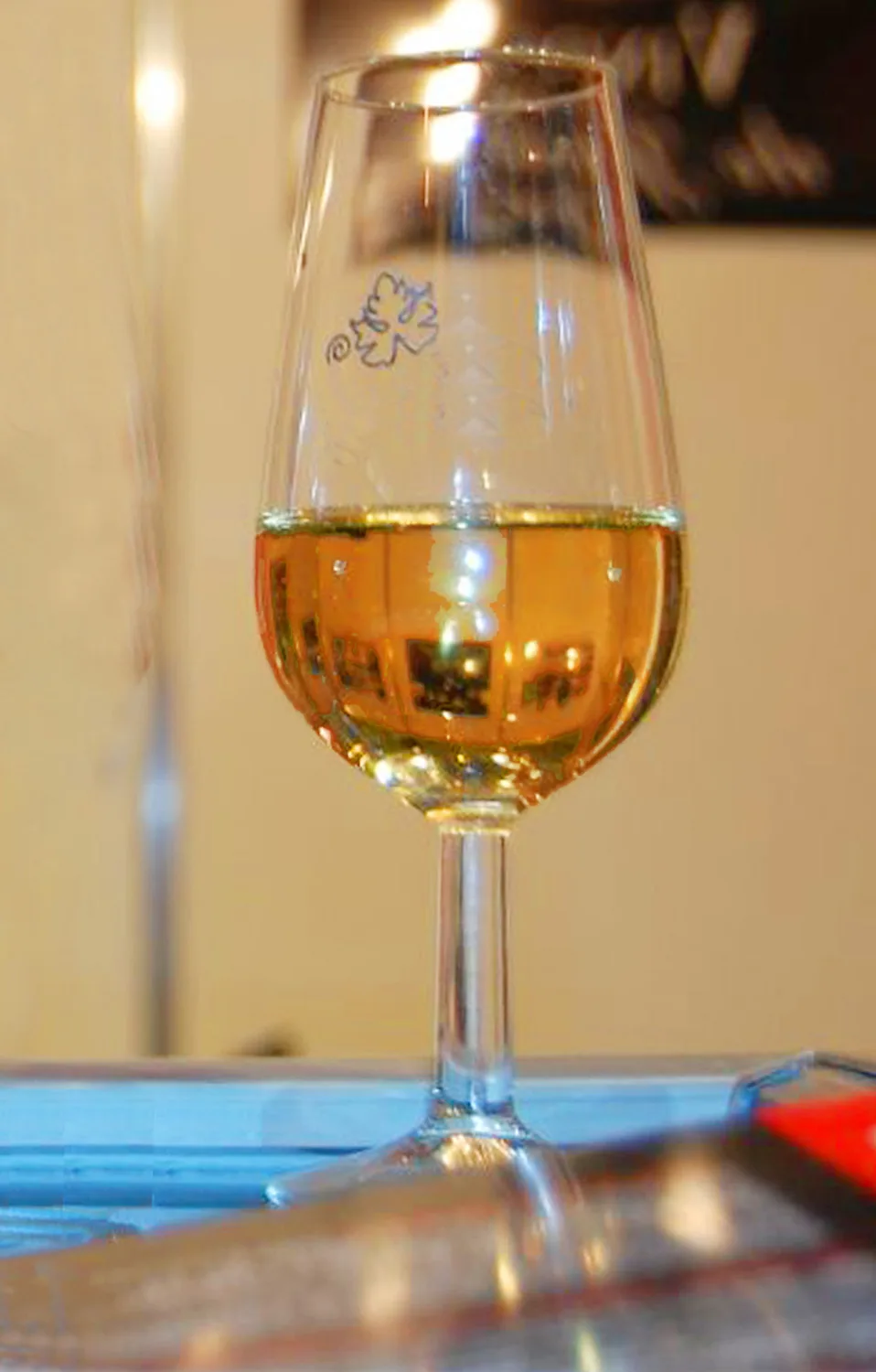
Moscatel de Setubal is a Portuguese fortified dessert wine with a protected designation of origin (DOC), produced on the Setubal Peninsula south of Lisbon. One of the oldest and most historically significant wines of Portugal, it has been known since the fourteenth century and was prized at the courts of European monarchs. Its defining characteristic is a unique production method involving prolonged maceration on the grape skins after fortification.
History
Antiquity and the Middle Ages
Viticulture on the Setubal Peninsula has a history stretching back millennia. Muscat (Moscatel) varieties have been cultivated here for an estimated three thousand years, though the precise date when fortified winemaking began is difficult to establish.
Moscatel de Setubal gained international renown in the second half of the fourteenth century, when the English king Richard II (reigning 1377–1399) became a regular importer. This is one of the earliest documented cases of Portuguese wine being exported to England.
The Age of Discoveries
During the fifteenth and sixteenth centuries, at the height of Portuguese maritime expansion, Moscatel de Setubal was shipped aboard caravels and galleons to India and other colonies. The prolonged sea voyages and the heat in the holds reportedly had a beneficial effect on the quality of the wine – an effect similar to the one later deliberately employed in the production of Madeira.
Versailles and the Enlightenment
In the seventeenth century, at the court of Louis XIV, Moscatel de Setubal reached the zenith of its European fame. It was called a “national pride” and “sunshine in a bottle.” According to historical accounts, the Sun King invariably included this wine at his receptions in Versailles. Later, possibly influenced by the royal tradition, Voltaire drank Moscatel de Setubal at his home in Geneva.
The Nineteenth Century: Moscatel Roxo at the Paris Exhibition
In the nineteenth century, the rarer variety – Moscatel Roxo – was hailed by French connoisseurs as “the quintessence of muscats.” [UNVERIFIED] Some sources report that the wine was awarded a gold medal at the 1855 Paris World Exhibition, but this claim has not been confirmed from primary documents.
DOC Recognition
In 1907, Moscatel de Setubal received D.O.C. status (Denominacao de Origem Controlada – controlled designation of origin) – one of the oldest appellations in Portugal. The production and cultivation regulations remained virtually unchanged until the DOC rules were revised in 1997 and 1999, when Moscatel was established as the mandatory principal grape variety and other previously permitted varieties were excluded.
Major Producers
Jose Maria da Fonseca
Jose Maria da Fonseca is the oldest industrial producer of table wines in Portugal, founded in 1834. The company has been owned by the Soares Franco family for six generations. Its founder is credited with developing the modern style of fortified Moscatel de Setubal.
The name Alambre – the company’s flagship brand – derives from the estate where Jose Maria da Fonseca first planted Moscatel grapes. The word also alludes to the wine’s characteristic amber hue.
Domingos Soares Franco, the sixth-generation winemaker and a graduate of the University of California, Davis, has been modernising production since the 1980s, becoming one of the most innovative winemakers of the new generation in Portugal.
Bacalhoa Vinhos de Portugal
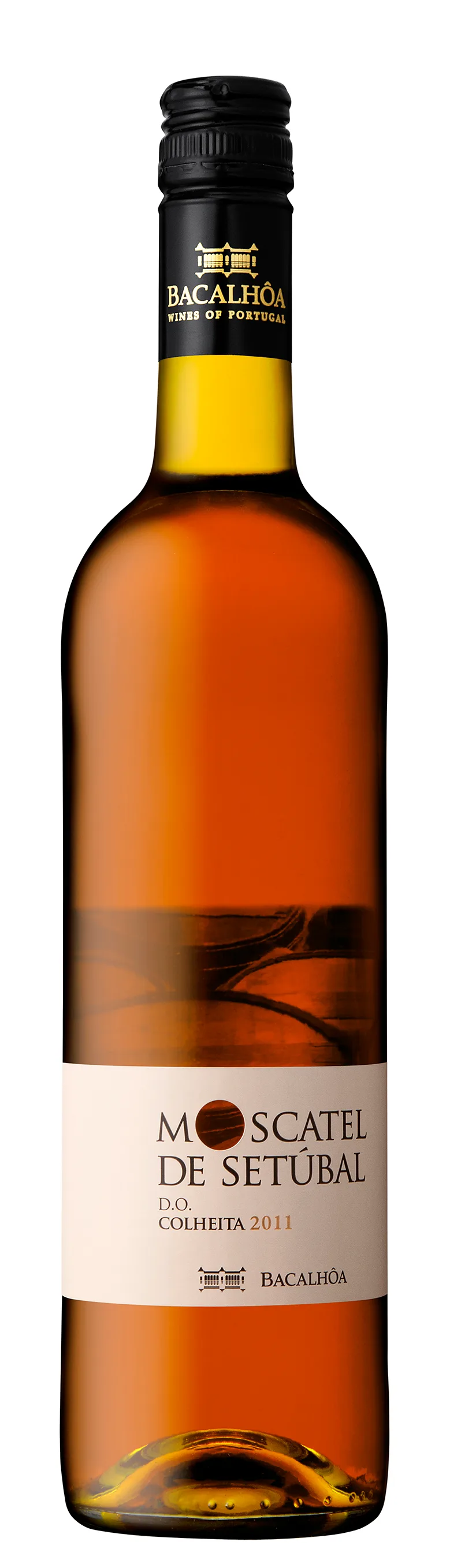
The company was established in 1922 under the name Joao Pires & Filhos in the Algarve and relocated to Setubal in 1966. Its own winemaking began in the 1970s. In 1998, Comendador Jose Berardo became the principal shareholder and launched major investments. The company was renamed Bacalhoa Vinhos de Portugal in 2005. In 2007, Bacalhoa became the largest shareholder of Alianca – one of Portugal’s most prestigious producers of sparkling wines, brandy, and still wines.
Bacalhoa consistently earns gold medals at the Decanter World Wine Awards for its Moscatel de Setubal.
Description
Grape Varieties
Moscatel de Setubal is made from two principal varieties:
-
Moscatel de Setubal – also known as Muscat of Alexandria. One of the most ancient muscat varieties in the world. It produces wines with a fruity character and notes of tropical fruit and molasses.
-
Moscatel Roxo – a rare mutation of Muscat of Alexandria with dark-skinned berries. It yields wines with notes of blackberry, blueberry, violet, lavender, and sometimes rockrose. It possesses outstanding ageing potential, developing aromatic complexity in barrel.
Under current EU legislation, for the varietal name to appear on the label, the wine must contain at least 85% Moscatel grapes. The previous threshold was 67%.
Production Method
The production of Moscatel de Setubal involves several distinctive stages:
-
Harvesting and pressing. The grapes are picked at a high sugar concentration.
-
Brief fermentation. Alcoholic fermentation of the grape must begins.
-
Fortification. Fermentation is arrested by the addition of grape spirit – aguardente vinica. This preserves the residual sugar in the wine and raises the alcohol level.
-
Maceration on the skins. The defining feature of Moscatel de Setubal: after fortification, the wine remains in contact with the grape skins for a period of three to six months (typically around five months). It is this prolonged contact with the aromatic Moscatel skins that imparts the wine’s characteristically intense aroma, floral and musky notes, depth and texture, and amber-orange colour.
-
Ageing. The wine is traditionally aged in used oak barrels under an oxidative regime. The legal minimum ageing periods are:
- Moscatel de Setubal (white): 18 months
- Moscatel Roxo de Setubal: 36 months (3 years)
Ageing Categories
Moscatel de Setubal may carry the following age designations:
| Category | Minimum ageing |
|---|---|
| Standard | 18 months |
| Superior / Reserva | 5 years |
| 10 Anos | 10 years |
| 15 Anos | 15 years |
| 20 Anos | 20 years |
| 25 Anos | 25 years |
| 30 Anos | 30 years |
| 35 Anos | 35 years |
| +40 Anos | Over 40 years |
The Superior and Reserva categories require a minimum of five years’ ageing. Most commercially available wines are aged between 5 and 20 years. Bottlings of 20 years and above fall into the collector category.
Tasting Profile
Young Moscatel (up to 5 years):
- Colour: golden, amber
- Nose: floral, citric, with notes of orange zest, honey, tropical fruit
- Palate: sweet, fruity, with good freshness
Aged Moscatel (10–20 years):
- Colour: deep amber, caramel
- Nose: caramel, dried fruit, nutmeg, spice
- Palate: more concentrated, with toffee and nutty notes and a long finish
Moscatel Roxo:
- Colour: from ruby to deep brown with age
- Nose: forest berries, violet, lavender, rockrose
- Palate: more complex, deep, with minerality
The Wine Region
Geography
The Setubal Peninsula lies between the mouths of the rivers Tagus (to the north) and Sado (to the south), southeast of Lisbon. The relief and terroir of the region are remarkably diverse.
Two areas with controlled designations of origin are found on the peninsula:
-
DOC Setubal – for the production of fortified wines (Moscatel de Setubal). Moscatel vineyards are located predominantly on the slopes of the Serra da Arrabida, a limestone-clay mountain range rising to 501 metres and running along the peninsula’s southern coast.
-
DOC Palmela – for the production of still wines (white, red, rose), semi-sparkling and liqueur wines. The main red variety is Castelao (at least 67%), grown on sandy soils east of the town of Palmela.
Soils and Climate
- Soils: ranging from limestone-clay on the slopes of the Arrabida to sandy plains in the Sado valley near Palmela
- Climate: Mediterranean – hot, dry summers and mild, rainy winters with high humidity. The Serra da Arrabida has a more Atlantic climate thanks to its elevation and proximity to the ocean
- Influences: the Tagus and Sado rivers and the Arrabida mountain range create a unique microclimate
Cultural Significance
Moscatel de Setubal is one of Portugal’s three great fortified wines, alongside Port and Madeira. Unlike those two, however, Moscatel remains less well known on the international stage – a fact that some experts view as both a challenge and an opportunity: its accessible price point makes it one of the most undervalued fortified wines in the world.
The wine is an integral part of the region’s gastronomic culture. Traditional pairings include:
- Desserts, especially local pastries
- Queijo de Azeitao – the soft sheep’s-milk cheese from nearby Azeitao
- Foie gras and blue cheeses
- It is also served as an aperitif or digestif
Where to Try It
- Jose Maria da Fonseca winery (Azeitao) – a historic estate offering tours and tastings. The full range, from the standard bottling to the 40-year-old Alambre, is available.
- Bacalhoa Vinhos (Azeitao) – a winery with an art collection and tasting room.
- Comissao Vitivinicola da Regiao de Setubal (CVRPS) – the regional wine commission, which organises tastings and events.
- Restaurants of Setubal – a glass of local Moscatel is available at virtually every establishment in the city.
- Feira de Azeitao (Azeitao Market) – a monthly market held on the first Sunday of each month, where Moscatel can be purchased directly from small producers.
Interesting Facts
- A wine catalogue from 1797 already lists Moscatel de Setubal – one of the oldest documentary references to this wine by name.
- Muscat of Alexandria (Moscatel de Setubal) is considered one of the most ancient muscat varieties in the world.
- The word Alambre – Jose Maria da Fonseca’s flagship brand – simultaneously denotes the estate where the first Moscatel vines were planted and alludes to the amber (ambar) colour of the wine.
- Unlike Port and Madeira, which are fortified before or during fermentation and then aged without grape skins, Moscatel de Setubal undergoes prolonged maceration on the skins after fortification – a feature that makes its production unique among fortified wines.
- [DISPUTED] The question of whether Moscatel de Setubal’s affordable price is an advantage (attracting new consumers) or a handicap (undermining its perception as a premium product) is actively debated in the winemaking community.
Image sources
See also
- Choco Frito – Setubal’s signature dish, traditionally accompanied by local wine
- Queijo de Azeitao – the cheese classically paired with Moscatel de Setubal
- Arrabida Natural Park – the mountain range on whose slopes the grapes are grown
All our knowledge is free. Creating it is not.
☕ Support on Ko-fi