Queijo de Azeitao — A Cheese with Protected Designation of Origin
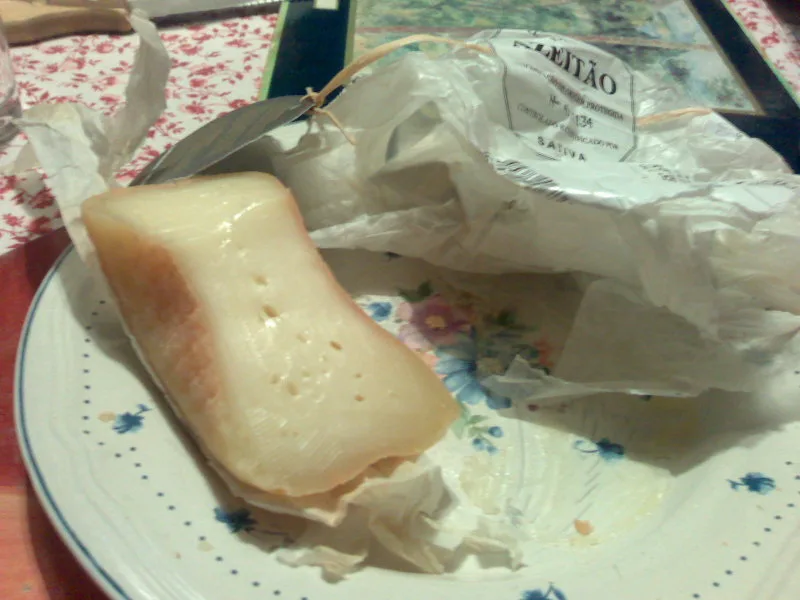
Queijo de Azeitao is a Portuguese artisanal cheese with a Protected Designation of Origin (DOP/PDO), made from raw sheep’s milk using a vegetable rennet derived from the flowers of the wild cardoon (thistle). It is distinguished by a creamy, almost liquid interior and a mild, tangy flavour. It is produced exclusively in the municipalities of Setubal, Palmela, and Sesimbra at the foot of the Serra da Arrabida mountain range.
History
Origins: A Settler from Beira
The history of Queijo de Azeitao begins in 1830, when Gaspar Henriques de Paiva, a native of the village of Monsanto in the province of Beira Baixa (central Portugal), settled in the village of Azeitao in the Arrabida hills south of Lisbon.
Paiva brought with him sheep of the Bordaleira breed from his home region, intending to reproduce the production technique of the celebrated Serra da Estrela – the most revered cheese in Portugal, made in the mountains of Beira. Queijo de Azeitao was conceived as a smaller-scale replica of Serra da Estrela, following the same recipe: raw sheep’s milk, vegetable rennet from cardoon flowers, hand-moulded.
However, local conditions – different pasture flora, the microclimate of the Arrabida, the particular character of the soils – quickly gave the new cheese its own distinctive qualities. It turned out smaller, softer, with a more pronounced creamy texture and a more delicate flavour. These qualities were highly prized, and the cheese established itself as a product with a reputation all its own.
DOP Status
Queijo de Azeitao was granted Protected Designation of Origin (DOP) status under EU regulations in 1996 (Reg. (CE) No. 1107/96, L148, 21.06.1996). The DOP status guarantees that cheese bearing this name can only be produced within a defined geographical area, using traditional methods and strictly specified raw materials.
Description
Raw Materials
Milk
Only raw (unpasteurised) sheep’s milk is used. The sheep graze on pastures at the foot of the Serra da Arrabida, where the local flora – the diverse plant life of the Mediterranean maquis – determines the intensity and aromatic character of the milk.
[DISPUTED] There is some disagreement concerning the breed of sheep. Historically, Gaspar Henriques de Paiva brought Bordaleira sheep from the Serra da Estrela region; however, a number of contemporary sources indicate that the breed now used for Queijo de Azeitao production is the Saloia, which is more widespread in the Lisbon area.
Vegetable Rennet
The coagulation of the milk is achieved without animal rennet. Instead, the dried flowers of the wild cardoon – Cynara cardunculus L., a wild thistle related to the cultivated artichoke – are used. The enzymes in the cardoon flowers cause the milk proteins to coagulate, separating the curd (cheese mass) from the liquid whey. This makes Queijo de Azeitao a fully vegetarian cheese.
The use of cardoon in cheesemaking is an ancient Mediterranean tradition characteristic of the Iberian Peninsula. Portugal preserves this practice for several of its most celebrated cheeses, including Serra da Estrela and Serpa.
Production Method
- Milking – predominantly by hand.
- Filtering the milk.
- Adding the coagulant. Crushed cardoon flowers – approximately 0.5 g per kilogram of milk – and salt (about 25 g per litre) are added.
- Coagulation. The milk curdles under the action of the vegetable enzymes.
- Moulding. The curd is shaped by hand and placed on wooden boards. Pressing and whey drainage.
- Ripening. The cheese is placed in a curing chamber at a temperature of 10–12 degrees C and a relative humidity of 85–90%. Minimum ripening time:
- 20 days for cheese made in summer
- 40 days for cheese made in winter
Longer ageing intensifies the flavour profile and increases pungency.
Physical Characteristics
| Parameter | Value |
|---|---|
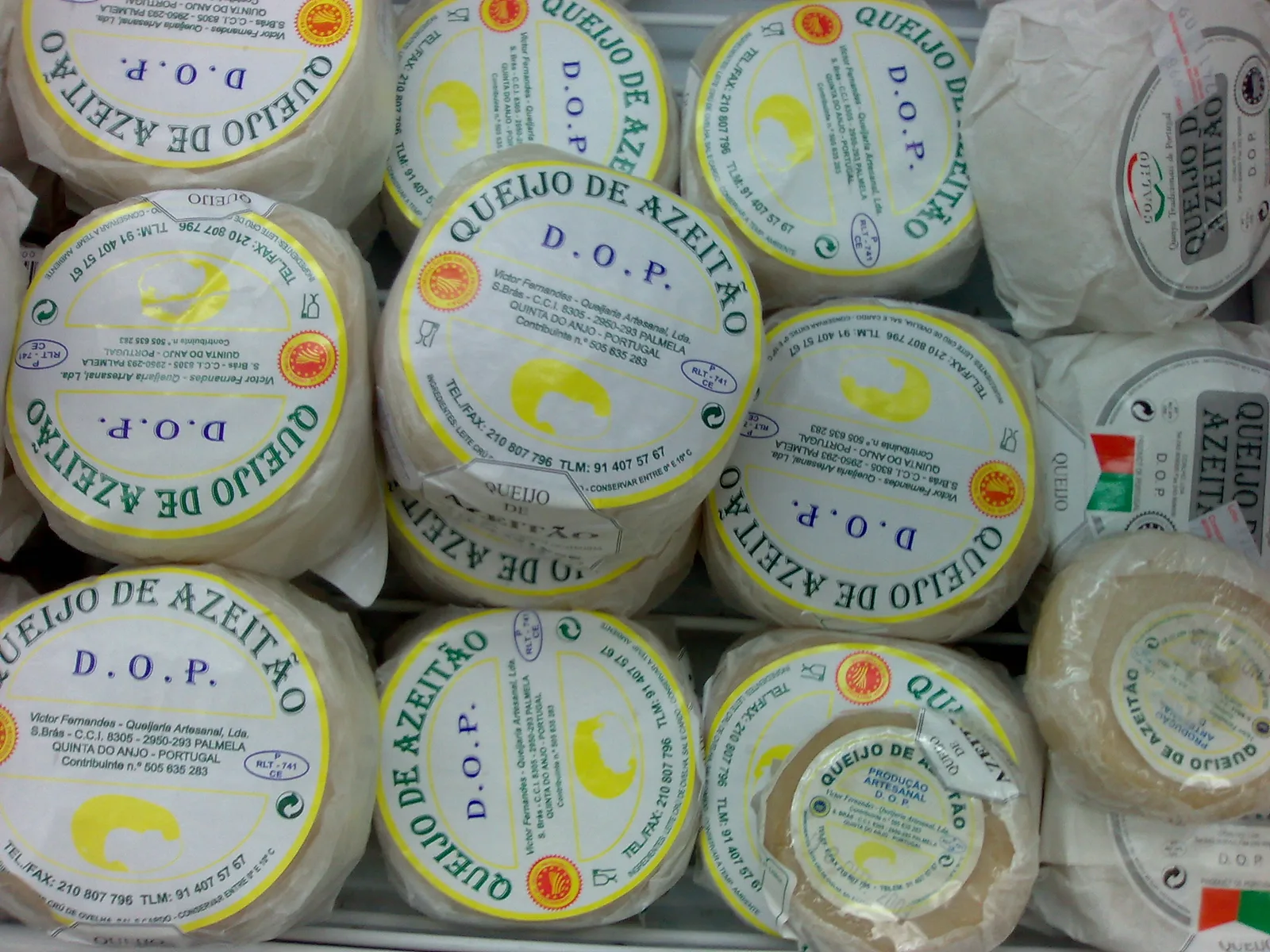
| Shape | Round, slightly flattened |
| Weight | 100 g and 250 g |
| Rind | Thin, golden-yellow |
| Texture | Semi-soft, buttery, creamy |
| Paste colour | White or slightly yellowish |
| Flavour | Tangy, slightly acidic, mildly salty |
Flavour Profile
Queijo de Azeitao has a mild yet distinctive flavour: at once tangy, slightly sour, and moderately salty. Compared with its relative Serra da Estrela, the Azeitao cheese is softer and more delicate. Its defining characteristic is a creamy, almost liquid core that, when properly ripened, takes on a flowing consistency that contrasts with the firm rind.
How to Eat Queijo de Azeitao
The traditional and most authentic way to serve it:
- Cut off the top of the rind with a sharp knife – like a lid.
- Scoop the creamy interior with a small spoon and spread it on a slice of bread.
- Spread or “pour” the cheese onto crusty bread (pao) or crackers.
The cheese is traditionally presented with a small spoon stuck right into the soft centre – a familiar ritual for every Portuguese person.
Classic pairings:
- Crusty country bread
- Moscatel de Setubal – the fortified dessert wine from the neighbouring vineyards (considered the ideal match)
- Red wines from the Palmela region
- Fresh fruit, nuts, honey
- Marmelada (quince paste)
Production Area
The Village of Azeitao
Azeitao is a small settlement located approximately 40 minutes’ drive south of Lisbon, at the foot of the Serra da Arrabida mountain range. It falls within the municipality of Setubal (as a freguesia, or civil parish).
The village is both the centre of production of its namesake cheese and the home of many of the Setubal Peninsula’s wineries – the estates of Jose Maria da Fonseca and Bacalhoa are both located here. Azeitao is also known for its workshops producing decorative ceramic tiles (azulejos).
The DOP Zone
Queijo de Azeitao DOP may be produced exclusively in three municipalities:
- Setubal
- Palmela
- Sesimbra
All three are situated on the Setubal Peninsula, in the zone of influence of the Serra da Arrabida, whose ecosystem determines the character of the pastures and, consequently, the flavour of the milk.
Serra da Arrabida
The Serra da Arrabida mountain range is a natural park of limestone cliffs, Mediterranean forests, and rich biodiversity. The pastures at the foot of the range, where the sheep graze, are covered with typical Mediterranean vegetation – maquis – featuring aromatic herbs, shrubs, and wildflowers. It is this flora that shapes the unique flavour profile of the sheep’s milk and, in turn, of the cheese.
Cultural Significance
Queijo de Azeitao is one of the most esteemed artisanal cheeses in Portugal. Together with Moscatel de Setubal, it forms a gastronomic pairing that has become a symbol of the Setubal Peninsula: a creamy sheep’s-milk cheese accompanied by a glass of sweet fortified wine is the classic way to begin or end a meal in this region.
The production of Queijo de Azeitao remains predominantly artisanal. Unlike industrial cheesemaking, traditional hand methods are preserved here: the milk is filtered by hand, the coagulant is prepared from wild-gathered flowers, the curd is shaped manually. This makes every batch unique – flavour and texture vary according to the season, the weather, the condition of the pastures, and the skill of the cheesemaker.
Where to Try and Buy
In Azeitao
-
Feira de Azeitao (Azeitao Market) – a monthly market held on the first Sunday of each month from 9:00 to 17:00 on the grounds of the Recinto do Mercado Mensal (Rua do Mercado, Azeitao). The tradition dates to the eighteenth century. Hundreds of local vendors offer fruit, nuts, cheeses, honey, plants, and handicrafts. Queijo de Azeitao can be purchased directly from the producers.
-
Victor Fernandes Queijaria – an artisanal cheese dairy producing Queijo de Azeitao DOP since 1988. One of the most renowned and consistent producers.
-
Queijos Santiago – another recognised producer, with products featured on TasteAtlas.
In Setubal and Surroundings
- Restaurants in Setubal, Palmela, and Sesimbra routinely include Queijo de Azeitao on their menus as a starter.
- Mercado do Livramento (Livramento Market) in Setubal – one of Portugal’s finest markets, where local cheeses can be found.
Interesting Facts
- Queijo de Azeitao is the “younger cousin” of Serra da Estrela: both are made using the same basic technique (raw sheep’s milk plus cardoon), but the Azeitao cheese is notably smaller (100–250 g versus 1–1.7 kg) and milder in flavour.
- The use of cardoon flowers (Cynara cardunculus) as a coagulant is a practice with roots in the pre-Christian era of the Iberian Peninsula. Portugal is one of the few countries to have preserved this tradition on a commercial scale.
- The cheese is entirely vegetarian – no animal rennet is used in its production. It should be noted, however, that the milk is raw and unpasteurised, which may be relevant for individuals with certain medical restrictions.
- Summer and winter cheeses differ markedly: the summer cheese (ripened for 20 days) is softer and more delicate, while the winter cheese (40 days) is more intense and pungent.
- The rind, once the creamy interior has been scooped out, is not discarded – it can be filled with various stuffings (meat, vegetables) and baked. This is a popular reinterpretation in modern Portuguese cuisine.
Image sources
See also
- Moscatel de Setubal – the fortified wine that is this cheese’s ideal gastronomic partner
- Choco Frito – another iconic dish of the Setubal region
- Arrabida Natural Park – the territory where the sheep graze
If this article was useful — help us write the next one.
☕ Support on Ko-fi