Seafood Cuisine of Setubal
The seafood cuisine of Setubal is the culinary expression of a city that lives by the sea. Over the centuries, the fishing culture of the Sado estuary and the Atlantic coast has shaped a gastronomic tradition in which fish and shellfish are not merely ingredients but the foundation of everyday meals, festive tables, and the city’s very identity.
History
From Fishermen’s Fare to Gastronomy
The seafood cuisine of Setubal was born not in restaurants but in the boats and taverns of the fishing quarters. Historically, fish and shellfish dishes were the food of the poor – fishermen cooked what they could not sell: less valuable species, damaged specimens, undersized catch. In this way, dishes that would later become culinary symbols of the region first came into being.
Key factors in its formation:
- The Sado estuary – a rich ecosystem where fresh and salt water mingle, creating an ideal habitat for cuttlefish, oysters, clams, and dozens of fish species
- The Atlantic coastline – access to ocean fish: sardines, mackerel, sole, and sea bream
- The canning industry – a century of working with fish fostered a deep culture of seafood preparation
- The poverty of fishing communities – the need to make use of the entire catch, including the less “noble” species, bred ingenuity
The Link to Roman Tradition
Seafood processing in these parts began in antiquity. At Cetobriga, on the opposite bank of the Sado, factories operated to produce garum – a fermented fish sauce. The Roman tradition of salting and fermenting fish, though interrupted over time, laid the groundwork for a culinary culture that would later re-emerge in medieval Setubal.
Description
Caldeirada a Setubalense (Setubal-Style Fish Stew)
Caldeirada is a fish stew found all along the Portuguese coast, but the Setubal version possesses distinctive features that set it apart.
Origin: The name derives from caldeira (“cauldron”), the pot in which fishermen cooked their stew from the day’s catch, either aboard the boat or on the shore. Fish that were not fit for sale went into the pot – and so a dish of the poor became a regional classic.
Key ingredients of caldeirada a setubalense:
- Fish: traditionally several species are used at once – pata roxa (small shark), xarroco (toadfish), raia (skate), safio (conger eel). It is precisely the combination of “humble” species that defines the character of the dish
- Potatoes – sliced into rounds and layered with the fish
- Onion, peppers, tomatoes – the base of the tomato-vegetable sauce
- Herbs: coriander (coentros), parsley, bay leaf
- Garlic and olive oil
The secrets of the Setubal version:
- The addition of fish liver (figado) – the principal distinguishing element, lending the broth a characteristic depth and richness
- The addition of short pasta (massa) toward the end of cooking – a feature that sets the Setubal caldeirada apart from versions elsewhere
- The dish is not stirred during cooking – the ingredients are arranged in layers and left to simmer gently
Feijoada de Choco (Cuttlefish Bean Stew)
A Setubal variation on the classic feijoada, in which cuttlefish replaces meat.
- White beans are stewed in a thick tomato broth
- Cuttlefish is cut into large chunks and added to the stew
- Seasoned with garlic, onion, coriander, and bay leaf
- The result is a hearty, aromatic dish that unites the traditions of the Alentejo (feijoada) with those of coastal Setubal (cuttlefish)
Choco Frito (Fried Cuttlefish)
The signature dish of Setubal, described in detail in a separate article – Choco Frito. Strips of cuttlefish marinated in wine and lemon, coated in cornmeal, and deep-fried.
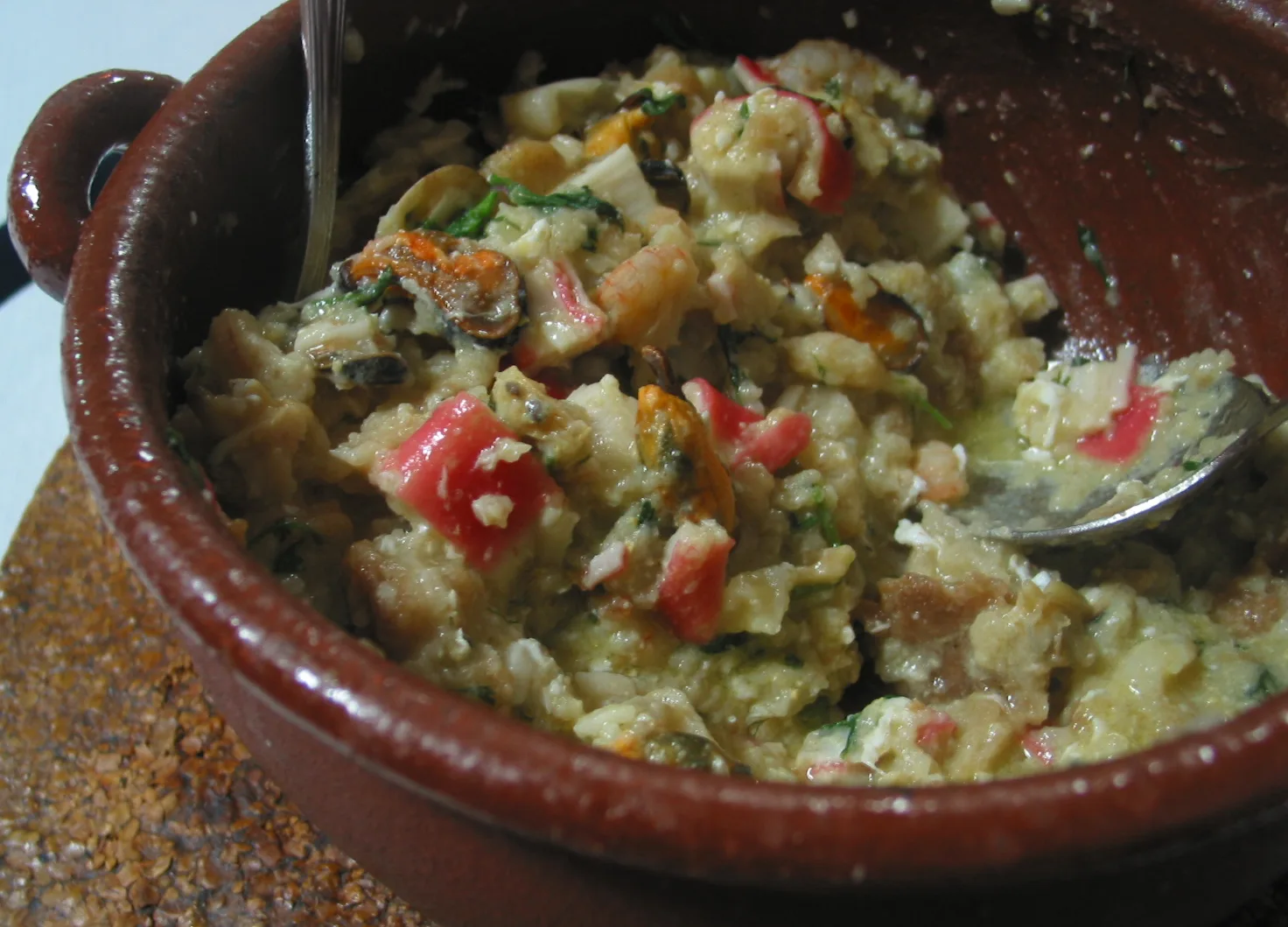
Acorda de Marisco (Bread and Shellfish Soup)
A bread-based soup with seafood – a dish that originated in the cuisine of the Alentejo and was adapted on the coast.
Composition:
- Stale bread – the base of the dish, soaked in broth
- Shellfish: prawns, mussels, clams, sometimes crab
- Garlic – in generous quantity
- Coriander – the signature herb
- Olive oil
- Egg yolk – added for richness and smoothness
Acorda is a quintessential example of “poverty cuisine”: from stale bread and whatever shellfish was to hand, a substantial, warming dish is fashioned.
Sardinhas Assadas (Charcoal-Grilled Sardines)
Grilled sardines – the ritual summer dish described in detail in the article on sardines. In Setubal, fresh sardines are grilled over charcoal with coarse salt and served on bread with roasted peppers.
Other Seafood Dishes
- Choco Grelhado – grilled cuttlefish, a lighter alternative to choco frito
- Choco Frigideira – cuttlefish braised in a pan with onion, garlic, and white wine
- Carapau Grelhado – grilled horse mackerel, a staple of the everyday diet
- Peixe Grelhado – grilled fish; in Setubal, sea bream (dourada), sole (linguado), and sea bass (robalo) are commonly prepared this way
- Ameijoas a Bulhao Pato – clams in a garlic-and-coriander sauce with white wine; the dish is named after a Lisbon poet
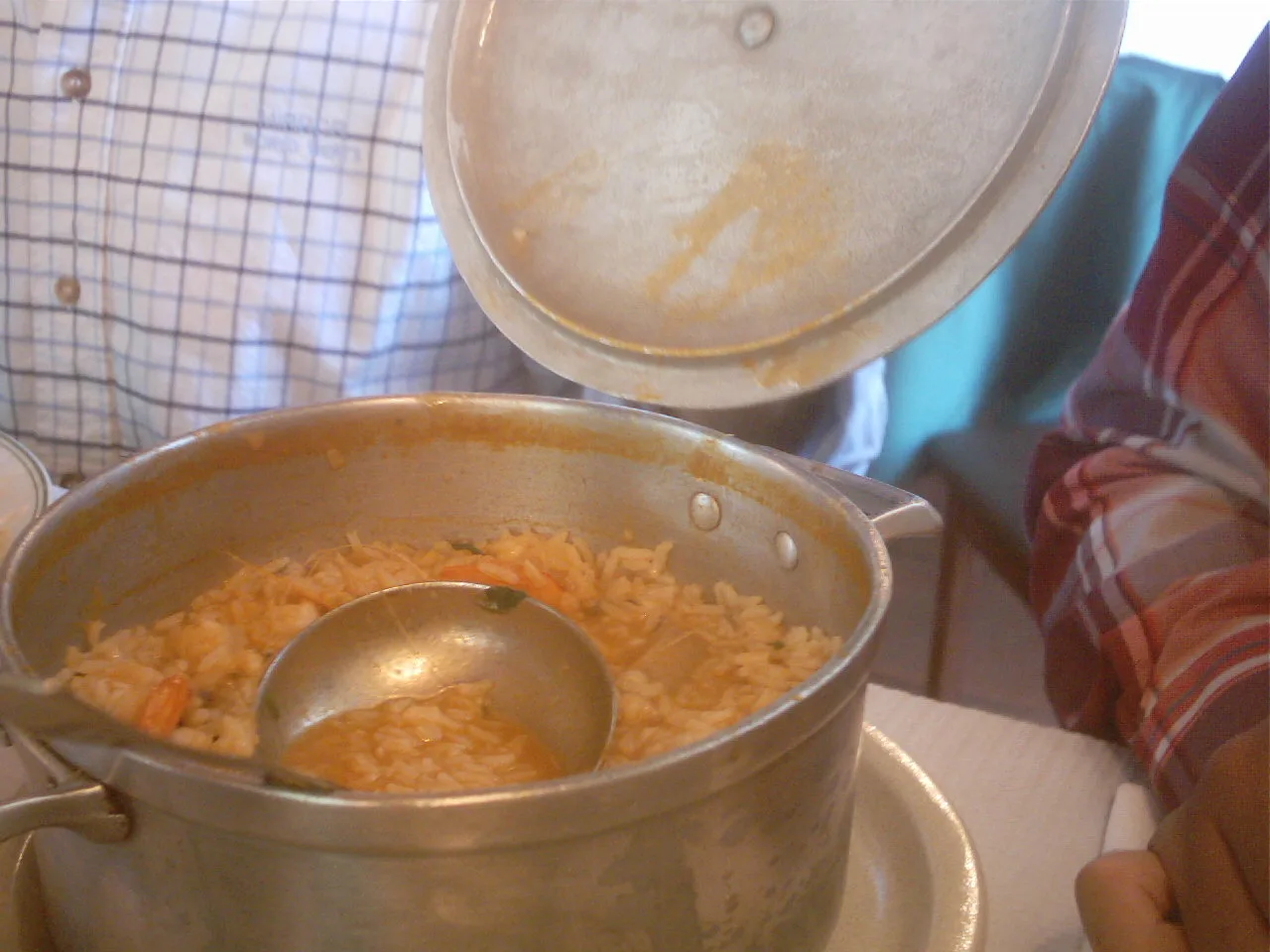
- Arroz de Marisco – rice with seafood, moist and aromatic; the Portuguese counterpart of paella, though considerably more liquid
- Sado estuary oysters – the Sado estuary is one of the most important oyster-farming areas in Portugal
The Oyster Tradition of the Sado
The Sado estuary is one of the principal centres of oyster production in Portugal. Oysters are cultivated on both banks of the river, taking advantage of the natural blending of fresh and salt water. Sado oysters are distinguished by their minerality and a subtle briny flavour, shaped by the unique water composition of the estuary.
Cultural Significance
Food as Identity
In Setubal there is a saying: the city lives “da lota a lata” – “from the fish auction to the tin.” This formula neatly captures the economic chain that defined the city’s life for a century: fish was caught, sold at auction (lota), processed, and canned (lata – tin can). The cuisine of Setubal is the culinary expression of that chain.
The Democratic Character of Seafood Cuisine
A defining trait of Setubal’s seafood cuisine is its democratic spirit. Most of the iconic dishes were born as the food of poor fishermen: caldeirada from unsellable fish, choco frito from cuttlefish of no commercial value, acorda from stale bread. The transformation of “poor man’s food” into gastronomic symbols is a classic narrative repeated in culinary cultures around the world.
The Bond with the Fishing Quarters
In Setubal, seafood cuisine is not a restaurant genre but an everyday practice. The city’s fishing culture shapes its culinary culture: fish is purchased every morning at the Mercado do Livramento, prepared according to family recipes handed down through the generations.
Where to Try It
Mercado do Livramento
Mercado do Livramento is the starting point for any gastronomic exploration of Setubal. Originally opened in 1876, the market was rebuilt, and the current Art Deco building dates from 1930. Its interior is adorned with approximately 5,700 azulejo tile panels by Pedro Pinto (1929). The market offers the freshest fish and seafood straight from the boats every morning. In 2015, USA Today named it one of the best fish markets in the world.
Restaurants and Venues
- Restaurants on Avenida Luisa Todi – the waterfront promenade lined with numerous fish restaurants
- Casa Santiago – a historic establishment specialising in choco frito
- Restaurants in the port area – traditional fishermen’s taverns
- Portinho da Arrabida – fish restaurants at the foot of the Serra da Arrabida, in a cove overlooking the ocean
- Carrasqueira – a stilt village in the Sado estuary, where the freshest oysters and fish are served
Gastronomic Events
- Semana do Choco (April) – Cuttlefish Week, a gastronomic festival with the participation of approximately 50 restaurants
- Feast of Santo Antonio (12–13 June) – charcoal-grilled sardines
- Feira de Santiago (July–August) – gastronomic pavilions featuring seafood dishes
Interesting Facts
-
In Setubal, cuttlefish is called choco rather than sibia, as it is in most of Portugal. This dialectal distinction has become part of the local identity: a “setubalense” is, by definition, “someone who eats choco.”
-
Caldeirada a setubalense is one of the few Portuguese fish dishes to which pasta is added. This tradition is thought to be linked to the influence of Italian fishermen who worked in Setubal in the nineteenth century.
-
The Cais Palafitico da Carrasqueira – a wooden stilt pier in the Sado estuary built by fishermen in the 1950s and 1960s – is one of the last structures of its kind in Europe. Fishing boats still moor there and the fresh catch is sold on the spot.
-
Oysters from the Sado estuary were historically considered a delicacy of the aristocracy, in contrast to the “plebeian” sardines and cuttlefish. Today that distinction is fading: both oysters and choco frito appear on the menus of the same restaurants.
-
In the harbour taverns of nineteenth-century Setubal, there was a custom whereby a fisherman returning with a good catch would treat the entire tavern to a caldeirada made from the finest fish. This was an expression of social solidarity and, at the same time, a demonstration of professional skill.
Image sources
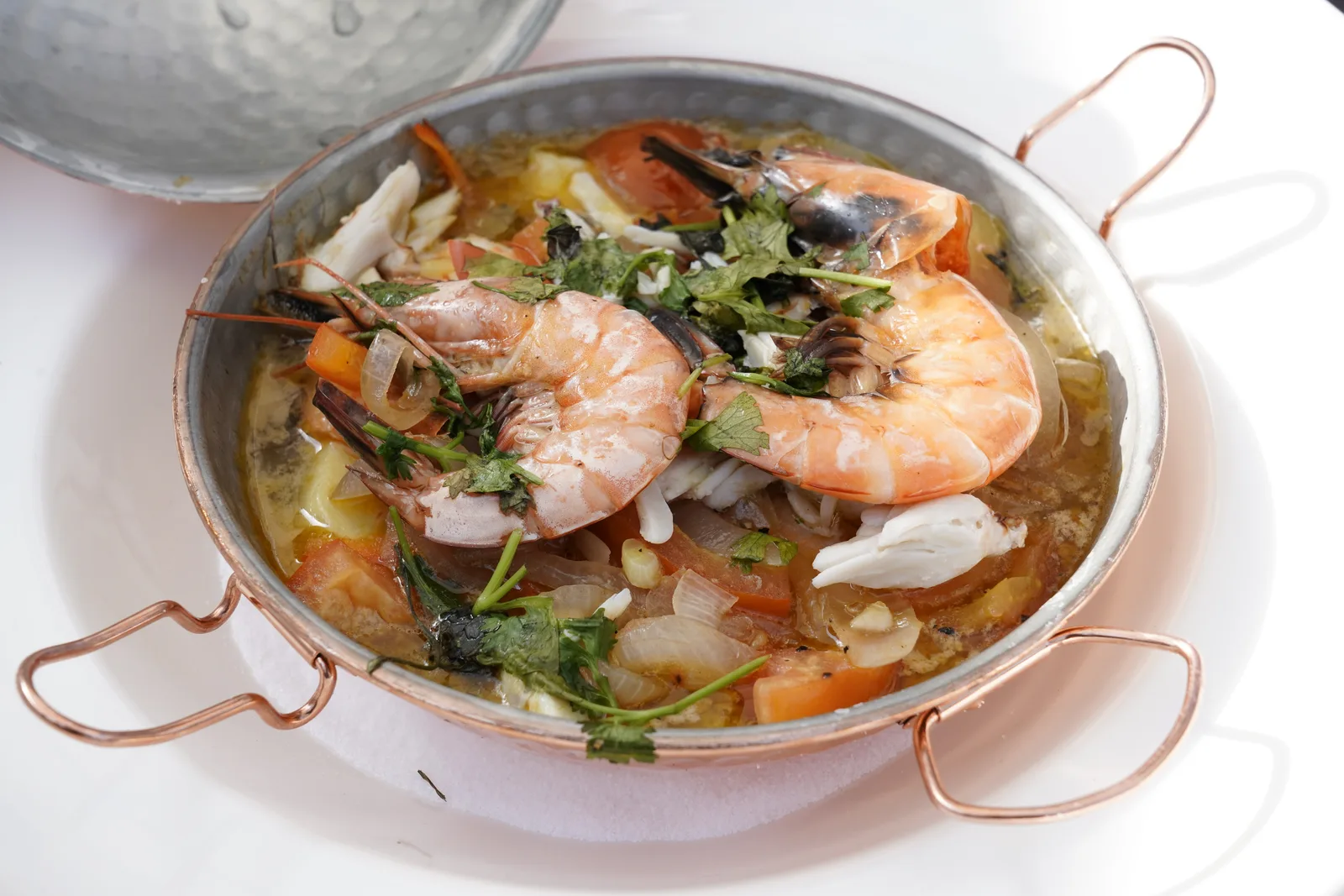
- cataplana-seafood.webp — Cataplana with seafood. Author: Wikimedia Commons. License: CC BY-SA 4.0. Source
- arroz-de-marisco.webp — Arroz de marisco — rice with seafood. Author: Wikimedia Commons. License: CC BY-SA 4.0. Source
- acorda-de-marisco.webp — Acorda de marisco — bread soup with seafood. Author: Wikimedia Commons. License: CC BY-SA 4.0. Source
See also
- Choco Frito
- Sardines: Cult and Cuisine
- Regional Wines of Setubal
- Fishing Culture of Setubal
- Mercado do Livramento
- The Sado Estuary
The light is on for free. But someone has to clean the lantern.
☕ Support on Ko-fi