Torta de Azeitao — The Rolled Cake of Azeitao
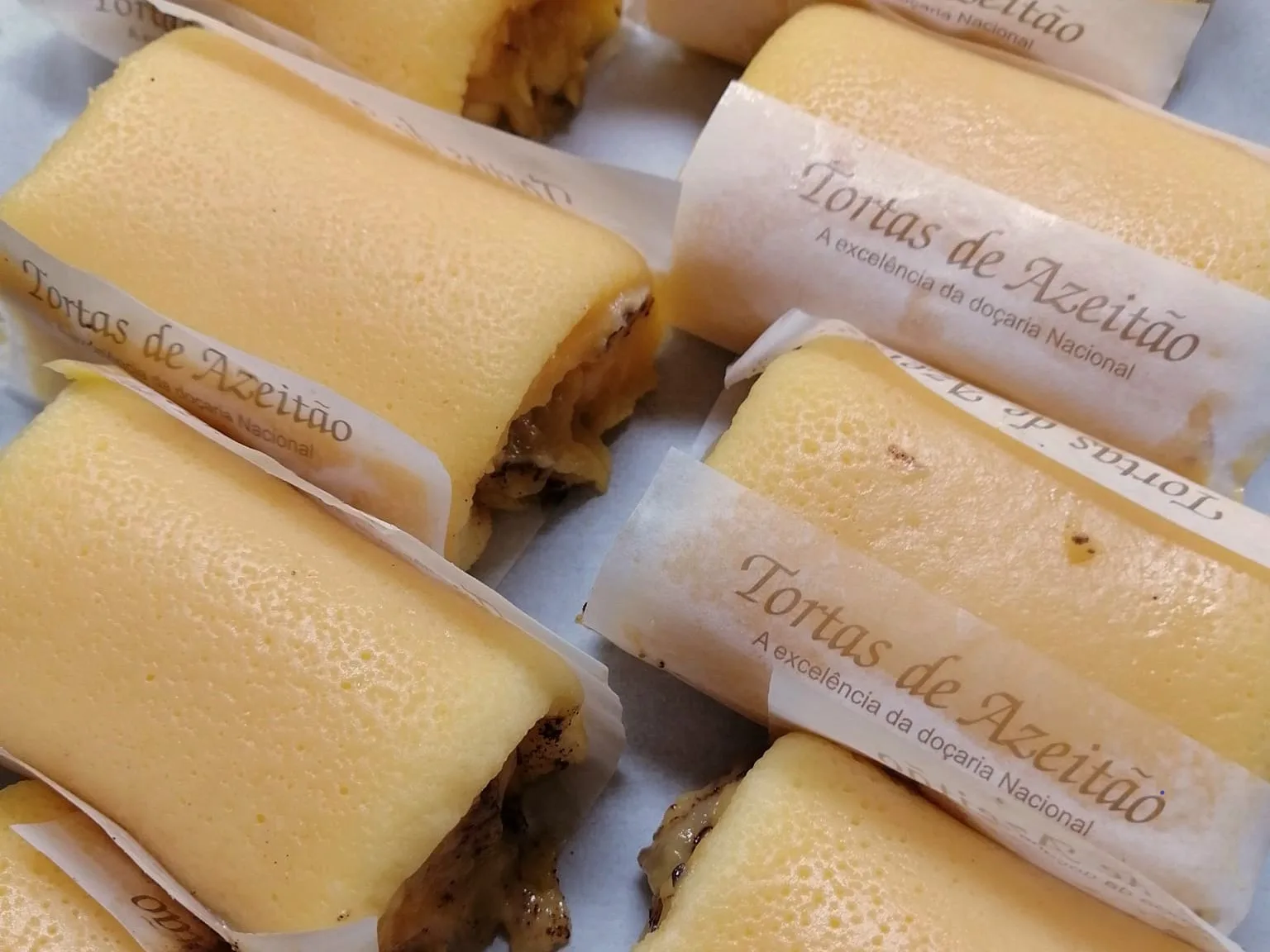
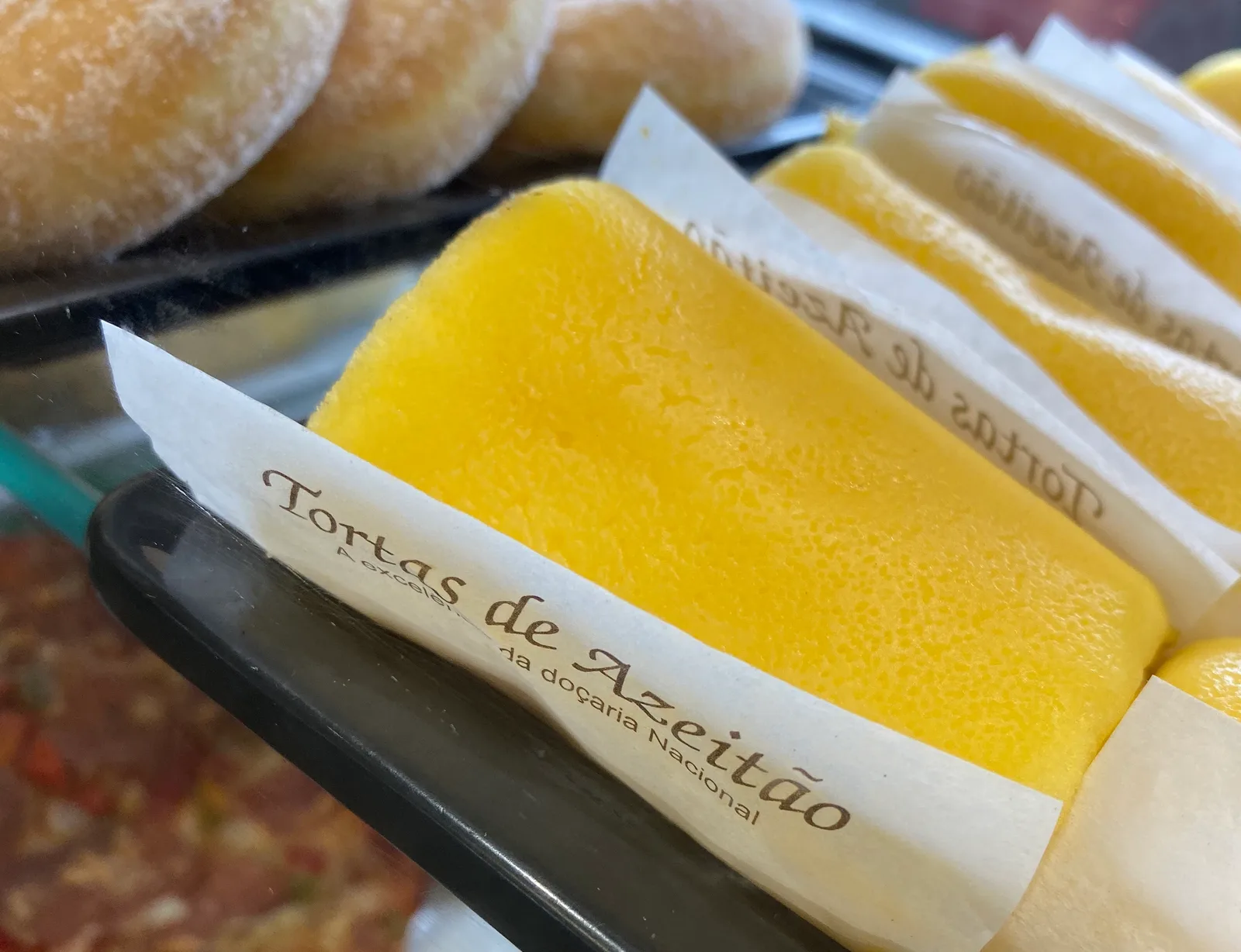
Torta de Azeitao (Portuguese: Torta de Azeitao) is a miniature rolled cake made from thin sponge pastry filled with doce de ovos (egg cream), one of the most recognisable desserts in Portugal. Having first appeared in the early twentieth century at a pastry shop in a small village on the slopes of the Serra da Arrabida, this dessert became a culinary symbol of Azeitao – on a par with the cheese and the Moscatel.
History
Origins
The story of the Torta de Azeitao begins not in Azeitao itself but in the town of Fronteira in the Alentejo, where a recipe for an egg-based rolled cake existed in the late nineteenth century. The recipe reached Azeitao through Manuel Rodrigues, known as “O Cego” (“The Blind Man”). After obtaining the recipe, Rodrigues passed it on to his wife Maria Albina, a skilled confectioner who adapted and perfected it.
In 1901, Rodrigues founded a pastry shop in Azeitao bearing his nickname – Pastelaria O Cego. It was here that the torta acquired its definitive form: from a large rolled cake that was sliced into portions, it evolved into individual miniature rolls – the small golden cylinders, 10–16 cm in length, that are known today.
Conventual Roots
Torta de Azeitao belongs to the vast family of Portuguese conventual sweets (docaria conventual). During the Middle Ages and the early modern period, Portugal’s monasteries and convents were centres of confectionery art. Monks and nuns used egg whites for starching vestments and for fining wine, leaving enormous quantities of yolks that were channelled into the creation of sweets. This gave rise to an entire family of egg-and-sugar desserts – doce de ovos, pasteis de nata, ovos moles, and many others.
Torta de Azeitao is a direct heir to this tradition: its filling, doce de ovos (egg cream), is a classic conventual product.
A Dynasty of Confectioners
After the founder’s death, the Pastelaria O Cego changed hands. In 1975, it was acquired by Augusto Pinto. His son, Jose Augusto Pinto, who began working in the bakery at the age of fifteen, continues to reproduce Maria Albina’s original recipe to this day. The pastry shop, now known as Pastelaria Regional (also called “Bolos do Cego”), remains the custodian of the original recipe.
Description
Ingredients
Torta de Azeitao consists of two components:
Pastry:
- Eggs
- Sugar
- Flour (wheat)
- Lemon zest
- Cinnamon
Filling (doce de ovos):
- Egg yolks
- Sugar syrup
Preparation
- Pastry. A liquid sponge batter is prepared from eggs, sugar, and flour, flavoured with lemon zest and cinnamon. The batter is spread in a thin layer over moulds measuring 10–16 cm.
- Baking. The pastry is baked to a golden colour while remaining thin and pliable – a quality that is essential for the subsequent rolling.
- Filling. The doce de ovos is prepared – a dense egg cream made from yolks and sugar syrup, cooked down to a paste-like consistency.
- Rolling. The sponge sheet is covered with a layer of doce de ovos and carefully rolled into a tight cylinder.
- Glazing. The finished roll is coated with a thin sugar glaze that gives it a characteristic glossy sheen.
Appearance and Flavour
The finished torta is a small golden-yellow roll with a glistening surface. The pastry is thin, almost translucent, with a delicate aroma of cinnamon and lemon. The filling is a deep yellow, dense, with a pronounced egg flavour and refined sweetness. The texture is at once soft and substantial.
Torta de Azeitao is traditionally served at room temperature, often accompanied by a glass of Moscatel de Setubal – the fortified dessert wine that perfectly complements the sweetness of the egg cream.
Cultural Significance
The Gastronomic Triad of Azeitao
Torta de Azeitao is part of the celebrated gastronomic triad of Azeitao, which comprises:
- Torta de Azeitao – the sweet
- Queijo de Azeitao – the sheep’s milk cheese made with thistle rennet
- Moscatel de Setubal – the fortified wine
This triad forms the distinctive culinary identity of Azeitao – a small cluster of villages at the foot of the Serra da Arrabida that has become one of the foremost gastronomic destinations in the region.
Official Recognition
Torta de Azeitao is listed in the register of Produtos Tradicionais Portugueses (Traditional Portuguese Products) maintained by the Directorate-General for Agriculture and Rural Development (DGADR). This official recognition confirms its status as an item of culinary heritage.
Economic Significance
The production of tortas de Azeitao has become the foundation of a small but sustainable local industry. In addition to the historic Pastelaria Regional, several other pastry shops in Azeitao and its surroundings produce tortas, each with its own variation on the original recipe. The Sunday market in Azeitao (Feira de Azeitao) is one of the principal points of sale.
Where to Try It
Historic Pastry Shops
-
Pastelaria Regional / Bolos do Cego (Azeitao) – the successor to the original Pastelaria O Cego (1901). The custodian of Maria Albina’s original recipe. In addition to the tortas, it produces other traditional sweets created by the same confectioner.
-
Other pastry shops in Azeitao – several pastelarias in the village offer their own versions of the torta, varying in the consistency of the filling and the degree of sweetness.
Recommendations
- The Sunday market in Azeitao (Feira de Azeitao) – tortas are sold alongside cheese and local wine; the ideal place to experience the entire gastronomic triad
- Torta de Azeitao can also be found in pastry shops in Setubal and Lisbon, but for the most authentic flavour, Azeitao itself is the place to go
- Pairing with Moscatel is the classic way to serve it
Interesting Facts
- The Portuguese word torta does not mean “cake” in the layered sense but rather a rolled pastry (from the verb torcer, “to twist”). Visitors unfamiliar with the term often expect a large confection and are surprised by the miniature size.
-
The tortas were originally produced as a single large roll that was sliced into portions. The transition to individual miniature rolls occurred in the twentieth century – probably for ease of sale at markets.
-
The recipe for Torta de Azeitao came from the Alentejo (Fronteira), yet it was Azeitao that gave it its name and international renown – a typical case of the place of adaptation eclipsing the place of origin.
-
Doce de ovos – the filling of the torta – is one of the most widespread confectionery products in Portugal. It is used in dozens of desserts across the country, from pasteis de nata to ovos moles from Aveiro.
-
The founder of the pastry shop earned the nickname “The Blind Man” (O Cego) owing to his loss of sight, yet it is precisely this blindness that, by an irony of fate, is immortalised in the name of the establishment that became a culinary landmark.
Image sources
See also
All our knowledge is free. Creating it is not.
☕ Support on Ko-fi