The Canning Industry
For more than a century — from the mid-19th to the late 20th — the canning industry defined life in Setubal. Around 400 factories, tens of thousands of workers, factory sirens that set the rhythm of the city — and the overwhelming majority of those workers were women. The rise and fall of sardine canning is a story not only of economics but also of labour rights, gender inequality, and urban identity.
Origins
The First Factories
[DISPUTED] The exact date when canning production began in Setubal is a matter of debate:
- 1854 — this date is cited by the academic study “A Industria conserveira e a evolucao urbana de Setubal, 1854–1914” as the beginning of documented canning production in the city
- 1880 — according to other sources, the first fully fledged cannery was established to compensate for a fish shortage along the Brittany coast of France
The discrepancy likely stems from the distinction between artisanal salting and industrial canning in tin containers. The tradition of fish curing in Setubal stretches back two millennia to Roman Cetobriga and its 182 salting vats. Industrial canning — employing tin plate, soldering irons, and autoclaves — did indeed begin in the second half of the 19th century.
For context: the oldest Portuguese canning company, Ramirez, was founded as early as 1853, though not in Setubal but in Vila Nova de Gaia in northern Portugal.
Why Setubal?
The city proved an ideal setting for canning production thanks to several converging factors:
- Fish — abundant sardine stocks in the waters of the Sado estuary and the Atlantic coast
- Salt — centuries-old salt works on the banks of the Sado
- A port — well-developed harbour infrastructure for exporting finished goods
- Labour — a population with deep ties to fishing and fish processing
- Historical tradition — a thousand years of fish processing, from garum to salted fish
The Golden Age
The Boom of the Early 20th Century
The growth of the canning industry in Setubal was swift:
- 1912 — Portugal became the world’s leading producer and exporter of canned fish
- 1920s — a sardine production boom, with new factories springing up across the city
- 1925 — Portugal counted approximately 400 canneries
- 1930 — Portugal overtook France to become the world’s largest producer of canned sardines
The World Wars as a Growth Engine
The industry peaked during the First and Second World Wars. Armies needed compact, calorific, long-lasting provisions — and sardines in oil met every requirement.
During the war years, canning became the second-largest sector of the Portuguese national economy. The country’s neutral status in both conflicts allowed it to supply both sides.
Setubal — The Sardine Capital
Over the course of little more than a century, approximately 400 fish-processing plants operated in Setubal — an unprecedented concentration for a city of its size. The factories lined the waterfront, creating an industrial landscape that defined the city’s appearance.
Canning was the single largest source of employment for the local population. The entire economic and social life of Setubal revolved around sardines.
Labour and People
The Gender Divide
The canning industry of Setubal was marked by a rigid division of labour along gender lines:
Men:
- Fishing — going to sea to catch sardines
- Welding and soldering tin cans — a technically demanding operation
Women:
- Made up the overwhelming majority of factory workers
- Hand-packing fish into tins — the core operation, requiring dexterity and speed
- Cleaning and preparing the fish
- Packaging the finished product
Children also worked in the factories, performing auxiliary tasks.
The Working Day: “De Sol a Sol”
For approximately 70 years, the working day at the sardine factories was governed by the formula “De Sol a Sol” — “from sunrise to sunset.” The length of the working day depended on the season and could reach 14–16 hours.
Breaks were minimal: two rest periods totalling just 2 hours per day.
The Siren System
Each factory had its own personalised siren with a distinctive sound. When fishing boats delivered a catch, the factory sounded its siren, and the women workers, recognising “theirs,” rushed to their posts — whether it was 3, 4, or 5 o’clock in the morning.
The women lived in a state of constant readiness. Their schedule was dictated not by the clock but by the fish: when the sardines arrived, it was time for the factory, regardless of the hour. This system turned the female workers into a fully factory-dependent element — a kind of living assembly line, activated by a sound signal.
Working Conditions
Work in the canneries was gruelling:
- Standing work throughout the entire shift
- The smell — a constant odour of fish, oil, and sweat
- Cold in winter and heat in summer — unheated and unventilated workshops
- Low pay — especially for women and children
- No social protections — no sick leave, no pensions, no holidays
As the number of factories grew, conditions did not improve — if anything, they worsened: competition between enterprises drove down costs, and the savings came at the workers’ expense.
The Labour Movement
Trade Unions
As the industry developed, workers began to organise into trade unions. Setubal, with its enormous concentration of industrial workers, became one of the centres of the labour movement in Portugal.
The unions fought for:
- Shorter working hours
- Improved factory conditions
- Restrictions on child labour
- Higher wages
- The right to rest and sick leave
Strikes
The social unrest of the early 20th century repeatedly erupted in strikes:
- 1934 — strikes and demonstrations in Setubal as part of the Portuguese general strike. The strike was brutally suppressed by the Salazar regime.
- Recurrent clashes between workers and the National Republican Guard (GNR)
- Documented cases of young workers killed during the dispersal of protests
The socio-political instability of the early 20th century, manifested in frequent strikes, paradoxically undermined Setubal’s standing as an industrial centre: some entrepreneurs preferred to locate their operations in less “turbulent” cities.
The Link to the Carnation Revolution
The labour traditions of Setubal — the fight for rights, trade union activity, the experience of confronting an authoritarian regime — prepared the ground for the city’s active participation in the Carnation Revolution of 25 April 1974. Setubal’s working class, tempered by decades of strikes and repression, was among the most organised and mobilised in the country.
Decline
Timeline of the Crisis
- 1938 — approximately 152 canneries in Portugal (consolidation begins)
- 1970s — the onset of a serious crisis in the sector
- 1983 — 152 factories nationwide, producing approximately 34,000 tonnes per year
- Late 1980s–1990s — catastrophic decline, mass closures
- Late 1990s — the number of factories fell from 152 to just 20 across all of Portugal
Causes of Decline
Several factors simultaneously undermined the industry:
-
Declining sardine stocks — decades of overfishing depleted populations. Atlantic sardine stocks, once thought inexhaustible, shrank to critical levels.
-
Competition — producers from Morocco, Thailand, and Peru entered the global market with lower costs.
-
Changing consumer preferences — post-war generations favoured fresh products and frozen convenience foods.
-
Outdated equipment — many factories operated with machinery dating from the early 20th century and could not compete with modernised operations.
-
Labour drain — improved living standards and expanded employment opportunities meant the younger generation had no desire to work “de Sol a Sol” in fish factories.
-
Portugal’s accession to the EU (1986) — the opening of the market intensified competitive pressure.
Consequences for Setubal
The closure of hundreds of factories was an economic and social catastrophe for the city:
- Mass unemployment
- The impoverishment of entire neighbourhoods
- Derelict industrial buildings lining the waterfront
- The loss of professional identity for whole generations
What Survives Today
The Michel Giacometti Labour Museum
The Museu do Trabalho Michel Giacometti is the principal repository of the memory of Setubal’s canning era.
- Building: a former cannery, the Perienes factory (late 19th century–1971)
- Named after: Michel Giacometti (1929–1990) — a Corsican-born ethnographer who devoted his life to documenting Portuguese folk culture
Permanent exhibition: “A Industria Conserveira — From the Auction Hall to the Can” (Da Lota a Lata) features:
- A reconstruction of the production process — from catch to packaging
- Authentic factory equipment
- Documents on the struggle for labour rights
- Materials on gender inequality in production
- Exhibits dedicated to young workers killed by the GNR (National Republican Guard) during protests
In 1998, the museum received the Council of Europe Museum Prize — the highest honour in the European museum community.
Livramento Market
The Mercado do Livramento — Setubal’s fish market, regarded as one of the finest in Portugal — carries on the city’s fishing tradition. Though the factories have closed, fish remains a part of Setubal’s identity.
The Canned Fish Revival
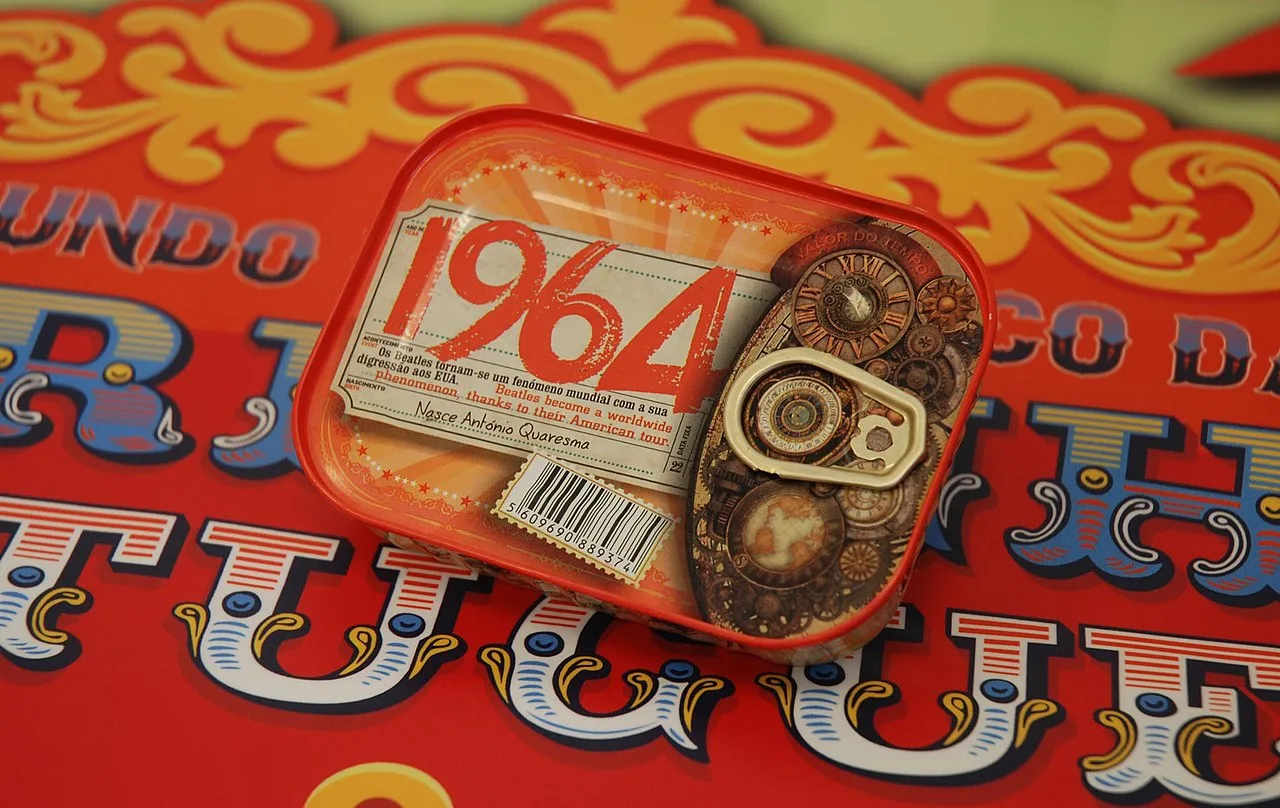
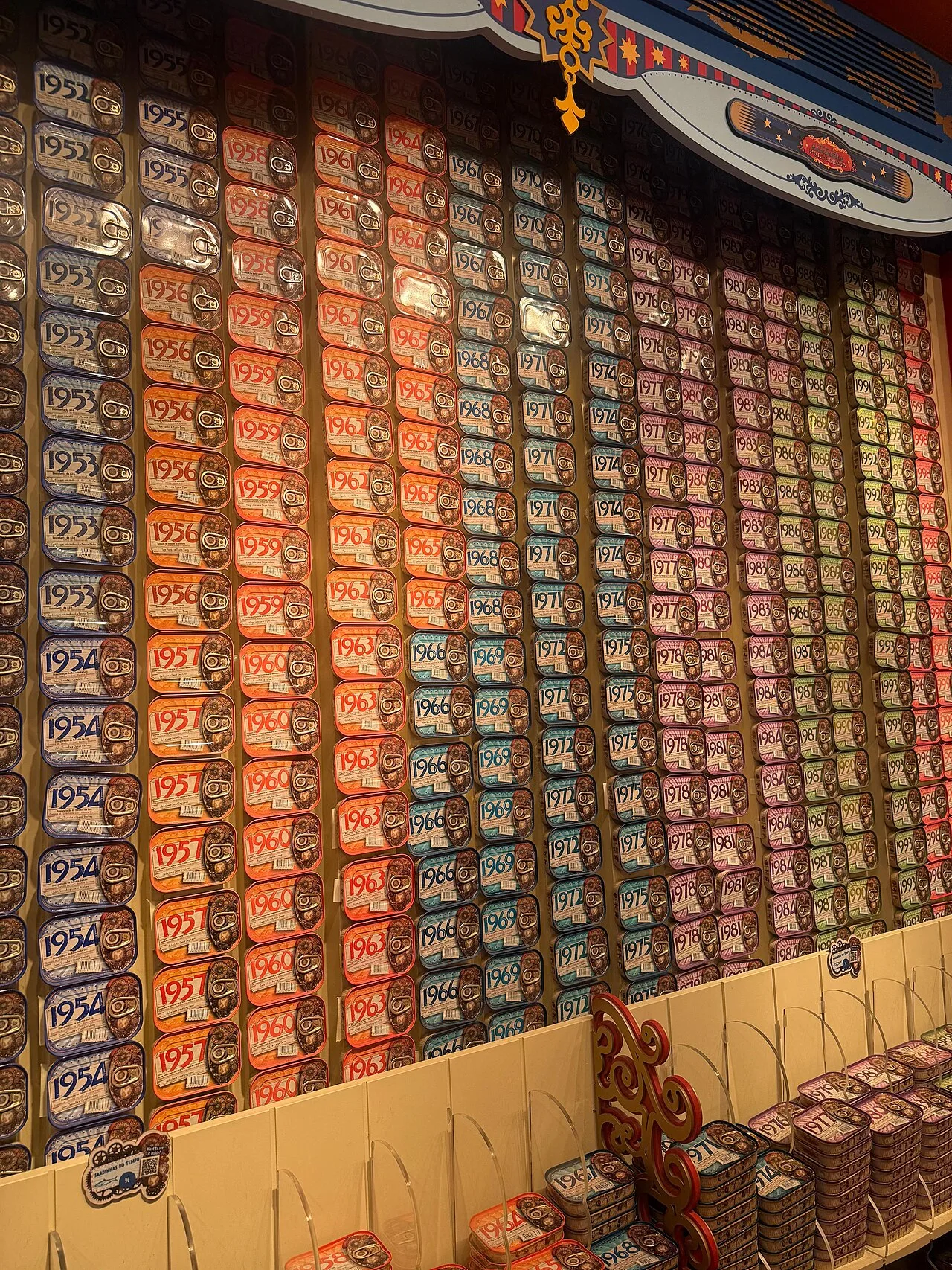
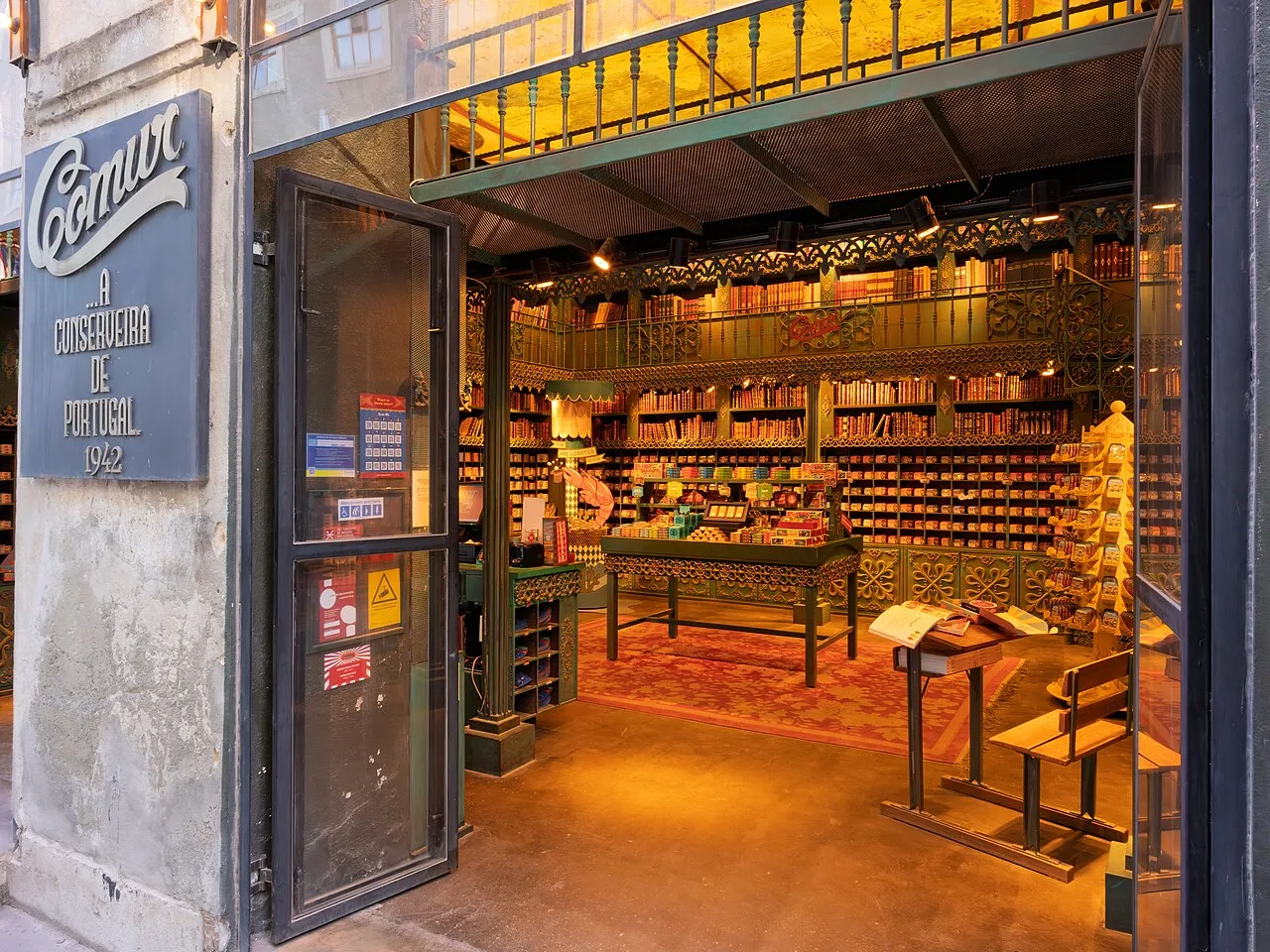
In the 21st century, Portuguese canned fish has experienced an unexpected renaissance — no longer as a mass-market staple but as a niche luxury product. Designer tins, artisanal production, tourist shops (conserveiras) in Lisbon and Porto — all represent a reimagining of a heritage whose centre was once Setubal.
Whether any active canning operations survive in Setubal itself at the time of writing has not been confirmed.
Historical Perspective
The canning industry of Setubal is one link in a chain stretching across two millennia:
- 1st–6th centuries — Roman Cetobriga: 182 vats, garum, amphorae reaching Hadrian’s Wall
- The Middle Ages — salted fish, salt trade with Northern Europe
- 15th–16th centuries — salt and fish as the foundation of exports in the Age of Discoveries
- 1854–1990s — the canning industry: 400 factories, women workers, strikes
- The 21st century — artisanal canned fish, museums, the fish market
The same river, the same fish, the same salt. The technologies change — from the salting vat to the tin can — but the essence endures: Setubal is a city that lives by what the Sado provides.
Key Dates
| Date | Event |
|---|---|
| 1854 | First documented evidence of canning production |
| 1880 | Founding of the first full-scale cannery (per other accounts) |
| 1912 | Portugal becomes the world’s leading producer of canned fish |
| 1920s | The sardine production boom |
| 1925 | ~400 canneries in Portugal |
| 1930 | Portugal overtakes France in sardine production |
| 1934 | Strikes in Setubal during the national general strike |
| 1970s | Onset of the industry crisis |
| 1990s | Catastrophic decline, mass factory closures |
| 1998 | The Labour Museum receives the Council of Europe Museum Prize |
Image sources
- canning-sardine-collection.webp — Sardine tin collection — a symbol of the canning industry. Author: Wikimedia Commons. License: CC BY-SA 4.0. Source
- canning-sardines-by-year.webp — Sardines by vintage year. Author: PortoBay Hotels & Resorts. License: CC BY 2.0. Source
- canning-comur-conservatoria.webp — Comur Conservatoria — a historic canning factory. Author: Comur. License: CC BY-SA 4.0. Source
See also
- Cetobriga — A Roman City
- Fishing Culture
- Sado Estuary
- Setubal and the Age of Discoveries
- The Earthquake of 1755
- The Carnation Revolution
- Livramento Market
- Choco Frito
All our knowledge is free. Creating it is not.
☕ Support on Ko-fi