The Earthquake of 1755
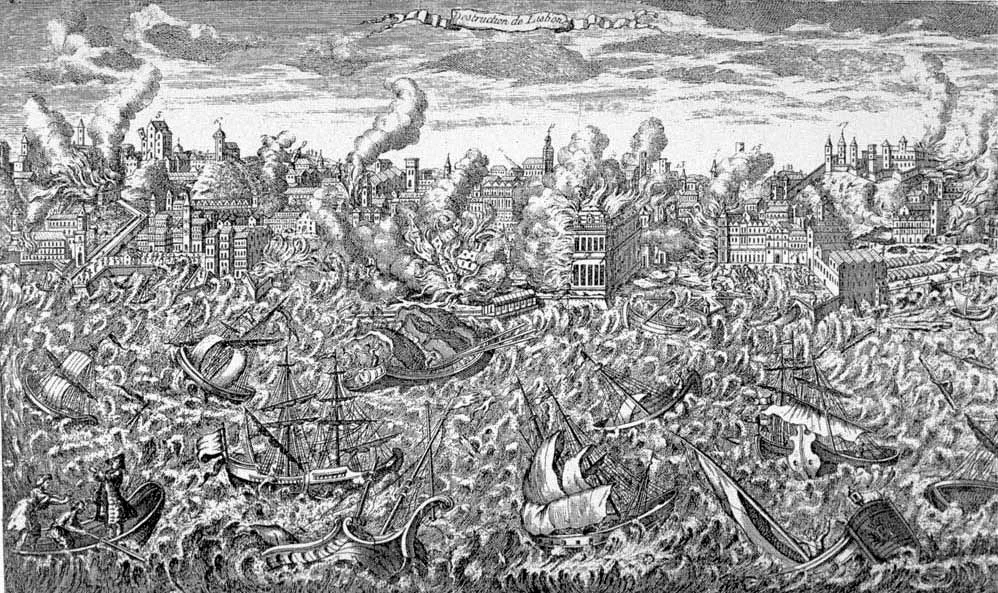
On the morning of 1 November 1755 — All Saints’ Day, with parishioners filling the churches — a catastrophic earthquake struck southwestern Portugal. Setubal, situated only 30 km south of Lisbon, suffered proportionally heavier losses than the capital: approximately 2,000 dead, or roughly 17% of the city’s population.
Scale of the Disaster
General Data
- Date: 1 November 1755, at approximately 9:40 in the morning
- Day: All Saints’ Day (Dia de Todos os Santos) — one of the most important Catholic holy days
- Magnitude: estimated at 8.5–9.0 on the Richter scale (modern assessments)
- Epicentre: the Atlantic Ocean, approximately 200 km southwest of Cape St Vincent
- Duration: several powerful shocks spanning 6–10 minutes
This earthquake remains one of the most powerful in European history and the first major natural disaster to receive detailed scientific documentation.
A Triple Blow
The catastrophe struck in three waves:
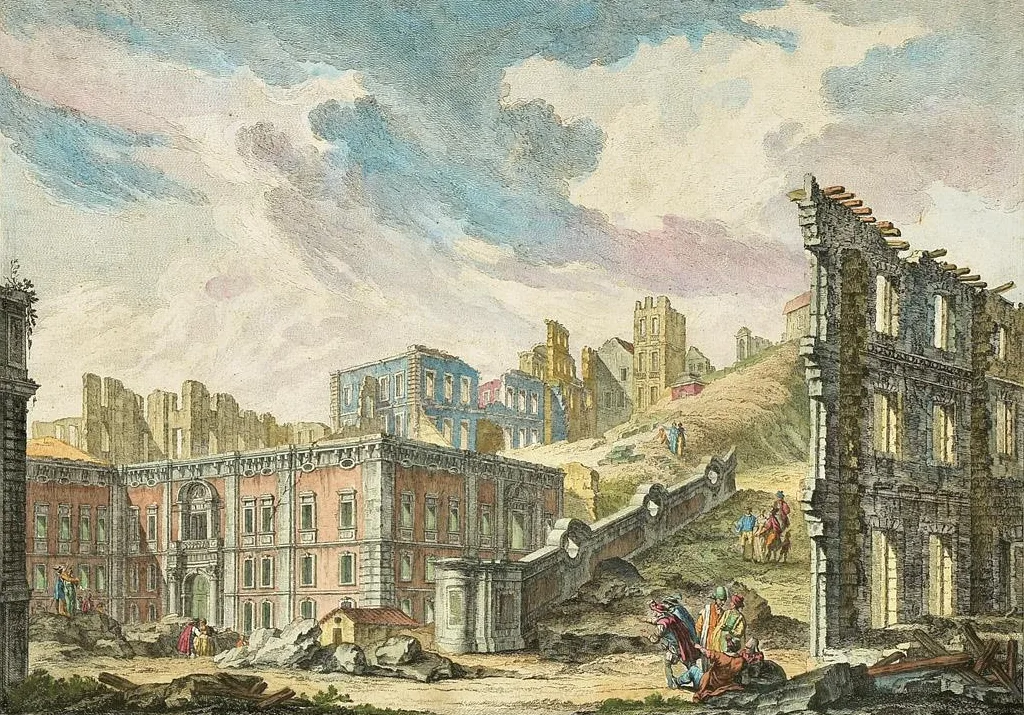
- Earthquake — devastating tremors damaged buildings and infrastructure
- Tsunami — powerful waves triggered by the submarine earthquake crashed into the coastline
- Fires — in Lisbon, candles overturned in churches and homes ignited a conflagration that raged for several days
Impact on Setubal
Casualties
- Approximately 2,000 people perished in Setubal
- This represented roughly 17% of the city’s population
[DISPUTED] For comparison: Lisbon lost between 10,000 and 30,000 people (estimates vary), which amounted to 4–9% of the capital’s population. Thus, Setubal suffered proportionally far more severely than Lisbon. However, the precise figures for both cities remain debated among historians; 18th-century primary sources are not always reliable in this regard.
The Tsunami — The Principal Killer
Unlike Lisbon, where fire was the chief cause of death, in Setubal the primary agent of destruction was the tsunami.
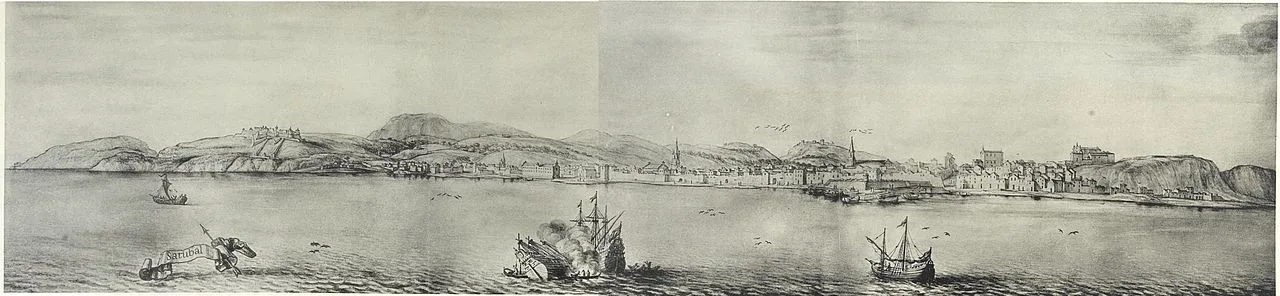
Setubal sits on the northern bank of the Sado River estuary, and the broad mouth of the river acted as a funnel, channelling the tsunami’s energy directly into the city. Waves surged inland, inundating the waterfront quarters.
According to contemporary accounts, water reached the first floor of buildings in the city. For the low-lying coastal districts of Setubal, this meant total submersion.
Along the exposed western coast of Portugal, tsunami waves reached heights of up to 30 metres in some locations. Within the sheltered Sado estuary, the waves were lower, but their destructive force remained enormous.
Destruction of Buildings
Fort of Sao Filipe:
The formidable fortress, built between 1590 and 1600 to the designs of Italian engineers, sustained significant damage. Its star-shaped bastions, engineered to withstand artillery bombardment, proved vulnerable to seismic shocks.
Monastery of Jesus:
The Monastery of Jesus — the first example of the Manueline style — suffered serious damage. However, it was subsequently carefully restored with maximum preservation of its original architectural features, including the celebrated spiralling columns of Arrabida breccia.
Churches:
All Saints’ Day was one of the most important feast days of the Church calendar, and the churches of Setubal were packed with worshippers at the moment of the first tremor. The collapse of church buildings almost certainly accounted for a large share of the casualties. Stone vaults and columns, designed for static loads, could not withstand the horizontal forces of the earthquake.
A detailed inventory of destroyed churches and public buildings in Setubal has not been found in available sources.
Impact on the Sado Estuary
The tsunami affected the entire expanse of the Sado estuary, including:
- Coastal settlements on both banks of the river
- Salt works (salinas) situated on low-lying ground
- Fishing boats and port infrastructure
- The Troia Peninsula, which faces the city across the water
[UNVERIFIED] It has been suggested that the 1755 tsunami inflicted additional damage on the Roman ruins on the Troia Peninsula, partially burying them under sand and silt. The ruins, however, had already been abandoned for more than a thousand years by that point.
Differences from Lisbon
Setubal and Lisbon experienced the same earthquake, but the nature of the destruction differed markedly:
| Factor | Lisbon | Setubal |
|---|---|---|
| Population | ~250,000 | ~12,000 |
| Casualties | 10,000–30,000 | ~2,000 |
| Proportion killed | 4–9% | ~17% |
| Principal cause of death | Fires | Tsunami |
| Reconstruction | Systematic rebuilding (Pombal) | Less organised |
Fire vs Tsunami
In Lisbon, thousands of candles lit in churches on All Saints’ Day were toppled by the tremors, igniting a fire that burned for five or six days and consumed a large part of the city. The narrow medieval streets became deadly fire traps.
In Setubal, fire was not the main destructive factor. Instead, the city — situated on the shore of a broad estuary — lay defenceless before the tsunami, which penetrated deep into the waterfront neighbourhoods.
Reconstruction
Lisbon was methodically rebuilt under the direction of the Marquis Sebastiao Jose de Carvalho e Melo (Marquis of Pombal) — the chief minister of King Jose I. Pombal devised the famous plan for the rebuilt Baixa Pombalina district, featuring:
- A rectangular street grid
- Buildings in the Pombaline style — with a timber-frame skeleton (gaiola pombalina) that provided earthquake resistance
- Firebreak walls between buildings
- Standardised facades
No comparable systematic reconstruction plan for Setubal has been found in available sources. The city appears to have recovered in a less organised and more gradual fashion. This partly explains why the historic layout of Setubal retains a more organic, irregular character compared to the geometric grid of Pombaline Lisbon.
Long-Term Consequences
Economic Impact
The earthquake dealt a heavy blow to Setubal’s economy:
- Port infrastructure was damaged, temporarily undermining trade
- Salt works on the low-lying banks of the Sado were ravaged by the tsunami
- The fishing fleet suffered losses
- A significant portion of the merchant and artisan population perished
Demographic Shock
Losing 17% of one’s population in a single morning is a catastrophe from which a city takes decades to recover. The impact on the working-age population was especially severe: many died in churches, where they had gathered for the feast-day services.
Psychological Impact
The earthquake of 1755 was not only a physical but also an intellectual catastrophe for all of Europe. It challenged the optimistic philosophy of Leibniz (“the best of all possible worlds”) and inspired Voltaire’s famous satire Candide. For the people of Setubal, who had lost one in every six neighbours, philosophical debates were a distant concern — they were rebuilding their homes, churches, and livelihoods.
Memory of the Disaster
Historical Contextualisation
The earthquake of 1755 occupies a singular place in the history of Setubal. The city, which had been on the ascent since the Age of Discoveries, was thrown back by decades. It took nearly a century for Setubal to regain economic momentum — this time thanks to the canning industry that emerged in the second half of the 19th century.
Seismic Risk
The Setubal region remains in an area of seismic activity. Its proximity to the boundary between the African and Eurasian tectonic plates — the same geological force that created the Serra da Arrabida mountain range — means that the risk of powerful earthquakes persists. This is reflected in modern building codes and civil defence planning.
Traces in the Urban Fabric
[UNVERIFIED] Some buildings in the historic centre of Setubal bear the hallmarks of 18th-century reconstruction — simplified facades, reinforced walls — typical of post-earthquake architecture. However, unlike Pombaline Lisbon, these traces are neither as systematic nor as readily identifiable.
Key Facts
| Parameter | Value |
|---|---|
| Date | 1 November 1755 |
| Magnitude | 8.5–9.0 |
| Casualties in Setubal | ~2,000 |
| Proportion of population | ~17% |
| Principal destructive factor | Tsunami |
| Damaged landmarks | Fort of Sao Filipe, Monastery of Jesus |
Image sources
- earthquake-1755-lisbon-engraving.webp — Engraving of the 1755 Lisbon earthquake aftermath. Author: Unknown (18th century). License: Public domain. Source
- earthquake-setubal-1669-before.webp — Panorama of Setubal in 1669 — the city before the earthquake. Author: Unknown (17th century). License: Public domain. Source
- earthquake-1755-ruins-engraving.webp — Ruins after the 1755 earthquake. Author: Unknown (18th century). License: Public domain. Source
See also
- Setubal and the Age of Discoveries
- The Canning Industry
- Monastery of Jesus
- Fort of Sao Filipe
- Sado Estuary
- Troia Peninsula
- Arrabida Natural Park
The light is on for free. But someone has to clean the lantern.
☕ Support on Ko-fi