Estado Novo and Setúbal
Forty-one years. From 1933 to 1974, Setúbal—city of fishermen, salt workers, and factory women—lived under oppression of regime that proclaimed “God, Fatherland, and Family” but in practice meant secret police, censorship, poverty, and silence. Estado Novo did not break the city—but left scars on it that have not healed to this day.
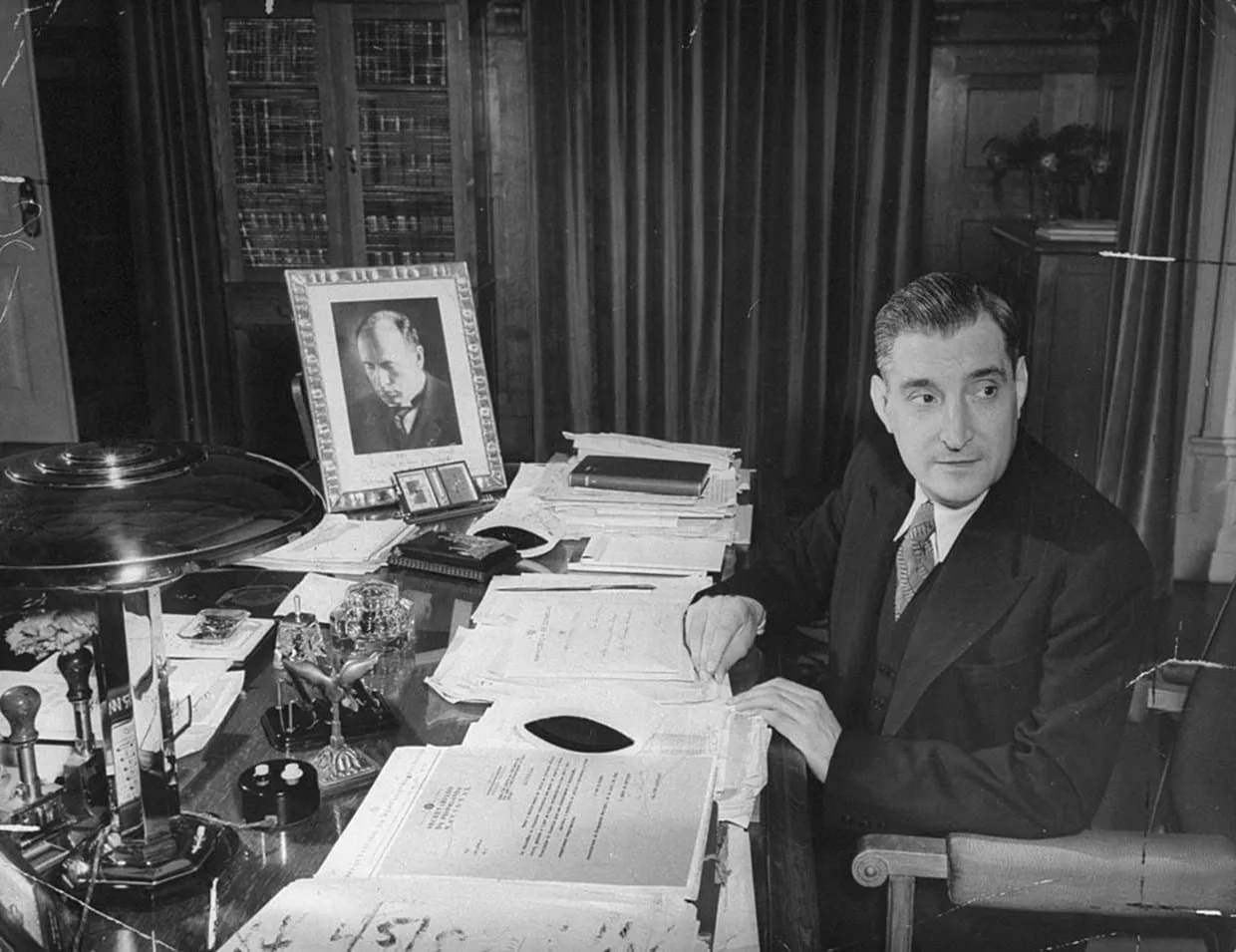
Estado Novo: General Context
Regime Establishment
Estado Novo (New State) was authoritarian regime established in Portugal after 1926 military coup and constitutionally formalized in 1933. Regime was headed by António de Oliveira Salazar, who held position of Chairman of Council of Ministers from 1932 to 1968. After Salazar’s stroke in 1968, power passed to Marcelo Caetano, who continued predecessor’s policies until Carnation Revolution of April 25, 1974.
Ideology
Estado Novo relied on triad “Deus, Pátria, Família” (God, Fatherland, Family)—conservative-nationalist ideology combining elements of Catholic corporatism, Portuguese nationalism, and authoritarian state management. Regime rejected both liberal democracy and communism and socialism, positioning itself as “third way.”
Control Instruments
Regime was maintained by several key institutions:
- PIDE (Polícia Internacional e de Defesa do Estado—International Police of State Defense)—secret police responsible for political repressions, surveillance, arrests, torture
- Censorship—all mass media subjected to prior censorship
- Sindicatos Nacionais—state “unions” replacing free workers’ organizations
- Legião Portuguesa (Portuguese Legion)—paramilitary organization supporting regime
- PIDE-DGS—after 1969 PIDE formally renamed DGS (Direcção-Geral de Segurança), but essence unchanged
Setúbal under Estado Novo
City’s Special Significance for Regime
For Estado Novo, Setúbal represented double challenge:
- Economic—city with large industrial base (canning factories, port, shipyards) and significant working class, potentially inclined to strikes and unrest
- Political—city with long leftist political tradition, where communists had deep roots since 1920s
These two factors made Setúbal object of heightened PIDE attention and especially harsh control.
PIDE in Setúbal
Secret police conducted systematic work in Setúbal to identify and suppress any oppositional activity. PIDE methods included:
- Surveillance of suspicious persons—worker activists, intelligentsia, former union members
- Embedding informers—in factories, port, fishing quarters, taverns
- Arrests and interrogations—often accompanied by torture (sleep deprivation, “statue”—standing in place for hours, beatings)
- Preventive arrests—detention of suspicious persons before holidays, elections, regime anniversaries
[UNVERIFIED] According to veterans of labor movement, in Setúbal there existed atmosphere of constant fear: any neighbor, colleague, acquaintance could be PIDE informer. Denunciation was encouraged and rewarded, destroying social ties and trust.
Labor Movement under Dictatorship
1934 Strike
Most dramatic episode of workers’ resistance in Setúbal under Estado Novo was revolutionary strike of January 18, 1934—attempt at general strike against fascist regime.
In Setúbal, strike preparation was large-scale: organizers planned to paralyze canning factories, port, and transport. However, PIDE uncovered conspiracy: on January 15, 60 homemade bombs were discovered in city, and on night of January 17—day before start—entire city organization of strikers was arrested.
Despite this blow, some protest actions in Setúbal did take place, though significantly weakened compared to plan.
Repressions after strike were harsh:
- 696 arrests nationwide
- Over 400 people tried by special military courts
- Severe prison terms and exile to colonies (especially Tarrafal island, Cape Verde)
- Mass dismissals of workers who participated or were suspected of participation
Conserveiras Strikes
Throughout Estado Novo period, Setúbal’s canning factories remained hotbed of labor conflict. Women workers-conserveiras—women comprising overwhelming majority of workforce—worked in harshest conditions:
- Piecework payment—wages depended on quantity of processed fish
- No social guarantees—no paid leave, sick leave, pensions
- Unsanitary conditions—working with fish in poorly ventilated premises
- Seasonality—work depended on catch, in “dead” season families starved
Despite strike ban and state control through sindicatos nacionais, spontaneous protests periodically erupted at factories—from work slowdowns to brief stoppages. Each such protest threatened arrest and dismissal.
Also remember earlier tragedy: in 1911, still under First Republic, Republican Guard killed two women workers on Avenida Luísa Todi during conserveiras strike. This episode became part of Setúbal working class collective memory and passed from generation to generation as reminder of struggle’s price for rights.
Social Consequences
Housing Crisis: Barracas
One of Estado Novo’s most severe social consequences in Setúbal was housing crisis. Regime, proclaiming ideals of order and prosperity, could not (or would not) provide decent housing for working population of industrial cities.
By moment of Carnation Revolution in 1974, over 11,000 people in Setúbal lived in barracas—homemade shacks of boards, tin, and cardboard, lacking sewerage, water supply, and electricity. These were real slums—evidence of regime’s failure to solve basic social problems.
Barracas located on city outskirts, in areas unsuitable for normal housing: on slopes, in flood zones, near industrial facilities. Their inhabitants—fishermen, factory workers, migrants from rural areas—were invisible to official propaganda, which portrayed Estado Novo as “welfare state.”
Poverty and Inequality
Setúbal under Estado Novo was city of extreme social inequality:
- Factory owners and merchants lived in comfort, using cheap labor and absence of labor legislation
- Workers survived on brink of poverty, deprived of right to strike, free union, and political representation
- Workers’ children often began working from 10-12 years, not receiving full education
Regime supported this inequality system with corporatist ideology: everyone should “know their place” in social hierarchy, and attempts to change order qualified as “subversive activity.”
Ideological Control
Street Renaming
Estado Novo used toponymy as instrument of ideological control. Setúbal streets were renamed according to regime values:
- Names connected to republican or workers’ tradition replaced with names of regime “heroes,” Catholic saints, or neutral designations
- Squares and avenues received names of Estado Novo figures and “glorious moments” of Portuguese history in their regime interpretation
[UNVERIFIED] After Carnation Revolution, many streets renamed back or received new names reflecting democratic values—names of fighters against dictatorship, liberation dates, freedom symbols.
Censorship and Information Control
All Setúbal press subjected to prior censorship. Newspapers could not report on strikes, arrests, labor conditions at factories, poverty, or any facts casting shadow on regime. Public meetings required permission, and any unsanctioned activity—from distributing leaflets to informal meetings—could be qualified as crime.
Underground Activity
Despite repressions, underground activity in Setúbal did not cease. Portuguese Communist Party (PCP) maintained illegal cells at factories, port, and fishing quarters. Underground newspaper “Avante!” printed at conspiratorial print shops and distributed through courier network.
Conspiratorial work required incredible discipline: “conspiratorial apartments” (casas clandestinas) regularly changed, contacts between cells minimal, and each participant knew only their part of network. Nevertheless, PIDE periodically managed to uncover underground groups, leading to waves of arrests.
Industrial Setúbal under Late Estado Novo
Setnave and Industrialization of 1960-1970s
In last decade of Estado Novo (1960-1970s), Setúbal experienced new wave of industrialization. In city were built Setnave shipyards—large shipbuilding enterprise, as well as Ford and British Leyland auto plants. These enterprises attracted thousands of new workers, strengthening city’s industrial character.
However, new industrialization did not solve social problems—rather aggravated them: population growth with absence of housing construction increased number of barracas, and concentration of workers at large enterprises created new base for organized labor movement.
Revolution Harbingers
By early 1970s, tension in Setúbal reached limit. Colonial war in Africa (1961-1974), exhausting country, intensified discontent. Young workers, less intimidated than their parents, were ready for more active resistance. Setnave shipyards and auto plants became centers of illegal union activity.
When on April 25, 1974, “Grândola, Vila Morena” by José Afonso sounded on radio—signal for Carnation Revolution start—Setúbal was ready. Workers took to streets, committees of struggle took control of factories, and 41 years of silence and fear ended in one day.
Estado Novo Legacy in Setúbal
Physical Legacy
- Barracas—though most slums demolished after 1974, housing problem solved over decades
- Industrial buildings—factories, shipyards, and warehouses built under regime converted to cultural and public spaces (Museum of Labor, A Gráfica)
- Toponymy—part of streets preserved names from Estado Novo period, others renamed
Psychological Legacy
[UNVERIFIED] Researchers note Estado Novo psychological legacy in Setúbal manifests to this day: deep distrust of state institutions, striving for self-organization, wary attitude toward any forms of authoritarian power. Collective memory of repressions, arrests, and denunciation transmitted through generations and shapes city’s political culture.
Memory and Understanding
Setúbal actively works to preserve memory of Estado Novo period:
- Michel Giacometti Museum of Labor—exhibition dedicated to labor conditions under dictatorship
- Toponymic decisions—streets named after fighters against dictatorship
- April 25 Festival—annual large-scale celebration of Carnation Revolution anniversary
- Oral history—recordings of memoirs by veterans of labor movement and political prisoners
Image sources
- estado-novo-salazar-1940.webp — António de Oliveira Salazar, circa 1940. Source: Wikimedia Commons.
See Also
- “Red City”: Political History of Setúbal—underground resistance and political tradition
- Carnation Revolution—end of Estado Novo and beginning of democracy
- Canning Industry—economic base on which social conflict built
- Municipal Governance of Setúbal—political system before and after dictatorship
- Michel Giacometti Museum of Labor—space of memory about working history
All our knowledge is free. Creating it is not.
☕ Support on Ko-fi