The 1249 Charter and the Order of Santiago
- The Master of the Order of Santiago, D. Paio Peres Correia, puts his seal on parchment that will forever change the fate of a small settlement on the Sado estuary’s shore. The charter—a document granting urban rights and privileges—transforms a fishing and salt-producing village into a full municipal entity, beginning the count of Setúbal’s seven-plus centuries of municipal history.
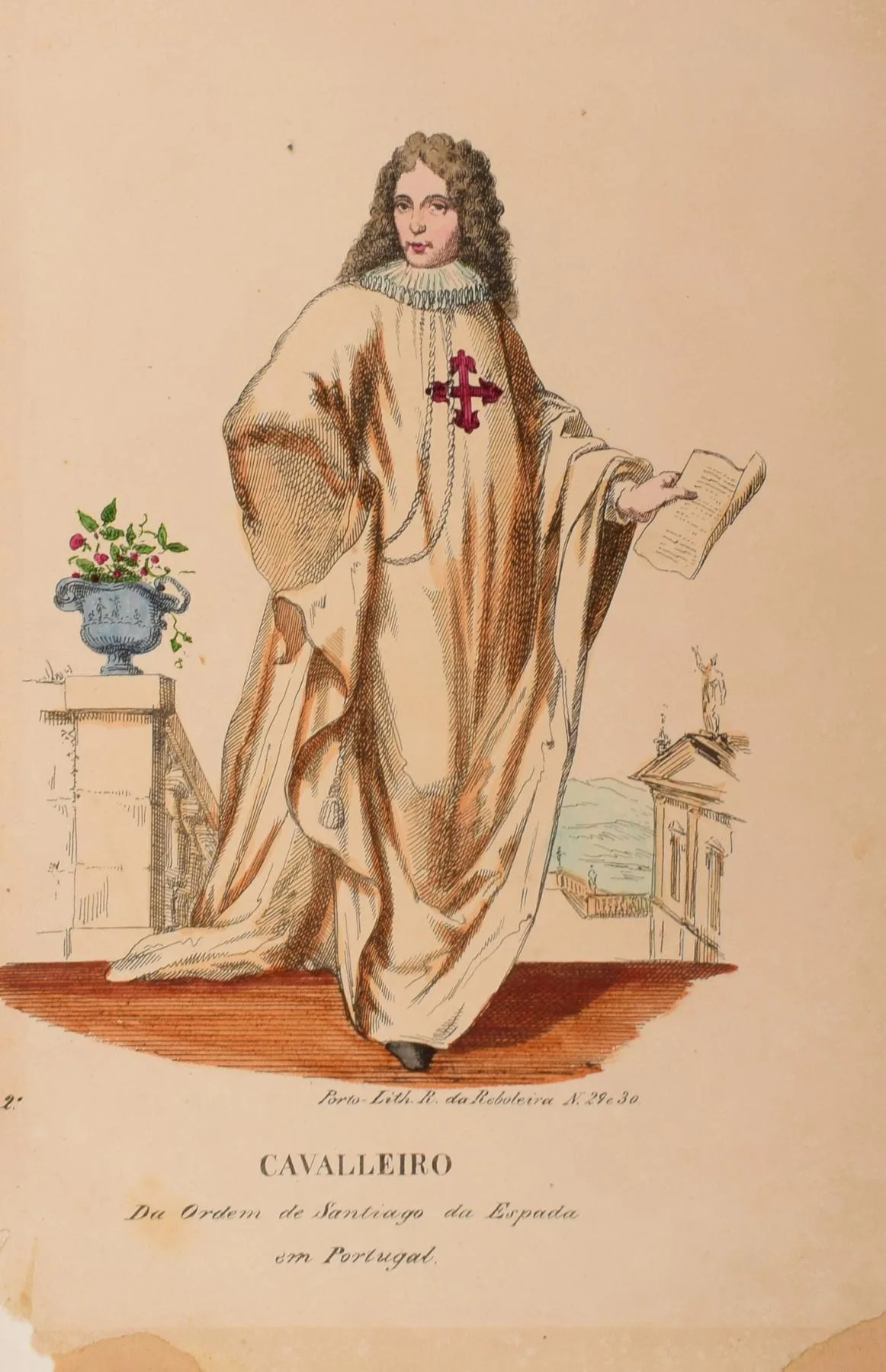
Context: Reconquista and the Order of Santiago
Order of Santiago on the Iberian Peninsula
The Order of Santiago (Ordem de Santiago da Espada—Order of the Sword of Saint James) is a military-monastic order founded in 1170 in the Kingdom of León to fight the Moors on the Iberian Peninsula. In Portugal, the order received significant land holdings as reward for participation in the Reconquista—the reconquest of the Iberian Peninsula from Muslim rulers.
After taking Palmela Castle from the Moors, the Order of Santiago gained control over vast territories south of Lisbon, including the Sado estuary area. Palmela became the order’s residence in Portugal, and Setúbal—one of the most important settlements in its sphere of influence.
D. Paio Peres Correia
D. Paio Peres Correia (c. 1205-1275) was one of the greatest military commanders of the Reconquista, master (mestre) of the Order of Santiago from 1242. Under his command, the order achieved key victories in the Algarve and Alentejo, completing the reconquest of significant part of southern Portugal.
It was D. Paio Peres Correia who authored the 1249 charter that endowed Setúbal with municipal rights. This act was part of the order’s broader strategy of settling and economically developing reconquered territories: the charter attracted settlers by providing them with legal guarantees and tax benefits.
The 1249 Charter
Content and Significance
The 1249 charter is the first known document legally establishing Setúbal as an independent municipal entity. The charter was signed by Master D. Paio Peres Correia and Commander of Mértola Gonçalo Peres.
The document established:
- Rights and obligations of residents—tax duties, judicial privileges, conditions of military service
- Territorial boundaries of the municipality
- Economic conditions—rights to fishing, salt production, trade
- Subordination to the Order of Santiago—Setúbal formally remained the order’s possession, not the crown’s
Economic Foundation
Already in the 13th century, Setúbal’s economy was based on two pillars that would determine its development for centuries to come:
- Salt—salt works on the Sado estuary shores existed since Cetobriga times and provided the city with steady income. Setúbal salt was exported throughout Europe
- Fish—rich sardine stocks in estuary and Atlantic waters were the foundation of food economy. Salting and fish trade connected Setúbal with European markets
The 1249 charter documented this economic reality, regulating rights to extraction and sale of salt and fish.
Beginning of Municipal Life
Granting the charter meant recognition of sufficient population and economic activity in Setúbal to form municipal government. Before 1249, the settlement existed but lacked legal status—its residents were subjects of the order without their own municipal self-government.
After the charter, Setúbal obtained:
- Own municipal government—town council (conselho)
- Judicial autonomy—right to local court
- Tax certainty—fixed obligations to the order
1343 Border Clarification
In 1343, nearly a century after the first charter, there arose a need to clarify the municipality’s territorial boundaries. Commander D. Garcia Peres, acting on behalf of King D. Afonso IV, conducted demarcation of Setúbal’s borders. This clarification reflected population growth and economic activity—as the city developed, its actual boundaries exceeded those established by the 1249 charter.
Foral Novo of 1514
Reform Context
In early 16th century, King D. Manuel I (1469-1521) conducted large-scale reform of Portugal’s charter system. Old medieval charters, composed in different conditions and with different formulations, were replaced by unified “new charters” (forais novos), brought to a single standard and reflecting changed economic realities.
Setúbal received its Foral Novo in 1514. This document is not merely a technical update: it records the radical growth in the city’s importance over two and a half centuries since the first charter.
Salt and Sardine Economy
The Foral Novo of 1514 pays special attention to the economy of salt and salted sardines—two commodities ensuring the city’s prosperity. The document regulates:
- Order of salt extraction and sale—including export rules
- Fish salting and trade—especially sardines
- Port duties—taxes on import and export of goods through Setúbal port
- Rights and obligations of traders—regulation of commercial activity
Noteworthy is a record from 1511 (three years before the new charter): King D. Manuel I issued a decree prohibiting ships arriving in Setúbal to load sardines and fish from bringing their own salt for salting. This protectionist ban emphasizes the significance of local salt for the city’s economy—imported salt undermined the monopoly of Setúbal salt workers.
Port Economy
In the 15th century, Setúbal became one of Portugal’s most important ports. Income from port duties (direitos cobrados pela entrada no porto) was significant. Through Setúbal port were exported salt, salted fish, wine, and other goods, while grain, fabrics, and luxury items were imported.
The Foral Novo of 1514 reflects this port economy, regulating in detail trade operations and tax obligations related to maritime trade.
Path to City Status
Growth and Development (16th-18th centuries)
After the Foral Novo, Setúbal continued to develop despite the catastrophic 1755 earthquake and other calamities. The city strengthened its position as a major port and center of salt industry. By mid-19th century, its economic and demographic significance had long exceeded the formal status of “vila” (town).
City Status: 1860
In June 1858, the Câmara Municipal (municipal chamber) of Setúbal submitted a representation to King D. Pedro V requesting elevation of the settlement’s status. The request was motivated by the city’s economic significance, its population, and historical merits.
On April 19, 1860, Decree-Law No. 91 was issued by which King D. Pedro V elevated Setúbal to the rank of city (cidade). Implementation of the decree was entrusted to Minister António Maria de Fontes Pereira de Melo. April 19 is celebrated as the city’s anniversary.
Thus, from the first charter of 1249 to obtaining city status, 611 years passed—a period during which a small fishing settlement under the rule of a military-monastic order transformed into one of Portugal’s significant cities.
Archive Fire of 1910
A tragic detail in the history of Setúbal’s charters is the municipal archive fire on the night of October 4-5, 1910, coinciding with proclamation of the Portuguese Republic. On this night, when clashes between supporters of republic and monarchy occurred throughout the country, the Paços de Concelho (municipal chamber) building in Setúbal was engulfed in flames.
The fire destroyed the municipal archive—a collection of documents accumulated since 1249. The loss was irreplaceable: original medieval charters, meeting minutes, tax registers, judicial acts, and many other documents constituting the city’s institutional and historical memory over six and a half centuries perished.
The full scale of loss was never assessed: only individual notes and excerpts by researchers who worked with the archive before 1910 survived. After the fire, the archive temporarily moved to Liceu Bocage, then returned to Praça do Bocage in 1938. New premises of Setúbal’s Municipal Archive opened in 2021.
Legacy
Symbolic Significance
The 1249 charter is the starting point of Setúbal’s municipal history. It symbolizes the moment when a nameless settlement on the Sado shore acquired legal personhood, rights and obligations—became a subject of history. Each subsequent document—the 1343 border clarification, 1514 Foral Novo, 1860 decree on city status—was a superstructure on this foundation.
Academic Research
Setúbal’s charters are subject of active academic research. In 2015, Câmara Municipal de Setúbal published the fundamental edition “Os Forais de Setúbal. 1249|1514,” combining transcriptions of both charters with scholarly commentary. Universidade Nova de Lisboa (NOVA) conducted research “Setúbal, um Pólo de Poder da Ordem Militar de Santiago no final da Idade Média,” analyzing Setúbal’s role as a power center of the Order of Santiago.
Connection to Modernity
The Order of Santiago, which granted the first charter, remains present in Setúbal’s symbolism. Palmela Castle—former order residence—remains one of the region’s main attractions. The Order of Santiago cross—a red sword-shaped cross—can be found in municipal heraldry and on historic buildings.
Image sources
- ordem-santiago-cavaleiro.webp — Knight of the Order of Santiago. Source: Wikimedia Commons.
See Also
- Reconquista and Medieval Setúbal—military-political context of the first charter
- Salt Trade—economic foundation recorded in charters
- Palmela Castle—Order of Santiago residence
- Setúbal Toponymy—medieval heritage in street names
- Canning Industry—continuation of fish economy laid down in charters
If this article was useful — help us write the next one.
☕ Support on Ko-fi