The Migration Mosaic of Setúbal
Over the centuries, the territory of what is now the Setúbal District has received people of the most diverse origins – from medieval Moors and Jews to modern-day expats and refugees. Today, approximately 9% of the city’s population are foreign nationals, and the municipality is a member of the Portuguese Network of Intercultural Cities.
Historical waves of migration
Moorish and Jewish heritage (8th–15th centuries)
The territory of the Setúbal District was under Muslim rule from 711 until the Reconquista (the definitive reconquest of Alcácer do Sal in 1217). The Moorish legacy survives in toponymy, agricultural traditions and architectural elements.
Medieval Setúbal had a Jewish quarter (judiaria), as confirmed by tax records – the community paid tributes comparable to those of Santarém, Leiria and Coimbra. In 1496, Manuel I ordered the expulsion of all Jews and Muslims; forced baptism followed in 1497, bringing the judiaria system to an end. [UNVERIFIED] The precise location and scale of the medieval judiaria in Setúbal require further archival research.
Age of Discoveries (16th–18th centuries)
Setúbal, with its deep natural harbour, served as an important port in the Atlantic trade network. According to 16th-century parish baptismal records, between 6% and 9% of those baptised in villages near Setúbal were people of African origin. Their presence left a lasting mark on the language, music and folk traditions of the region.
Internal migration in the 19th century
With the growth of the canning industry in the second half of the 19th century, thousands of workers migrated to Setúbal from the Alentejo and other rural provinces. Men, women and children worked in the factories. This internal migration profoundly changed the social fabric of the city, shaping the working class that would later define Setúbal’s political identity.
Retornados (1974–1979)
After the Carnation Revolution and decolonisation, between 500,000 and 1,000,000 people returned to Portugal from the African colonies. As an industrial centre with a strong labour movement, Setúbal received a significant share of the retornados. See the dedicated article for details.
African immigration (1980s–1990s)
Cape Verdeans became one of Portugal’s largest immigrant communities. Migration from the archipelago had begun as early as the 1960s (fleeing drought and famine) and intensified after Cape Verde gained independence in 1975. Approximately 150,000 Cape Verdeans live in Portugal – the second-largest diaspora worldwide. Most came from the island of Santiago.
The Angolan community began forming in the late 1980s amid the Angolan Civil War and Portugal’s economic growth. The most intensive period of migration was the 1990s. Angolan migrants concentrated in the Lisbon Metropolitan Area, including the Setúbal District.
The Brazilian wave (2000s)
Brazilians are Portugal’s largest foreign community: over 484,000 people (31.4% of all foreign residents as of 2023). The combined Lisbon–Setúbal districts host some 54,000 Brazilians; in Almada (Setúbal District) alone, over 3,000. Brazilian migrants work predominantly in commerce, services and the cultural sector.
New communities (2010s–2020s)
Eastern Europeans (Ukrainians, Romanians, Moldovans) are among the main immigrant nationalities in the district. Many work in construction, industry and agriculture. The municipal SEI service provides assistance in Russian among other languages.
Since 2022, over 60,000 Ukrainian refugees have arrived in Portugal, a significant number of whom were received in the Setúbal District. Ukrainians have become the country’s second-largest foreign community.
South Asian workers (from India, Nepal, Bangladesh) are a rapidly growing group of the 2020s, employed mainly in greenhouse agriculture, construction and services.
Western European expats choose Setúbal for its affordable property, proximity to Lisbon, the natural beauty of Arrábida and well-developed healthcare facilities.
Demographics
Foreign population by municipality (2022)
| Municipality | % foreign | Abs. number |
|---|---|---|
| Montijo | 11.6% | 6,663 |
| Almada | ~10.8% | – |
| Seixal | 8.9% | – |
| Setúbal | 8.9% | 10,975 |
| Moita | 8.1% | 5,432 |
| Palmela | 5.3% | 3,789 |
Source: O Setubalense (2022).
Main nationalities in Setúbal
According to the municipal SEI service, the principal nationalities are: Brazilian, Cape Verdean, Angolan, Romanian, Ukrainian and Moldovan.
Cultural contributions
Music
Immigrant communities have enriched the district’s cultural life with new musical genres:
- Morna and funaná – Cape Verdean music: from the lyrical, melancholic morna to the energetic accordion-driven funaná
- Kuduro – an Angolan electronic genre popular in the suburbs of the metropolitan area
- Kizomba – an Angolan dance-music genre that has become part of Portugal’s club culture
Cuisine
Multicultural influences are reflected in local gastronomy: Cape Verdean cachupa (a stew of maize, beans, meat and vegetables), Brazilian dishes and Angolan cuisine can all be found in the district’s restaurants and markets.
Festivals
- Maio – Diálogo Intercultural (May–June) – an annual municipal programme of concerts, film screenings, workshops and exhibitions. The “Mundos ao Largo” parade on Largo da Ribeira Velha gathers over 80 participants in national costumes
- Festival Sabura (Sesimbra) – a multicultural festival; the word sabura means “moment of joy” in Cape Verdean Creole; 6 stages, over 100 artists
- Festival Internacional de Música de Setúbal – brings together Portuguese and international musicians with amateur groups, including immigrant associations
The Roma community
The Roma (ciganos) have been present in Portugal since the 15th century. The metropolitan area (Lisbon + Setúbal) is home to nearly one-third of all Roma in the country (from an estimated total of 40,000–60,000). Traditional occupations include market trading, horse breeding and crafts.
In 2013, the government adopted a National Strategy for the Integration of Roma Communities, addressing four areas: health, education, housing and employment. District municipalities have developed their own local integration plans.
Integration infrastructure
SEI – Setúbal, Etnias e Imigração
A municipal service operating since 2004 – one of the first of its kind in the country. It provides assistance with document regularisation, social security, healthcare, education, nationality and consular matters. Services are delivered in Portuguese, Russian and Creole.
Address: Edifício Sado, Rua Acácio Barradas, 27, Setúbal.
CLAIM
Local Support Centres for the Integration of Migrants (over 150 nationwide). CLAIM offices in the Setúbal District operate in the municipalities of Setúbal, Barreiro, Moita and others.
“Nosso Bairro, Nossa Cidade” programme
In the Bela Vista neighbourhood (5,769 residents), the municipality runs a social integration programme: housing rehabilitation, public-space improvements and educational initiatives. Investment from the Recovery and Resilience Plan (PRR) amounts to approximately €40 million.
Municipal integration plan
The “Setúbal, Território Intercultural” project (2018–2020) provided ~€120,000 in investment (75% co-funded by FAMI) and established a monitoring platform of institutions and associations working in the field of migration.
Challenges
- Housing: social vulnerability in certain neighbourhoods; need for large-scale rehabilitation programmes
- Employment: immigrants are often concentrated in low-paid sectors; language barriers create additional vulnerability
- Education: improving access for the children of migrants and Roma communities
- Balancing reception and resources: the growing number of migrants requires the expansion of municipal support services
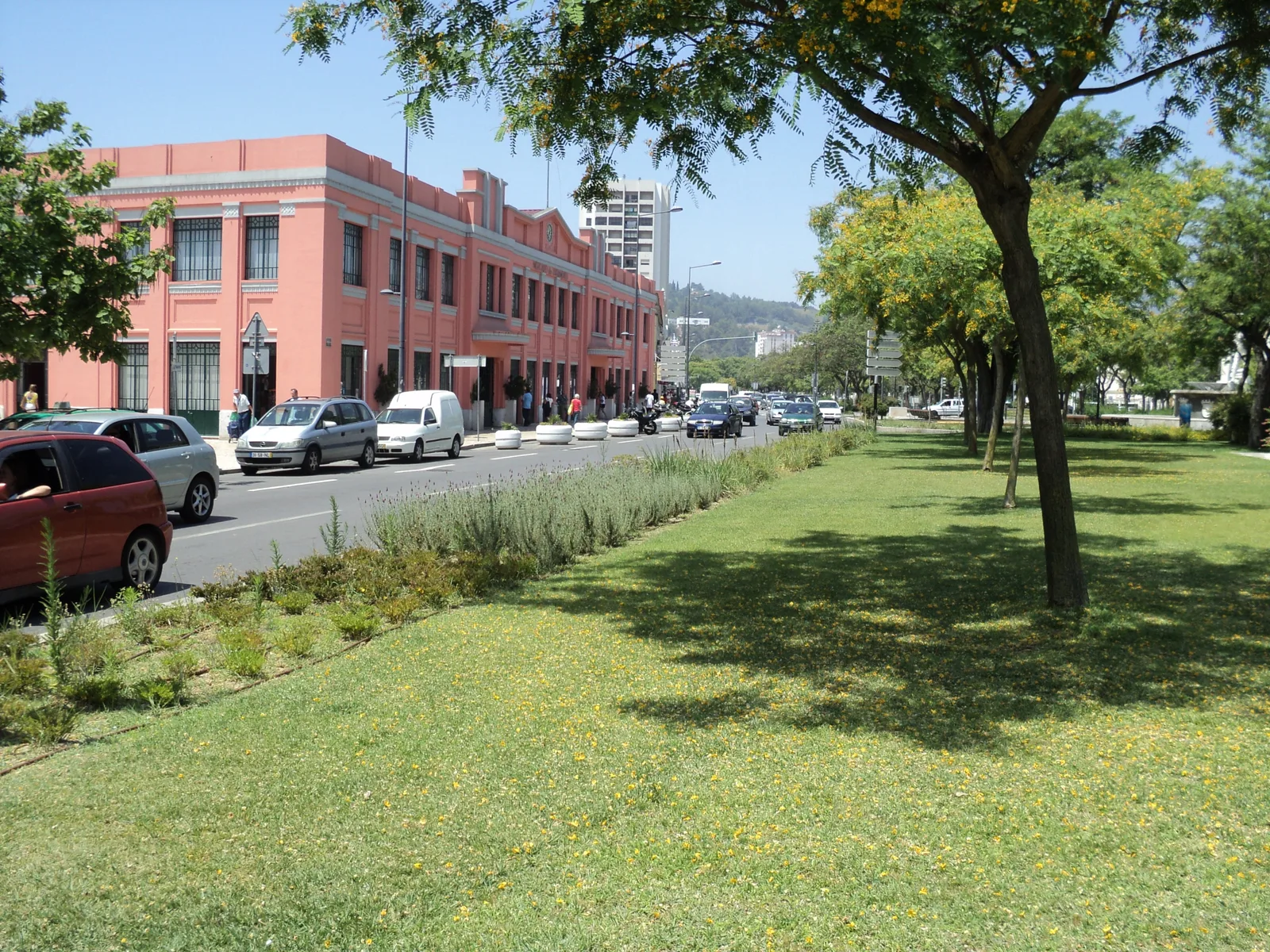
📷 Image credit
Photo: Guilherme Guimas / Wikimedia Commons / CC BY-SA 4.0
See also
- Retornados – Returnees from Africa
- The Moorish Period
- The Canning Industry
- Modern Setúbal
- The Carnation Revolution
All our knowledge is free. Creating it is not.
☕ Support on Ko-fi