Modern Setubal (20th--21st Centuries)
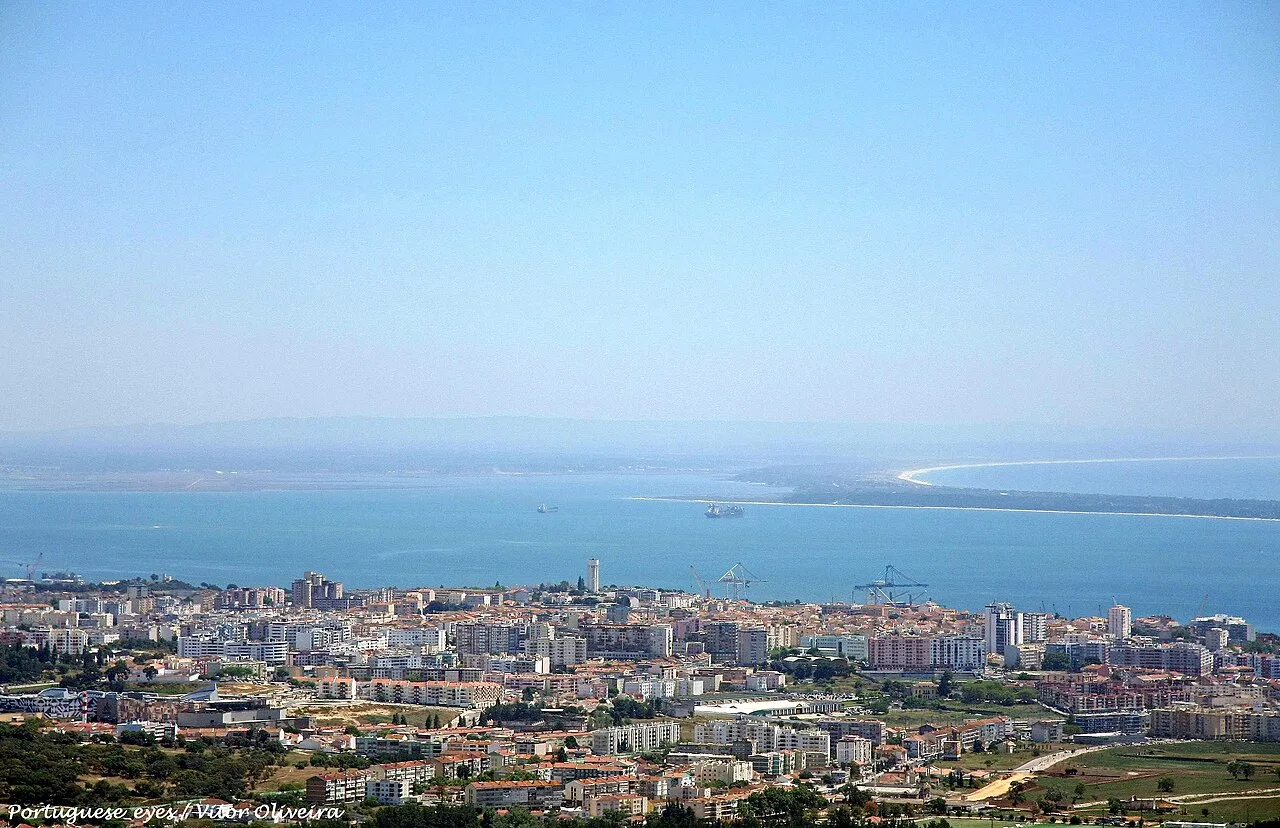
Over the course of the 20th century, Setubal traversed the arc from Europe’s foremost sardine-processing centre to a city enduring the pain of deindustrialisation. In the 21st century, it is forging a new identity – as a hub of tourism, education, and high-technology manufacturing – without severing its bond with the sea and the fishing tradition.
The First Half of the 20th Century: Industrial Heyday
The Sardine Capital
At the dawn of the 20th century, Setubal was in the grip of an industrial boom. By the 1920s, the city had become one of the key centres of Portugal’s canning industry – approximately 400 factories processed sardines for export. The two World Wars ensured steady demand: neutral Portugal supplied canned goods to the belligerent powers.
Beyond canning, the first half of the 20th century saw Setubal develop:
- Cement manufacturing
- Fertiliser production
- Pulp and paper manufacturing
- Shipbuilding and heavy engineering
A Working-Class City
The high concentration of industrial enterprises gave rise to a powerful working class in Setubal. The city became one of the centres of the labour movement in Portugal:
- 1934 – Setubal’s workers took an active part in the general strike, which was brutally suppressed by the Salazar regime
- Trade unions at the canning factories, where the workforce was predominantly female, campaigned for shorter working hours (the “de Sol a Sol” formula – dawn to dusk) and better working conditions
- The National Republican Guard (GNR) repeatedly used force to disperse protests
This tradition of left-wing activism shaped Setubal’s political culture for decades to come.
The Carnation Revolution and Its Aftermath (1974)
25 April 1974
Setubal’s working class, tempered by decades of strikes and confrontation with the Estado Novo regime, was among the most organised and mobilised forces during the Carnation Revolution. The city vigorously supported the military coup of 25 April 1974, which brought nearly half a century of dictatorship to an end.
The Post-Revolutionary Period
After the revolution, Setubal became a stronghold of the left. For decades, the municipality was governed by representatives of the Portuguese Communist Party (PCP) and its CDU coalition. The city’s left-wing political tradition is a direct consequence of its industrial past.
Crisis and Deindustrialisation (1970s–1990s)
The Collapse of the Canning Industry
Beginning in the 1970s, Setubal sank into a deep economic crisis. The causes were manifold:
- Depletion of sardine stocks – decades of overfishing
- International competition – cheaper production in Morocco, Thailand, Peru
- Obsolete equipment – factories had not been modernised
- Changing consumer preferences – falling demand for canned goods
Of the roughly 400 factories, only 20 remained across all of Portugal by the late 1990s. Setubal, the former sardine capital, had lost its economic foundation.
The Scale of the Catastrophe
In the 1970s–1980s, unemployment in Setubal approached 20 %. The closure of the factories meant:
- Mass unemployment, particularly among women
- Impoverishment of working-class neighbourhoods
- Dereliction of the industrial zones along the waterfront
- Demographic decline – an outflow of young people to Lisbon
The Setubal Peninsula, which had symbolised economic growth in the 1960s, became a symbol of post-industrial crisis.
A New Economy
The Automotive Industry: Autoeuropa
The most important development for the region was the opening of the Volkswagen Autoeuropa plant in neighbouring Palmela:
- 1991 – founded as a joint venture between Volkswagen and Ford (50/50)
- 1995 – production begins: Volkswagen Sharan, SEAT Alhambra, Ford Galaxy
- 1999 – Volkswagen acquires Ford’s share
The plant became the largest industrial enterprise in the region and one of Portugal’s leading exporters:
- Annual turnover: approximately 3.8 billion euros (2024)
- Around 4,800 employees
- ~1.6 % of Portugal’s GDP through exports and the supply chain
- More than 90 % of output is exported through the port of Setubal
- Rail connection to the port: 250 vehicles per day
Autoeuropa did not replace the canning industry in terms of jobs directly within Setubal, but it significantly strengthened the regional economy.
The Port of Setubal
The port of Setubal remains one of the most important in Portugal. In the 21st century it serves:
- The export of Autoeuropa vehicles
- Cement production
- Container shipping
- Ferry services to the Troia Peninsula
Education: The Polytechnic Institute (IPS)
Foundation and Development
The Instituto Politecnico de Setubal (IPS) was founded in 1979 – five years after the Carnation Revolution, during a period of democratisation and the expansion of access to higher education.
IPS became the first institution of higher education in the city and played a key role in Setubal’s transformation from an industrial town into a centre with a diversified economy.
Present-Day Profile
- More than 6,500 students
- Around 650 teaching and administrative staff
- 32 undergraduate programmes (licenciatura)
- 21 master’s programmes
- Post-graduate programmes (CTeSP)
The institute specialises in the practical training of professionals for the labour market: engineering, education, business, healthcare, and technology.
For a city where, just half a century ago, most of the population had only a primary school education and worked in factories, the presence of its own university with thousands of students represents a fundamental transformation.
Sport: Vitoria de Setubal
Vitoria – The Soul of the City
Vitoria Futebol Clube, known as Vitoria de Setubal, is a football club founded on 20 November 1910 by players of the Bonfim Football Club. Over the course of the 20th century, Vitoria became a symbol of the city’s identity.
The Era of Triumphs
The club’s golden age fell in the 1960s and the early 2000s:
- Taca de Portugal 1964/65 – victory over Benfica, 3–1
- Taca de Portugal 1966/67 – victory over Academica, 3–2
- Taca de Portugal 2004/05 – victory over Benfica, 2–1
- Taca da Liga 2007/08 – victory over Sporting on penalties
The home ground is the Estadio do Bonfim, inaugurated on 16 September 1962, originally with a capacity of 18,694 spectators (current capacity after renovations: 15,497).
Crisis and Decline
The history of Vitoria mirrors the fate of the city itself:
- In the 2019/20 season, the club avoided relegation by a single point
- Owing to financial difficulties, the club was denied a licence for the new season
- In 2020, Vitoria was administratively demoted to the non-professional divisions (Campeonato de Portugal)
- In the 2024/25 season, the club found itself in the sixth tier – the Segunda Divisao Distrital
The fall of Vitoria from the Primeira Liga to the sixth tier became a symbol of a broader crisis: a city that lost its industry is losing its principal sporting symbol as well. As of the 2024/25 season, the club competes in the first division of the Setubal district football association (6th tier of Portuguese football).
Tourism: A New Identity
Natural Assets
In the 21st century, Setubal is positioning itself with growing confidence as a tourist destination, drawing on its unique natural resources:
- Arrabida Natural Park – turquoise beaches, Mediterranean flora, hiking trails
- Sado Dolphins – dolphin watching with resident bottlenose dolphins
- Troia Peninsula – white-sand beaches and Roman ruins
- Wine tourism – vineyards of Moscatel, tastings
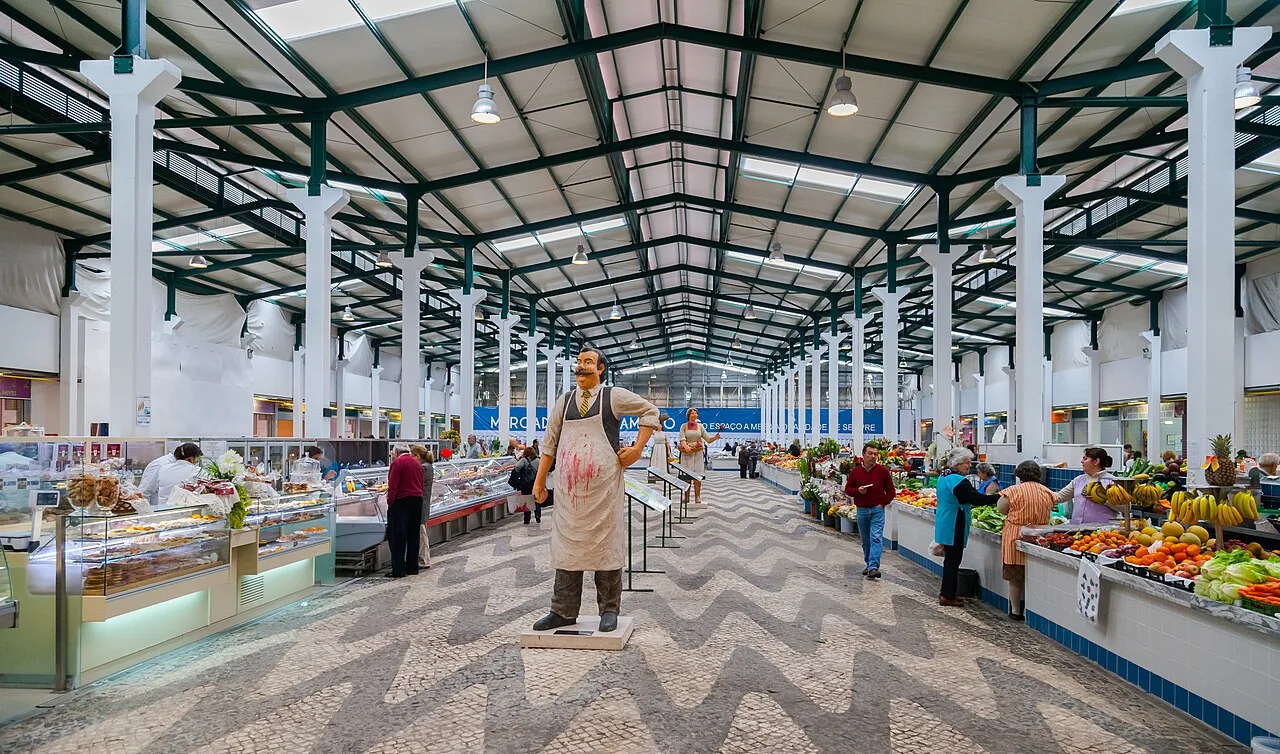
- Gastronomic tourism – choco frito, fresh seafood at the Livramento Market
Proximity to Lisbon
Setubal’s strategic advantage is its location fewer than 50 km from Lisbon. The city attracts both day-trippers and those seeking an alternative to the overcrowded capital: lower prices, an authentic atmosphere, proximity to nature.
City Life Today
Population
According to the 2021 census, the population of the municipality of Setubal stands at 123,496 people. The city serves as the administrative centre of the district (distrito) of the same name.
The Face of the City
Modern Setubal is a city of contrasts:
- Historic centre – narrow streets, Praca do Bocage, old churches
- Waterfront – a modernised riverfront zone, restaurants, the fish market
- Industrial heritage – abandoned and repurposed factory buildings
- New neighbourhoods – residential developments for commuters who work in Lisbon
Cultural Life
- Museu do Trabalho Michel Giacometti – custodian of the city’s industrial memory
- Festas do Bocage – an annual festival honouring the poet Bocage
- Feira de Santiago – the traditional summer fair
- Theatres, galleries, independent cultural spaces
Challenges and Prospects
Unresolved Problems
- Unemployment – although the situation has improved compared with the 1980s, unemployment remains above the national average
- Social inequality – a legacy of deindustrialisation
- Dependence on Autoeuropa – economic activity concentrated around a single enterprise
- Gentrification – growing interest from Lisboetas and foreigners is driving up housing prices
Points of Growth
- Development of ecotourism and wine tourism
- A strengthened role for the port in logistics chains
- IPS as a talent incubator and innovation centre
- Repurposing of industrial heritage into cultural spaces
- The potential of sustainable fisheries and artisanal production
Key Dates: 20th–21st Centuries
| Date | Event |
|---|---|
| 1910 | Founding of Vitoria FC |
| 1912 | Portugal becomes the world’s largest producer of canned fish |
| 1934 | Strikes in Setubal during the general strike |
| 1962 | Opening of the Estadio do Bonfim |
| 1974 | Carnation Revolution – Setubal lends active support |
| 1975 | Creation of the Diocese of Setubal |
| 1979 | Founding of the Polytechnic Institute (IPS) |
| 1986 | Portugal joins the European Community |
| 1990s | Mass closure of canning factories |
| 1995 | Production begins at Autoeuropa |
| 1998 | Museu do Trabalho receives the Council of Europe Prize |
| 2005 | Vitoria wins its third Taca de Portugal |
| 2020 | Vitoria administratively demoted due to financial difficulties |
Image sources
- modern-setubal-city-view.webp — Modern Setubal — city view. Author: Diego Delso. License: CC BY-SA 4.0. Source
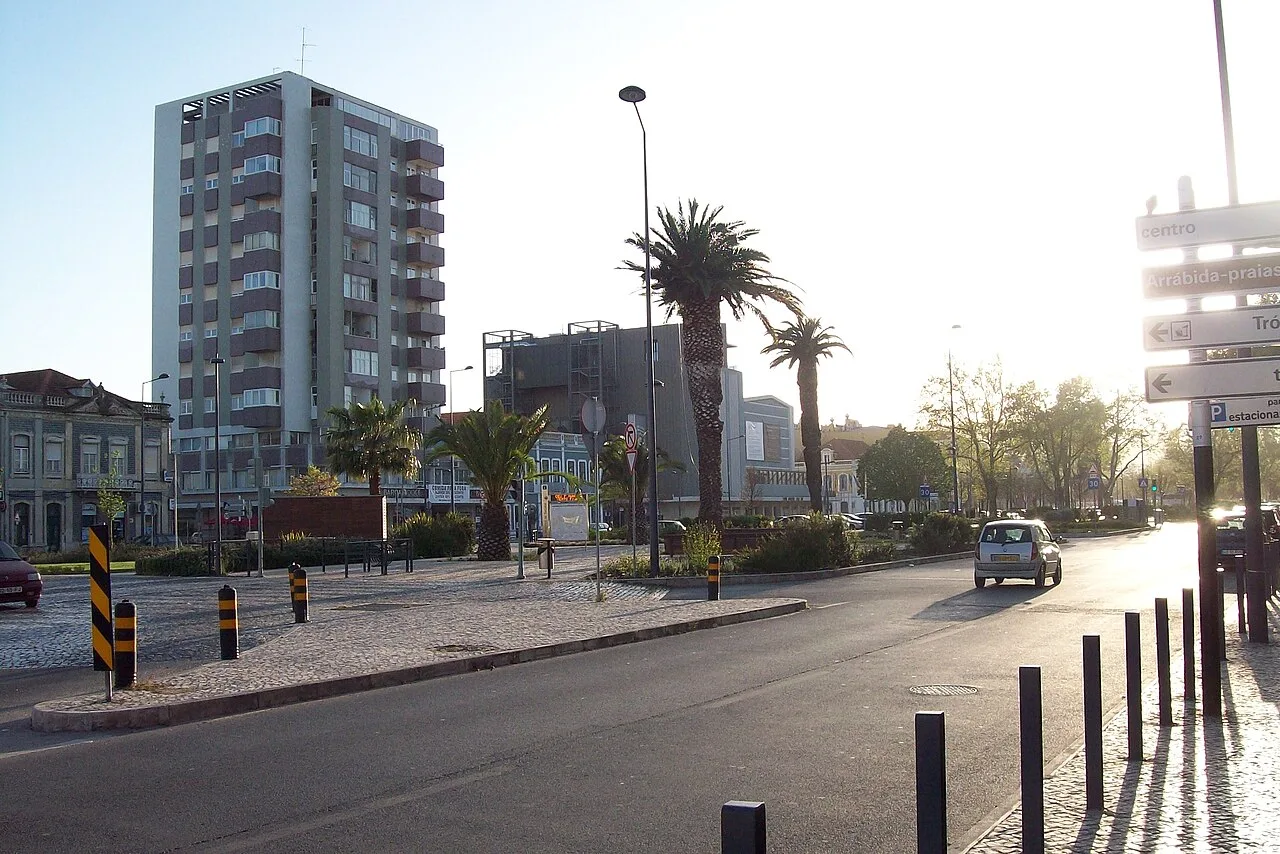
- modern-avenida-luisa-todi.webp — Avenida Luisa Todi — the main waterfront avenue. Author: GualdimG. License: CC BY-SA 4.0. Source
- modern-mercado-livramento.webp — Mercado do Livramento — one of Europe’s best markets. Author: GualdimG. License: CC BY-SA 4.0. Source
See also
- The Canning Industry
- The Carnation Revolution
- Fishing Culture
- Arrabida Natural Park
- Sado Dolphins
- Livramento Market
- Bocage – The Poet
- Praca do Bocage
- Museu do Trabalho Michel Giacometti
If this article was useful — help us write the next one.
☕ Support on Ko-fi