Municipal Governance of Setúbal
From the medieval charter granted by the knights of the Order of Santiago to the modern democratic chamber—Setúbal’s municipal governance has traveled a path seven and a half centuries long. This history reflects the fate of Portugal itself: feudal power, absolute monarchy, republic, dictatorship, revolution, and finally—democracy.
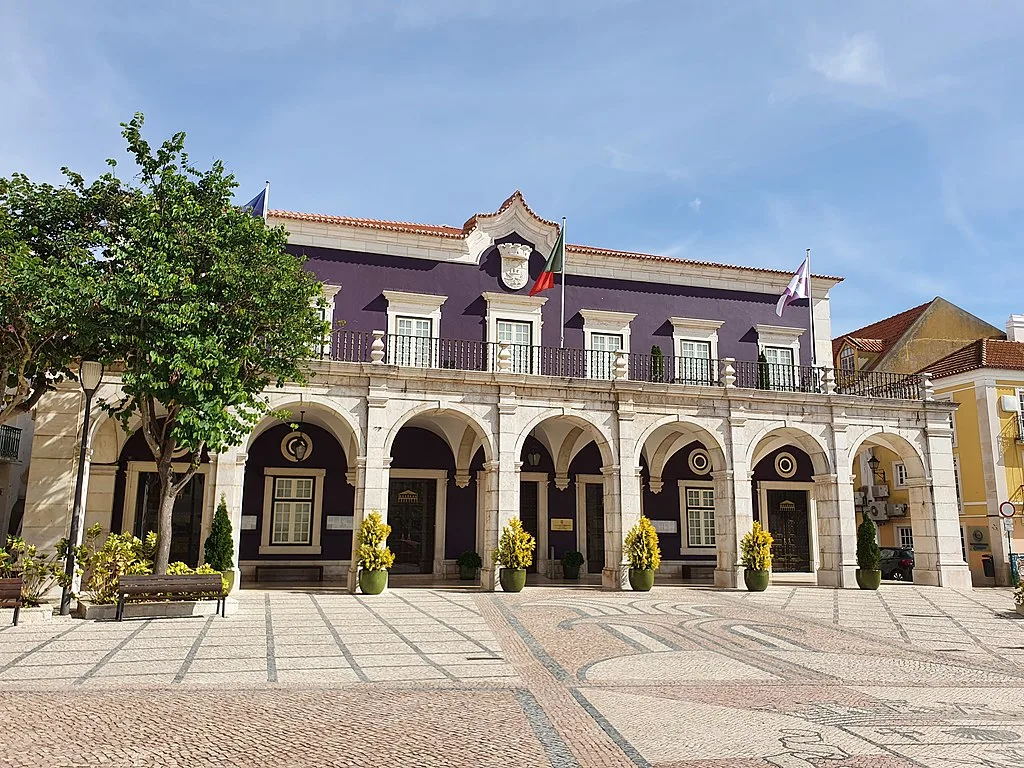
From Charter to Câmara Municipal
Medieval Self-Government
Setúbal’s municipal history begins with the 1249 charter, granted by the Master of the Order of Santiago D. Paio Peres Correia. The charter established primary forms of local self-government—a town council (conselho), endowed with judicial and administrative powers within boundaries determined by the order.
Medieval municipal governance in Portugal was oligarchic: real power belonged to a narrow circle of “good men” (homens-bons)—large landowners, merchants, and order representatives. Common fishermen and salt workers of Setúbal were subjects, not participants in governance.
Early Modern Period
With the Foral Novo of 1514 and further centralization of royal power, Setúbal’s municipal governance increasingly integrated into the nationwide system. The Câmara (chamber) operated under crown control, then under supervision of corregidors (corregedor) appointed by central government.
In the 18th-19th centuries, Portuguese municipal governance underwent a series of reforms, gradually expanding representation and limiting aristocratic power. Setúbal’s obtaining city status in 1860 under King D. Pedro V increased the municipality’s administrative weight.
Structure of Modern Governance
Câmara Municipal (Municipal Chamber)
Câmara Municipal de Setúbal is the executive body of municipal governance. The Chamber consists of a president (presidente da câmara, analogous to mayor) and vereadores (councilors, analogous to deputies and advisors). The president is elected by direct vote of municipality residents for a four-year term.
Câmara Municipal powers include:
- Urban planning—land use, construction, transport
- Municipal services—water supply, sewerage, sanitation
- Education and culture—schools, libraries, cultural programs
- Social policy—housing programs, assistance to needy
- Local economy—business support, tourism, markets
Assembleia Municipal (Municipal Assembly)
Assembleia Municipal is the representative (legislative) body of municipal governance. The Assembly approves budget, adopts regulatory acts, and controls Câmara Municipal activities. Assembly members are also elected by direct vote.
Juntas de Freguesia (Parish Chambers)
Below the municipality level operate freguesias (parishes)—Portugal’s minimal administrative units, roughly corresponding to districts or parishes. Each freguesia has its own chamber (junta de freguesia) with limited powers in local improvement, civil registration, and provision of primary services to population.
2013 Administrative Reform
Background
In 2012-2013, Portugal conducted large-scale administrative reform of freguesias aimed at optimizing state governance and reducing expenses. The reform was formalized by Law No. 22/2012 (of May 30) and Law No. 11-A/2013 (of January 28).
Transformations in Setúbal
Before reform, Setúbal municipality included 8 freguesias:
- São Julião
- Nossa Senhora da Anunciada
- Santa Maria da Graça
- São Lourenço
- São Simão
- São Sebastião
- Sado (Gâmbia)
- Gâmbia-Pontes-Alto da Guerra
After reform, the number of freguesias decreased to 5:
- União das Freguesias de Setúbal (São Julião, Nossa Senhora da Anunciada and Santa Maria da Graça)—merger of three central freguesias, taking effect after municipal elections September 29, 2013. This is the largest and most populous unit, covering the historic city center
- Freguesia de Azeitão (merger of São Lourenço and São Simão)—area known for cheese and wine production
- Freguesia de São Sebastião—preserved without changes
- Freguesia do Sado—preserved without changes
- Freguesia de Gâmbia-Pontes-Alto da Guerra—preserved without changes
Reform Consequences
The reform provoked mixed reactions. Supporters pointed to cost savings and increased management efficiency. Critics, including significant part of local political spectrum, noted loss of historic identity of individual parishes and weakening of connection between residents and local authorities.
In central Setúbal, the merger of three ancient freguesias—each with its own history and identity—was especially painful. São Julião freguesia, for example, historically included the Troino district and fishing quarter, Nossa Senhora da Anunciada—the market and trade zone, Santa Maria da Graça—upper city with Santa Maria da Graça church.
Presidents of Câmara Municipal
Democratic Era (after 1974)
After the Carnation Revolution of April 25, 1974, democracy was restored in Portugal, and municipal elections became free. Setúbal from the very first elections demonstrated its “red” political identity: CDU (Coligação Democrática Unitária—coalition of Portuguese Communist Party and Green Party) consistently won municipal elections for decades.
Carlos Sousa (2001-2006)
[UNVERIFIED] Carlos Sousa served as president of Câmara Municipal de Setúbal from 2001 to 2006. His leadership period coincided with preparation and beginning of large-scale reconstruction of city infrastructure.
Maria das Dores Meira (2006-2021)
Maria das Dores Meira became president of Câmara Municipal in 2006 and held this post until 2021—for 15 years and several electoral cycles. Meira, representing CDU, became one of the longest-serving presidents in municipality history.
Her leadership period is marked by:
- Reconstruction of Fórum Luísa Todi (2009-2012)—largest cultural project
- Development of street art programs—including launch of TAUS
- Urban improvement—requalification of waterfront, parks, public spaces
- Social policy—housing programs, support for vulnerable groups
André Martins (since 2021)
André Martins—sociologist and politician, current president of Câmara Municipal de Setúbal since 2021. Martins worked long in municipal structure: from 2001 to 2017 he held position of vereador (councilor)—including under presidency of Maria das Dores Meira (2007-2017).
His election in 2021 continued the leftist tradition in Setúbal governance, though the city’s political landscape gradually becomes more diverse.
Setúbal’s Political Culture
CDU and “Red” Identity
Setúbal’s municipal governance cannot be understood without considering the city’s political history. Setúbal is one of the key strongholds of CDU (PCP + PEV) in Portugal. Communists and their allies controlled the municipality throughout most of the democratic era.
This political orientation has deep roots: labor movement in canning industry, union tradition, PCP underground activity during Estado Novo—all this formed a political culture where leftist values—social justice, workers’ rights, public property—are perceived as natural and obvious.
Citizen Participation
Setúbal’s municipal governance is distinguished by relatively high level of civic participation. Assembleia Municipal regularly holds open sessions, and the municipality supports mechanisms of direct dialogue with residents—from public hearings to participation in cultural projects (as in case of TAUS).
Challenges of the 21st Century
Modern municipal governance of Setúbal faces a number of challenges:
- Demographic pressure—population growth in suburban zones with stagnation or decline in historic center
- Economic transformation—transition from industrial to service economy, tourism development
- Housing crisis—rising real estate prices, intensified by proximity to Lisbon
- Environmental issues—protection of Sado estuary and Serra da Arrábida from anthropogenic pressure
- Decentralization—transfer of powers from central government to municipalities, requiring new resources and competencies
These challenges require municipal governance adaptation and innovation, while preserving traditions of social orientation and civic participation characteristic of Setúbal.
Image sources
- camara-municipal-setubal.webp — Câmara Municipal de Setúbal building. Source: Wikimedia Commons.
See Also
- 1249 Charter and Order of Santiago—origins of municipal governance
- “Red City”: Political History of Setúbal—political context of municipal power
- Carnation Revolution—beginning of democratic era
- Modern Setúbal—general development context
If this article was useful — help us write the next one.
☕ Support on Ko-fi