Setúbal in the Age of Discovery
On Fernando Álvaro Seco’s map (1560), Setúbal is marked as “primeiro porto nacional” – the first national port. In the 15th–16th centuries, the city was not merely a supply base for expeditions providing salt and provisions – it was a staging ground for armadas, a testing site for naval weaponry, and the location where the treaty that determined the fate of two hemispheres was ratified.
The city’s economic power
The kingdom’s second port
In 1473, Setúbal contributed 2 contos and 57,000 réis to royal revenues from port duties, salt and fish – more than Guimarães and Évora. This placed the city among the largest trading ports of Portugal, second only to Lisbon and Porto.
In 1514, King Manuel I reformed the foral (city charter) of Setúbal precisely because of the “progress and demographic increase” the city had recorded over the previous century. In 1525, João III bestowed on Setúbal the title of “notável vila” – “notable town”.
Salt – a strategic resource
Salt from the Sado estuary was critically important for maritime expeditions: salting preserved provisions for months of sailing. Setúbal occupied a unique position – as a simultaneous producer of salt and fish, it supplied expeditions with pre-salted fish as a ready product.
In 1511, Manuel I issued a decree prohibiting ships coming for sardines from bringing salt from elsewhere – so great were the local reserves.
More on the salt trade in a dedicated article.
Assembling armadas in the Sado estuary
The Alcácer-Ceguer expedition (1458)
In 1458, a fleet of Afonso V was assembled in the port of Setúbal – 200–220 ships carrying 25,000–26,000 soldiers (plus sailors and support staff) – for the conquest of Alcácer-Ceguer in Morocco. Among the participants was Henry the Navigator, commanding the Algarve armada.
The choice of Setúbal for assembling the armada was no accident: the sheltered estuary allowed hundreds of vessels to gather safely, while proximity to the open ocean enabled rapid access to the Atlantic.
Vasco da Gama’s privateering mission (1492)
In 1492, João II dispatched the young Vasco da Gama to the ports of Setúbal and the Algarve to seize French vessels – in retaliation for piracy. The specific cause: the French had captured a Portuguese caravel carrying gold from São Jorge da Mina (a fort on the coast of modern Ghana). Da Gama carried out the assignment “swiftly and effectively” – this episode was his first known naval commission.
Provisioning expeditions
Setúbal supplied Age of Discovery expeditions with essential stores:
- Biscoito – ship’s biscuit (bread baked multiple times)
- Salted fish – the main source of protein
- Wine – often mixed with water for disinfection
- Olive oil
- Salt – for preservation en route
Fleet preparation required large contingents of craftsmen: carpenters, caulkers, coopers (for making barrels for water, wine and provisions).
[UNVERIFIED] No evidence of major shipbuilding yards (estaleiros) directly in Setúbal during the 15th–16th centuries has been found. The principal shipbuilding centres were the Ribeira das Naus (Lisbon), Vila do Conde and Porto. However, under João II, Setúbal was used for testing cannon on caravels – a key innovation that enabled caravels to carry deck artillery.
Ratification of the Treaty of Tordesillas
On 5 September 1494, João II ratified the Treaty of Tordesillas in Setúbal, where he was residing for health reasons. From Setúbal, the king exchanged correspondence with his ambassadors in Tordesillas.
The treaty, signed on 7 June 1494, divided the world into two spheres of influence – Portuguese and Castilian – along a meridian 370 leagues west of the Cape Verde Islands. This act:
- Guaranteed Portugal a monopoly on the Sea Route to India (Cabo Route)
- Made possible Portugal’s sovereignty over Brazil after its discovery by Cabral in 1500
- Is regarded as the first international treaty of the modern era
- Is inscribed in the UNESCO Memory of the World register
Foreign trading communities
The port of Setúbal attracted merchants from across Europe:
The Dutch and Flemish
In 1578–1579, approximately 130 ships per year arrived in Setúbal for salt. Setúbal salt had a special quality – it bleached fish during salting – for which it was highly prized in Northern Europe. The salt was critical to the Dutch herring-salting industry – the foundation of the so-called “Mother Trade” (moedernegotie) with the Baltic.
The Genoese
From 1317, the Genoese navigator Manuel Pessanha was appointed Portugal’s first admiral in exchange for 20 warships. This laid the foundation for a Genoese trading community operating across all key ports, including Setúbal.
The English
English merchants are recorded in the Cortes of Évora (1481–1482). As early as the 14th century, Richard II imported “Osoye” wine from Azeitão – see maritime trade routes of Moscatel.
The city’s golden age
The Age of Discovery brought Setúbal:
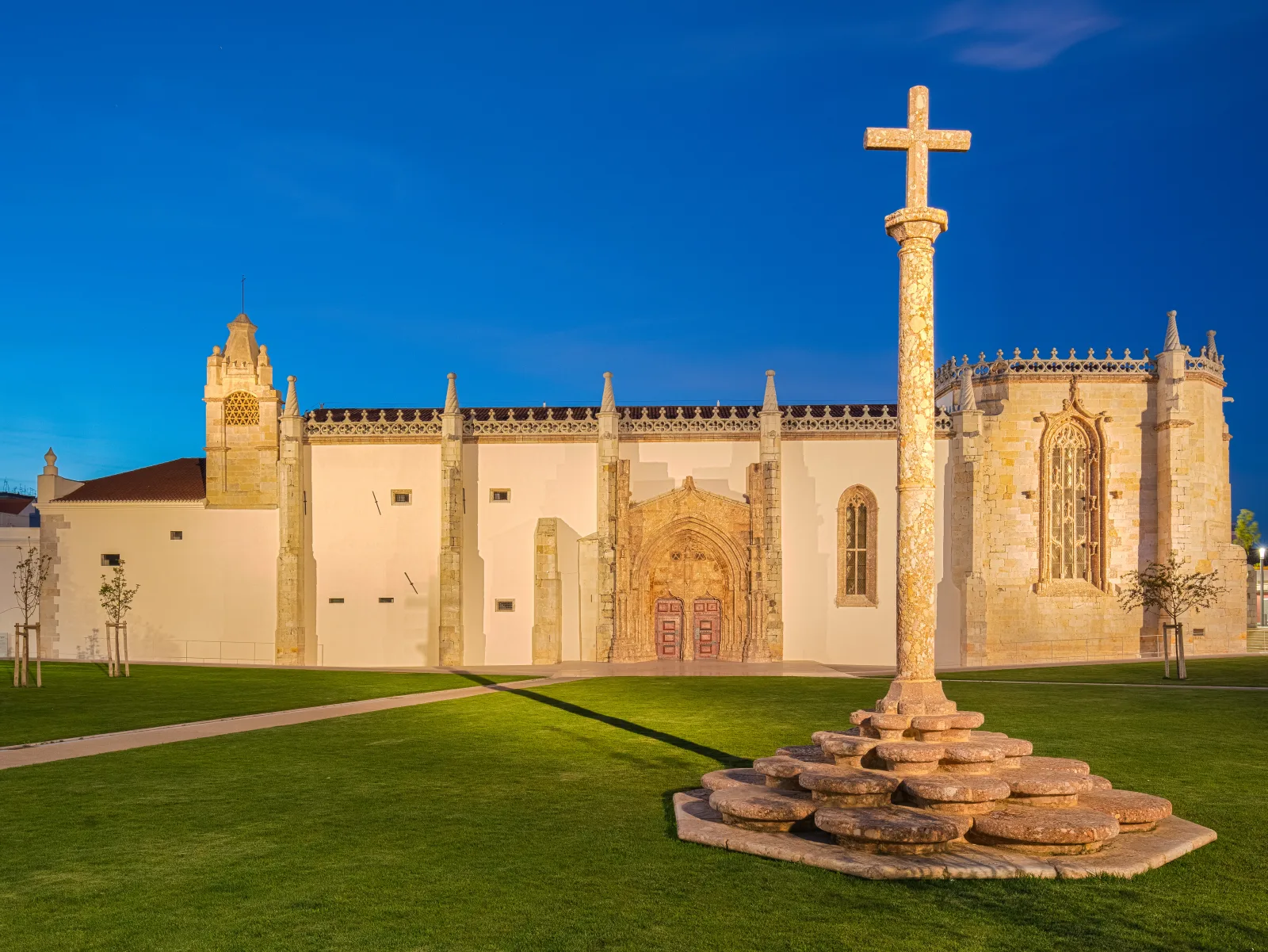
- The Monastery of Jesus (1490–1500) – the first example of the Manueline style, built by architect Diogo de Boitac under the patronage of Manuel I
- An aqueduct (begun in 1487 at João II’s initiative, completed under Manuel) – the city’s water supply system
- Expansion beyond the 14th-century medieval walls (by the 16th century, the walls had 5 gates and 13 posterns)
Decline: the Iberian Union
After the death of Sebastião I at the Battle of Alcácer-Quibir (1578) and the union of Portugal with Spain (1580), Setúbal suffered serious losses:
- Fort São Filipe (1582–1600) – built not only for defence but also to control the city, which had offered significant resistance to Spanish rule
- Embargo on Dutch trade – Spain banned Dutch ships from entering Iberian ports, severely undermining Setúbal’s salt trade
- Plague epidemics (1579–1580, 1582–1583, 1598–1603) devastated the population
- The earthquake of 1755 completed the period of decline
After the Restoration (1640), the Dutch resumed salt purchases, but during the 60 years of the Union, the city lost some of its trade connections permanently.
Timeline
| Year | Event |
|---|---|
| 1317 | Genoese Pessanha – Portugal’s first admiral |
| 1421 | Fishermen’s complaint: all the catch is being bought up at sea |
| 1458 | Afonso V’s armada to Alcácer-Ceguer: 200+ ships from Setúbal |
| 1473 | Setúbal – 2 contos in royal revenues |
| 1487 | Aqueduct construction begins (João II) |
| 1490–1500 | Monastery of Jesus – first Manueline building |
| 1492 | Vasco da Gama seizes French ships at Setúbal |
| 1494 | Treaty of Tordesillas ratified in Setúbal |
| 1511 | Manuel I bans external salt imports |
| 1514 | Foral reform due to city growth |
| 1525 | Title of “notável vila” (João III) |
| 1578–1580 | Iberian Union; beginning of decline |
| 1755 | Earthquake |
See also
- Setúbal and the Age of Discoveries – general context
- The Salt Trade of Setúbal
- Fort São Filipe
- The Monastery of Jesus
- Maritime Trade Routes of Moscatel
- The Modern Port of Setúbal
Image sources
- monastery-jesus-setubal.webp — Monastery of Jesus at night, Setúbal. Author: Diego Delso. License: CC BY-SA 4.0. Source
The light is on for free. But someone has to clean the lantern.
☕ Support on Ko-fi