Dockworkers and Port Labourers of Setúbal
Setúbal is a working-class city. Dockworkers, fishermen, canning factory women and ship repair labourers shaped the social fabric of the city throughout the 20th century. The history of Setúbal’s port workers is a story of trade union struggle under the Estado Novo, the turbulent events of the Carnation Revolution and the painful transformation into a post-industrial era.
A working-class city
Formation of the working class
By the early 20th century, Setúbal had become one of Portugal’s largest industrial centres. Three industries defined the character of the city:
- Canning industry – by the 1920s, dozens of sardine salting and canning factories operated in Setúbal. The workforce was predominantly female – operárias conserveiras. See canning industry
- Fishing – thousands of fishermen went to sea daily. See fishing culture
- Port work – loading and unloading salt, fish, cement, and later pulp and automobiles
Social geography
Setúbal’s working-class neighbourhoods formed around the port and factories:
- Bairro do Troino – the fishermen’s quarter
- Bairro dos Pescadores – literally “Fishermen’s Quarter”
- Fontainhas and areas along the waterfront – residential zones for port workers
These neighbourhoods became not only residential districts but also cradles of working-class culture: fado was sung here, and traditions of mutual aid took shape.
Estado Novo: suppression and resistance
Salazar’s corporatist system
Under the Estado Novo regime (1933–1974), free trade unions were banned. In their place, the state created sindicatos nacionais – government-controlled “national syndicates” incorporated into the corporatist system. Strikes were declared illegal.
Nevertheless, Setúbal remained one of Portugal’s most politically active cities. Underground cells of the Portuguese Communist Party (PCP) operated among fishermen, canning workers and dockworkers.
Strikes
Despite the ban, illegal strikes occurred in Setúbal:
- 1940s–1950s – spontaneous protests by canning workers for improved working conditions
- 1960s–1970s – politicisation of the labour movement, linked to anti-colonial resistance
[UNVERIFIED] Exact dates and scale of strikes at the port of Setúbal under the Estado Novo require further research in archival sources.
The Carnation Revolution and its aftermath
25 April 1974
The Carnation Revolution was particularly intense in Setúbal. Workers’ organisations swiftly emerged from the underground:
- Creation of free trade unions for dockworkers, fishermen and canning workers
- Occupation of enterprises by workers’ committees
- Setúbal became one of the strongholds of the left during the PREC period (Processo Revolucionário em Curso, 1974–1975)
Nationalisation and the Setenave shipyard
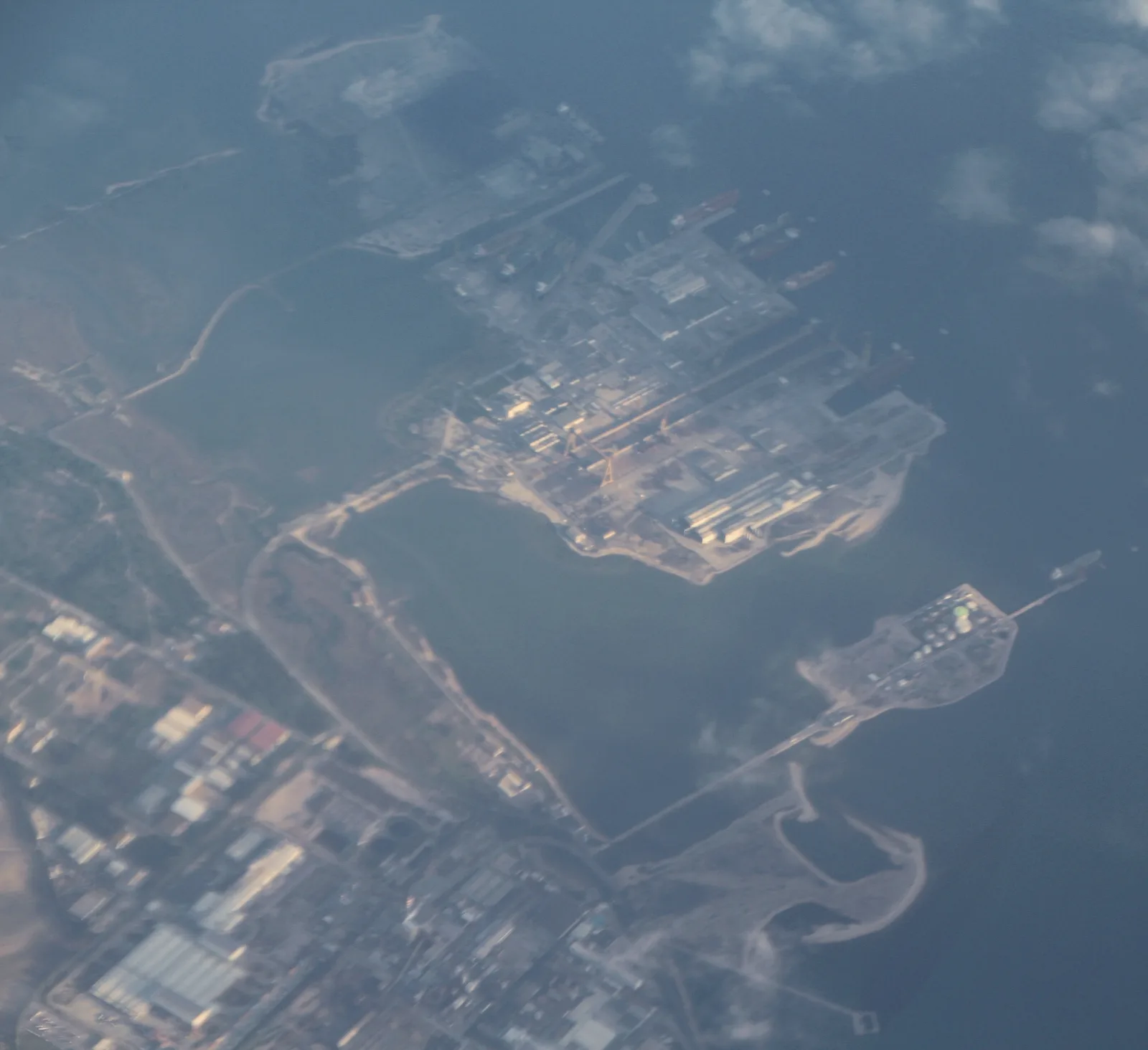
In 1975, the Setenave shipyard on the Mitrena peninsula was nationalised – the largest employer in the region. At its peak, the yard provided thousands of jobs. It was subsequently restructured and transformed into Lisnave – a ship repair operation with a significantly reduced workforce.
Transformation
Deindustrialisation
From the 1980s onwards, Setúbal experienced a painful transformation:
| Period | Event |
|---|---|
| 1980s | Closure of most canning factories |
| 1990s | Decline of shipbuilding; Setenave → Lisnave (ship repair) |
| 2000s | Port containerisation; reduction in manual labour |
| 2010s | Automation of port operations |
Whereas in the mid-20th century the port of Setúbal required thousands of estivadores (stevedores) for the manual loading of salt, fish and cement, the modern terminals of Sadoport and Tersado operate with significantly fewer staff thanks to containerisation and mechanisation.
New industries
Traditional port occupations have been replaced by:
- Automotive logistics – the Autoeuropa terminal (since 1995)
- Pulp and paper industry – the Navigator Company complex on Mitrena
- Ship repair – Lisnave (high-tech but with a smaller workforce)
Memory: the Museum of Work
The Museu do Trabalho Michel Giacometti (Museum of Work), housed in a former canning factory on the waterfront, preserves the memory of the city’s working history. The exhibition includes:
- Tools and equipment from canning factories
- Photographs and documents of port workers
- The ethnographic collection of Michel Giacometti (a Corsican ethnographer who devoted his life to studying Portuguese folk culture)
Timeline
| Year | Event |
|---|---|
| Early 20th c. | Rise of the canning industry; formation of the working class |
| 1933 | Establishment of the Estado Novo; ban on free trade unions |
| 1973–1974 | Construction of the Mitrena yard (Lisnave, 1973); Setenave company formally established (6 August 1974) |
| 1974 | Carnation Revolution; creation of free trade unions |
| 1975 | Nationalisation of Setenave |
| 1980s | Beginning of deindustrialisation; closure of canning factories |
| 1990s | Setenave → Lisnave; decline of shipbuilding |
| 1995 | Autoeuropa – a new type of employment |
| 2000s | Port containerisation |
See also
- The Canning Industry of Setúbal
- The Carnation Revolution in Setúbal
- The Modern Port of Setúbal
- Fishing Culture
- Museum of Work
Image sources
- lisnave-shipyard-aerial.webp — Lisnave/Setenave shipyards on Mitrena peninsula, aerial photo. Author: Bjoertvedt. License: CC BY-SA 4.0. Source
If this article was useful — help us write the next one.
☕ Support on Ko-fi