The Toponymy of Setubal
The place names of the Setubal region preserve the memory of two millennia of continuous settlement: Proto-Celtic, Latin, Arabic, and medieval Portuguese roots are interwoven in the names of the city, its neighbourhoods, beaches, and rivers. Every name is a witness to the civilisation that bestowed it.
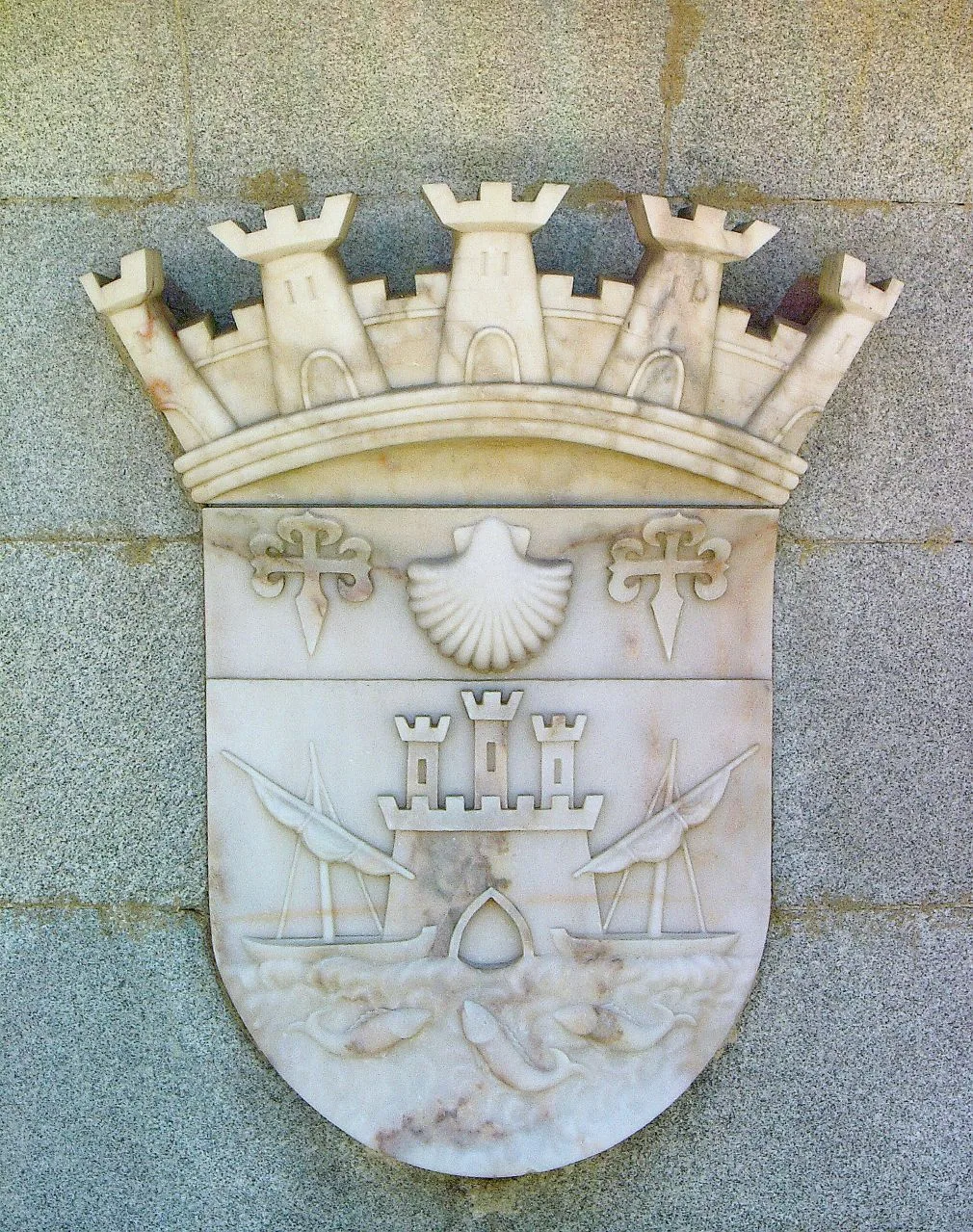
Setubal: From Cetobriga to Shatubar
The origin of the city name Setubal is among the best-documented toponymic cases in the region. The name descends from Cetobriga (Latin: Cetobriga, also Caetobriga) – a Roman settlement on the banks of the Sado estuary, active from the 1st through the 6th century AD.
The Proto-Celtic Root
The name Cetobriga itself has Proto-Celtic origins, deriving from the root *Caetobrix. The element *-brix (or *-briga) is a typical Celtic suffix meaning “fortified settlement” or “stronghold,” found in numerous Celtic toponyms across Western Europe (cf. Conimbriga / Coimbra, Lacobriga / Lagos).
The Arabic Transformation
During the period of Moorish rule (8th–12th centuries), the name passed through Arabic phonetic adaptation and became Shatubar (Andalusian Arabic: shatubar). The Arabic form preserved a phonetic link with the pre-Roman name while subjecting it to the rules of Arabic phonology. The 12th-century Arab geographer al-Idrisi referred to the river at Setubal as nahr Shatubar – “the river of Shatubar.”
European Variants
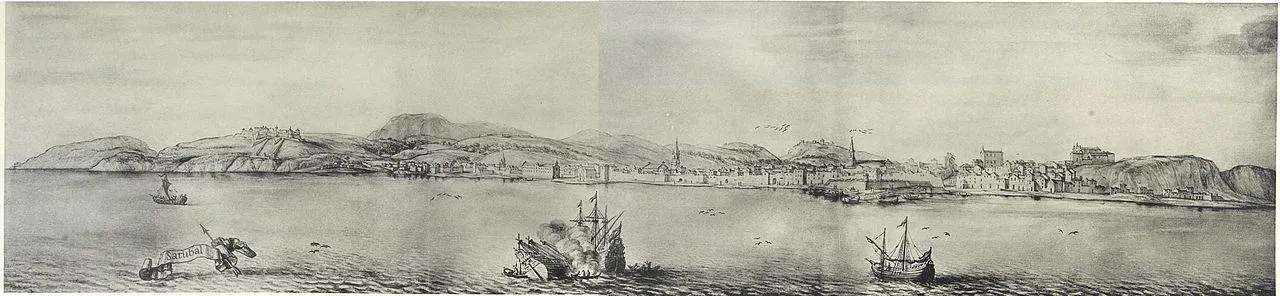
After the Reconquista, the Arabic form Shatubar evolved into the Portuguese Setubal. In the 17th century, during the era of active salt trade through the port of Setubal, foreign languages developed their own variants of the name:
- Saint Ubes – the English form
- Saint-Yves – the French form
Both variants represent folk etymology – attempts by foreign merchants to make sense of an unfamiliar name through the familiar pattern of “saint + name.” The city has no connection whatsoever to any Saint Ubes or Saint Yves.
Evolution of the Name
| Period | Form | Language |
|---|---|---|
| Pre-Roman | *Caetobrix | Proto-Celtic |
| Roman (1st–6th centuries) | Cetobriga / Caetobriga | Latin |
| Moorish (8th–12th centuries) | Shatubar | Andalusian Arabic |
| Medieval | Setubal | Portuguese |
| 17th century | Saint Ubes / Saint-Yves | English / French |
The River Sado (Rio Sado)
The Sado, on whose estuary Setubal stands, has a tangled toponymic history.
The Roman Name: Callipus
In ancient sources, the river bore the name Callipus. In late antiquity, this name apparently fell out of use and was replaced by the descriptive flumen de Caetobriga – “the river of Cetobriga.”
Sadao / Sado
Until the 18th century, the river was known as Sadao (Portuguese: Sadao). This form survives in a number of modern toponyms: Sao Romao do Sadao (municipality of Alcacer do Sal), Santa Margarida do Sadao (municipality of Ferreira do Alentejo), Sao Mamede do Sadao (municipality of Grandola).
Etymology: Uncertain
[DISPUTED] The origin of the name Sado / Sadao remains unclear and probably goes back to a pre-Roman (possibly Proto-Celtic or even earlier) substrate. The leading Portuguese etymologist Jose Pedro Machado (Dicionario Onomastico Etimologico da Lingua Portuguesa) rejects the hypothesis of a derivation from the Latin *Salatus (related to salt), despite the fact that the salt trade was central to the region. The modern shortened form Sado supplanted the historical form Sadao in the 18th century.
Arrabida
The name of the Serra da Arrabida mountain range and the natural park of the same name is of Arabic origin.
Ribat – The Islamic Fortified Monastery
The word Arrabida derives from the Arabic al-rabita, itself a derivative of the verb rabata – “to bind,” “to fasten.” From the same root comes the word ribat (Arabic: ribat) – originally a small fortified structure on the frontier of Muslim territories, serving simultaneously as a military outpost and a place of religious retreat. The warrior-monks who inhabited ribats were called murabitun (hence “Almoravids,” the ruling dynasty of the Maghreb).
Over time, ribats lost their military function and evolved into centres of Sufi piety and hermitage. On the Iberian Peninsula, the Arabic root gave rise to numerous toponyms: Rabida, Rapita, Arrabida.
From Ribat to Monastery
It is a striking fact that the territory named after an “Islamic fortified monastery” later became the site of the Franciscan Convento da Arrabida (founded in 1542) – a Christian counterpart to the hermit’s retreat. In this way, the name proved prophetic: the place that the Arabs had called a “retreat” remained one under a different faith.
Troia
The Troia Peninsula, situated across the Sado estuary from Setubal, was known in antiquity as Acala and was originally an island. Its Roman name was associated with Cetobriga – the industrial settlement that produced garum.
A Connection to Ancient Troy?
[DISPUTED] The origin of the modern name Troia remains a matter of debate. The 16th-century humanists Gaspar Barreiros and Andre de Resende, who first described the ruins on the peninsula, erroneously identified them with Cetobriga. There is a hypothesis that the name arose among Renaissance scholars, who were inclined to bestow classical names upon newly discovered archaeological sites. The scale of destruction on the peninsula may have evoked associations with the fall of legendary Troy – hence the name “Portuguese Troy” that took hold.
[UNVERIFIED] According to another theory, the toponym may have an earlier origin unrelated to ancient Greek Troy; however, no documentary evidence for this hypothesis has been found.
Palmela
The town of Palmela, situated to the north of Setubal, received its name in the Roman era.
The Roman Founder
The toponym derives from the name of the Roman statesman Aulus Cornelius Palma Frontonianus, twice consul (99 and 109 AD), who served as governor of Hispania Tarraconensis around 100 AD and apparently fortified this site. The Latin form Palmella was gradually transformed into the Portuguese Palmela.
[UNVERIFIED] Some researchers point to an earlier settlement dating to approximately 310 BC, which was subsequently fortified by the Roman praetor. After the Romans, the site was occupied in succession by the Visigoths and then the Muslims, who significantly expanded the fortress in the 10th–12th centuries.
Azeitao
The name Azeitao, a district to the west of Setubal renowned for its cheese and Moscatel, is of Arabic origin.
Olive Oil in the Name
The word derives from the Arabic az-zayt – “olive oil,” “olive juice.” The same root gave Portuguese the words azeite (olive oil) and azeitona (olive). The suffix -ao in Portuguese often denotes a place associated with a particular product or activity. Thus, Azeitao literally means “the place where olive oil is produced” or “the olive country.”
The etymology accords well with the history of the region: olive groves have been cultivated on the slopes of the Arrabida since the era of Moorish rule and remain part of the landscape to this day.
Neighbourhoods of Setubal
Fontainhas
Fontainhas is the historic fishing quarter of Setubal, settled from the 17th century onward. The name derives from the Portuguese fontainha – a diminutive of fonte (“spring,” “well,” “fountain”). Fontainhas literally means “little springs” – apparently, the quarter was located at a site where springs emerged from the ground.
Bonfim
The name of the Bonfim quarter derives from the Portuguese Bom Fim – “good ending,” “blessed outcome.” This is a typical religious toponym, associated with the cult of Senhor do Bonfim (Lord of the Good Ending) – one of the dedications to Jesus Christ widely observed in Portugal and Brazil. [UNVERIFIED] In Setubal, the quarter probably took its name from a chapel or church dedicated to Senhor do Bonfim.
Outao
Outao is located at the entrance to the Sado estuary, where the Fort of Santiago do Outao stands. The word outao derives from Old Galician-Portuguese outo with the augmentative suffix -ao. In turn, outo goes back to the Latin altus – “high.” Thus, Outao means “high place” or “elevated point” – an apt description of the headland at the entrance to the bay. The earliest known structure at this site is a watchtower and lighthouse erected by order of King Joao I in 1390.
The Beaches of Arrabida
The beaches along the coast of the Serra da Arrabida bear evocative Portuguese names rooted in the local landscape and natural surroundings.
Figueirinha (Praia da Figueirinha)
The name derives from figueirinha – a diminutive of figueira (“fig tree”). Literally: “a little fig tree.” The beach is named after the wild fig trees that once grew in abundance in the vicinity.
Galapinhos and Galapos (Praia dos Galapinhos, Praia dos Galapos)
[UNVERIFIED] The etymology of the beach names Galapinhos and Galapos is unclear. One hypothesis connects them with the Portuguese word galapago – “turtle” (cf. Spanish galapago, which gave its name to the Galapagos Islands). The suffix -inhos is a diminutive plural, meaning Galapinhos could signify “little turtles” or “place of small turtles.” However, no convincing documentary evidence for this connection has been found.
Portinho da Arrabida
The name literally means “little port of Arrabida.” Portinho is a diminutive of porto (“port,” “harbour”). The site historically served as an outlying anchorage for the port of Setubal, where fishermen would set their tackle and ply their trade during certain seasons, forming a temporary settlement.
Streets and Squares
The street names of Setubal constitute a memorial topography of the city – a map of its cultural heroes and historical events.
Praca do Bocage
The city’s main square is named after Manuel Maria Barbosa du Bocage – the foremost poet of Setubal. A white marble statue of the poet (by sculptor Joao Carlos dos Reis) was ceremonially unveiled on 21 December 1871 – the anniversary of the poet’s death. The monument stands twelve metres tall: atop a base of four octagonal steps rises a Corinthian column crowned by a two-metre figure of Bocage, quill pen in his right hand.
Avenida Luisa Todi
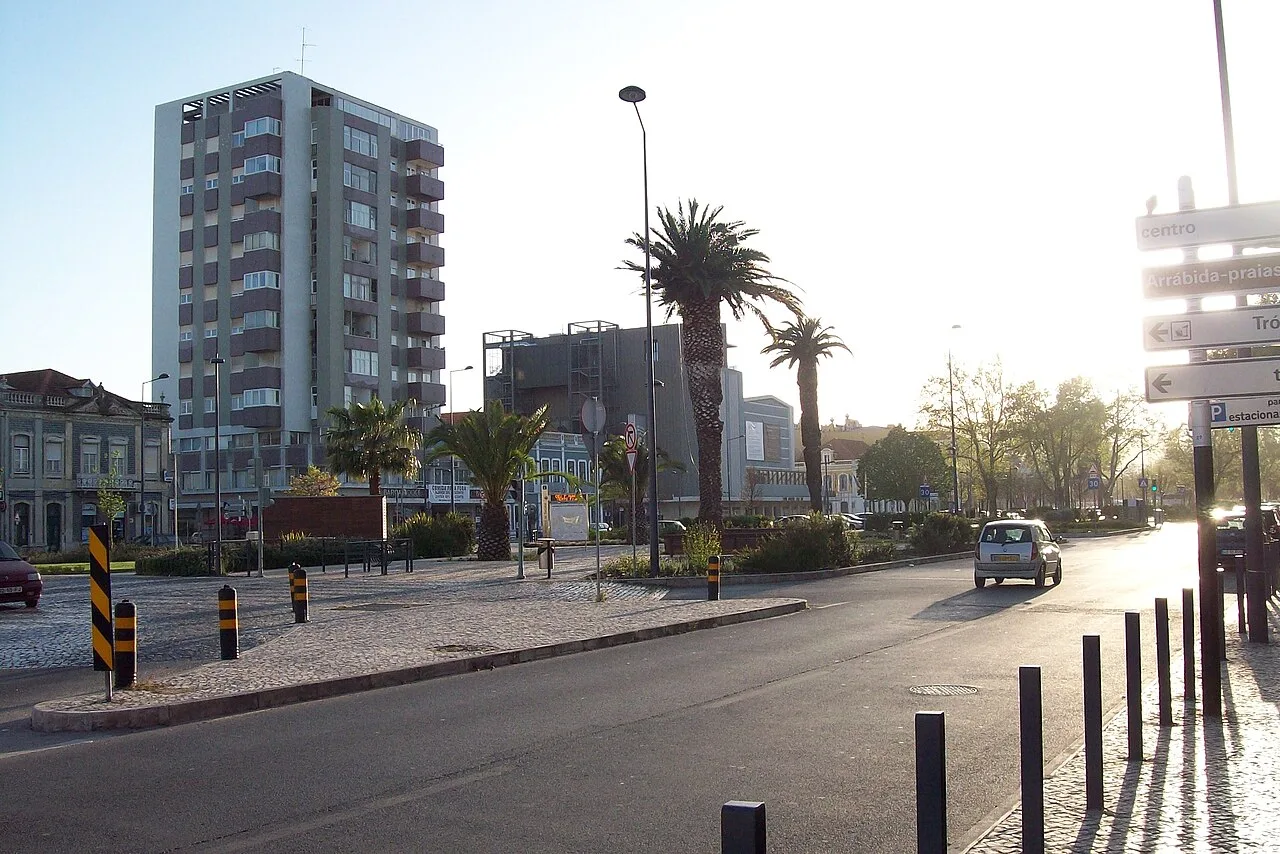
The principal waterfront avenue of Setubal received its present name in 1895 in honour of Luisa Todi – an opera singer born in Setubal who won renown across Europe. Before the renaming, the street was known as Rua da Praia (“Beach Street”). Reconstruction of the avenue began in the summer of 1848: the street was levelled, paved, and lined with trees.
Other Memorial Toponyms
The streets and squares of Setubal commemorate the names of figures associated with the city and with Portuguese history at large. Among them:
- Streets named after figures of the Carnation Revolution
- Toponyms linked to the Age of Discoveries
- Names that recall the medieval era and the Reconquista
The Arabic Legacy in Toponymy
The Moorish period (8th–12th centuries) left a deep imprint on the toponymy of the Setubal region. In addition to Arrabida (from al-rabita) and Azeitao (from az-zayt) discussed above, Arabic roots can be traced in a number of other toponyms:
- Alcacer do Sal – from the Arabic al-qasr (“fortress”), a town on the Sado upstream from Setubal
- Albarquel – [UNVERIFIED] presumably from an Arabic root meaning a fortified place; the Fort of Albarquel stands on the Setubal waterfront
This density of Arabic toponyms attests to the significance of the region for Muslim al-Andalus – fortified outposts, ribats, and agricultural estates were established here over the course of several centuries.
The Pre-Roman Substrate
Beyond the Proto-Celtic root in the name of Cetobriga and the probably pre-Roman origin of the hydronym Sado (Sadao), [UNVERIFIED] the region may preserve traces of even earlier linguistic strata – Phoenician and Turdetanian. The Turdetani, who inhabited the southwestern Iberian Peninsula before the arrival of the Romans, founded Cetobriga, yet their language remains poorly studied, and it is difficult to reliably identify Turdetanian toponyms in the modern landscape.
Conclusion
The toponymy of the Setubal region is a kind of geological cross-section in which each layer corresponds to an epoch: the pre-Roman substrate (Sadao, Caetobrix), Latin forms (Cetobriga, Palmella, Callipus), Arabic overlays (Shatubar, al-rabita, az-zayt), medieval Portuguese transformations (Setubal, Arrabida, Azeitao), and later memorial namings (Praca do Bocage, Avenida Luisa Todi). The city tells its own history through its names – one need only know how to read them.
Image sources
- toponymy-brasao-setubal.webp — Coat of arms of Setubal. Author: Unknown. License: Public domain. Source
- toponymy-setubal-1669-panorama.webp — Panorama of Setubal in 1669. Author: Unknown (17th century). License: Public domain. Source
- toponymy-avenida-luisa-todi.webp — Avenida Luisa Todi. Author: GualdimG. License: CC BY-SA 4.0. Source
See also
- Cetobriga – A Roman City
- The Moorish Period
- Reconquista and Medieval Setubal
- Arrabida Natural Park
- Sado Estuary
- Troia Peninsula
- Galapinhos Beach
- The Salt Trade
- Bocage – The Poet of Setubal
- Luisa Todi
- Convento da Arrabida
If this article was useful — help us write the next one.
☕ Support on Ko-fi