Arrabida Natural Park
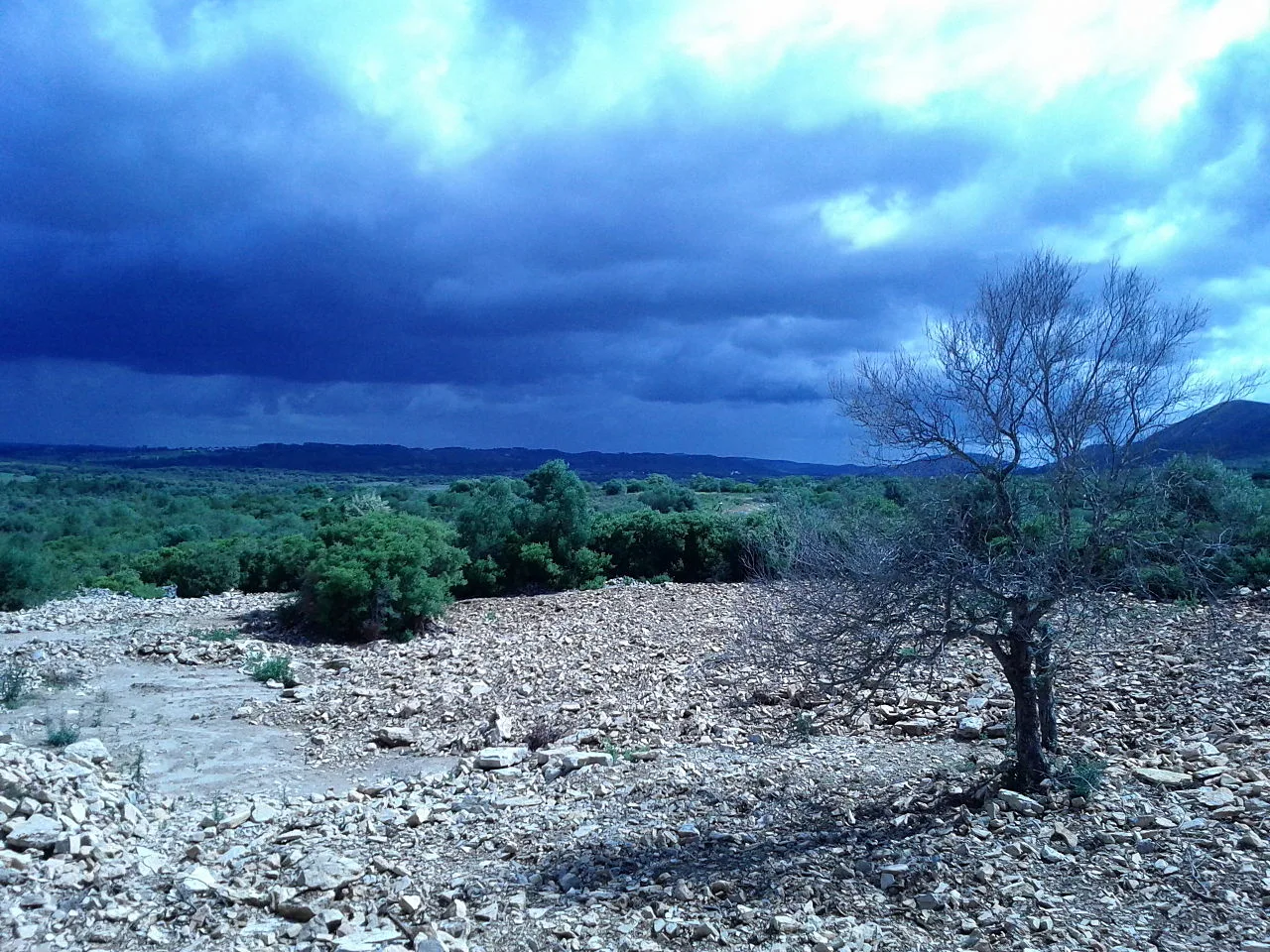
Arrabida Natural Park (Parque Natural da Arrabida) is a protected area on the southern edge of the Setubal Peninsula, encompassing the limestone mountain range of Serra da Arrabida and the adjacent Atlantic waters. Established in 1976, it preserves one of the few remaining pockets of truly Mediterranean vegetation on Portuguese soil.
Geography
The park occupies the southern tip of the Setubal Peninsula, roughly 40 km south of Lisbon. Its territory spans parts of the municipalities of Setubal, Palmela and Sesimbra.
Total area: 176.41 km2, of which 123.30 km2 is land and 53.11 km2 is marine.
Geology
The Serra da Arrabida mountain range was formed by the collision of the African and Eurasian tectonic plates. The geological history of the area involves four successive rifting phases that led to the break-up of Laurasia and the opening of the North Atlantic. The mountain massif took shape during the Jurassic and Miocene periods, while the lowland areas date to the Pliocene and Quaternary.
The massif is predominantly limestone, with frequent rocky outcrops forming dramatic cliffs. Its highest point is Formosinho Peak (Formosinho), at 501 metres above sea level. The setting is unique along the Atlantic coast: a limestone ridge that drops directly into the ocean – a landscape more typical of the Mediterranean than of Western Europe’s Atlantic seaboard.
Coordinates
Park centre: approximately 38.48° N, 8.98° W.
Ecosystem
Flora
The park’s plant life comprises some 1,450 botanical species, representing roughly 40% of all the flora of Portugal. Among them are about 70 rare and endemic species.
The terrain of Arrabida creates a multitude of microhabitats with varying Mediterranean and Atlantic characteristics. Three floristic elements converge here:
- Euro-Atlantic vegetation – predominant on the northern slopes
- Mediterranean vegetation – dominant on the southern slopes
- Macaronesian vegetation – occupying coastal areas with complex relief
One of the park’s greatest botanical treasures is the Mediterranean maquis (maquis) – dense, fragrant thickets of drought-resistant shrubs and trees. This is one of the rarest examples of maquis in Portugal, and its preservation was a key reason for the park’s creation. Characteristic species include:
- Phoenician juniper (Juniperus phoenicea)
- Holm oak (Quercus ilex)
- Mastic tree (Pistacia lentiscus)
- Strawberry tree (Arbutus unedo)
- Common myrtle (Myrtus communis)
- Wild jasmine
- Laurustinus (Viburnum tinus)
Endemic species: Several species are endemic to the region, including Convolvulus fernandesii (corriola-do-Espichel), which grows exclusively on dry, sea-facing rocky slopes between Sesimbra and Cape Espichel, and Euphorbia pedroi. Both species survived the Ice Age thanks to the unique microclimatic conditions created by the Arrabida massif and the influence of the Atlantic Ocean.
Fauna
The park is home to 213 vertebrate species: 8 amphibians, 16 reptiles, 154 birds and 35 mammals.
Mammals: Red fox (Vulpes vulpes), common genet (Genetta genetta), European badger (Meles meles), Egyptian mongoose, wild boar, hare, European rabbit, least weasel (Mustela nivalis), European polecat (Mustela putorius) and stone marten (Martes foina). The presence of the European wildcat (Felis silvestris) is considered probable.
Birds: Arrabida is the only stretch of the Portuguese coast where the rare Bonelli’s eagle (Aquila fasciata) nests. Other raptors include the peregrine falcon (Falco peregrinus) and the Eurasian eagle-owl.
Bats: The limestone caves and cliffs provide shelter for several bat species: Schreibers’s long-fingered bat (Miniopterus schreibersii), Mediterranean horseshoe bat (Rhinolophus euryale), greater horseshoe bat (Rhinolophus ferrumequinum) and Mehely’s horseshoe bat (Rhinolophus mehelyi).
Professor Luiz Saldanha Marine Park
In 1998, the Professor Luiz Saldanha Marine Park (Parque Marinho Professor Luiz Saldanha) was established within the park – the first marine park on the Portuguese mainland. It covers 53.11 km2 of ocean and stretches along 38 km of coastline.
The marine park’s waters harbour more than 2,000 marine species – a record level of biodiversity for this area. This richness is explained by the park’s position at the boundary between cooler higher-latitude waters and warmer lower-latitude waters, as well as the proximity of an upwelling zone.
The ecosystem’s trophic web comprises 884 taxa. A pivotal role is played by the common cuttlefish (Sepia officinalis), the species with the greatest number of prey species.
Marine park zoning provides three levels of protection:
- Total protection – all human activity is prohibited
- Partial protection – limited fishing is permitted (octopus traps, hook-and-line)
- Complementary protection – fishing is allowed for licensed vessels up to 7 metres in length
In the 2000s, the EU LIFE BIOMARES project carried out large-scale biodiversity restoration and management work in the marine park.
Conservation status
Arrabida Natural Park was established by Decree 622/76 on 28 July 1976. Its purpose was to protect the geological, forest, faunal and landscape resources, as well as the cultural and historical heritage of the area.
The park is managed by ICNF (Instituto da Conservacao da Natureza e das Florestas – the Institute for Nature Conservation and Forests of Portugal).
International conservation designations:
- Natura 2000: Special Area of Conservation (ZEC: PTCON0010 Arrabida / Espichel)
- Natura 2000: Special Protection Area for birds (ZPE: PTZPE0050 Cabo Espichel)
Threats
- Wildfires: The risk of fire is high, especially in summer. Wild camping and lighting fires are strictly prohibited.
- Invasive species: Non-native plants threaten the indigenous flora.
- Urbanisation and land use: Development pressure; management plans for the protected area are integrated with municipal master plans (PDM).
- Human pressure: Heavy tourist influx during the summer months.
People and nature
Cultural heritage
Within the park lies the Convent of Arrabida (Convento da Arrabida), founded in 1542 by the Franciscan friar Martinho de Santa Maria on land donated by the first Duke of Aveiro. The monks lived in cells carved into the limestone rock. The 25-hectare complex includes the Old Convent on the mountaintop, the New Convent on the slope, a garden and the Bom Jesus sanctuary. After the dissolution of religious orders in 1834, the convent fell into disrepair and was restored in the 1940s and 1950s. Since 1990 it has belonged to the Orient Foundation (Fundacao Oriente).
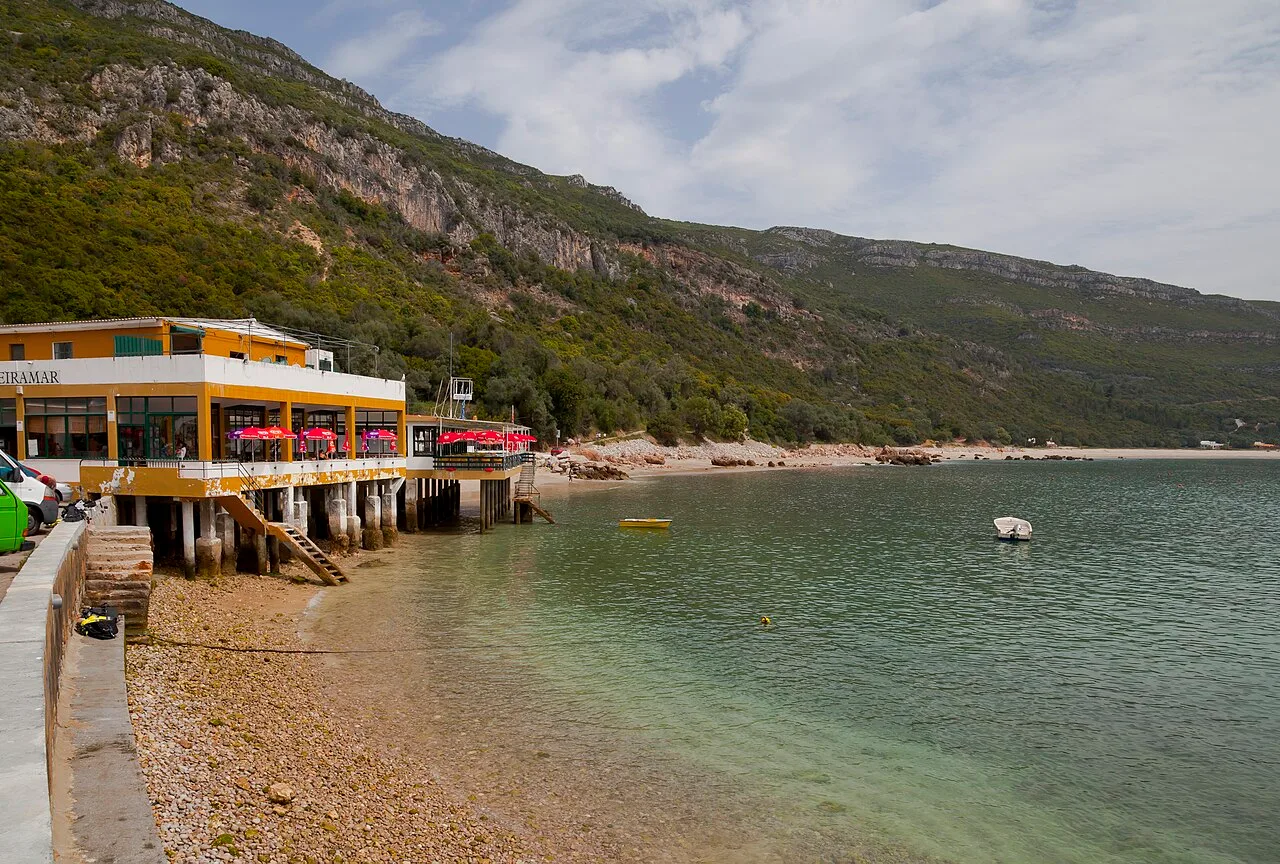
On the coast near the village of Portinho da Arrabida stands Lapa de Santa Margarida – a 17th-century chapel sheltered inside a sea cave. About 200 stone steps lead down to it. The cave has been inhabited since ancient times; nearby is a Neanderthal site (closed to the public).
The Fort of Santa Maria at Portinho da Arrabida houses the Oceanographic Museum.
Archaeology
Roman ruins have been found within the park – fish-salting tanks at Creiro, evidence of an ancient fishing tradition in these waters.
What to see
Beaches
The park is celebrated for its turquoise-water beaches, tucked into coves at the foot of limestone cliffs:
- Praia da Figueirinha – the most accessible beach, with parking
- Praia de Galapos (Galapos)
- Praia de Galapinhos (Galapinhos) – voted one of the best beaches in Europe in 2017
- Praia de Coelhos (Coelhos)
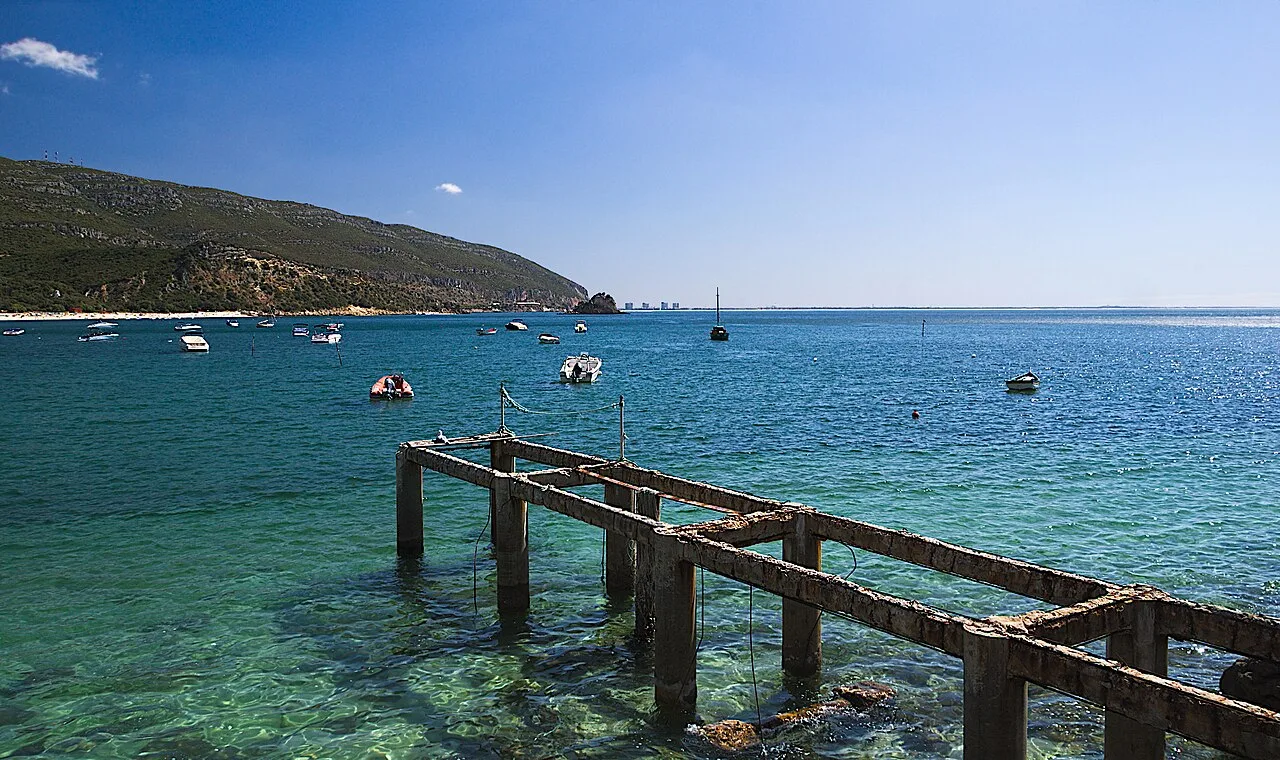
- Portinho da Arrabida – a historic cove with a fort and museum
Hiking trails
Several official trails wind through the mountain range, offering panoramic views of the coastline and the Sado Estuary. Some trails may be temporarily closed during high fire-risk periods in summer.
Practical information
- Getting there: From Lisbon, take the A2 motorway towards Setubal (about 40 minutes), then follow the N10 or N379-1 roads through the park.
- Best time to visit: Spring (March–May) for wildflowers and hiking; summer for beaches (subject to restrictions); autumn for mild weather.
- Restrictions:
- “Arrabida Car-Free” programme – from mid-June to mid-September, vehicle traffic is restricted on the stretch between Figueirinha and Creiro beaches (07:00–19:00). A free shuttle bus operates.
- Year-round ban on vehicle access between Figueirinha and Galapos due to landslide risk.
- Wild camping and open fires are prohibited.
- The marine park has zones with varying restrictions on fishing and water activities.
Image sources
- paisagem-arrabida.webp — Arrabida Natural Park landscape. Author: FakenMC. License: CC BY-SA 3.0. Source
- parque-natural-arrabida-vista.webp — View of Arrabida park and Portinho bay. Author: Diego Delso. License: CC BY-SA 3.0. Source
- portinho-da-arrabida.webp — Panorama of Portinho da Arrabida. Author: Juntas. License: CC BY-SA 4.0. Source
See also
- Sado Estuary
- Sado Dolphins
- Troia Peninsula
- Convent of Arrabida
- Cetobriga – the Roman city
- Moscatel de Setubal
- Queijo de Azeitao
- Mushrooms of Arrábida — rare calciphilous fungi and black truffle potential of the limestone ecosystem (Mushroom Encyclopedia)
If this article was useful — help us write the next one.
☕ Support on Ko-fi