Professor Luiz Saldanha Marine Park
📷 Image credit
Photo: Pepolino83 / Wikimedia Commons / CC BY-SA 4.0
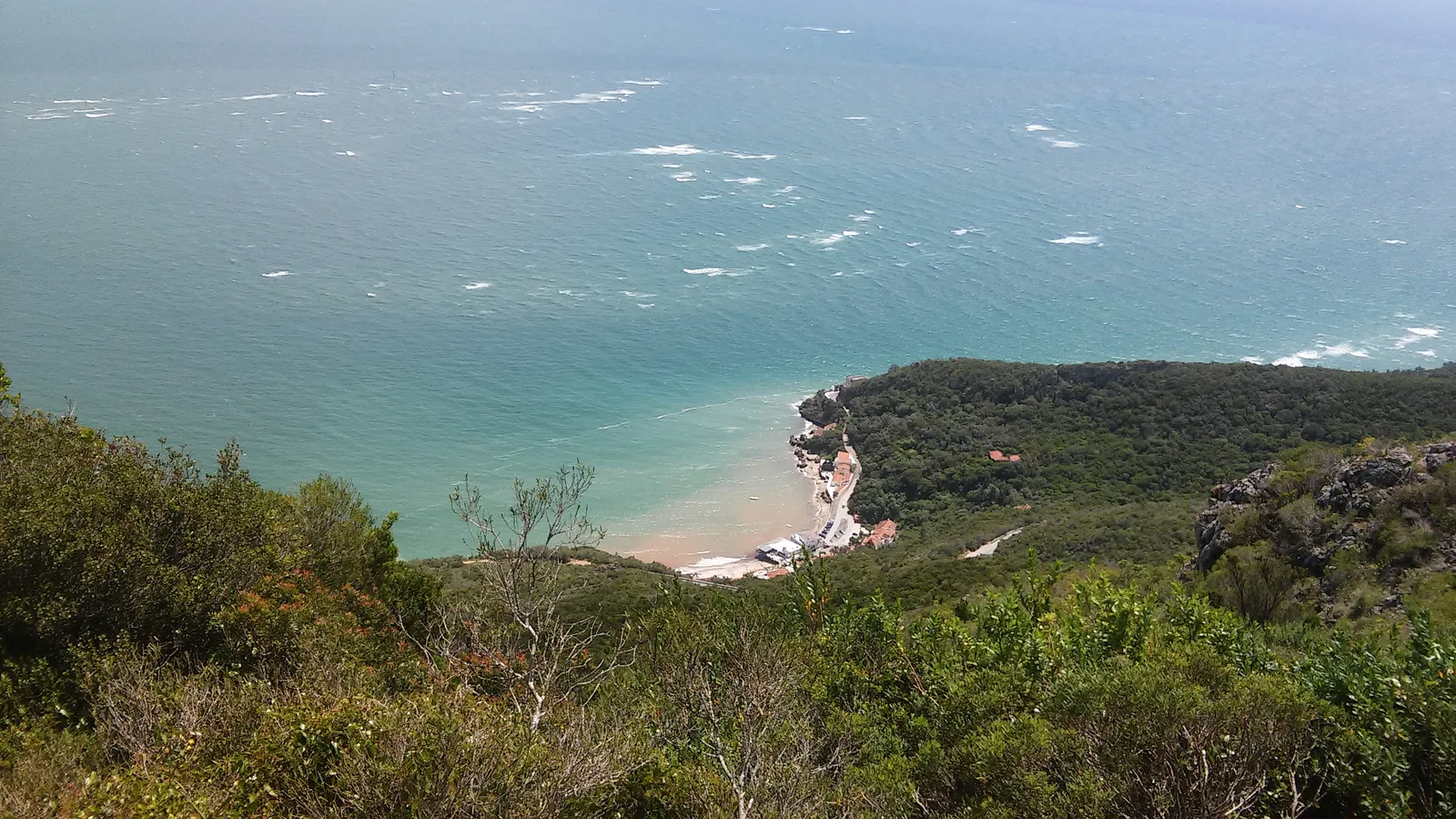
The Professor Luiz Saldanha Marine Park (Parque Marinho Professor Luiz Saldanha) is the first marine protected area on mainland Portugal. Stretching along the coast of Serra da Arrábida, it covers 53 km² of ocean and 38 km of coastline. Situated at the junction of the Atlantic and Mediterranean biogeographic zones, the park harbours over 1,100 marine species. It is part of the Natura 2000 network and an integral component of the Arrábida Natural Park.
History
The first proposal
In 1965, Professor Luiz Saldanha and his colleagues from the Portuguese Centre for Underwater Activities (CPAS) submitted a proposal to the Ministry of the Navy for the creation of a marine reserve along the Arrábida coast. The proposal was rejected.
A park without the sea
When the Arrábida Natural Park was established in 1976 (Decreto 622/76), it covered only the terrestrial area. The marine waters remained unprotected for over two decades.
Establishment of the marine park
On 14 October 1998, Regulatory Decree No. 23/98 established the marine park as a component of the Arrábida Natural Park. It was named after Professor Luiz Saldanha, who had died the previous year (16 November 1997) without seeing his vision realised.
Management plan
Full regulation came into effect in 2005 with the approval of the Spatial Plan for the Arrábida Natural Park (POPNA, Resolução do Conselho de Ministros n.º 141/2005), following two to three years of public consultation and heated protests from stakeholders – primarily fishermen and recreational boat owners.
Professor Luiz Saldanha
Luiz Vieira Caldas Saldanha (1937–1997) was a Portuguese marine biologist and ichthyologist who devoted his career to the study of northeastern Atlantic marine fauna.
| Fact | Details |
|---|---|
| Born | 16 December 1937, Lisbon |
| Died | 16 November 1997 |
| Education | PhD in marine biology (thesis on the marine fauna of Arrábida) |
| Positions | Full Professor at the University of Lisbon (from 1979); Director of the Guia Marine Laboratory in Cascais (1974–1997); President of INIP |
| Discoveries | Participated in the discovery of the first hydrothermal vents and seamounts of the Azores |
| Conservation | President of the Liga para a Protecção da Natureza (1985–1987) |
From 1969 Saldanha took part in deep-sea expeditions aboard manned submersibles – the French Archimède and Nautile, and the American Alvin. He trained generations of marine biologists who work across Portugal and abroad today.
Area and zoning
Key facts
| Parameter | Value |
|---|---|
| Area | 53.11 km² |
| Coastline | 38 km (from Figueirinha beach to Foz beach, north of Cabo Espichel) |
| Depths | up to 100 m |
| Seabed types | Rocky and sandy |
| Administration | ICNF (Instituto da Conservação da Natureza e das Florestas) |
| Status | Natura 2000 SCI; part of the Arrábida Natural Park |
Zone system
Since 2005, the park’s waters have been divided into zones at three levels of protection:
| Zone type | Rules |
|---|---|
| Full protection (Proteção Total) | All activities prohibited, including fishing. Vessels must keep at least 0.25 nautical miles from shore. Access for scientific monitoring only |
| Partial protection (Proteção Parcial, 4 zones) | Limited access; diving through certified operators; regulated fishing |
| Complementary protection (Proteção Complementar, 3 zones) | Least restrictive; buffer zone |
Commercial fishing with set nets and hand lines is allowed only beyond 0.25 nautical miles from shore; squid and octopus trapping – beyond 200 m from shore.
Biodiversity
Biogeographic context
The Arrábida coast sits at the transitional boundary between the Atlantic and Mediterranean biogeographic zones. The mouth of the Tagus River (approximately 30 km to the north) serves as a rough boundary: to the south, the number of Mediterranean species rises sharply. For many of them, Arrábida represents the northern limit of distribution.
Main species groups
Fish: sea breams (Diplodus spp.), comber (Serranus cabrilla), Mediterranean rainbow wrasse (Coris julis), and 16 species of large meso- and macrocarnivores particularly vulnerable to spearfishing.
Mammals: bottlenose dolphin (Tursiops truncatus) and common dolphin (Delphinus delphis) – inhabitants of the adjacent Sado Estuary.
Invertebrates: octopus (the primary commercial resource of the licensed fleet), cuttlefish, spider crab, sea anemones, sea urchins.
Algae and seagrasses:
- Kelp: 4 of Europe’s 13 Laminaria species, including Laminaria ochroleuca – populations with high genetic diversity that have existed here for thousands of years.
- Seagrass Zostera marina: meadows serving as nurseries for juvenile fish and invertebrates.
Loss and recovery
Seagrass meadows near Portinho da Arrábida shrank from 30 hectares in 1983 to 0.006 hectares in 2006 – near-total destruction caused by fishing and recreational boating. These were the last truly marine Zostera meadows on the Atlantic coast of Iberia.
Restoration projects
LIFE-BIOMARES (2007–2013)
The largest ecosystem restoration project in the park:
- 62 pilot plots; 5,276 seagrass sods transplanted across 7 hectares
- Survival rates were low (storms and fish grazing), but natural seed-based recovery of Z. marina showed high growth rates in undisturbed areas
- The project became a model for marine reserve creation within the Natura 2000 network
Research projects 2017–2021
Studies in the marine park and along the Alentejo coast demonstrated a “reserve effect”: increased biomass and abundance of reef fish in fully protected zones within 3–4 years of their establishment.
Threats
- Illegal fishing – particularly dredging for bivalves
- Recreational pressure – anchoring and mooring damage benthic habitats
- Climate change – rising water temperatures and declining nutrients threaten kelp populations at the southern edge of their range
- Invasive species – the impact of alien algae on fish ecology is under study
Diving and recreation
Diving in the park is permitted through certified operators. The main dive centre in the region is Haliotis Sesimbra (PADI-certified). Notable dive sites include:
- Pedra do Leão – an underwater arch at ~5 m depth with schools of fish
- River Gurara – a Nigerian cargo ship that sank in 1989; depth ~28–30 m
- Jardim das Gorgónias – a “garden of gorgonians” with colourful soft corals
Snorkelling and kayaking in partial protection zones require notification to the GNR (National Republican Guard). Eco-friendly mooring buoys have been installed; the number of recreational vessels is limited.
For more on water activities, see Water Sports in the Arrábida Region.
Relationship with the Natural Park
The marine park is an integral part of the Arrábida Natural Park. The mountains of Serra da Arrábida directly influence the marine ecosystem: limestone cliffs extend beneath the water, creating rocky reefs and sheltered coves. The three floristic elements found on land (Euro-Atlantic, Mediterranean and Macaronesian) are mirrored in the park’s marine biodiversity.
In September 2025, Arrábida was designated a UNESCO Biosphere Reserve – a recognition that encompasses both the terrestrial and marine components of the park.
Key dates
| Year | Event |
|---|---|
| 1965 | Luiz Saldanha proposes a marine reserve |
| 1976 | Arrábida Natural Park established (land only) |
| 1997 | Death of Professor Saldanha |
| 1998 | Professor Luiz Saldanha Marine Park established |
| 2005 | Spatial plan with zoning system approved |
| 2007–2013 | LIFE-BIOMARES restoration project |
| 2025 | UNESCO Biosphere Reserve designation |
📷 Image credit
Photo: Epinheiro / Wikimedia Commons / CC BY 3.0
See also
- Arrábida Natural Park
- Sado Dolphins
- Sado Estuary
- Galapinhos Beach
- Water Sports in the Arrábida Region
- Arrábida Hiking Trails
The light is on for free. But someone has to clean the lantern.
☕ Support on Ko-fi