Sado Dolphins
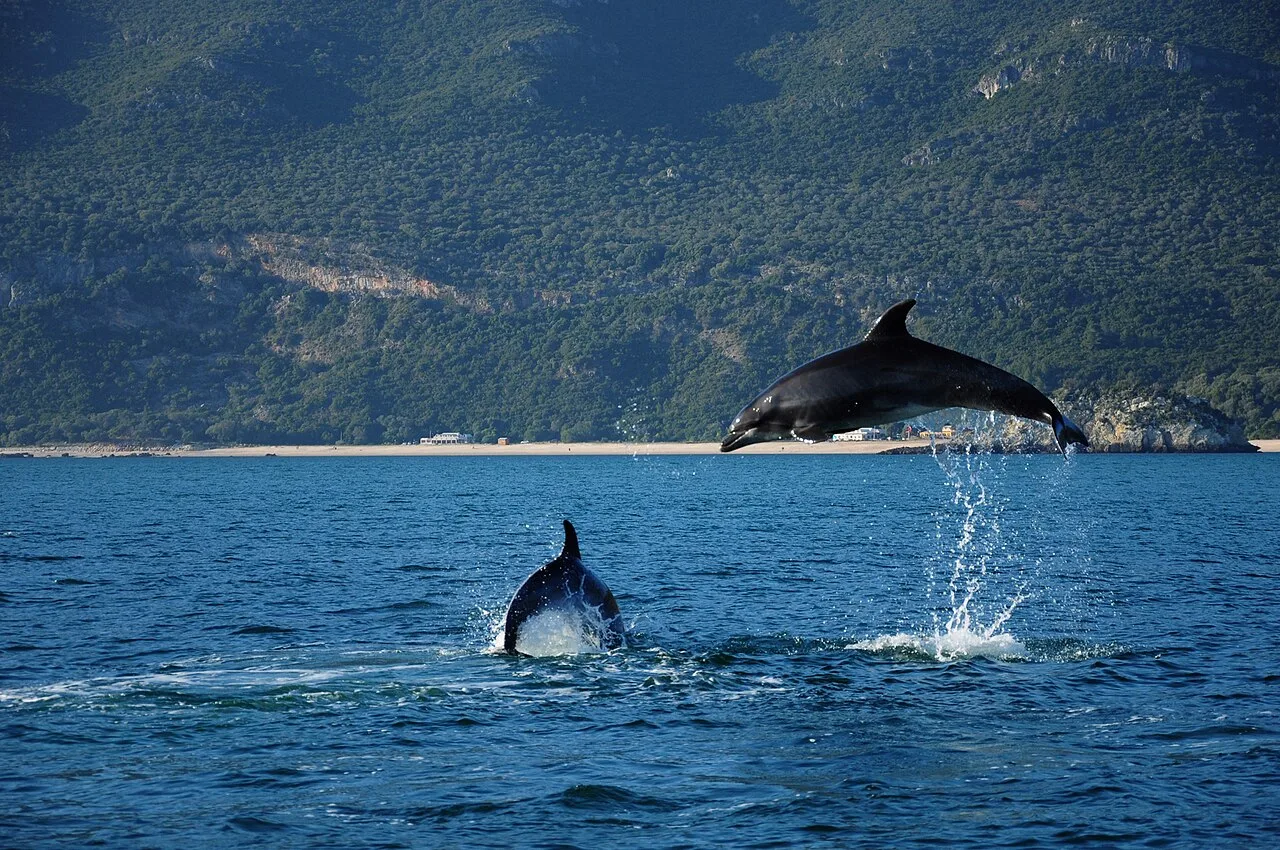
The Sado dolphins (Golfinhos do Sado) are a resident population of common bottlenose dolphins (Tursiops truncatus) that permanently inhabit the Sado Estuary near Setubal. This is the only such population in Portugal and one of three known resident dolphin populations in European estuaries. As of early 2026, the group numbers approximately 28 individuals.
Biology
Species
The common bottlenose dolphin (Tursiops truncatus) is one of the most extensively studied dolphin species. Adults reach a length of 2–4 metres and a weight of up to 300 kg. Bottlenose dolphins are highly social animals with advanced intelligence, a complex communication system and prolonged parental care.
Resident population
The Sado population is one of three resident bottlenose dolphin populations in European estuaries:
| Population | Location | Approximate size | Trend |
|---|---|---|---|
| Sado Estuary | Setubal, Portugal | ~28 individuals | Historically declining, now stabilised |
| Shannon Estuary | Ireland | ~140 individuals | Relatively stable |
| Moray Firth | Scotland | ~224 individuals | Increasing |
The Sado population is the smallest of the three and raises the greatest concern for long-term survival.
History and population dynamics
Early scientific observations
The first scientific records of dolphins in the Sado Estuary date to 1980 – the work of Teixeira and Duguy (1981), Hussenot (1982), Dos Santos (1985) and Dos Santos and Lacerda (1987). The population has been under continuous scientific monitoring ever since.
Population trends
- 1980s: When systematic observations began, the estuary held roughly 40 dolphins.
- 1980s–1990s: Numbers declined significantly.
- 2005: Only 22 individuals remained – the lowest count on record.
- 2011: 25 individuals recorded.
- 2020s: The population stabilised at 25–28 individuals.
- January 2026: 28 individuals recorded – including a newborn calf named Bravo (Bravo), born in July 2025.
Demographic structure (2020s)
The community remains fragile and ageing:
- 19 adults, more than half of them over 30 years old
- 6 juveniles
- 3 calves
Low birth rates and an ageing population are the chief demographic challenges. According to a reassessment of the estuary’s carrying capacity (2022), the probability of population growth by 2030 is rated as low.
Identification and monitoring
Photo-identification method
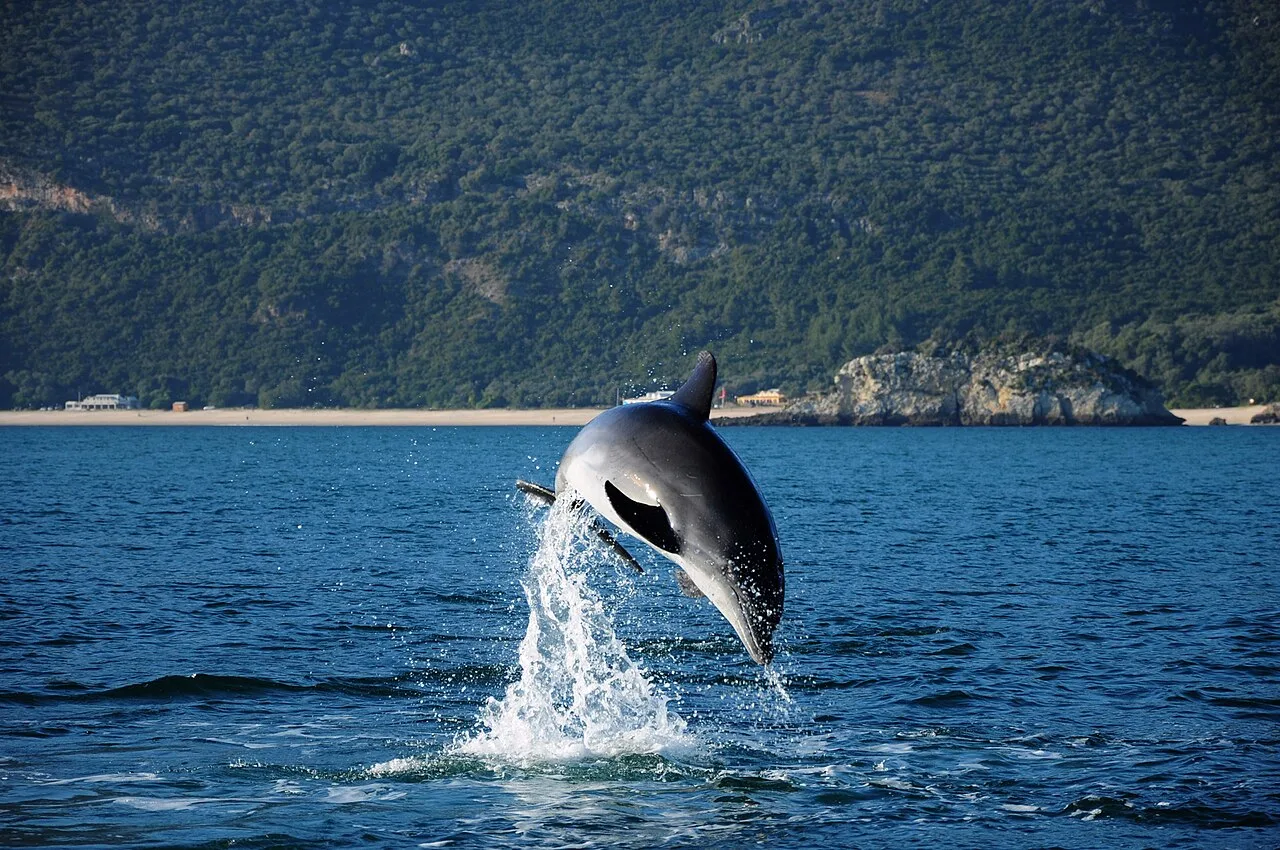
Every individual has been identified by distinctive markings on its dorsal fin – notches, scars and fin shape. All the dolphins in the group have been given personal names by researchers. Among the known names are Estrela, Luz, Azul, Bisnau and Bravo.
Scientific monitoring
The dolphins have been monitored by ICNF (Instituto da Conservacao da Natureza e das Florestas) for more than 40 years – one of the longest-running dolphin monitoring programmes in Europe.
Research is conducted by, among other institutions:
- Faculty of Sciences, University of Lisbon (Faculdade de Ciencias da Universidade de Lisboa)
- Abel Salazar Biomedical Sciences Institute (University of Porto)
Research areas include ecology, social structure, genetics, acoustic communication and the conservation outlook for the population.
Genetic data
Genetic studies have revealed low genetic diversity in the Sado population. The group is isolated from other Iberian bottlenose dolphin populations, leading to high levels of inbreeding and reduced reproductive potential.
Threats
Estuary pollution
The industrial zone on the northern shore of the estuary (pulp and paper mills, shipyards, chemical plants) is a source of contamination. Bottlenose dolphins are particularly vulnerable to persistent organic pollutants: high concentrations that accumulate through bioaccumulation can suppress reproductive function.
Shipping and noise
The port of Setubal, regular ferry services to the Troia Peninsula, recreational vessels and routine dredging operations generate constant background noise and a risk of vessel strikes. Underwater noise disrupts the dolphins’ echolocation and communication.
Tourist pressure
The growing number of dolphin-watching excursion boats has become a significant source of disturbance. Increasing tourism in Setubal and on Troia also adds to pollution levels.
Demographic factors
- Small population size
- Ageing age structure
- Low birth rate
- Genetic isolation and inbreeding
Protection and regulation
Legal status
The Sado dolphins are protected within the Sado Estuary Natural Reserve (Reserva Natural do Estuario do Sado) as well as under European habitats directives.
Regulation of dolphin watching
Regulations governing dolphin watching have been progressively tightened:
- 2013: A plan to reduce disturbance and pollution was adopted, including a code of conduct for tour operators.
- All operators are required to follow ICNF standards. Observation time is limited to 30 minutes per session.
- 2023–2025: For the third consecutive year, ICNF introduced experimental exclusion zones near the estuary mouth (Cambalhao/Cabecudos), where all presence, anchoring and dolphin-watching activities are prohibited.
- July 2025: Dolphin watching and the presence of tourist and recreational vessels at the estuary entrance were banned entirely.
These measures are based on the findings of the Study for the Reassessment of the Carrying Capacity for Cetacean Observation in the Sado Estuary (2022), which underscored the vulnerability of the population.
Local initiatives
The municipality of Setubal has taken steps to limit pollution, overfishing and disturbance to the dolphins within the reserve.
Dolphin watching
Current situation (2025–2026)
Due to the tightening of ICNF restrictions, opportunities for dolphin watching have been substantially reduced. Tour operators in Setubal offer boat trips around the Sado Estuary and along the Arrabida coast, during which dolphin sightings are possible but not guaranteed.
Observation rules
Where watching is permitted:
- Contact time – no more than 30 minutes
- Minimum distance from the dolphin group
- No pursuit or encirclement
- The zone near the estuary mouth is off-limits
Recommendation
Dolphin watching in Setubal is one of the region’s top tourist attractions, but visitors should approach it with an awareness that the protection of this vulnerable population takes priority. Choose only licensed operators, and bear in mind that the restrictions have been put in place to ensure the survival of this unique dolphin community.
Significance for science and conservation
The Sado dolphin population is of considerable scientific interest as one of the few examples of large marine mammals permanently inhabiting an estuarine environment close to a major city. Over 40 years of monitoring have produced one of the most comprehensive datasets on the demography of a small bottlenose dolphin population – data of great value for understanding the dynamics of small cetacean populations generally.
The future of this group remains uncertain. Although numbers have stabilised in recent years and individual births have occurred, the ageing population structure, genetic isolation and ongoing human pressures make it impossible to predict with confidence whether the population will survive in the long term.
Practical information
- Where to watch: Excursion boats depart from Setubal harbour (Doca do Comercio). Dolphins can also sometimes be seen from shore near the estuary mouth.
- Best time: Spring and summer (April–September), though the dolphins inhabit the estuary year-round. Check the current ICNF restrictions.
- Restrictions: Before planning an excursion, consult the latest observation rules on the ICNF or Visit Setubal website, as they are updated annually and may include a complete ban during certain periods.
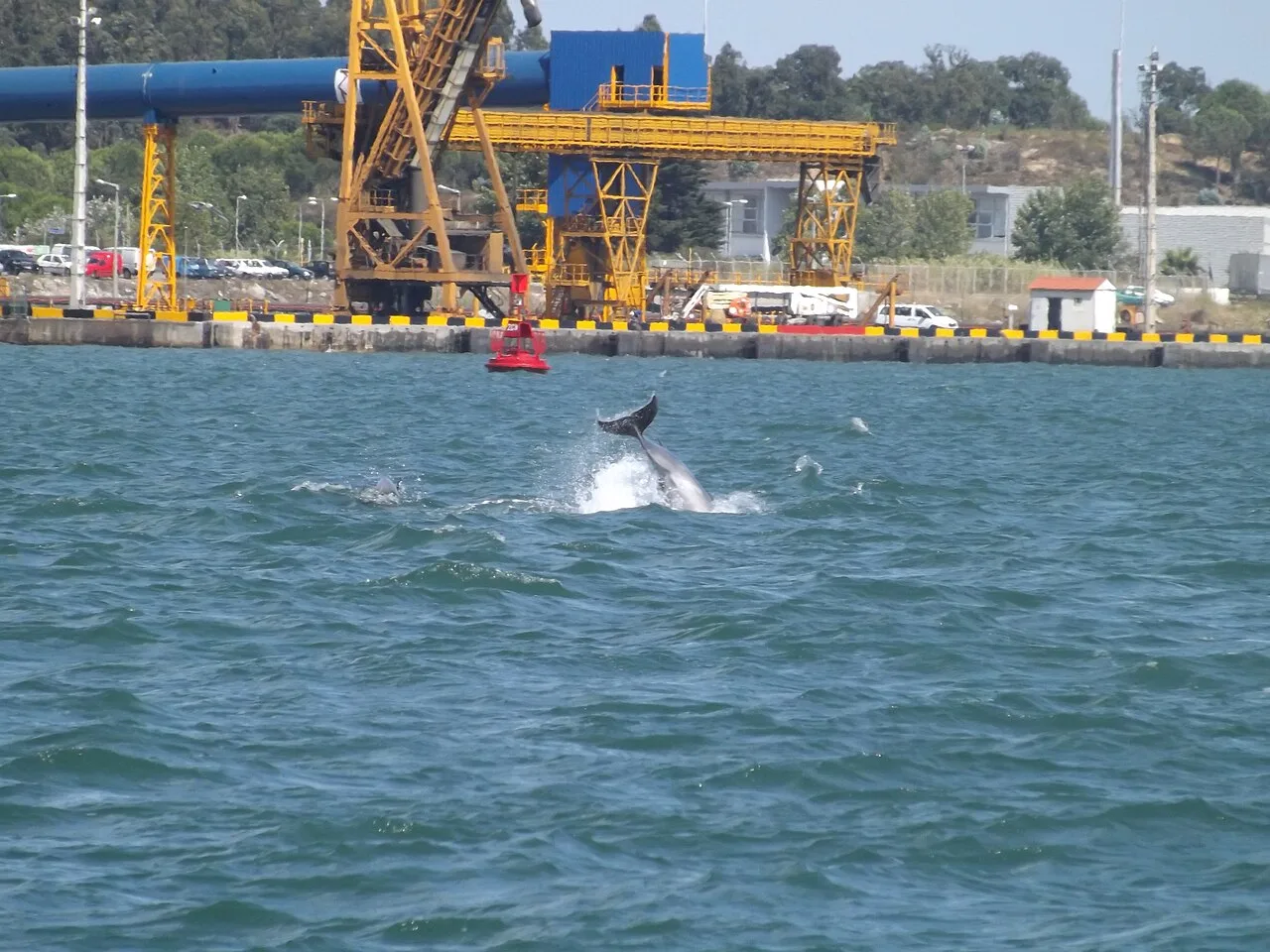
Image sources
- golfinhos-do-sado.webp — Sado dolphins — bottlenose dolphins. Author: Joao Coutinho. License: CC BY-SA 4.0. Source
- golfinho-do-sado.webp — Sado dolphin leaping from the water. Author: Joao Coutinho. License: CC BY-SA 4.0. Source
- grand-dauphin-setubal.webp — Bottlenose dolphin in the Sado bay. Author: Leodras. License: CC BY-SA 4.0. Source
See also
The light is on for free. But someone has to clean the lantern.
☕ Support on Ko-fi