Ana de Castro Osório — Pioneer of Feminism
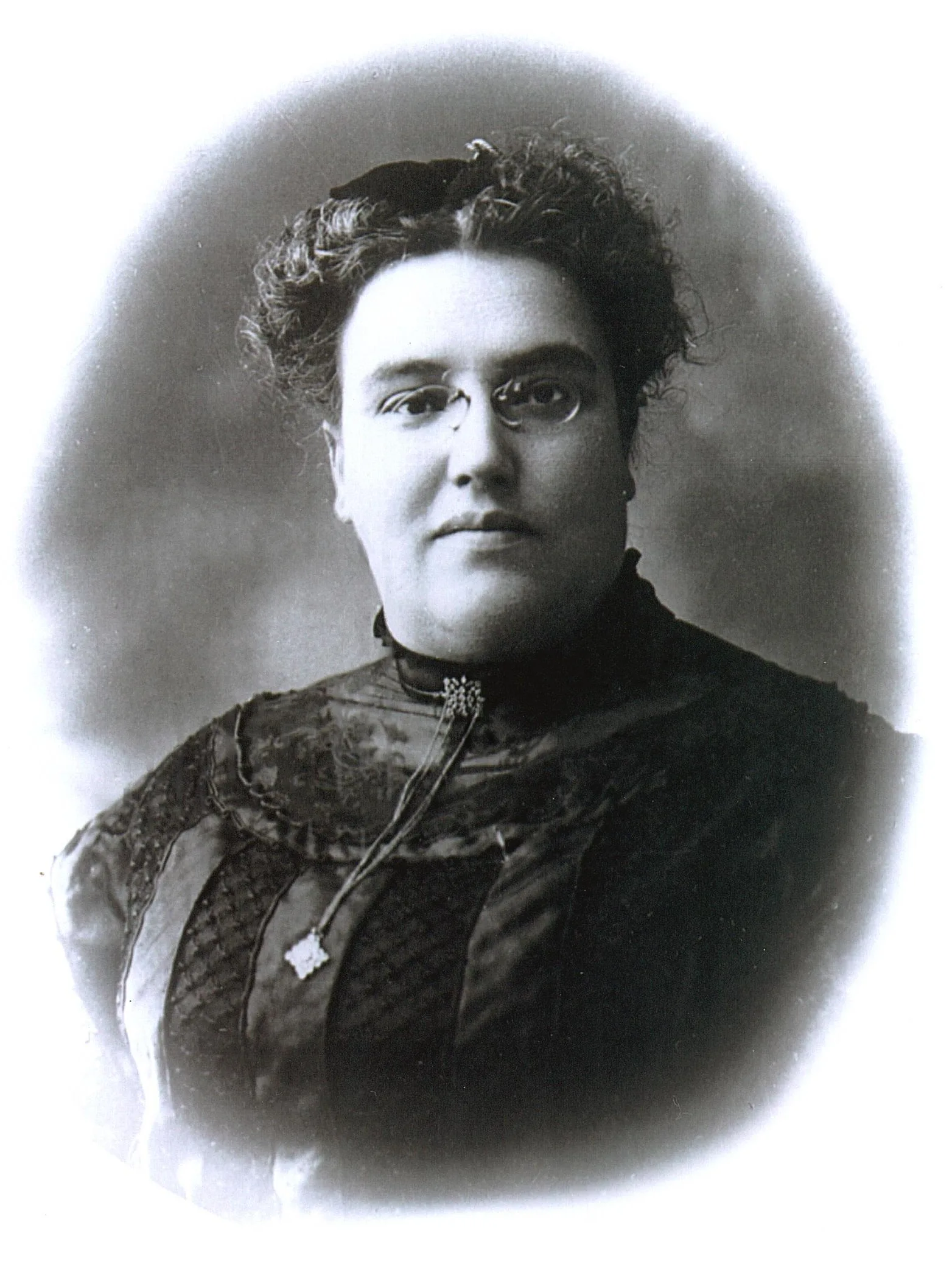 Photo: Public Domain. Museu da Presidência da República. Wikimedia Commons.
In the fishing quarter of Troino, where women with salt-mangled hands worked 14 hours a day in canning factories, a thought was born that would overturn conceptions of women’s role in Portuguese society.
Early Years in Setúbal (1872-1895)
Ana de Castro Osório was born June 18, 1872 in Mangualde, a small town in the Beira Alta region of Portugal. From early childhood the family moved to Setúbal, where her father João Baptista de Castro served as a judge. The family settled in the Troino quarter.
Living in Troino — the poorest fishing district of the city — was a defining experience for the formation of her social consciousness. She daily observed:
- Women arranhadoras (fish processors) working at canning factories under conditions she would later call “modern slavery”
- Child mortality from unsanitary conditions, malnutrition, and lack of medical care
- Female illiteracy — more than 80% of Troino women could not read or write
- Domestic violence considered a private family matter in which neither police nor church intervened
- Lack of legal subjectivity for women — they could not own property, sign contracts, travel without husband’s permission
Her family, though poor, belonged to the petty bourgeoisie, which provided Ana access to education — a rare privilege for a woman of that time. She studied at a private school for girls in Setúbal, where she received basic knowledge of Portuguese language, arithmetic, and housekeeping (traditional program of women’s education).
From an early age she displayed literary talent and critical thinking. At age 14 she published her first poems in the local newspaper Eco de Setúbal under the pseudonym “A.L.” (name initials), as the publisher refused to print a woman’s name on the literary page.
In 1895, at age 23, she married Paulino de Castro Osório, an officer and republican activist, and moved to Lisbon. The marriage, though traditional in form, proved to be a union of intellectual like-minded people: her husband supported her literary and political activity, which was exceptionally rare for the era.
“Às Mulheres Portuguesas”: First Feminist Manifesto (1905)
In 1905 Ana de Castro Osório published “Às Mulheres Portuguesas” (“To Portuguese Women”) — a text recognized as the first feminist manifesto in Portugal. The small 32-page brochure became a political bombshell, causing fury in conservative society and admiration in progressive circles.
Key Theses of the Manifesto
1. Education as the Foundation of Emancipation
“A woman without education is a slave kept in ignorance to be more easily controlled.”
Osório demanded universal women’s education, identical to men’s, including access to universities and professional schools. She criticized traditional “women’s education,” reduced to needlework, cooking, and religious catechism.
2. Economic Independence
“Economic dependence is the root of all other forms of oppression. As long as a woman cannot earn her own living, she remains a man’s property.”
She demanded opening of all professions to women (except those requiring physical strength), equal pay, the right to own property and dispose of one’s earnings without husband’s or father’s permission.
3. Political Rights
“A woman pays taxes, obeys laws, but has no voice in their creation. This is tyranny masked as natural order.”
She advocated for women’s suffrage — a radical demand, considering that even most men in Portugal did not have the right to vote due to property qualifications.
4. Reform of Family Legislation
Osório criticized the Civil Code, which enshrined legal inequality in marriage:
- Husband as “head of family” with right of control over wife
- Impossibility of divorce (for Catholics)
- Husband’s right to physically punish wife “for educational purposes”
- Deprivation of woman’s parental rights in divorce
She demanded civil marriage, right to divorce, joint parental authority.
Society’s Reaction
The publication caused a scandal:
- The Catholic Church declared the text “blasphemous” and called for a boycott
- Conservative newspapers accused Osório of “destroying the family” and “imitating foreign vices”
- Monarchists saw in feminism a threat to traditional order
- Some liberals supported the call for education but considered the demand for voting rights “premature”
Simultaneously the text inspired a young generation of educated women from the middle classes, many of whom for the first time heard articulated demands corresponding to their own vague sense of injustice.
Grupo Português de Estudos Feministas (1907)
In March 1907 Ana de Castro Osório founded Grupo Português de Estudos Feministas (GPEF, “Portuguese Group of Feminist Studies”) — the first feminist association in Portugal.
Goals and Activities
GPEF united about 50 women (predominantly teachers, writers, journalists) and set tasks:
- Educational lectures on women’s rights and history of feminism
- Legal aid to women victims of domestic violence
- Lobbying legislative reforms
- Publication of feminist texts and translations of foreign authors
- International connections with suffragist movements of Great Britain, France, USA
The group published the journal “A Sociedade Futura” (“Future Society”), featuring articles on women’s rights, child pedagogy, and social issues. In 1908, Osório together with Adelaide Cabete and Fausta Pinto de Gama founded the Liga Republicana das Mulheres Portuguesas (Portuguese Women’s Republican League). She also edited the journal “A Mulher e a Criança” (“Woman and Child”), which sought to show that feminism does not mean rejection of motherhood, but demands its dignified conditions — medical care, education, economic support.
Split and Limitations
GPEF split in 1909 due to disagreements between radical and moderate wings:
- Radicals (led by Osório) demanded immediate granting of all rights
- Moderates proposed gradual reforms starting with education
Additionally, the group faced internal contradictions:
- Most participants were from the educated bourgeoisie, detached from the working class
- Demands were often formulated in terms of “educated mothers for the nation,” excluding childless and working women
- Connection with the republican movement made feminism suspect to conservatives, but simultaneously subordinate to the political goals of republicans
After the collapse of the monarchy in 1910 and establishment of the First Republic, GPEF effectively ceased activity, as many participants switched to work in republican organizations.
The Divorce Law (1910)
One of Osório’s most significant practical achievements was her collaboration with Afonso Costa, Minister of Justice in the provisional republican government, in drafting the divorce law (1910). Osório wrote “A Mulher no Casamento e no Divórcio” (“Woman in Marriage and Divorce”), which became the theoretical foundation for legislative changes. The adoption of the civil divorce law was one of the First Republic’s earliest major reforms and a direct result of feminist struggle.
Children’s Literature: Cultural Revolution
Parallel to feminist activism, Ana de Castro Osório created Portuguese children’s literature as an independent genre. Before her there were practically no quality books for children in Portuguese — they read either adaptations of foreign tales or religious teachings.
Literary Works
She wrote more than 40 books for children, including:
- “Contos Tradicionais Portugueses” (1914) — adaptation of folk tales
- “Para as Crianças” series (1897-1935) — stories about Portuguese history, nature, family life
- “Viagens Aventurosas de Teresinha” (1917) — adventure novel with a girl heroine (innovation!)
- “A Minha Pátria” (1906) — patriotic stories for schoolchildren
Her books were distinguished by:
- Pedagogical function — development of critical thinking, not blind obedience
- Modern language — rejection of archaic vocabulary and complex constructions
- Active heroines — girls not only wait for rescue but solve problems themselves
- Secular content — ethics without religious dogmatism
Osório also founded the publishing house “Livraria Editora” (1909), specializing in children’s literature and educational materials. The publishing house existed until the 1970s and published hundreds of titles that educated several generations of Portuguese.
Emigration to Brazil (1911-1914)
After the establishment of the Republic, Ana’s husband, Paulino Osório, was appointed consul in São Paulo, Brazil. The family moved in 1911. Three years in Brazil proved fruitful:
- Contact with Brazilian feminist movement (stronger than Portuguese)
- Lectures at women’s clubs and educational societies
- Publication of articles in Brazilian journals
- Observation of immigrant communities — thousands of Portuguese living in poverty
The Brazilian experience strengthened her criticism of the Portuguese state, which did not care for emigrants. Upon return she published a series of articles on the need for state support of the diaspora.
Later Years and Legacy (1914-1935)
Returning to Lisbon in 1914, Osório focused on literary and publishing activity, withdrawing from active politics after disappointment in the First Republic, which did not fulfill promises on women’s rights.
In the 1930s, with the establishment of Salazar’s dictatorship, her feminist works were effectively banned (though there was no official prohibition). Children’s literature continued to be published, but under censorship control.
Ana de Castro Osório died March 23, 1935 in Lisbon at age 62, in relative obscurity. The Salazar regime actively silenced her feminist legacy, promoting the image of “woman-mother,” devoted to family and nation.
Posthumous Recognition
After the Carnation Revolution of 1974, the name of Ana de Castro Osório was “rediscovered” by feminist researchers. Her texts were republished, biography written, schools and libraries named after her.
In Setúbal, where she spent the first 23 years of life, a public library in the Troino quarter is named after her — a symbolic return to the district that inspired her struggle.
Annually June 18 (birthday) memorial lectures and exhibitions are held dedicated to her legacy as pioneer of Portuguese feminism, founder of children’s literature, and republican intellectual.
See Also
- Troino — Fishing Quarter of Setúbal
- Luísa Todi — Prima Donna of European Stages
- Canning Industry of Setúbal
- Carnation Revolution and Its Legacy
All our knowledge is free. Creating it is not.
☕ Support on Ko-fi