Bocage -- Setubal's Poet
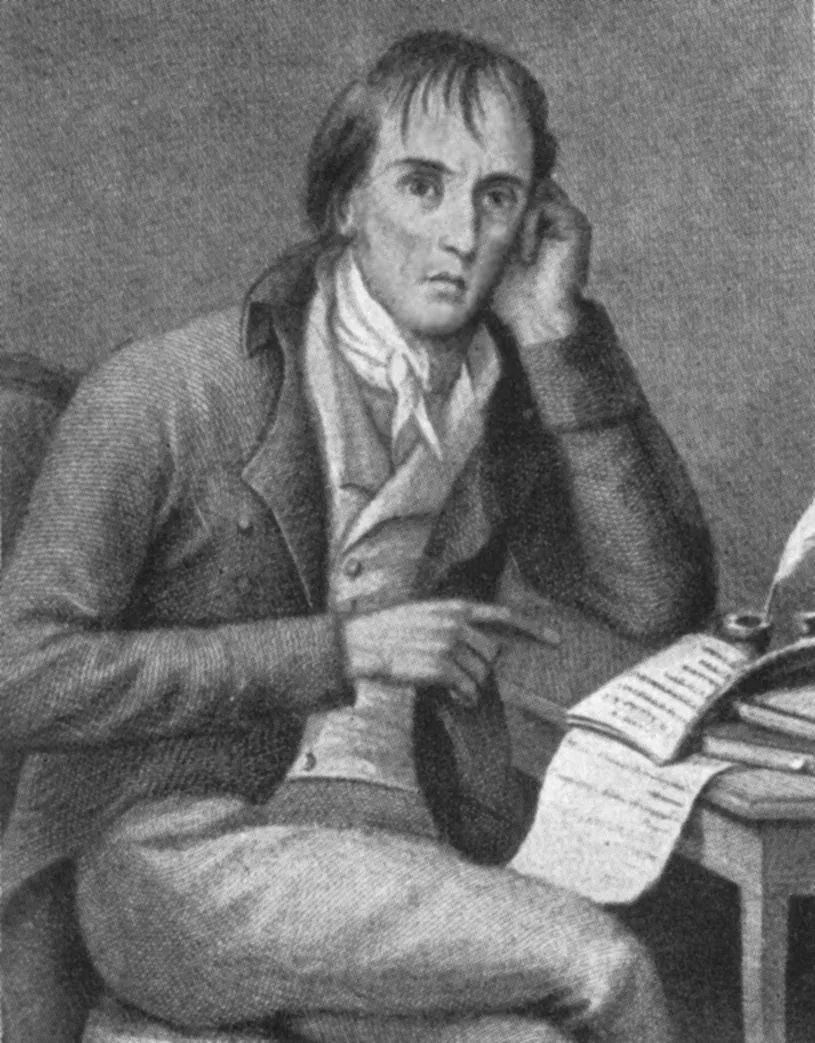
Manuel Maria Barbosa du Bocage (1765–1805) was the foremost Portuguese neoclassical poet and one of the greatest masters of the sonnet in the history of Portuguese literature. Born in Setubal, he became famous under the pen name Elmano Sadino – an anagram of “Manuel” combined with a reference to the Sado River (Rio Sado), which flows through his native city. The memory of Bocage forms one of the pillars of Setubal’s cultural identity.
Origins and family
Manuel Maria Barbosa du Bocage was born on 15 September 1765 in Setubal. His father, Jose Luis Soares de Barbosa, came from a Portuguese family. His mother, Mariana Joaquina Xavier l’Hedoux Lustoff du Bocage, was of French descent: her grandfather, the French admiral Gilles Hedoux du Bocage, had arrived in Lisbon in 1704 to reorganise the Portuguese navy during the War of the Spanish Succession.
The family’s ties to France had a literary dimension as well: Bocage’s mother was a third-cousin niece of the noted French poetess Anne-Marie Le Page du Bocage – translator of Milton’s Paradise Lost and author of the tragedy Les Amazones. In a sense, then, Bocage’s poetic gift was hereditary.
From the earliest age, the boy displayed a remarkable aptitude for verse. He began composing poetry as a child, winning the admiration and flattery of those around him. According to his biographers, this atmosphere fostered the character of the future poet – vain, volatile and prone to adventure.
Youth in Setubal and military career
At fourteen, in 1779, Bocage abruptly abandoned his studies and enlisted in the 7th Infantry Regiment. Two years of garrison life in Setubal bored the young poet, and he resolved to join the navy. In 1783, he was admitted to the Royal Naval Academy in Lisbon. Instead of diligent study, however, Bocage threw himself into romantic escapades and literary bohemia. Over the next five years, he led a turbulent life full of love affairs, while his phenomenal memory and extraordinary talent for poetic improvisation won him a host of admirers and wide renown in the capital’s literary circles.
Eastern wanderings: India and Macau
In 1786, Bocage was appointed midshipman (guarda-marinha) in the Portuguese fleet bound for India. Travelling via Brazil, he reached Goa in October 1786. The Portuguese colonial possessions in Asia made a dismal impression on him: the reality stood in stark contrast to the heroic traditions celebrated by the great Camoes two centuries earlier. This disillusionment inspired the poet to compose satirical sonnets “On the Decline of the Portuguese Empire in Asia” – works in which his characteristic sardonic observation was already on full display.
In early 1789, Bocage received a commission as infantry lieutenant in Daman (India) but quickly deserted. By a route that scholars have been unable to reconstruct in full, he made his way to Macau, arriving in July or August 1789. [UNVERIFIED] The precise circumstances of Bocage’s stay in Macau and the details of his return journey to Lisbon (1789–1790) are poorly documented and remain the subject of debate among literary historians. Without any means of support, the poet lived on the charity of friends, who eventually helped him return to Lisbon by the middle of 1790.
Literary life in Lisbon
The bohemian capital
Returning to Lisbon in 1790, Bocage plunged at once into the bohemian literary life of the capital. He became a regular at taverns and coffeehouses, especially the celebrated Cafe Nicola on the Rossio square, with which his name has remained linked ever since. It was at the Nicola that Bocage made his reputation as an unrivalled improvisateur of verse: his ability to compose poetry extemporaneously on any given subject astonished his contemporaries. He also composed modinhas – short rhyming poems set to guitar and performed at family evenings – which brought him widespread popular fame.
Nova Arcadia and the pen name Elmano Sadino
In 1790, the literary academy Nova Arcadia was founded, bringing together leading neoclassical poets in Lisbon. Bocage joined and adopted the poetic name Elmano Sadino. The pseudonym carried a double allusion:
- Elmano – an anagram of “Manuel”
- Sadino – a reference to the Sado River (Rio Sado), which flows through his native Setubal
Thus, even at the height of his Lisbon fame, Bocage maintained a literary bond with the city where he was born.
His independent, caustic and undisciplined temperament, however, soon brought him into conflict with fellow members of the academy. Bocage’s biting satires on his literary colleagues led to his expulsion from Nova Arcadia in 1794. There followed a protracted literary war that drew in most of the poets of Lisbon and split the capital’s literary community into two camps.
Imprisonment and the Inquisition
In 1797, Bocage was accused of propagating republicanism and atheism. Former fellow members of Nova Arcadia, now his enemies, denounced the poet to the authorities. The formal pretext for his arrest was the composition of anti-religious verses – the “Epistle to Marilia” (Epistola a Marilia) – together with charges of immorality.
Bocage was confined in a state prison, where his suffering soon brought on repentance. The poet actively sought to soften his fate through influential friends. In November 1797, he was transferred from the state prison to the prison of the Portuguese Inquisition. By that time, the Inquisition had become a considerably milder institution than in earlier centuries, and Bocage was released before long.
The period of incarceration had an unexpectedly beneficial effect on the poet’s literary output. While in prison, Bocage worked on translations of Virgil and Ovid. After his release, translation became his principal source of income: he rendered into Portuguese the works of Torquato Tasso, Jean-Jacques Rousseau, Jean Racine and Voltaire, contributing to the cultural exchange between the Romance literatures.
Poetic legacy
Rimas
Bocage’s chief poetic legacy is his verse collections Rimas, published in three volumes:
| Volume | Year of publication | Notes |
|---|---|---|
| First | 1791 (reprinted 1794) | First major collection of verse |
| Second | 1799 | Published after his release from prison |
| Third | 1804 | Last volume published in his lifetime |
These volumes contain works in all the lyrical genres that the author cultivated: sonnets, odes, elegies, epigrams, madrigals, apologues, quatrains, glosses, as well as translations from classical and contemporary French and Italian writers.
Mastery of form
Bocage commanded every lyrical form and left a significant mark on each:
- His rondels are elegant in construction
- His epigrams are sharp in wit and precision
- His satires are penetrating and merciless
- His odes are often imbued with nobility and elevated pathos
Sonnets – the crowning achievement
Bocage’s fame rests above all on his sonnets. Critics have observed that they almost rival the sonnets of Camoes in power, elevation of thought and tender melancholy, though they fall slightly short of Camoes in the learned refinement of their phrasing. Bocage is recognised as the second-greatest master of the sonnet in the history of Portuguese literature – after Camoes.
One of his best-known autobiographical sonnets is “Ja Bocage nao sou” (“No longer am I Bocage”), written shortly before his death in 1805. In this poem, the forty-year-old poet, aware of the approach of death, takes stock of his life and work. The sonnet combines traits of Arcadianism and Romanticism and stands as a vivid example of pre-Romantic sensibility:
“Ja Bocage nao sou!… A cova escura Meu estro vai parar desfeito em vento… Eu aos Ceus ultrajei! O meu tormento Leve me torne sempre a terra dura.”
(“No longer am I Bocage!.. Into the dark grave / my inspiration drifts, undone by the wind… / I have offended the Heavens! Let my torment / be always my burden upon this harsh earth.”)
Erotic poetry
Bocage’s erotic poetry occupies a distinctive place in his work. It was so daring and subversive for its time that it went officially unpublished in Portugal for nearly two hundred years. The first anonymous edition appeared only at the end of the 19th century. These poems, long circulated in manuscript copies, testify to the poet’s radicalism and his willingness to defy social conventions.
Bocage’s place in literary history
Between neoclassicism and romanticism
Bocage belongs to the generation of neoclassical poets, yet in his work one can increasingly discern traits that foreshadow Romanticism: the cult of personal suffering, autobiographical confession, emotional candour, the theme of life’s transience. Scholars define his work as neoclassicism with elements of pre-Romanticism – a transitional form in which the rational clarity of classical models merges with the emotional depth of the coming Romantic era.
Comparison with Camoes
The parallel between Bocage and Camoes extends beyond poetic form. Both poets:
- Were wanderers and travellers who journeyed to the East
- Created supreme examples of the Portuguese sonnet
- Clashed with the authorities
- Died in poverty on the eve of a foreign invasion of Portugal (Camoes – before the occupation by the army of the Duke of Alba; Bocage – on the threshold of the Napoleonic invasion)
Final years and death
In 1804, the disease from which Bocage suffered (syphilis) took a sharp turn for the worse. Rather than quelling his creative energy, the approach of death inspired the poet to produce several magnificent sonnets in which the confessional tone reaches its fullest intensity.
Manuel Maria Barbosa du Bocage died on 21 December 1805 in Lisbon from an aneurysm, in poverty. He was forty years old. His death fell on the eve of the Napoleonic invasion of Portugal (1807), deepening the historical parallel with the death of Camoes.
In Setubal today
Setubal proudly preserves the memory of its great son. The name of Bocage is one of the first that any visitor to the city encounters.
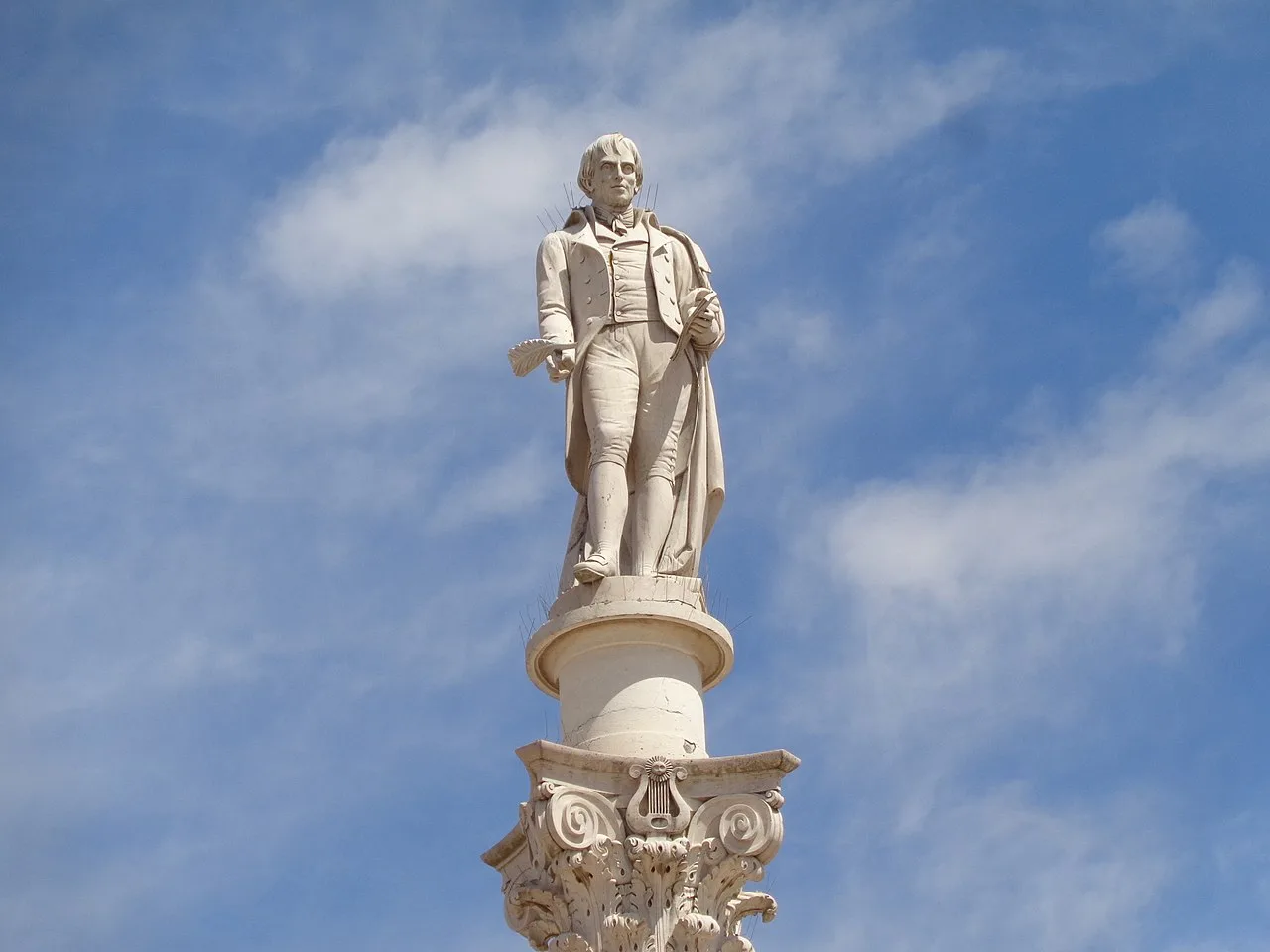
Praca do Bocage
The main square of Setubal bears the poet’s name. At its centre stands a marble statue of Bocage, erected in 1871 with funds raised by public subscription in Portugal and Brazil. The white marble figure rises on a Corinthian column with four octagonal steps. The poet is portrayed bare-headed, with a slight bow, in the costume of his era, holding a quill in his right hand and sheets of paper in his left.
The square is framed by handsome buildings in styles ranging from neoclassicism to Art Nouveau. The neoclassical town hall of Setubal also stands here. Praca do Bocage is not merely the geographical centre of the city but its symbolic heart – a place where everyday life and literary memory converge.
Casa do Bocage
Setubal preserves a museum-house associated with the poet’s memory – Casa do Bocage. The house serves as a memorial space dedicated to the life and work of Bocage.
Festivals and cultural events
Every year, Setubal hosts cultural events and festivals in honour of the poet, including events on Praca do Bocage. The Bocage Festivals bring together literary readings, theatrical productions and performances connected with the poet’s legacy.
Other forms of commemoration
- Bocage’s image appeared on the Portuguese 100-escudo banknote (1981 issue) – a mark of national recognition.
- Numerous streets and institutions across Portugal bear his name.
Bibliographic note
Bocage’s bibliography, as scholars have noted, is “exceptionally complex,” and establishing a complete catalogue of his works is a daunting task. The problem is compounded by a large number of anonymous publications and texts attributed to him without sufficient evidence. Some poems traditionally ascribed to Bocage may in fact be the work of other writers in his circle, and conversely, a number of his compositions may remain unidentified.
Key dates
| Year | Event |
|——|——-| | 1765 | Born in Setubal (15 September) | | 1779 | Enlists in the 7th Infantry Regiment | | 1783 | Admitted to the Royal Naval Academy in Lisbon | | 1786 | Sails for India; arrives in Goa | | 1789 | Deserts from Daman; arrives in Macau | | 1790 | Returns to Lisbon; joins Nova Arcadia | | 1791 | Publication of the first volume of Rimas | | 1794 | Expelled from Nova Arcadia | | 1797 | Arrested; imprisoned in the state prison, then in the Inquisition prison | | 1799 | Publication of the second volume of Rimas | | 1804 | Publication of the third volume of Rimas; health deteriorates | | 1805 | Dies in Lisbon (21 December) |
Image sources
See also
- Luisa Todi – Singer of the Ages
- Zeca Afonso and the Carnation Revolution
- Bocage Festivals
- Monastery of Jesus
All our knowledge is free. Creating it is not.
☕ Support on Ko-fi