Diogo de Boitaca -- Architect of the Manueline Style
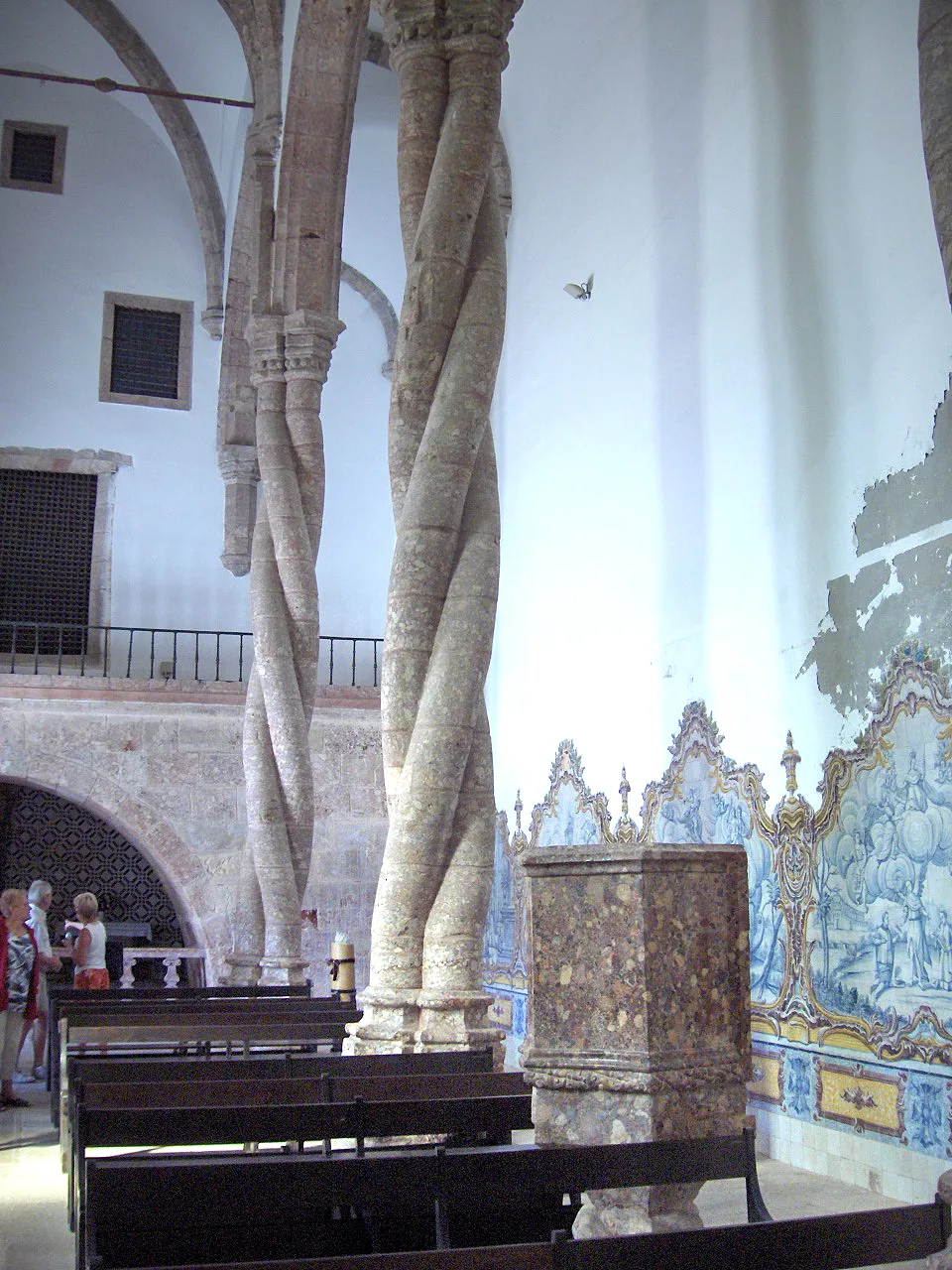
📷 Image credit
Photo: Georges Jansoone / Wikimedia Commons / CC BY 2.5
In a quiet city by the Sado River, far from the royal court and the great building sites of Lisbon, a style was born that would change the face of Portugal. When Diogo de Boitaca transformed the stone columns of the Monastery of Jesus in Setúbal into twisted maritime ropes, he accomplished an architectural revolution – and created the first building in the Manueline style.
Origins and Early Years (c. 1460)
Little is known about the origins of Diogo de Boitaca (also spelled Boytac, Boytaca; French name Jacques Boytac). He was born around 1460; the exact date and place of birth have not been established. According to the dominant view in historiography, the master builder was of French origin — probably from the Languedoc region of southern France. The Encyclopædia Britannica straightforwardly describes him as a “French architect.” The hypothesis is based on the phonetics of the surname “Boitaca/Boytac,” which is atypical for Portuguese naming conventions, although direct documentary proof has not survived.
Boitaca appears in historical records already as a fully formed master builder (mestre de obras) working on royal commissions. His training, apprenticeship years and early works remain in shadow – a common situation for 15th-century architects, whose names often did not survive at all.
The Monastery of Jesus in Setúbal: Birth of the Manueline (1490s)
Historical Significance
The Monastery of Jesus (Igreja de Jesus, Church of Jesus) in Setúbal is the first Manueline building (Manuelino) in the history of architecture. It was constructed in the 1490s, when the late Gothic style still prevailed at court, while the great expeditions of the Age of Discoveries were already transforming Portugal’s worldview.
Revolutionary Columns
Boitaca’s central innovation was the twisted columns supporting the church’s vaults. Before Boitaca, Gothic columns were straight, strictly vertical, geometrically predictable. Boitaca did something unthinkable: he twisted the stone pillars into spirals, giving them the form of maritime ropes.
These columns:
- Imitate ship’s cables – thick, twisted, as if knotted by sailors’ hands
- Evoke associations with organic forms: corals, seaweed, the trunks of exotic trees
- Transform the space: the church interior ceases to be static and acquires dynamism, movement, an almost living energy
- Pre-date all other known examples of Manueline architecture
Architectural historians are unanimous: Boitaca’s Setúbal columns pre-date every known Manueline monument. Neither the Belém Tower nor the Jerónimos Monastery nor the window at Tomar – none of the structures commonly associated with the Manueline style – was created earlier than the columns of the Monastery of Jesus in Setúbal.
The Maritime Connection
The appearance of “maritime” columns in Setúbal specifically was no accident. The city was one of Portugal’s most important ports: ships departed from here during the Age of Discoveries, the salt trade and fishing thrived. The ocean was an everyday reality for the people of Setúbal. Working in this city, literally surrounded by maritime themes, Boitaca found his source of inspiration in what he saw every day: the ropes with which sailors moored their vessels, the curves of ocean waves, the fantastical forms of corals and shells.
What Is the Manueline
The term “Manueline” (Manuelino) was coined much later – in the 19th century – and named after King Manuel I (D. Manuel I, reigned 1495–1521), during whose reign the style reached its zenith.
The Manueline is a uniquely Portuguese architectural style, representing late Gothic transformed by maritime and imperial motifs:
| Element | Gothic | Manueline |
|---|---|---|
| Columns | Straight, vertical | Twisted, spiral, organic |
| Ornament | Geometric, vegetal | Maritime ropes, anchors, corals, armillary spheres |
| Symbolism | Religious | Religious + imperial + maritime |
| Inspiration | French Gothic | The ocean, discoveries, the exoticism of overseas lands |
Boitaca’s key innovation was that he transformed simple Gothic pillars into dynamic, organic forms inspired by maritime ropes, corals and seaweed. The column ceased to be a purely structural element and became a narrative one – it told the story of Portugal as a maritime empire.
The Jerónimos Monastery in Belém (1502–1516)
After Setúbal, Boitaca received an even grander commission: the Jerónimos Monastery (Mosteiro dos Jerónimos) in Belém, a suburb of Lisbon. This is one of Portugal’s greatest architectural monuments and a UNESCO World Heritage Site.
Boitaca worked on the monastery from 1502 to 1516, carrying out a substantial portion of the construction: columns, walls, structural elements. It was he who laid the architectural foundation of the building, although other masters completed the work – notably João de Castilho.
At the Jerónimos, Boitaca developed the principles first tested in Setúbal, but on a grand scale:
- Columns became even more elaborate and decorative
- Maritime symbolism pervades every element
- Space acquires a monumentality worthy of Manuel I’s imperial ambitions
Other Works
In addition to his two chief masterpieces, a number of other projects are attributed to Boitaca:
-
Fortress of Sofala (Fortaleza de Sofala) in Mozambique (1505) – a military fortification at one of the key points of the Portuguese trading empire in East Africa. [DISPUTED] Some sources attribute involvement in the Sofala fortress project to Boitaca, but the major reference works (Britannica, Wikipedia, Oxford Reference) do not confirm this attribution. Construction of the fortress was carried out under the command of captain Pero de Anhaia.
-
Work at Batalha – Boitaca also worked on the Batalha Monastery (Mosteiro da Batalha), another great monument of Portuguese Gothic. It was at Batalha, according to available records, that he died in 1528.
Death and Legacy
Diogo de Boitaca died around 1528 at Batalha, among the walls of yet another great monastery on which he had worked. He had settled in Batalha in 1516 after marrying Isabel Henriques — the daughter of the Batalha Monastery architect Mateus Fernandes. He was buried in the Batalha Monastery, near his father-in-law’s tomb. He was approximately 68 years old – a venerable age for the 16th century.
Architectural Legacy
Boitaca’s contribution to world architecture can hardly be overstated:
- He created the first example of a style that became Portugal’s architectural signature
- His twisted columns are among the most recognisable architectural elements of the Portuguese heritage
- He linked architecture with national identity: the Manueline is inseparably associated with the Age of Discoveries and Portugal’s maritime glory
- His work in Setúbal pre-dates all known Manueline monuments, making the Monastery of Jesus the birthplace of the style
Setúbal as the Cradle of the Manueline
For Setúbal, Boitaca holds a special significance. Thanks to him, the city can rightfully call itself the birthplace of the Manueline style. The Monastery of Jesus is not merely a local landmark; it is the place where one of the pivotal turning points in the history of European architecture occurred.
Everyone who enters the Monastery of Jesus and beholds Boitaca’s twisted columns finds themselves at the point where architecture ceased to be mere construction and became narrative – the story of a people who sailed out upon the ocean and changed the map of the world.
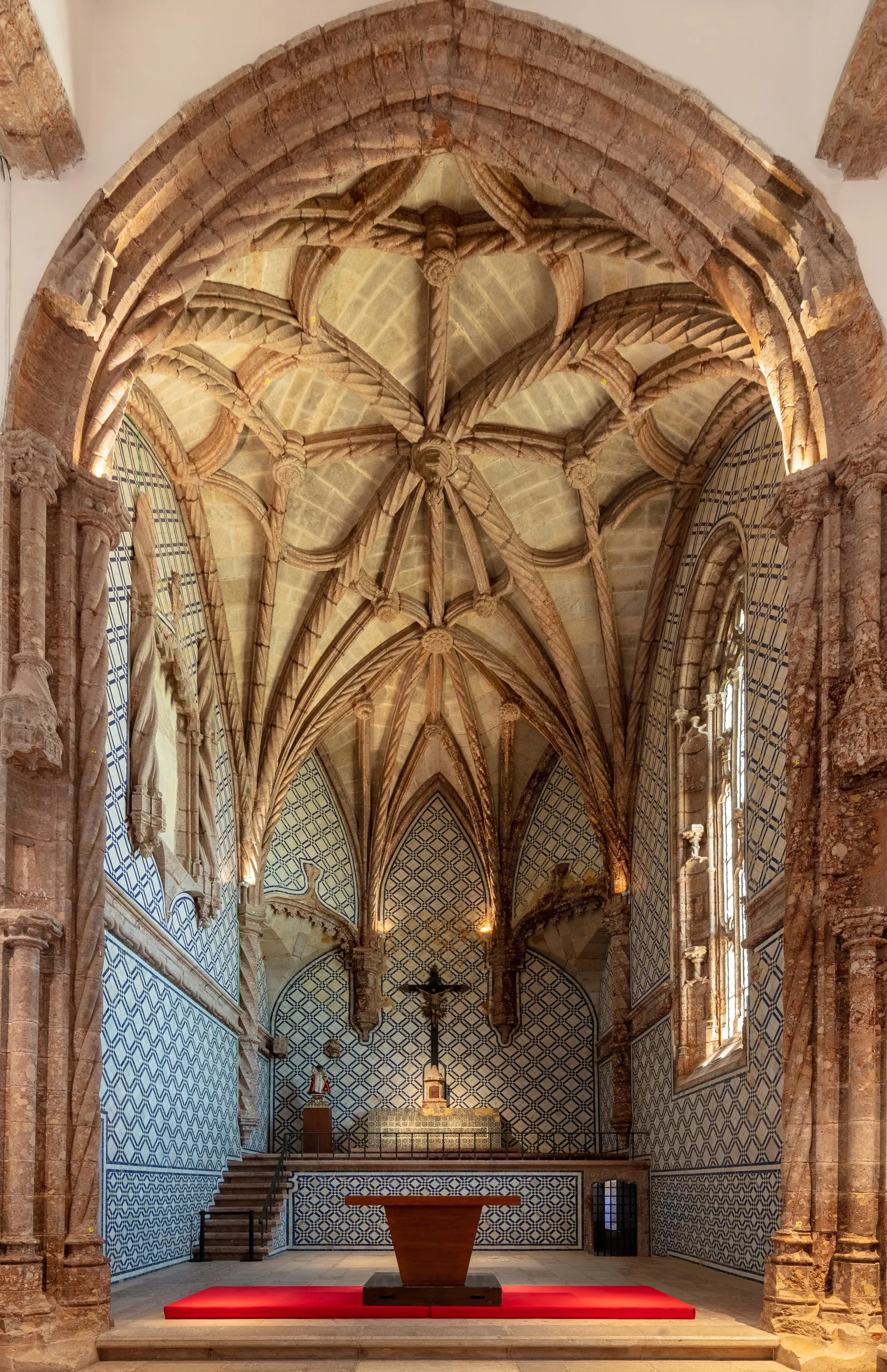
📷 Image credit
Photo: Diego Delso / Wikimedia Commons / CC BY-SA 4.0
See also
- Monastery of Jesus
- Age of Discoveries
- Reconquista and Medieval Setúbal
- Church of Santa Maria da Graça
The light is on for free. But someone has to clean the lantern.
☕ Support on Ko-fi