Michel Giacometti -- the Corsican Who Preserved the Soul of Portugal
Michel Marie Giacometti (1929–1990) was an ethnographer and ethnomusicologist of Corsican origin who devoted more than thirty years of his life to documenting Portuguese folk culture. His field recordings, collections of instruments and ethnographic materials constitute one of the largest collections of Portuguese folklore and are recognised as part of the national heritage of Portugal. The Museu do Trabalho (Labour Museum) in Setubal bears Giacometti’s name.
Biography
Early years
Michel Marie Giacometti was born on 8 January 1929 in the city of Ajaccio on the island of Corsica, France. Orphaned at a young age, he was raised by his maternal aunts, with whom he lived in North Africa – in colonial Algeria, among other places. He later returned to France, living on Corsica and in Paris, where he studied literature and ethnology.
While still in France, Giacometti made his mark as a man of letters: he published a poetry collection entitled Melika, contributed to the journals Simoun and Les Cahiers du Sud, and founded the journals Igloo and Ferments. Fate, however, was leading him not towards a literary career but towards the work of a lifetime – ethnography.
Move to Portugal
In 1959 Giacometti moved to Portugal – the country that would become his second homeland. Initially he submitted to the Calouste Gulbenkian Foundation a project for the collection of folk music in the Tras-os-Montes region. [UNVERIFIED] Following the Foundation’s initial rejection of the project, Giacometti established in 1960 the Arquivos Sonoros Portugueses (Portuguese Sound Archives) – an organisation that became the starting point for the systematic collection and cataloguing of Portuguese musical folklore.
Over the next thirty years Giacometti travelled the length and breadth of Portugal – from the mountains of Tras-os-Montes in the north to the Algarve in the south – recording oral traditions, songs, rites and crafts that were rapidly vanishing under the pressures of modernisation.
Final years
Michel Giacometti died on 24 November 1990 in the city of Faro, in southern Portugal. By the time of his death he had spent more than thirty years in Portugal – considerably longer than he had lived on his native Corsica.
Contribution to Portuguese ethnography
Anthology of Portuguese Regional Music
Giacometti’s principal musical legacy is the “Antologia da Musica Regional Portuguesa” (Anthology of Portuguese Regional Music), created in collaboration with the distinguished Portuguese composer Fernando Lopes-Graca. The anthology was issued as a series of records in burlap sleeves (the so-called discos de sarapilheira) and covered the main regions of the country:
| Volume | Region | Year of issue |
|---|---|---|
| First | Tras-os-Montes | 1960 |
| Second | Algarve | 1961 |
| Third | Minho | 1963 |
| Fourth | Alentejo | 1965 |
| Fifth | Beiras | after 1965 |
To record the first volume, Giacometti spent three months in Tras-os-Montes, covered more than 6,000 kilometres and recorded fifteen hours of music on magnetic tape in forty-five villages.
Povo que Canta (The People Who Sing)
In collaboration with cameraman Alfredo Tropa, Giacometti created the television documentary series “Povo que Canta” (The People Who Sing), broadcast on the Portuguese state broadcaster RTP from 1971 to 1974. Thirty-seven episodes of twenty-five minutes each were produced. The series was a journey through the heartland of Portugal in search of the voices and images that constituted one of the most important anthological collections of Portuguese regional music. Among the episodes were recordings of Christmas carols, the Feast of the Holy Spirit, the Alentejo tradition of the viola campanhica and much more.
Songbook and other publications
In 1981 Giacometti published the “Cancioneiro Popular Portugues” (Portuguese Folk Songbook) – a comprehensive collection of texts and scores of folk songs from across Portugal, prepared in collaboration with Fernando Lopes-Graca. Among his other publications were Musica Vocal e Instrumental (Vocal and Instrumental Music, 1974), Cantos e Dancas de Portugal (Songs and Dances of Portugal, 1981) and Bonecos de Santo Aleixo (Puppets of Santo Aleixo, 1981).
Collection of musical instruments
Giacometti assembled an extensive collection of Portuguese folk musical instruments, a significant part of which is now housed in the Museum of Portuguese Music in Estoril.
Connection with Setubal
Giacometti’s bond with Setubal grew especially strong after the Carnation Revolution of 1974. During this period he directed a large-scale programme of ethnographic collection under the auspices of the Servico Civico Estudantil (Student Civic Service) – an initiative in which students, under his guidance, gathered objects of material culture, tools, recordings of folk music and oral literature from across the country.
The earliest confirmed evidence of the institutionalisation of a documentation centre based on this collection dates from the summer of 1975 and is linked specifically to Setubal. This centre was the seed of the future museum.
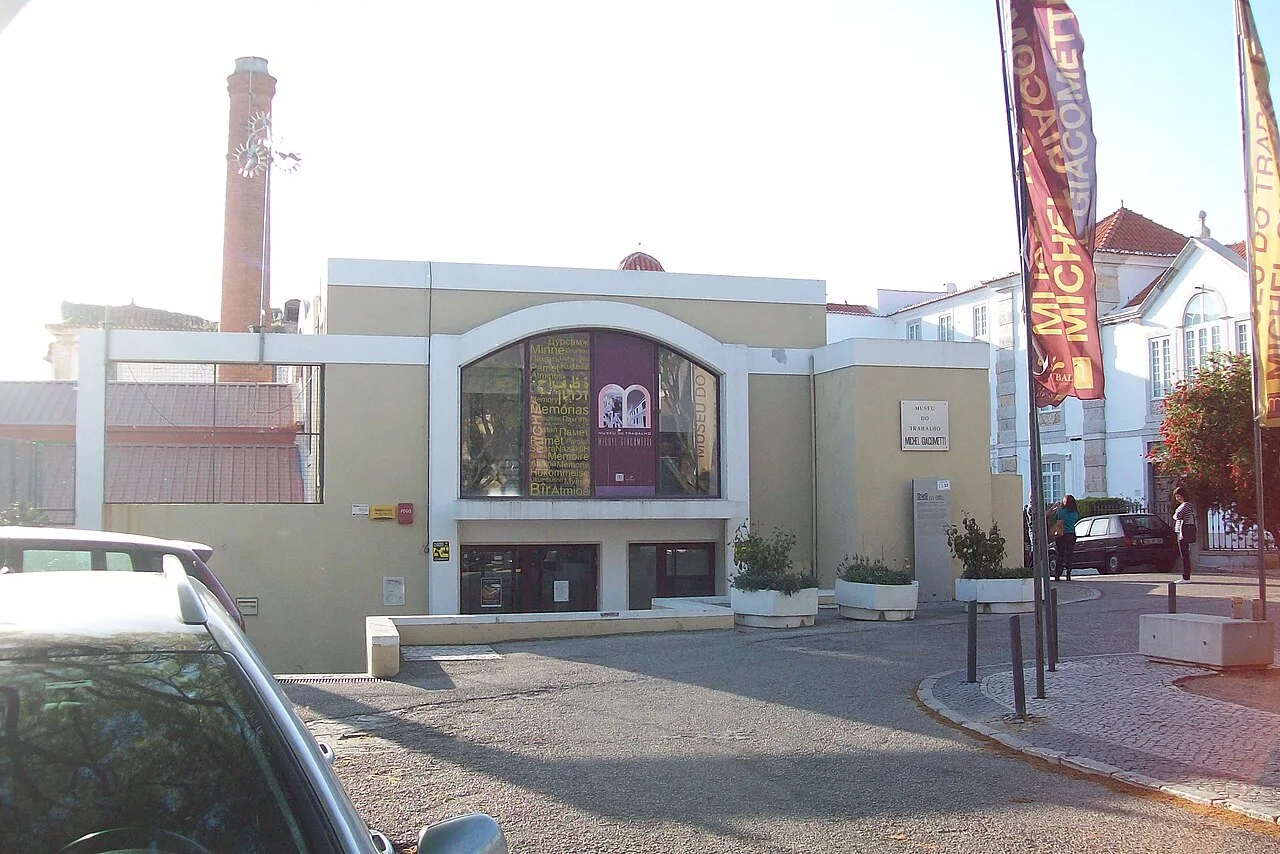
The materials collected formed the nucleus of the Museu do Trabalho Michel Giacometti (Michel Giacometti Labour Museum), which opened in 1995 – five years after the ethnographer’s death. The museum is housed in the former five-storey “Perienes” fish-canning factory in the historic quarter of fishermen, salt-workers and cannery hands. Its collection features items relating to trade, crafts, the work of the old canning factories and lithographic workshops, as well as agricultural implements and traditional artisanal artefacts.
In 1998 the museum received an honourable mention from the Council of Europe in connection with the European Museum of the Year Award – recognition that confirmed the international significance of Giacometti’s legacy.
Legacy
Ethnography as resistance
Giacometti’s work was inseparable from the political context of Portugal in the second half of the 20th century. Under the Estado Novo dictatorship, his documentation of authentic folk culture – in contrast to the official folklorisation promoted by the Salazar regime – constituted a form of cultural and civic resistance. Scholars have noted that Giacometti’s anthropological practice “subtly but steadily was oriented towards cultural and civic militancy.” He participated in the formation of an anti-fascist resistance network that persisted beyond the Carnation Revolution of 1974.
[UNVERIFIED] During his work on the documentary series “Povo que Canta” in the 1960s and 70s, Giacometti, while recording the songs of fishermen, was simultaneously spreading ideas of resistance.
National heritage
The Portuguese Sound Archives created by Giacometti are recognised as the most important collection of folk music, photographs and ethnographic materials in Portugal. His field recordings – the voices of peasants, fishermen, shepherds, artisans – constitute an invaluable document of the vanishing world of traditional Portuguese culture.
Influence on Portuguese music
Giacometti exerted a considerable influence on the intellectual and social life of Portugal. His work acted as a catalyst for a new flowering of Portuguese song: Giacometti’s recordings and publications inspired an entire generation of musicians to turn to folk roots. In the 2000s, new documentary projects followed in his footsteps: producer Ivan Dias and Manuel Rocha of the group Brigada Victor Jara returned to the same villages where Giacometti had worked, in order to record what remained of the traditions thirty years later.
A Corsican who became Portuguese
The story of Giacometti is a rare example of a person who, though a foreigner, devoted his life to the preservation of the cultural heritage of his adopted homeland with a selflessness that surpassed the efforts of most local researchers. Born on Corsica, orphaned in childhood, raised in Algeria, educated in Paris, he found his vocation in the remote villages of Portugal, where he recorded the voices of people whose songs and crafts would otherwise have been lost forever.
Key dates
| Year | Event |
|---|---|
| 1929 | Born in Ajaccio, Corsica (8 January) |
| 1959 | Moves to Portugal |
| 1960 | Founds the Portuguese Sound Archives; first volume of the Anthology released (Tras-os-Montes) |
| 1961 | Second volume of the Anthology released (Algarve) |
| 1963 | Third volume of the Anthology released (Minho) |
| 1965 | Fourth volume of the Anthology released (Alentejo) |
| 1971–1974 | Filming and broadcast of “Povo que Canta” on RTP |
| 1974 | Carnation Revolution; begins work with the Student Civic Service |
| 1975 | Institutionalisation of the documentation centre in Setubal |
| 1981 | Publication of the Portuguese Folk Songbook |
| 1990 | Dies in Faro (24 November) |
| 1995 | Michel Giacometti Labour Museum opens in Setubal (posthumous) |
Image sources
- museu-trabalho-giacometti.webp — Museu do Trabalho Michel Giacometti. Author: El-Kelaa-des-Sraghna. License: CC BY-SA 4.0. Source
See also
All our knowledge is free. Creating it is not.
☕ Support on Ko-fi