Sebastiao da Gama -- Poet of the Arrabida
Sebastiao da Gama (port. Sebastiao da Gama; 10 April 1924, Vila Nogueira de Azeitao – 7 February 1952, Lisbon) was a Portuguese poet and educator whose brief and luminous life was inseparable from the Serra da Arrabida and Azeitao. In fewer than twenty-eight years he created a body of poetry suffused with love for the natural landscape of his homeland, became a forerunner of the Portuguese environmental movement, and left behind a pedagogical diary that continues to influence generations of teachers. His call to defend the mountains of the Arrabida provided the impetus for the founding of Portugal’s first environmental organisation.
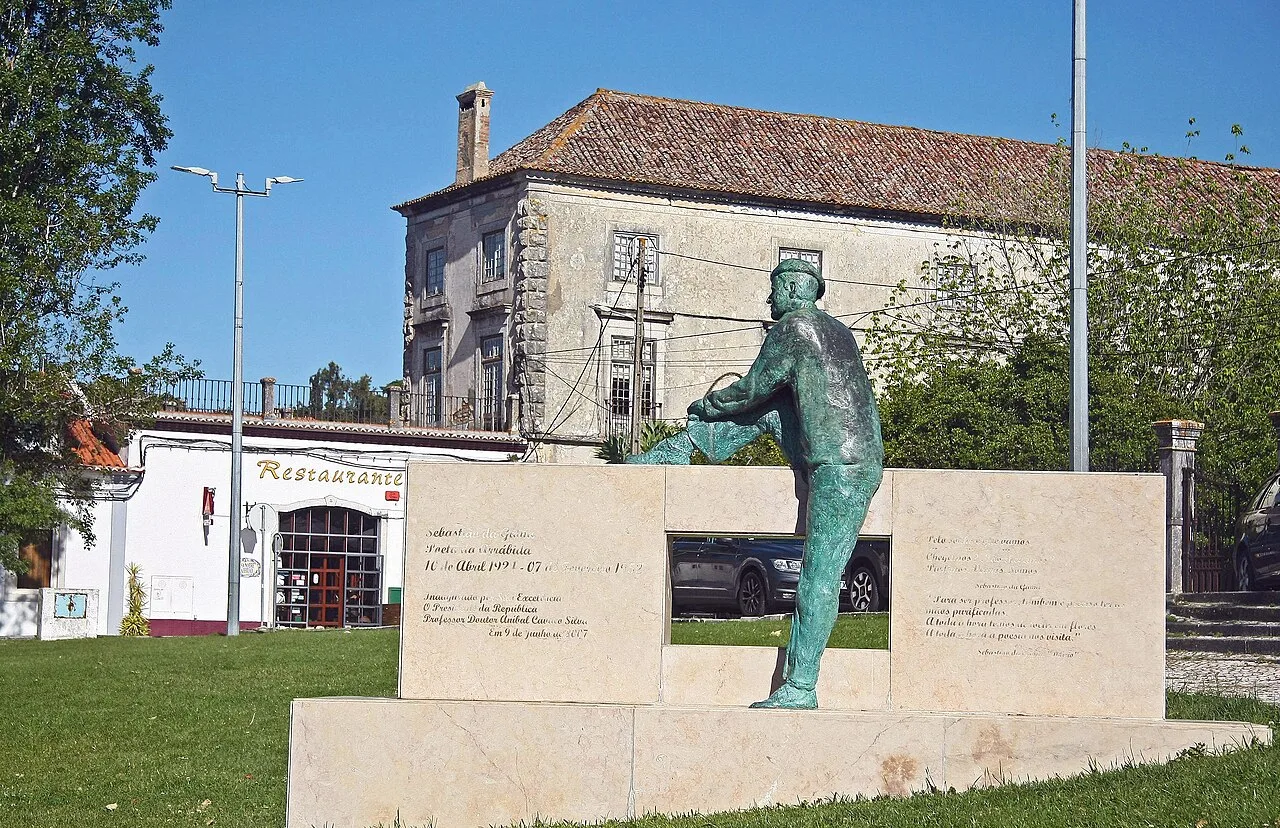
Biography
Childhood and youth in Azeitao
Sebastiao da Gama was born on 10 April 1924 in Vila Nogueira de Azeitao – a small town at the foot of the Serra da Arrabida, in the heart of the wine-growing and cheese-making country famed for its Queijo de Azeitao and Moscatel.
The Arrabida range became the defining landscape and wellspring of inspiration for his entire life. From childhood, Sebastiao explored the trails, valleys and crags of the mountain chain that he would later call his “paradise.”
Education
Sebastiao da Gama graduated from the Faculty of Romance Philology at the University of Lisbon (Faculdade de Letras da Universidade de Lisboa) in 1947. During his student years he took an active part in literary life, contributing to the journals:
- Mundo Literario (1946–1948)
- Arvore
- Tavola Redonda
Teaching career
After completing his university studies, Sebastiao da Gama embarked on a career in education. He undertook his teaching practice in Portuguese language at the Veiga Beirao Commercial School (Escola Comercial Veiga Beirao). It was this experience that formed the basis of his celebrated “Diary.”
His pedagogical credo was distilled into a single phrase that became a watchword:
“Ensinar e amar” – “To teach is to love.”
Sebastiao da Gama practised a pedagogy of love – an approach grounded in close, warm relationships between teacher and pupil, in attentiveness to the inner world of every child. This approach anticipated many of the ideas of humanistic pedagogy in the second half of the 20th century.
Illness and death
Sebastiao da Gama died on 7 February 1952 of renal tuberculosis, two months before his 28th birthday. Despite his youth, he had succeeded in creating a substantial poetic legacy and in exerting an influence that extended far beyond the realm of literature.
Literary legacy
Poetry collections
| Year | Title | Theme |
|---|---|---|
| 1945 | Serra-Mae | The Serra da Arrabida as mother-mountain |
| 1949 | Cabo da Boa Esperanca | The Cape of Good Hope – a metaphor of hope |
| 1951 | Campo Aberto | The open field – an invocation of freedom |
| 1958 (posthumous) | Diario | A pedagogical diary |
Serra-Mae (1945)
Sebastiao da Gama’s first poetry collection, published when he was twenty-one, is devoted to the Serra da Arrabida. The title itself – “Mother-Mountain” – encapsulates the central metaphor: the mountain range is not merely a landscape but a living, maternal force that bestows life and beauty.
The poems of Serra-Mae are a hymn to the nature of the Arrabida – its mountains, valleys, dawns and sunsets, trees and birds. The poet sees nature not as a backdrop but as a spiritual reality to which human beings are bound by the deepest ties.
Diario (1958)
The “Diary” is Sebastiao da Gama’s most influential work, although it was published posthumously, in 1958. It is a detailed record of his teaching experience at the Veiga Beirao school – observations of his pupils, reflections on pedagogy, attempts to find a path to the heart of every child.
The Diario has gone through thirteen editions and is regarded as one of the key texts of Portuguese pedagogical thought. It has influenced several generations of teachers and is still studied in teacher-training colleges throughout Portugal.
Style and themes
The poetry of Sebastiao da Gama is characterised by:
- Lyrical simplicity and transparency of language
- A profound bond with a specific landscape – the Arrabida
- Themes of love of nature, spiritual seeking and hope
- A pantheistic sensibility – nature as a manifestation of the divine
- An awareness of the brevity of life and the need to live intensely
Environmental legacy
Defence of the Arrabida
In the late 1940s the Solitario forest in the Arrabida mountains was being destroyed: an asphalt road was being driven through it and centuries-old trees were being felled. For Sebastiao da Gama, to whom these mountains were a sacred space, the devastation of his “paradise” was devastating.
He wrote an open letter addressed to prominent public figures and intellectuals of Portugal, calling on them to rise in defence of the Serra da Arrabida. This letter became the catalyst for the founding of the Liga para a Proteccao da Natureza (LPN) – the League for the Protection of Nature – established in 1948 on the initiative of Professor Carlos Manuel Baeta Neves.
The LPN became Portugal’s first environmental organisation and continues to exist to this day. Thus a young poet from Azeitao stands at the origins of the Portuguese environmental movement.
From a poet’s letter to a natural park
The thread begun by Sebastiao da Gama’s appeal ultimately led to the creation of the Arrabida Natural Park in 1976 – one of the first protected natural areas in Portugal. Although nearly three decades separated the poet’s letter from the establishment of the park, the connection between them is part of the collective memory of the region.
Commemoration
In Setubal and Azeitao
Sebastiao da Gama’s name is commemorated throughout the region:
- Agrupamento de Escolas Sebastiao da Gama – a group of schools in Setubal bearing his name
- Streets and squares in Azeitao and Setubal
- The Municipality of Setubal regularly holds events dedicated to his memory
- His name features in the “Author of the Month” programme at the municipal library
Literary trails
Azeitao and the Arrabida are included in literary trails devoted to Sebastiao da Gama. Tourists and lovers of literature can walk the paths that inspired the poet, see the landscapes celebrated in his verse, and experience the bond with nature that was the foundation of his art.
Significance
Sebastiao da Gama is a figure in whom several strands vital to the identity of the Setubal region converge:
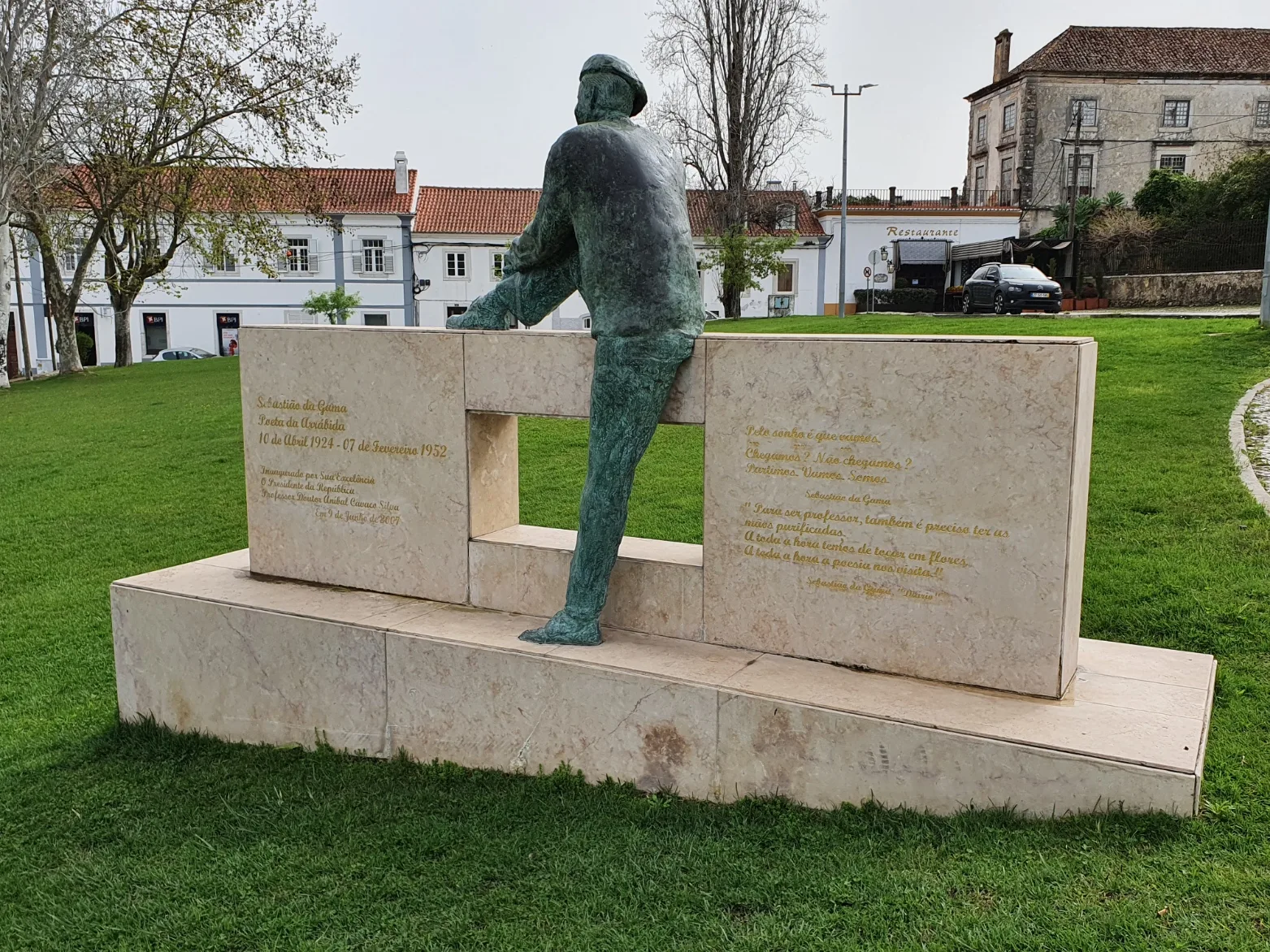
- Poetry and nature: He made the Arrabida a poetic space endowed with spiritual meaning
- Pedagogy: His “Diary” is a manifesto of humanistic education
- Ecology: His call to defend the mountains launched the environmental movement in Portugal
- Brevity and intensity: His life, cut short at twenty-seven, became a symbol of the truth that greatness is not measured by duration
In the literary history of the region he stands alongside Bocage, Luisa Todi and Jose Afonso – people whose creative work is inseparable from the land where they were born or lived.
Image sources
See also
- Arrabida Natural Park
- Geology of the Serra da Arrabida
- Queijo de Azeitao
- Bocage – Setubal’s Poet
- Jose Afonso
All our knowledge is free. Creating it is not.
☕ Support on Ko-fi