Zeca Afonso and the Carnation Revolution
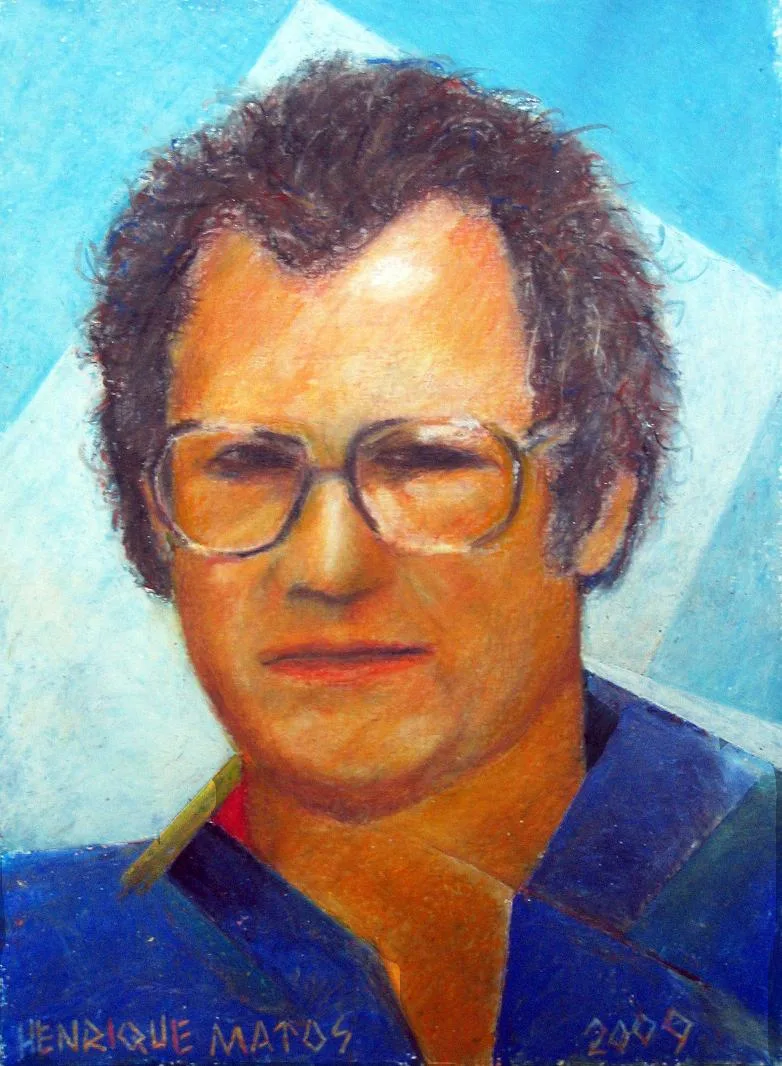
Jose “Zeca” Afonso (1929–1987) was a Portuguese singer, songwriter, poet and educator whose song “Grandola, Vila Morena” served as the radio signal for the launch of the Carnation Revolution on 25 April 1974, overthrowing the Estado Novo dictatorship. Linked to Setubal first as a teacher and later as a man who spent his final years in the city, Zeca Afonso died and was buried there, and his funeral became one of the largest public gatherings in the history of Setubal.
Origins and childhood
Jose Manuel Cerqueira Afonso dos Santos was born on 2 August 1929 in the city of Aveiro, Portugal. His father worked as a judge, and the family moved frequently in connection with his postings.
An African childhood
In 1930, his parents left for Angola (then a Portuguese colony), where his father received an appointment in the town of Silva Porto (now Kuito). In 1933, young Zeca followed the family and spent three years in Angola, where he began primary school. This African interlude, though a childhood one, left its mark on his perception of colonialism – a theme that would later resonate through his music.
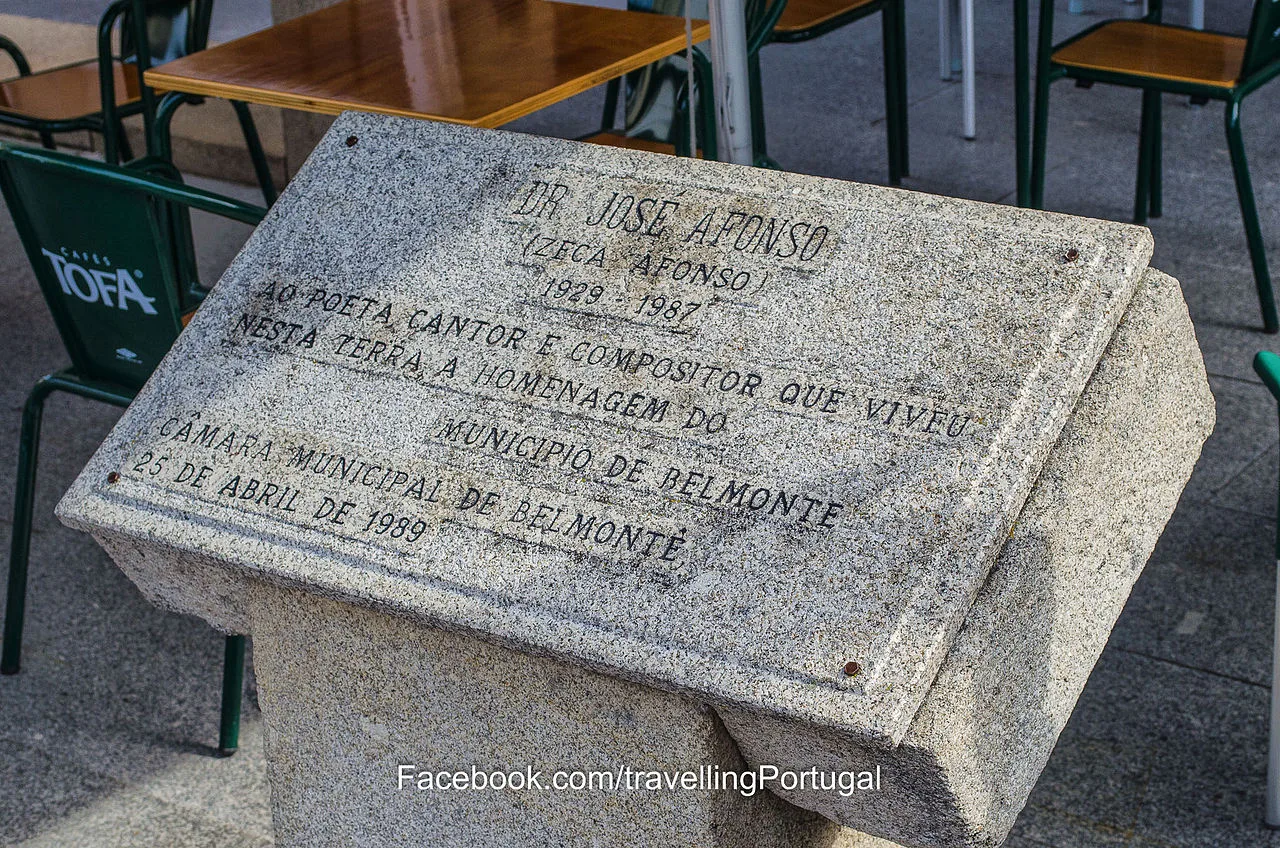
In 1936, he returned to Aveiro, and in 1937 he set out with his brother Joao and sister Mariazinha for Mozambique – another Portuguese territory, in East Africa, where their parents were then living. A year later, in 1938, Zeca returned to Portugal, to the home of his uncle Filomeno – the mayor of the small town of Belmonte, where he completed the fourth grade.
Afonso’s childhood, spent across three continents – Europe, Africa and back to Europe – gave him a broad outlook on the world and a heightened awareness of the social injustice inherent in the colonial system.
The University of Coimbra and the start of a musical career
The Coimbra years
Jose Afonso enrolled in the Faculty of History and Philosophy at the University of Coimbra – one of the oldest universities in Europe, founded in 1290. It was in Coimbra, in the 1940s, that he began performing with the Academic Choir of Coimbra (Orfeon Academico de Coimbra) – a prestigious university choir that played an important role in the city’s cultural life.
Coimbra fado
In 1953, Afonso made his first recordings in the genre of Coimbra fado (fado de Coimbra) – a tradition fundamentally different from the better-known Lisbon variety. Coimbra fado is rooted in the university milieu, performed exclusively by male voices, and its themes tend to be more intellectual and lyrical. It was from this tradition that Afonso emerged as a musician, gradually transforming the classical fado form into the politically charged “intervention song.”
In 1962, his EP “Baladas de Coimbra” (Ballads of Coimbra) marked the transitional stage from pure Coimbra fado to original songwriting with social content.
Teaching career
The itinerant schoolteacher
After university, Afonso worked as a secondary-school teacher in southern and central Portugal:
- Lagos (1957–1958) – on the far south, in the Algarve
- Faro – capital of the Algarve region
- Alcobaca (1959–1960) – in central Portugal
- Aljustrel (1959, briefly) – a mining town in the Alentejo
This period of itinerant teaching, which lasted until 1964, played a pivotal role in shaping the musician. Working in provincial towns, Afonso became intimately acquainted with diverse regional cultures, folk singing traditions and, crucially, the real social conditions of ordinary people’s lives under the Salazar dictatorship. The experience profoundly influenced the thematic evolution of his music – from academic lyricism to social protest.
Teaching in Setubal
Afonso subsequently obtained a teaching post at the Setubal lyceum, where he taught French, history and geography. From this point on, his lasting bond with Setubal began – the city that would become his final resting place.
Musical evolution: from fado to intervention song
The formation of a style
Beginning in 1959, Zeca Afonso set about forging his distinctive musical style, imbued with political and social connotations. His music represented a groundbreaking synthesis of:
- Portuguese folk – regional melodies and rhythms gathered during his years of itinerant teaching
- Coimbra fado – the lyrical foundation absorbed in his university years
- Socially critical lyrics – sharp yet poetically subtle verses that artfully evaded censorship while addressing colonialism, inequality and dictatorship
This synthesis gave rise to a genre known as cancao de intervencao (intervention song, or song of engagement) – the Portuguese counterpart of the protest song, and one of the most influential phenomena in the history of Portuguese music.
Political activity and persecution
Zeca Afonso toured the country and gradually became a favourite of the working class and rural population. During the 1960s and early 1970s, he wrote and recorded numerous songs that denounced the regime:
- “Os Vampiros” (“The Vampires”) – an allegory of the parasitic nature of the dictatorship
- “Venham Mais Cinco” (“Five More, Come Along”) – a hymn to solidarity and resistance
This activity attracted the attention of the secret police PIDE (Policia Internacional e de Defesa do Estado) – the chief instrument of political repression under the Estado Novo regime. Afonso was kept under constant surveillance, and his performances were subjected to censorship.
In 1968, Afonso was dismissed from the Setubal lyceum for his left-wing views and politically charged song lyrics. It was a punitive measure by the regime, depriving him of a steady income and official standing. The dismissal, however, did not break the musician – it only strengthened his resolve.
In April 1973, Afonso was arrested by PIDE and detained in Fort Caxias (Forte de Caxias) – the notorious political prison through which hundreds of opponents of the regime had passed. He spent 20 days there. Exactly one year remained before the Carnation Revolution.
Discography: key albums
Zeca Afonso’s musical legacy spans more than two decades and includes a number of albums that became cornerstones of Portuguese music:
| Year | Album | Notes |
|---|---|---|
| 1964 | Baladas e Cancoes | First studio album |
| 1968 | Cantares do Andarilho | With Rui Pato; first album for the Orfeu label |
| 1969 | Contos Velhos Rumos Novos | “Old Tales, New Paths” |
| 1970 | Traz Outro Amigo Tambem | Recorded in London at Pye Studios |
| 1971 | Cantigas do Maio | Afonso’s finest album; contains “Grandola, Vila Morena” |
| 1972 | Eu Vou Ser Como a Toupeira | Recorded in Madrid at Cellada Studios |
| 1976 | Com as Minhas Tamanquinhas | First album after the Carnation Revolution |
| 1983 | Ao Vivo no Coliseu | Final live album |
Cantigas do Maio – the crowning achievement
Special mention must be given to the album “Cantigas do Maio” (Songs of May, 1971), recorded near Paris at the studios of the Chateau d’Herouville – a legendary recording venue through which many prominent musicians of the era passed. This album is regarded as Afonso’s finest work and one of the greatest albums in all of Portuguese music. It contains the song that was destined to change the course of Portuguese history.
Final concert
The live album “Ao Vivo no Coliseu” was recorded on 23 January 1983 at a sold-out concert at the Coliseu dos Recreios in Lisbon – one of the country’s largest concert halls. It was the last major performance by a musician already gravely ill, and it became a kind of musical testament.
“Grandola, Vila Morena” – the song that changed history
The story of its creation
On 17 May 1964, Jose Afonso performed at a workers’ musical fraternity – the Sociedade Musical Fraternidade Operaria Grandolense (Musical Society of the Workers’ Brotherhood of Grandola) – in the town of Grandola in the province of Alentejo. The Alentejo is a vast, sparsely populated region in southern Portugal, known for its traditions of polyphonic singing and a deep sense of social solidarity among the rural population.
Moved by the atmosphere of brotherhood and solidarity among the workers of Grandola, Afonso composed the words and melody of the song on his way home – in a flash of spontaneous creative inspiration that proved to be prophetic.
Lyrics and musical style
The song was recorded in 1971 and included on the album “Cantigas do Maio.” It is performed a cappella, in the style of cante alentejano – the traditional polyphonic singing of the Alentejo province, inscribed by UNESCO on the Representative List of the Intangible Cultural Heritage of Humanity. The lyrics celebrate the brotherhood of the people of Grandola:
“Grandola, vila morena, Terra da fraternidade, O povo e quem mais ordena Dentro de ti, o cidade.”
(“Grandola, sun-browned town, / Land of fraternity, / It is the people who hold the greatest sway / Within you, o city.”)
The song’s theme – liberty, equality and the brotherhood of the people – made it an implicit yet unmistakeable challenge to a dictatorship in which the people decided nothing. The simplicity of melody and text, the a cappella delivery in the folk tradition – all gave it the power of a collective voice.
Signal for the Carnation Revolution
On the night of 24–25 April 1974, the Armed Forces Movement (Movimento das Forcas Armadas, MFA) – a group of young military officers disillusioned with interminable colonial wars and the repression of the regime – launched an operation to overthrow the Estado Novo dictatorship, which had endured for nearly half a century.
The operation employed a system of two radio signals – pre-arranged cues broadcast over the airwaves to indicate the transition to active operations:
-
First signal: The song “E Depois do Adeus” (“And After the Farewell”) by Paulo de Carvalho was broadcast on Radio Emissores Associados at around 22:55 on 24 April 1974, informing the insurgents that the operation had begun and they should take up their positions.
-
Second, decisive signal: The song “Grandola, Vila Morena” was broadcast on Radio Renascenca at 00:20 on 25 April 1974. This signal meant that the rebels were to proceed to active operations – seizing strategic points across Portugal: barracks, radio stations, government buildings and the PIDE headquarters.
The operation concluded almost without bloodshed. The Carnation Revolution (Revolucao dos Cravos) – so named because the population placed red carnations in the barrels of the soldiers’ rifles – toppled the dictatorship and set in motion Portugal’s transition to democracy. It was one of the few peaceful revolutions of the 20th century.
“Grandola, Vila Morena” became forever the symbol of the Carnation Revolution, of anti-fascism and of freedom. Every year on 25 April, the song resounds at ceremonies across Portugal – from parliamentary observances to popular festivals. It has become the unofficial anthem of Portuguese democracy.
Significance beyond Portugal
“Grandola, Vila Morena” has transcended the Portuguese context to become an international symbol of peaceful resistance to authoritarianism. It has been performed at anti-authoritarian protests in various countries and remains to this day one of the most recognisable protest songs in the world.
Illness and final years
In 1982, Zeca Afonso was diagnosed with amyotrophic lateral sclerosis (ALS) – a severe neurodegenerative disease that progressively deprives the sufferer of the ability to move, speak and breathe. The diagnosis was a death sentence for a musician whose life was inextricably bound to his voice and his performances.
Despite his illness, Afonso gave a sold-out farewell concert at the Coliseu dos Recreios on 23 January 1983 – a performance that became one of the most emotionally charged events in the history of Portuguese music. Thousands came to bid farewell to a living legend.
Zeca Afonso spent his final years in Setubal, the city to which he had been connected since the 1960s – first as a lyceum teacher, and now as a gravely ill man for whom Setubal became his last home.
Death and funeral in Setubal
Jose “Zeca” Afonso died on 23 February 1987, aged fifty-seven, at the Hospital de Sao Bernardo in Setubal, from complications of amyotrophic lateral sclerosis.
A funeral of national proportions
The funeral of Zeca Afonso on 24 February 1987 became one of the largest public gatherings in the history of Setubal. More than 30,000 people, according to official figures, came to pay their respects – an unprecedented number for a city of little over 100,000 residents.
The farewell ceremony was a spontaneous outpouring of popular love and gratitude. The accounts are striking:
- A sea of people and red carnations flooded the streets of Setubal
- When the coffin, carried on the shoulders of friends, appeared at the top of a school stairway, the crowd, with no prior arrangement, broke into “Grandola, Vila Morena” – the song that thirteen years earlier had served as the signal for the liberation of the country
- The procession took two hours to cover 1,300 metres – a distance that normally takes fifteen minutes on foot
- The coffin was draped in red cloth without any symbols – at the musician’s own request, who did not wish his image to be appropriated by any political party
- The coffin was surrounded by carnations, and on top lay an open loaf of bread – a symbol of the simplicity and popular spirit that Afonso had celebrated throughout his life
This ceremony was, in essence, the last great act of the Carnation Revolution – a nation bidding farewell to the man whose voice had kindled the spark of freedom.
In Setubal today
Cemetery of Nossa Senhora da Piedade
The remains of Zeca Afonso rest in the Cemetery of Nossa Senhora da Piedade in Setubal. The musician’s grave is a place of pilgrimage for those who keep alive the memory of the Carnation Revolution and its musical voice.
Memory in the cityscape
The exact address where Zeca Afonso lived in Setubal during his final years is cited differently across sources. Nevertheless, his presence is felt throughout the city: the musician’s name lives on in street names and public spaces.
25 April – annual celebrations
Every year on 25 April – the anniversary of the Carnation Revolution – Setubal, like all of Portugal, holds commemorative events at which “Grandola, Vila Morena” invariably resounds. For the people of Setubal, the date carries special meaning, as the author of the revolution’s anthem spent his final years in their city and lies buried in the local cemetery.
Memorials in other cities
- In Grandola – the town that inspired the song – a sculpture by Antonio Trindade, unveiled on 23 April 1999, stands on Largo Zeca Afonso.
- The artist Vhils (Alexandre Farto, known by his pseudonym Vhils) created a portrait of Zeca Afonso on the wall of a school in Seixal – a city on the south bank of the Tagus.
- Streets, schools and cultural institutions across Portugal bear Zeca Afonso’s name.
Significance for Portuguese culture and history
Musical legacy
Zeca Afonso accomplished something rare in the history of music: he created a genre – cancao de intervencao (intervention song), which became one of the most influential forms of Portuguese music of the 20th century. His synthesis of folk traditions, university fado culture and socially critical poetry gave rise to a unique musical language without a close counterpart in other cultures.
Historical significance
“Grandola, Vila Morena” is one of the rarest examples in world history of a song that directly served as the signal for a revolution. Not metaphorically, not symbolically, but literally: its broadcast on the radio at 00:20 on 25 April 1974 constituted the order to begin the military operations that toppled the dictatorship. This fact makes Zeca Afonso not merely a musician but a direct participant in a historical event that changed the fate of a nation.
The human dimension
Afonso’s biography – from a childhood on three continents, through the University of Coimbra and itinerant schoolteaching, to prison, fame, illness and death in Setubal – constitutes one of the most dramatic life stories in 20th-century Portuguese culture. His insistence that no party symbols appear on his coffin testifies to the independence of spirit that distinguished him throughout his life.
Key dates
| Year | Event |
|——|——-| | 1929 | Born in Aveiro (2 August) | | 1933–1936 | Childhood in Angola | | 1937–1938 | Stay in Mozambique | | 1940s | Studies at the University of Coimbra; begins performing | | 1953 | First recordings of Coimbra fado | | 1957–1964 | Period of itinerant schoolteaching | | 1962 | EP “Baladas de Coimbra” | | 1964 | First album “Baladas e Cancoes”; performance in Grandola (17 May) | | 1968 | Dismissed from the Setubal lyceum | | 1971 | Album “Cantigas do Maio” (recording of “Grandola, Vila Morena”) | | 1973 | Arrested by PIDE; detained in Fort Caxias (20 days) | | 1974 | “Grandola, Vila Morena” – signal for the Carnation Revolution (25 April) | | 1982 | Diagnosis: amyotrophic lateral sclerosis | | 1983 | Farewell concert at the Coliseu dos Recreios (23 January) | | 1987 | Dies in Setubal (23 February); funeral attended by 30,000 people |
Image sources
See also
All our knowledge is free. Creating it is not.
☕ Support on Ko-fi