Carrasqueira Palafitic Pier
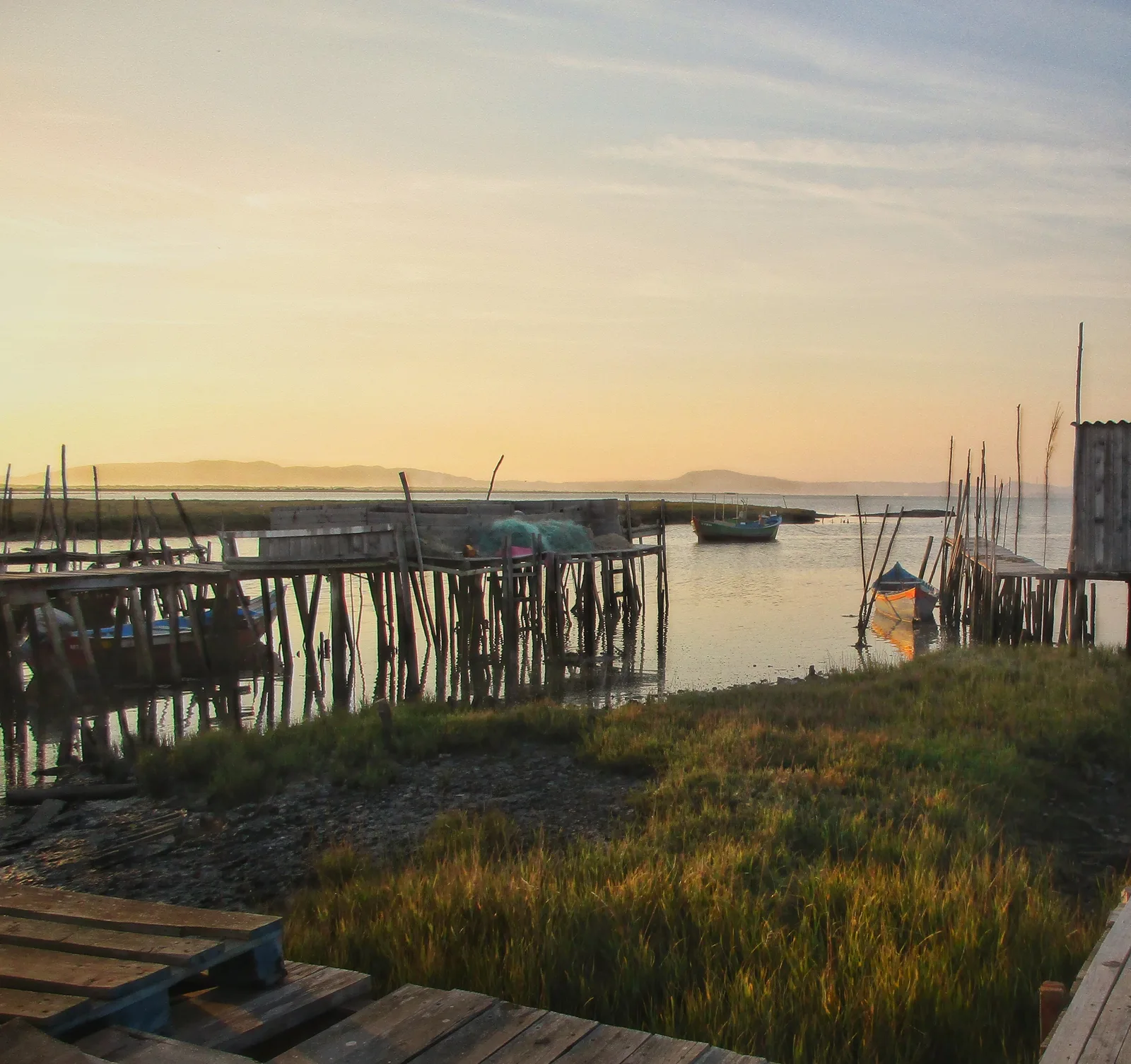
📷 Image credit
Photo: AJSL48 / Wikimedia Commons / CC BY-SA 4.0
The Carrasqueira Palafitic Pier (Cais Palafítico da Carrasqueira) is a unique stilt pier in the Sado Estuary, built by fishermen in the 1950s and 1960s. It is considered the only surviving and functioning structure of its kind in Europe. It stands in the village of Carrasqueira (municipality of Alcácer do Sal), 27 km from Setúbal.
History
In the 1950s, the first fisherman drove wooden stakes into the edge of the tidal dyke and laid a few planks on top – a practical solution for reaching the water at low tide, when the muddy bed is exposed for dozens of metres. Others followed: each fisherman added his own stakes and planks, gradually extending the pier.
Over decades of spontaneous collective construction, a zigzagging, interlocking labyrinth of wooden walkways on stilts grew to several hundred metres in length – a masterpiece of vernacular architecture unparalleled in Europe.
Construction
| Element | Description |
|---|---|
| Stakes | Irregular wooden poles driven into the muddy bed |
| Decking | Rough-hewn planks of local pine (costaneiros – boards cut from the first and last part of a log) |
| Cabins | Over 20 small wooden huts with thatched roofs |
| Cabin materials | Pine from surrounding forests; tightly packed river-bank grasses for thatching |
The apparent fragility of the structure is deceptive – the pier has been in service for over 70 years and continues to fulfil its original purpose. Fishermen can still add new sections as needed.
Tides
The appearance of the pier changes dramatically through the day:
- Low tide (typically morning): the water retreats, exposing the mud. Stakes protrude above the earth, boats rest on the riverbed – a ghostly, almost surreal landscape
- High tide (afternoon/evening): water fills the space around the stilts, reflecting the sky. At sunset – one of Portugal’s most photogenic scenes
At low tide, fishing is impossible: boats cannot reach the water. Tidal fluctuations in the estuary reach several metres, and fishermen must carefully plan their departures and returns.
Fishing community
Carrasqueira is the largest fishing community in the Sado Estuary. Traditional fishing and hand-harvesting of shellfish (marisco) are the main activities. The pier still serves its original function: mooring small fishing boats and storing tackle in the wooden cabins.
Mariscadores (shellfish pickers) collect bivalves by hand in the mud flats – a tradition practised across Portugal’s estuaries.
Cultural heritage
The fishing huts (cabanas) and the palafitic pier are recognised as cultural heritage of the Comporta region. The cabins are listed as protected structures. The entire complex lies within the Sado Estuary Natural Reserve (Reserva Natural do Estuário do Sado), which covers over 23,000 hectares.
How to get there
| Parameter | Value |
|---|---|
| Distance from Setúbal | 27 km (~25 min by car) |
| Distance from Comporta | 7 km |
| Route | Via the N-253 towards Alcácer do Sal |
| Public transport | Rodoviária do Alentejo bus to Carrasqueira village |
Visiting tips
- Best time: sunrise or sunset at high tide – the most scenic views
- Caution: the decking can be unstable; there are no safety railings
- For photographers: one of Portugal’s most cinematic locations; long-exposure shots at sunset are particularly striking
Ecosystem
The pier sits in the Sado Estuary ecosystem, home to over 250 bird species. It is a first-class birdwatching destination. The estuary also hosts a resident population of bottlenose dolphins.
See also
The light is on for free. But someone has to clean the lantern.
☕ Support on Ko-fi