Convento da Arrabida
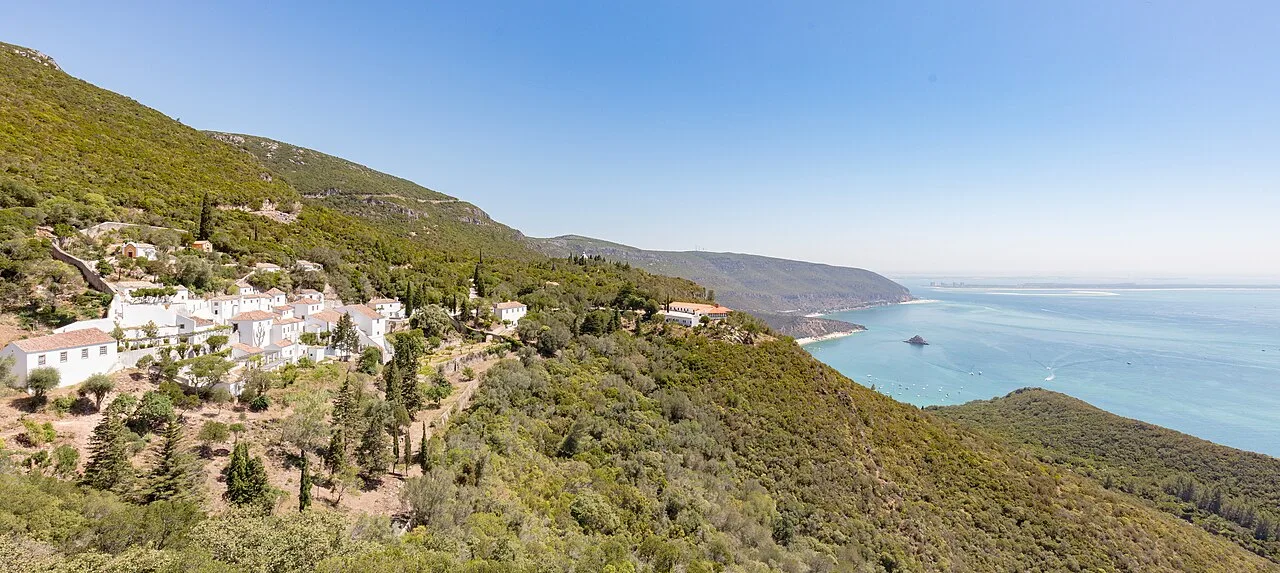
Convento de Nossa Senhora da Arrabida is a 16th-century Franciscan monastery on the slopes of the Serra da Arrabida. A complex of two monasteries, chapels, hermitages, and gardens spanning 25 hectares, it stands as a monument to hermitic asceticism rendered in stone.
Origins and Foundation
The monastery’s history dates to 1538–1539, when Dom Joao de Lencastre, 1st Duke of Aveiro, pledged to grant lands on the slopes of the Serra da Arrabida to the Franciscan friar Frei Martinho de Santa Maria. Frei Martinho — a Castilian (Andalusian) Discalced Franciscan of noble birth — sought to establish a community devoted to the eremitic life and the veneration of the Virgin Mary.
A hermitage already existed on the site, housing an image of Nossa Senhora da Arrabida (Our Lady of Arrabida) that had long been an object of pilgrimage.
The monastery was formally established in 1542. The first four friars spent two years living in cells hewn directly into the limestone cliffs, leading lives of the strictest asceticism.
Saint Peter of Alcantara and the Rule
The Duke of Aveiro invited Saint Peter of Alcantara (Sao Pedro de Alcantara, 1499–1562) — the celebrated Spanish Franciscan reformer and mystic — to assist Frei Martinho in organising the monastic community. Saint Peter helped draft the constitutions of the Franciscan Custody of Arrabida.
The friars, popularly known as “arrabidos”, were officially designated first as Discalced Franciscans (Franciscanos Descalcos) and later as Alcantarines (Alcantarinos). In 1560, the monastic communities were elevated to the rank of the Province of Arrabida.
The Architectural Complex
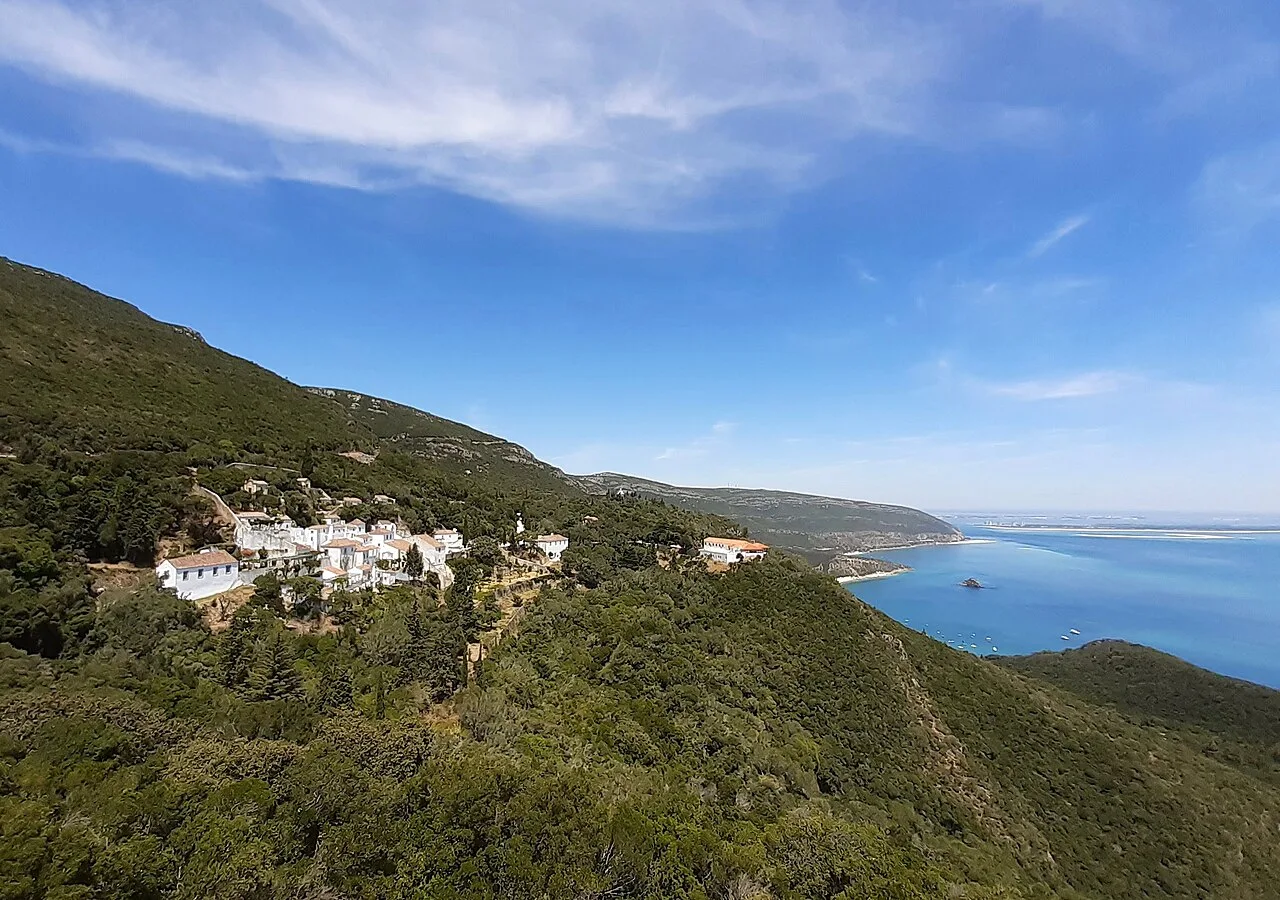
The complex occupies a steep, ocean-facing mountainside and is arranged across several levels.
The Old Monastery (Convento Velho)
Situated in the upper part of the mountain, it comprises:
- Four chapels
- Watchtowers dedicated to the Mysteries of the Passion
- Cells carved directly into the rock — the earliest structures in the complex
- Remains of the original hermitage
The Old Monastery preserves the spirit of the founders’ asceticism: the rock-hewn cells are devoid of any comfort and recall the caves of early Christian hermits.
The New Monastery (Convento Novo)
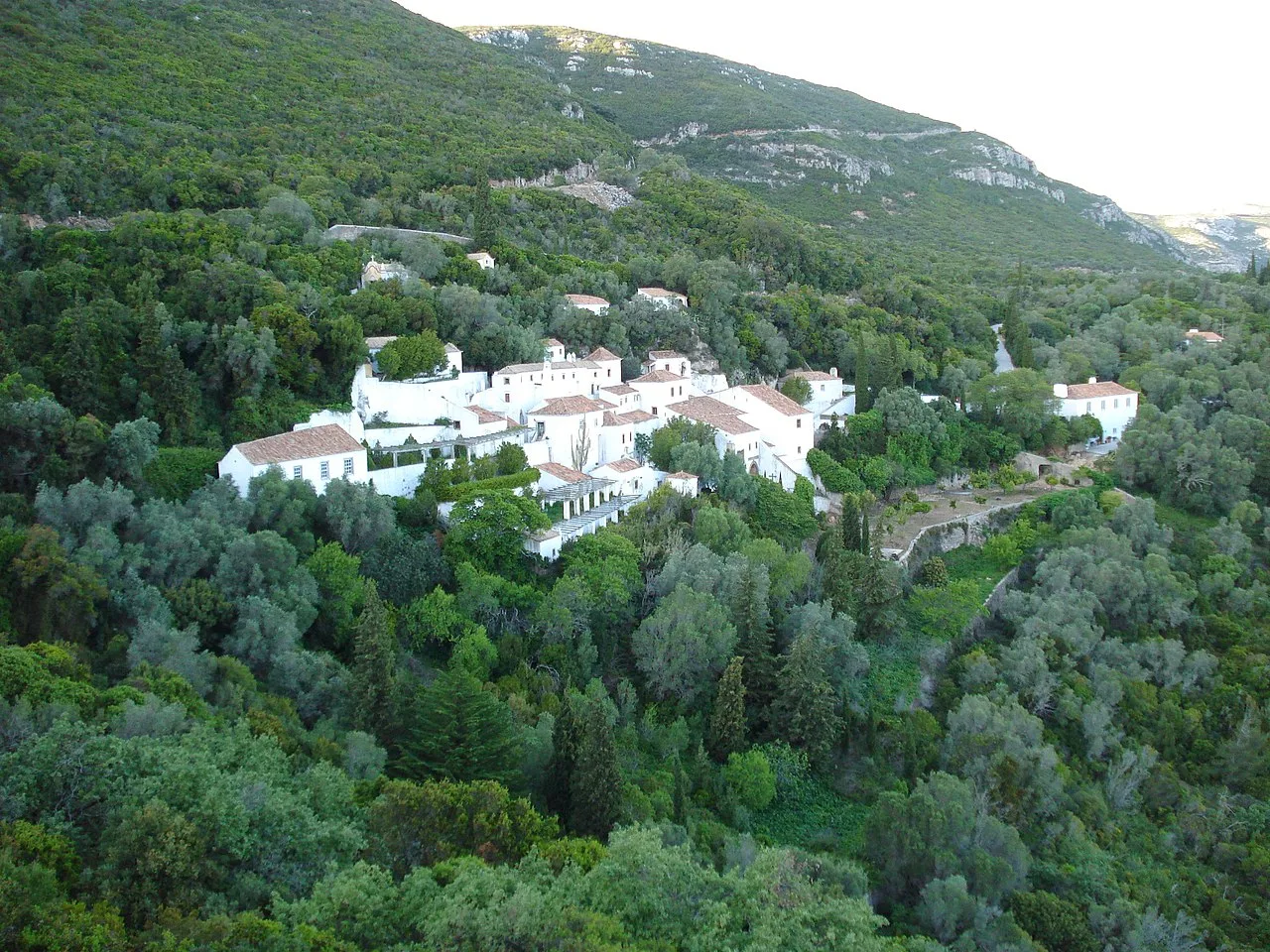
Located midway down the slope, this is a later and more spacious complex containing:
- The monastery church
- A cloister
- A refectory
- A library
- Service buildings
Santuario do Bom Jesus
A separate religious complex on the grounds, linked to the Old Monastery.
Gardens
Between the two monasteries lie monastic gardens that blend Mediterranean vegetation with cultivated plantings. The grounds fall within the boundaries of the Arrabida Natural Park, affording the site an exceptional natural setting.
Decline and Recovery
Following the dissolution of the religious orders in 1834 — a consequence of the Liberal Revolution in Portugal — the monastery, hermitages, and chapels were plundered and fell into gradual ruin through neglect.
In 1863, the monastery was acquired by the Casa de Palmela, a distinguished Portuguese noble house. Serious restoration work did not begin until the 1940s and 1950s.
The complex was classified as Property of Public Interest (Imovel de Interesse Publico) in 1977.
Fundacao Oriente
In 1990, the monastery and its surrounding grounds (25 hectares) were sold to the Fundacao Oriente — a Portuguese private foundation established in 1988 to promote cultural ties between Portugal and Asia. Since then, the Foundation has been the owner and steward of the entire complex, financing its restoration and upkeep.
Practical Information
- Location: slopes of the Serra da Arrabida, Municipality of Setubal
- Coordinates: 38.4817° N, 9.0167° W
- Visits: guided tours only, by prior appointment
- Days of operation: Wednesday – Sunday
- Admission: 5.00 euros
The schedule and prices are subject to change. Visitors are advised to contact the Fundacao Oriente for current details.
Image sources
- convento-panoramic.webp — Panoramic view of the Arrabida Convent. Author: Diego Delso. License: CC BY-SA 4.0. Source
- convento-view-portinho.webp — View of the convent and Portinho da Arrabida bay. Author: Silvia Sequeira. License: CC BY 4.0. Source
- convento-closeup.webp — Arrabida Convent close-up. Author: Igiul. License: CC BY 3.0. Source
See also
- Arrabida Natural Park — the protected area in which the monastery is situated
- Monastery of Jesus — another significant monastery in the Setubal region
- The Reconquista and the Medieval Period
All our knowledge is free. Creating it is not.
☕ Support on Ko-fi