Forte de Sao Filipe
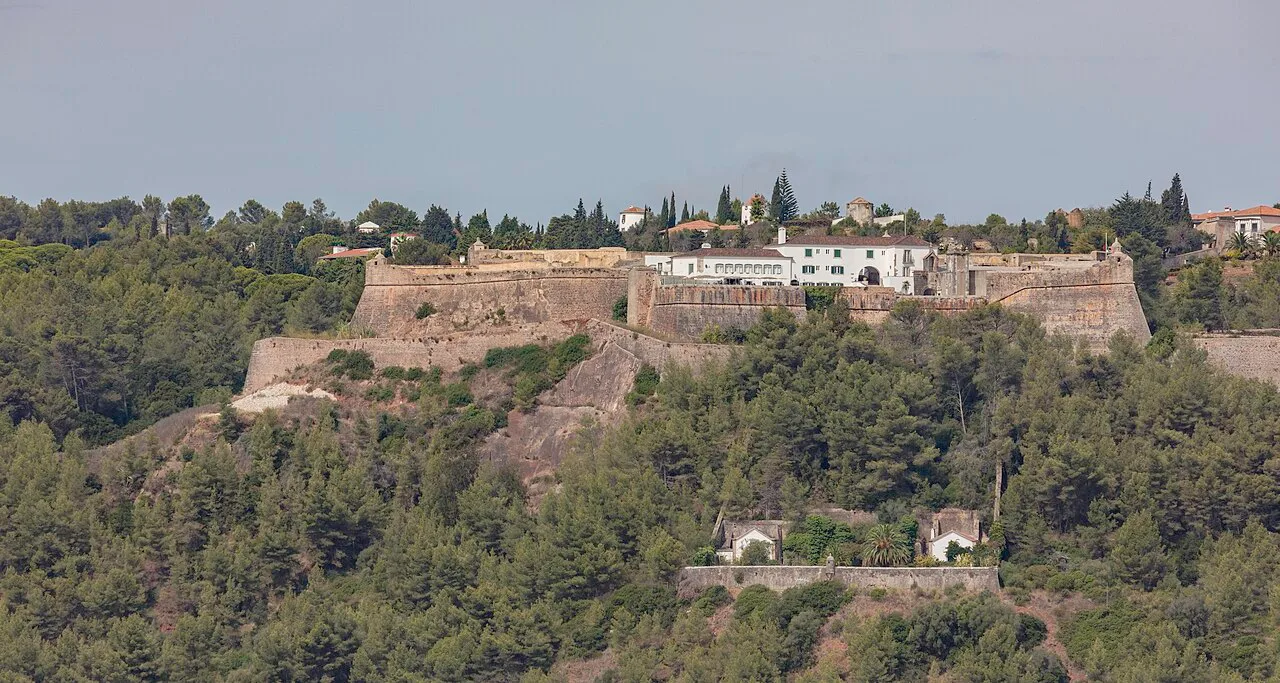
Forte de Sao Filipe is a 16th-century military fortress on a hilltop to the west of the historic centre of Setubal. Commanding views over the city and the Sado River estuary, it stands as a distinguished example of late-Renaissance bastion fortification.
History of Construction
The fortress is named after King Philip I of Portugal (Philip II of Spain), who personally ordered its construction. According to historical records, Philip II was present at the laying of the foundation stone in 1582, though the main building works did not commence in earnest until 1590.
The design was entrusted to Filipe Terzi — an Italian military engineer in the service of the Spanish crown. Following his death, construction was completed by the engineer Leonardo Torreano. The fortress was finished in 1600.
Strategic Necessity
During the Iberian Union (1580–1640), when Portugal was ruled by the Spanish crown, it became essential to strengthen the coastal defences against pirates from North Africa and France, as well as against the English and Dutch naval forces then at war with Spain.
Architectural Features
Star-Shaped Plan
Forte de Sao Filipe is a classic example of a bastion fortress (star fort), a type of fortification developed in response to advances in artillery during the 16th and 17th centuries. The star-shaped layout with projecting bastions provided:
- Elimination of blind spots in the field of fire
- Dispersal of the enemy’s attacking force
- Mutual covering of bastions through crossfire
Walls and Moat
The fortress features double-thickness walls and a broad moat. The design took into account the ballistic technology of the period.
Capela de Sao Filipe
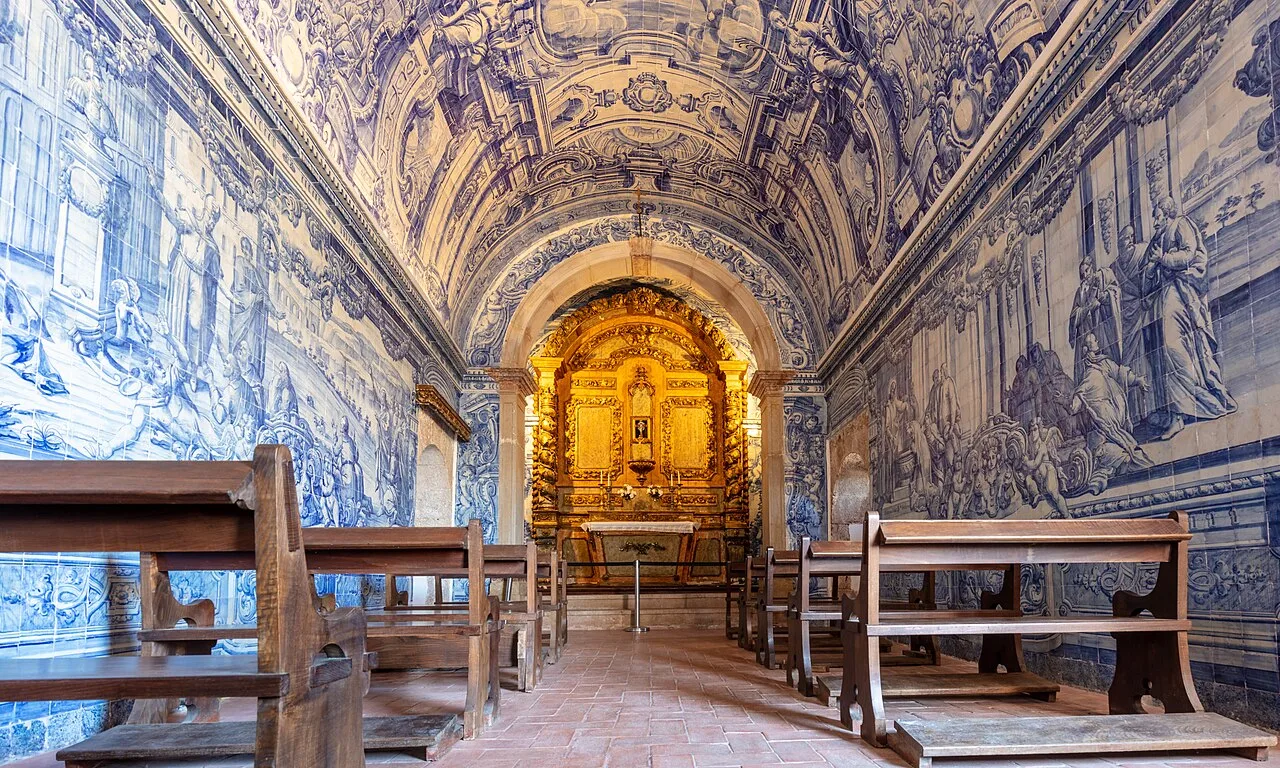
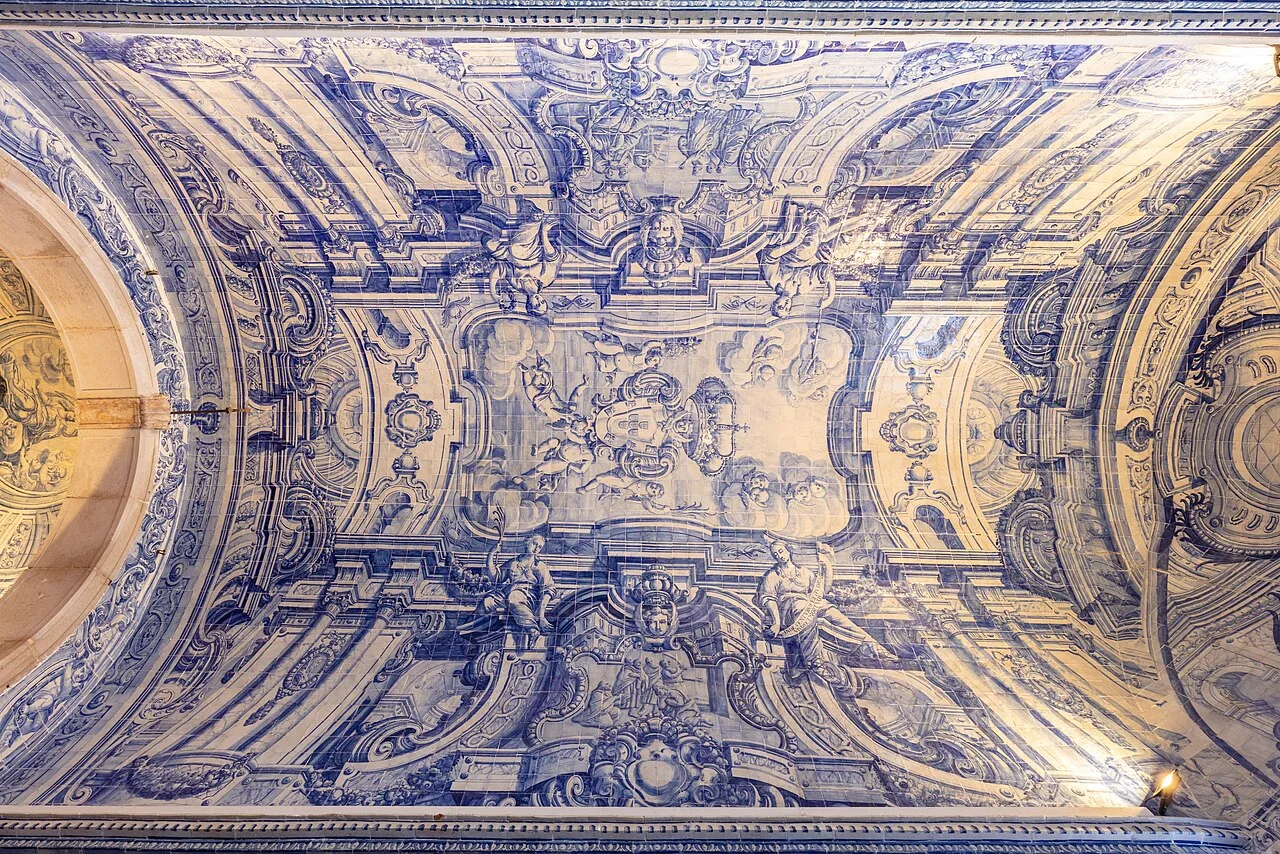
Within the fortress stands the Capela de Sao Filipe, decorated with traditional Portuguese azulejo tiles. The ceramic panels were executed by the artist Policarpo de Oliveira Bernardes and date from 1736. They depict scenes from the life of Saint Philip and are rendered in the characteristic blue-and-white palette.
Military History
The Restoration War (1640)
A pivotal episode in the fortress’s history came during the Restoration War (1640–1668), when Portugal regained its independence from Spain. In December 1640, following the proclamation of John IV as King of Portugal, Portuguese forces besieged Forte de Sao Filipe, then under the command of Dom Francisco de Almeida. Under pressure from the local populace and Portuguese troops, the fortress held out the longest of all the fortifications in Setubal — a testament to its defensive strength.
Pousada and Present Day
Restoration works were carried out in the 1940s. In 1962, part of the fortress was converted into a hotel, which opened in 1965 as part of the state-run Pousadas de Portugal network — a chain of historic guest houses set in castles, monasteries, and palaces.
On 1 November 2014, the pousada was closed owing to structural stability concerns. [UNVERIFIED] According to the latest available information, the hotel has not reopened.
The fortress itself remains open to visitors. Since 2017, the Municipality of Setubal has assumed management of the fortification and has opened a bar and terrace on the site.
Visitors may explore:
- The ramparts and bastions
- Panoramic viewing points overlooking Setubal, the Atlantic, and the Troia Peninsula
- The chapel with its azulejo panels (access may be restricted)
Certain areas, including underground tunnels, are closed to the public.
Practical Information
- Address: Estrada do Castelo, Setubal
- Coordinates: 38.5196° N, 8.8986° W
- Admission: free (fortress grounds)
- Location: a hilltop approximately 1 km west of the historic centre
Information regarding the current status of the pousada and access to the chapel may be incomplete. Visitors are advised to check conditions before their visit.
Image sources
- fort-panoramic-view.webp — Panoramic view of Fort Sao Filipe. Author: Diego Delso. License: CC BY-SA 4.0. Source
- fort-chapel-interior.webp — Interior of the chapel with azulejo tiles. Author: Diego Delso. License: CC BY-SA 4.0. Source
- fort-chapel-altar.webp — Chapel altar in Fort Sao Filipe. Author: Diego Delso. License: CC BY-SA 4.0. Source
See also
- Monastery of Jesus — another architectural landmark of Setubal
- Roman Ruins of Troia — an archaeological complex on the peninsula visible from the fortress walls
- Mercado do Livramento — the historic market in the city centre
- Setubal and the Age of Discoveries — the historical context of the fortress’s construction
- The 1755 Earthquake — the catastrophe that damaged the fortress
If this article was useful — help us write the next one.
☕ Support on Ko-fi