Church of Santa Maria da Graca (Setubal Cathedral)
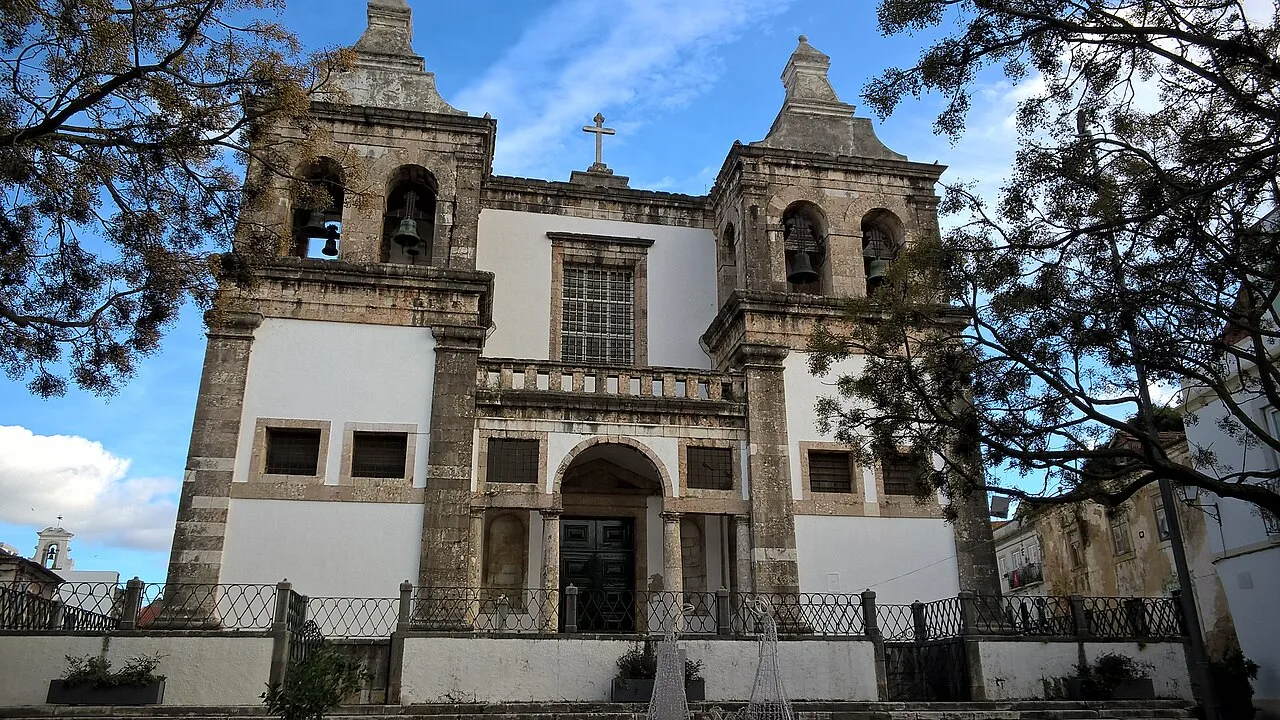
The Church of Santa Maria da Graca (Igreja de Santa Maria da Graca) is one of the oldest churches in Setubal, founded in the 13th century and rebuilt in the 16th century in the Mannerist style. Since 1975, it has served as the cathedral (Se) of the Diocese of Setubal.
History
Foundation in the 13th Century
The Church of Santa Maria da Graca was founded in the second half of the 13th century as the parish church of the eponymous parish (freguesia) of Setubal. The original building was constructed in the Romanesque-Gothic style characteristic of Portuguese ecclesiastical architecture of the period. Only fragmentary information survives about the medieval appearance of the building, as the church underwent a thorough reconstruction during the Renaissance.
The parish of Santa Maria da Graca was one of the most important in the city, alongside the parishes of Sao Juliao and Nossa Senhora da Anunciada. The church’s position in the upper part of the city, closer to the hills, determined its role as the parish centre for the inhabitants of this district.
The 16th-Century Reconstruction
The decisive transformation of the church took place in the second half of the 16th century. Between 1565 and 1570, the building was entirely reconstructed to a design by the architect Antonio Rodrigues – one of the leading Portuguese architects of the period and a representative of the Mannerist movement in architecture.
Antonio Rodrigues, a pupil of Italian masters, brought to the project the principles of Renaissance architecture adapted to the Portuguese tradition. The result was a building in which the medieval basilican plan is combined with a Mannerist facade composition – restrained, geometrically precise, and free of excessive ornament.
Subsequent Centuries
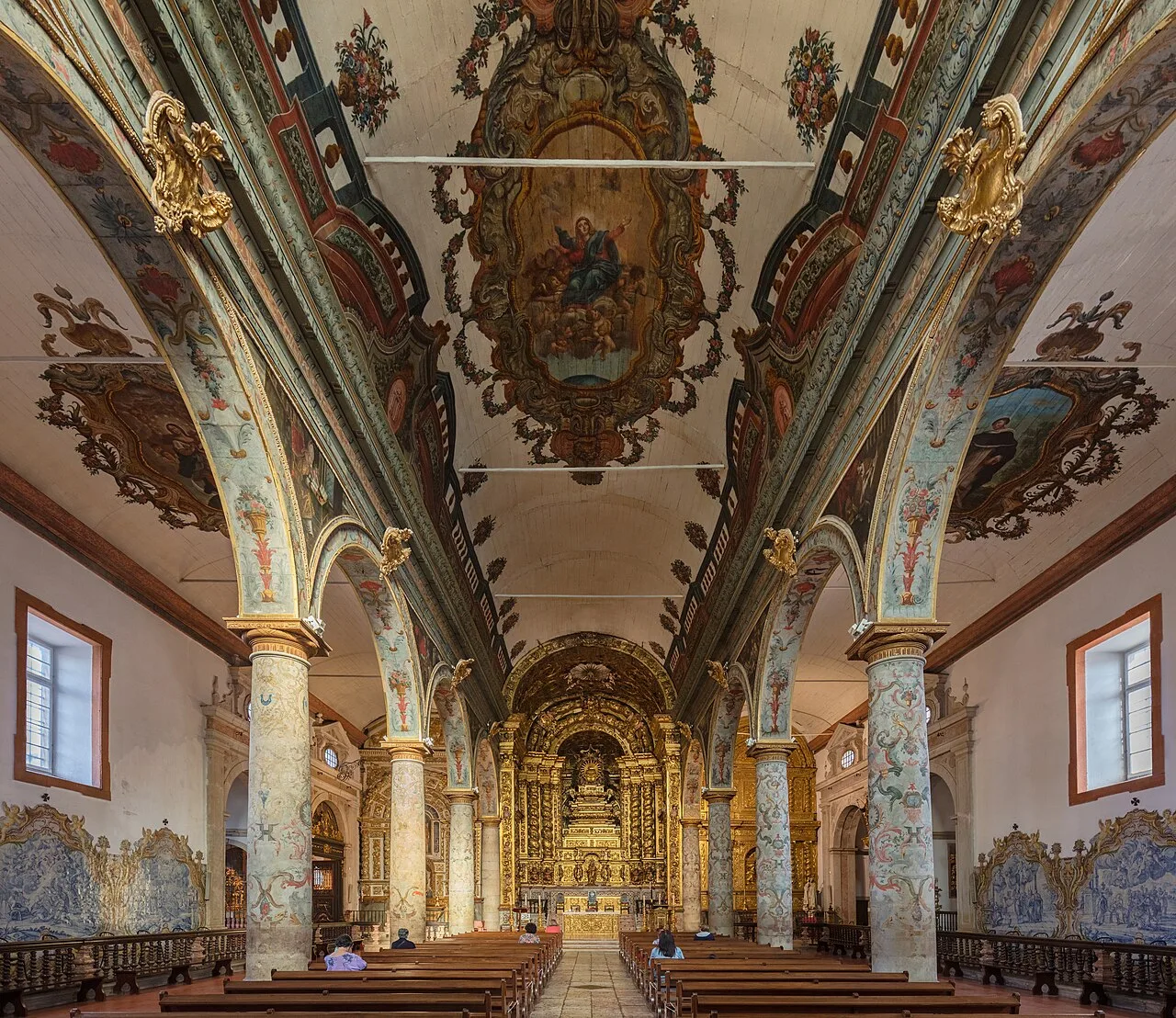
In the 17th–18th centuries, the church’s interior was enriched with new decorative elements: gilded carved altarpieces and azulejo panels were installed. Each century added its own layer to the ornamentation, turning the church into a chronological scale of Portuguese decorative art.
Cathedral Status (1975)
On 16 July 1975, by the bull “Studentes Nos” of Pope Paul VI, the Diocese of Setubal was established, carved from the Archdiocese of Lisbon. The Church of Santa Maria da Graca was elevated to the rank of cathedral (Se) – the principal church of the new diocese.
On 26 October 1975, the first Bishop of Setubal was consecrated in the cathedral – Dom Manuel da Silva Martins, who occupied the see until 1998. The creation of a separate diocese reflected the growing importance of Setubal as an urban centre and took place in the context of the democratic transformations in Portugal following the Carnation Revolution (1974).
Architecture and Description
The Facade
The cathedral’s facade is an example of Mannerist restraint. It is characterised by strict geometric forms, a minimum of decorative elements, and a pronounced verticality. On the left side of the facade rises a bell tower (torre sineira), lending the building its distinctive asymmetrical silhouette. The facade achieves its monumentality not through ornamentation but through the proportions and scale of its stone surfaces.
The Interior
The interior of the cathedral is organised as a three-aisled basilica. The aisles are separated by columns of the Tuscan order, decorated with 19th-century frescoes that create a contrast between the Renaissance structure and the later painted decoration.
The Main Chapel
The chancel (capela-mor) contains a gilded carved altarpiece (talha dourada) in the “national” style (estilo nacional), completed in the late 17th century. This style of carving, characteristic of the reign of Pedro II, is distinguished by dense vegetal ornament featuring vine tendrils, birds, and angels, covered in gold leaf.
Azulejos
The side walls of the main chapel are lined with panels of blue-and-white azulejos from the 18th century, depicting scenes from the life of the Virgin Mary. These tile panels represent a typical example of Portuguese Baroque azulejo – an art form in which Portugal achieved consummate mastery.
The Ceiling
The ceiling of the cathedral dates to the second half of the 18th century and complements the Baroque atmosphere of the interior.
Side Chapels
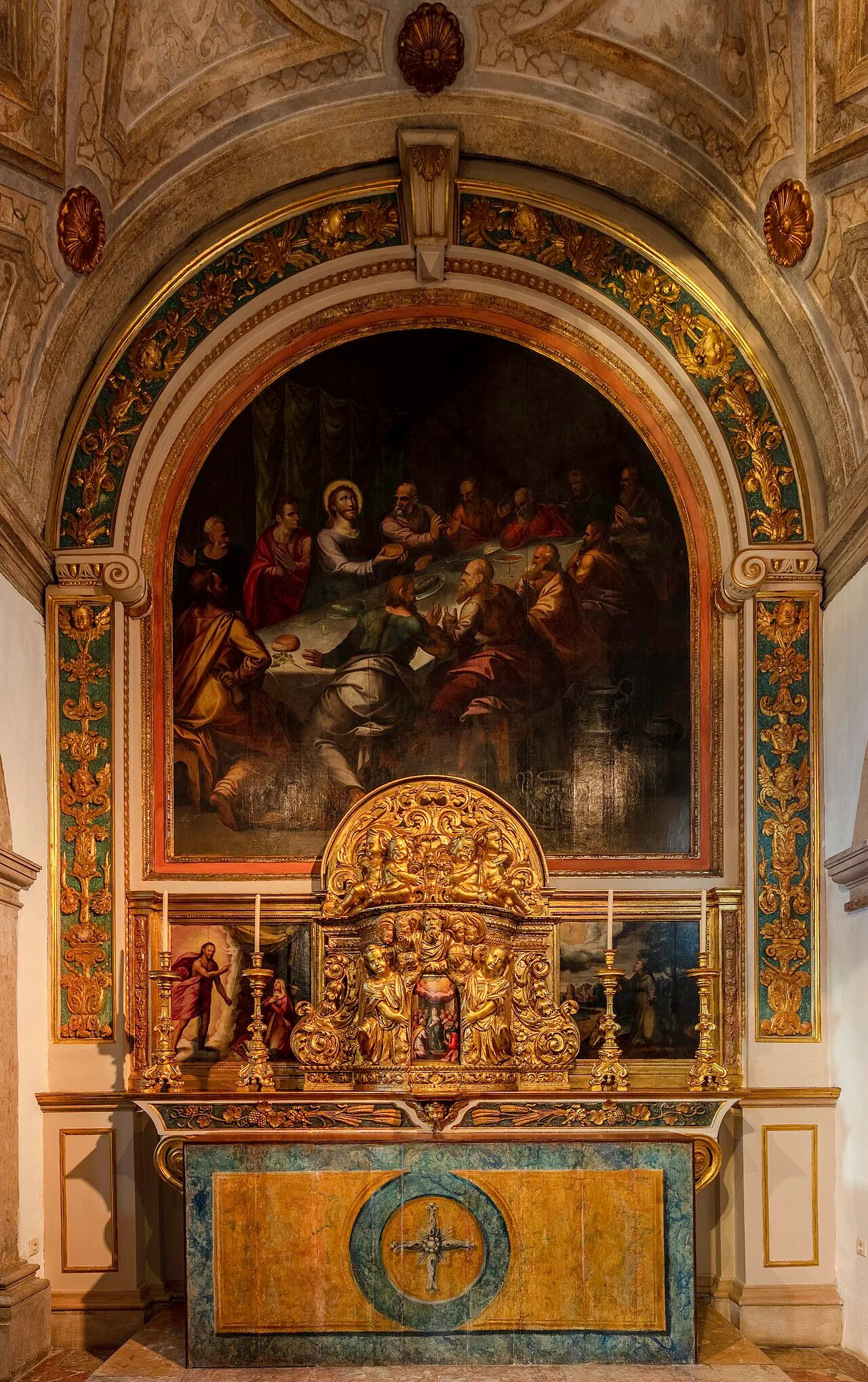
The side aisles contain chapels with gilded carved altarpieces from the 17th–18th centuries, each dedicated to a particular saint or religious subject.
Significance
Religious Centre
As the cathedral of the Diocese of Setubal, the Church of Santa Maria da Graca is the principal church of the diocese, which encompasses the territory of the Setubal district south of the Tagus. It is an active cathedral in which the main liturgical services and ceremonies are held.
Architectural Value
The building represents one of the few well-preserved examples of Mannerist ecclesiastical architecture in the Setubal region. The contrast between the austere Mannerist facade and the rich Baroque interior creates an expressive architectural dialogue between two eras.
Historical Layering
The church-cathedral displays the multi-layered character typical of Portuguese religious buildings: a medieval foundation, a Renaissance reconstruction, Baroque decoration, and 19th-century frescoes. Each layer does not efface the one before it but is superimposed upon it, producing a unique ensemble.
A Monument of Decorative Art
The combination of gilded carving, azulejo panels, and frescoes makes the cathedral’s interior a significant collection of Portuguese decorative art from the 17th through the 19th century.
Practical Information
- Address: Largo de Santa Maria, 2900 Setubal
- Coordinates: 38.5244 N, 8.8883 W
- Type: active cathedral (Se)
- Admission: free (the church is an active place of worship)
Visiting hours may be restricted by the schedule of religious services. It is advisable to check current information before visiting.
Image sources
- igreja-facade.webp — Western facade of Igreja de Santa Maria da Graca. Author: GualdimG. License: CC BY-SA 4.0. Source
- igreja-interior.webp — Interior of the Church of St. Mary of Graces. Author: Diego Delso. License: CC BY-SA 4.0. Source
- igreja-altar.webp — Church altar with Last Supper painting. Author: Diego Delso. License: CC BY-SA 4.0. Source
See also
- Monastery of Jesus – another outstanding example of ecclesiastical architecture in Setubal, two centuries older
- Praca do Bocage – the central square, located nearby
- Fort of Sao Filipe – a 16th-century fortress, contemporary with the Mannerist reconstruction of the cathedral
- The 1755 Earthquake – the catastrophe that affected all the historic buildings of Setubal
If this article was useful — help us write the next one.
☕ Support on Ko-fi