Monastery of Jesus
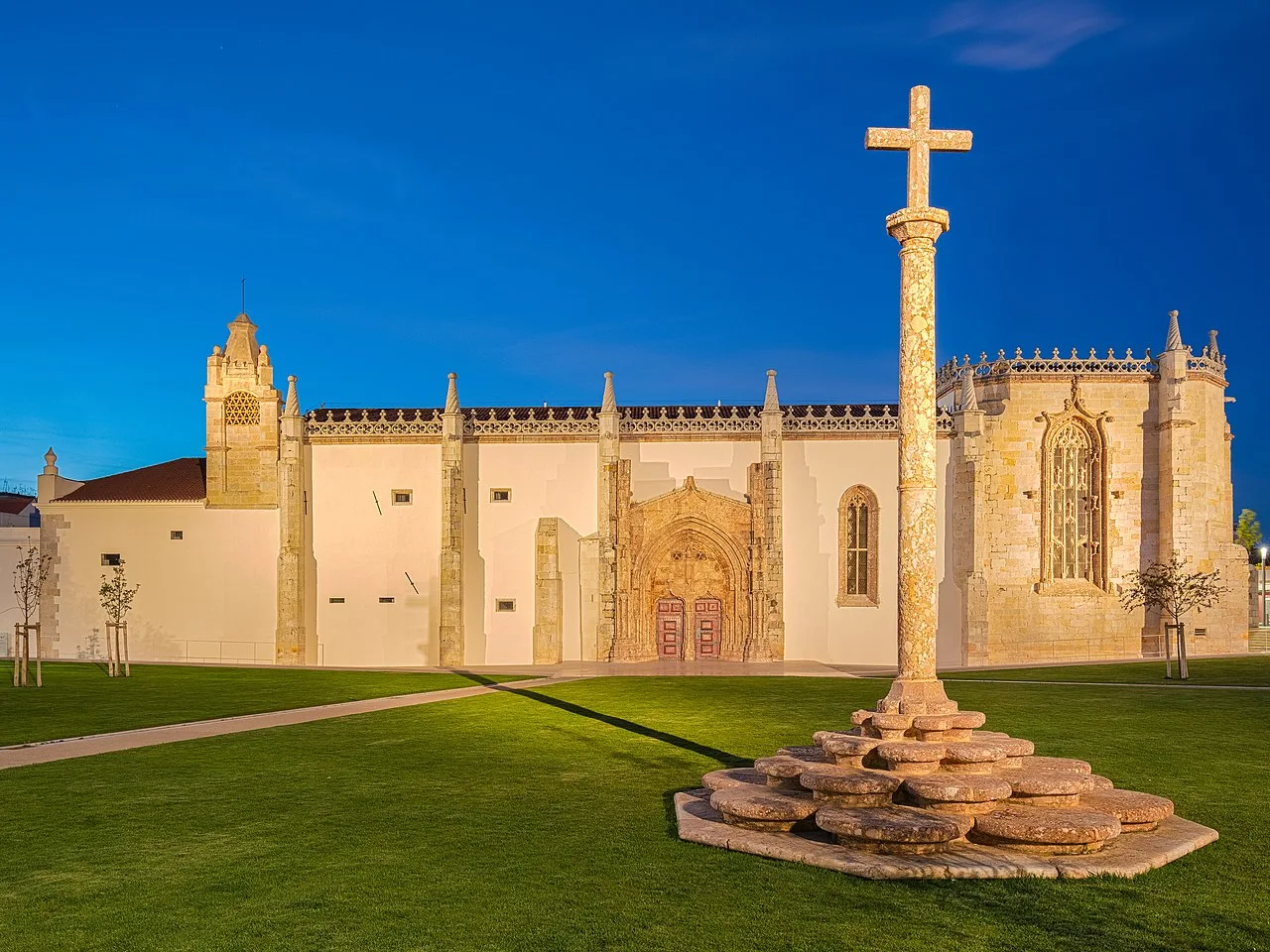
The Monastery of Jesus (Mosteiro de Jesus) is a historic architectural complex in the centre of Setubal, widely recognised as the first building constructed in the Manueline style. Founded around 1490 as a convent for nuns of the Order of Saint Clare, it now houses the Museu de Setubal.
Foundation
The monastery was founded around 1490 by the noblewoman Justa Rodrigues Pereira — the wet nurse of the future King Manuel I. Her position at court secured royal patronage for the project.
From 1491, King John II assumed sponsorship of the construction, entrusting the design to the architect Diogo de Boitaca, a master builder believed to be of French origin. After John II’s death in 1495, Manuel I continued to fund the building, paying Boitaca an annual salary. Queen Leonor de Lencastre, wife of John II, also actively supported the convent from 1492 onward.
By 1496, the main body of the church had been erected, and nuns of the Order of Poor Clares were already in residence. Construction of the entire complex was completed by 1510.
Architectural Features
The Church of Jesus was an experimental work by Boitaca, a precursor to his grand project — the Mosteiro dos Jeronimos in Lisbon.
Layout
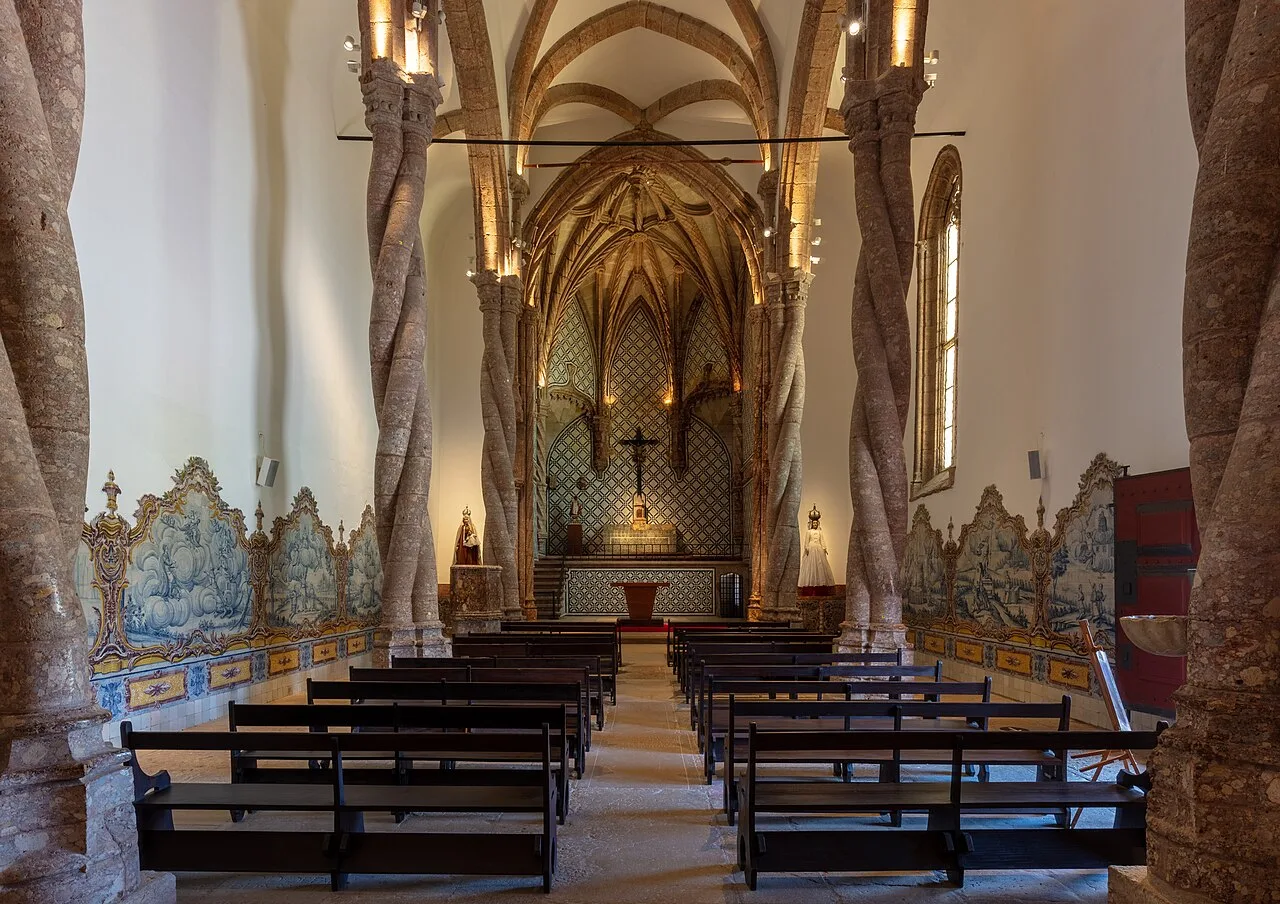
The church combines two contrasting spaces: a rectangular nave and a polygonal apse (the eastern end), which rises above the nave. The difference in height intensifies the dramatic effect of the interior.
Twisted Columns
The church’s defining architectural element is its twisted (spiral) columns. Each pier in the nave is composed of three intertwined half-columns carved from rough-hewn granite. Their spiral form creates a rope-like twisting effect — an image that would later become one of the hallmark motifs of the Manueline style.
The columns were fashioned from breccia quarried in the nearby Serra da Arrabida. This choice of material gave the columns their distinctive texture and colour and set a precedent for later Manueline buildings.
Vaults and Portal
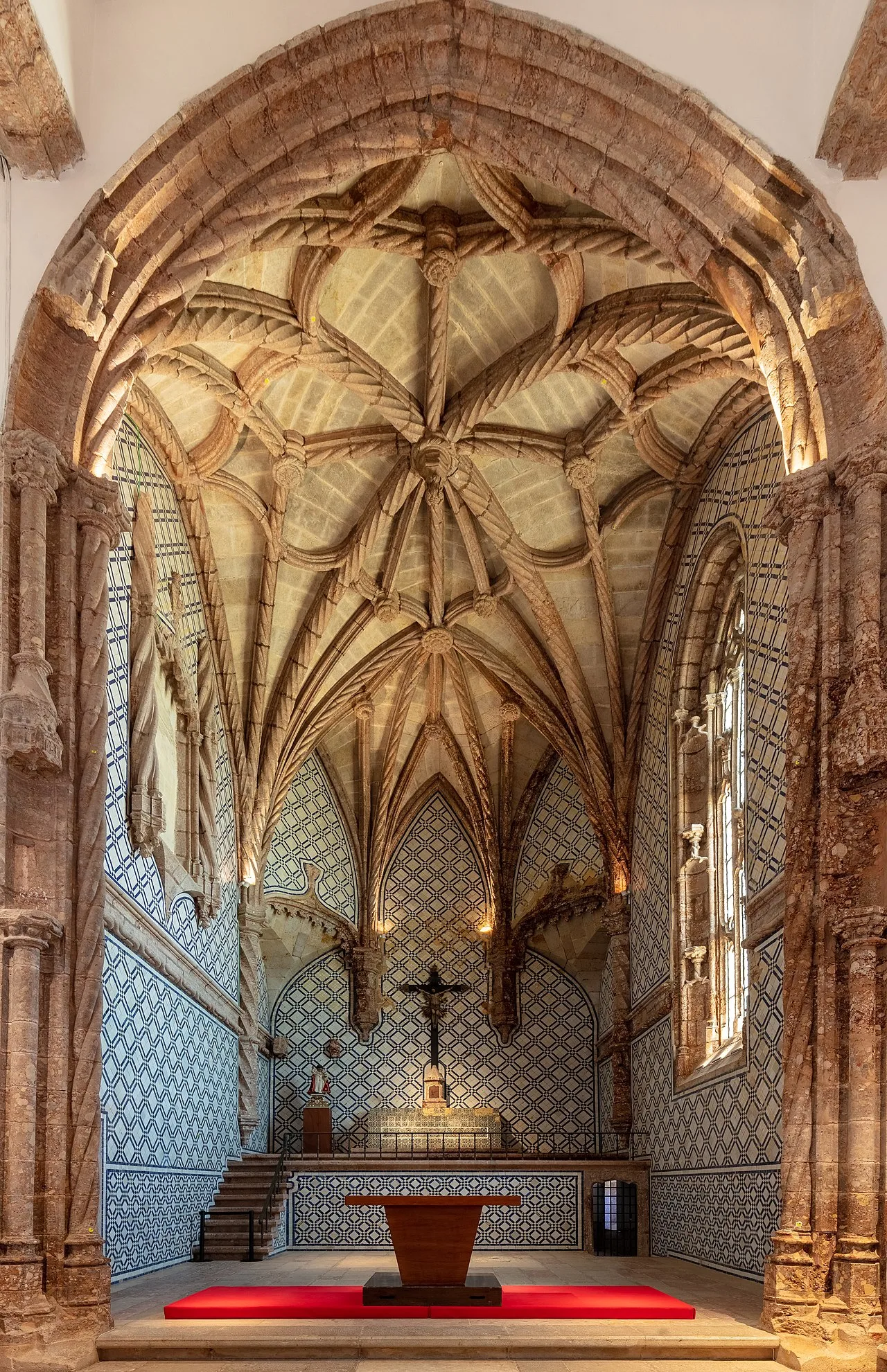
The church vaults are executed in the late Gothic manner, with characteristic ribbed tracery. The portal displays early elements of Manueline decoration, still more restrained than those found in the style’s mature examples.
Birthplace of the Manueline Style
The Monastery of Jesus is recognised as the first building in the Manueline style (Manuelino) — a uniquely Portuguese variant of late Gothic that became the national architectural idiom of the late 15th and early 16th centuries. Similar spiral columns appeared subsequently in the Cathedral of Guarda and in other Manueline structures across Portugal.
Painting: The “Setubal Primitives”
The monastery holds an outstanding collection of paintings — 14 altarpiece panels known as the “Setubal Primitives” (Primitivos de Setubal). They are attributed to the Lisbon workshop of Jorge Afonso and were executed by several masters:
- Jorge Afonso
- Gregorio Lopes
- Garcia Fernandes
- Cristovao de Figueiredo
These 14 panels are considered one of the most representative ensembles of Portuguese Renaissance painting.
Heritage Status
The church and the cloister with its chapter house were classified as a National Monument (Monumento Nacional) in 1910 and 1933, respectively.
In 2013, Europa Nostra placed the monastery on its list of the 7 Most Endangered Heritage Sites in Europe. The listing drew international attention to the urgent need for restoration.
Restoration and the Museu de Setubal
Since 1961, the monastery buildings have housed the Museu de Setubal (Museu de Setubal / Convento de Jesus). The museum displays more than 500 works of art, including the altarpiece panels.
An extensive restoration carried out by the Municipality of Setubal was divided into three phases and cost approximately 9 million euros (co-financed under the Portugal 2020 programme). The works included:
- Structural rehabilitation of the entire complex
- Conservation and restoration of artworks
- Updated museography and lighting
- Installation of a cafeteria and restaurant
- New building services and infrastructure
The museum reopened on 30 November 2020. Europa Nostra subsequently hailed the monastery as an example of transformation from “most endangered” monument to “heritage wonder of Europe.”
Practical Information
- Address: Praca Miguel Bombarda, Setubal
- Coordinates: 38.5244° N, 8.8925° W
- Opening hours (summer, 1 June – 30 September): Tuesday – Saturday 10:00–17:00, Sunday 15:00–19:00
- Opening hours (winter, 1 October – 31 May): Tuesday – Saturday 10:00–17:00, Sunday 14:00–17:00
- Closed: Mondays and public holidays
Opening hours are subject to change. Visitors are advised to check the current schedule on the official Museu de Setubal website.
Image sources
- monastery-exterior-night.webp — Monastery of Jesus at night, Setubal. Author: Diego Delso. License: CC BY-SA 4.0. Source
- monastery-nave-interior.webp — Main nave with Manueline twisted columns. Author: Diego Delso. License: CC BY-SA 4.0. Source
- monastery-altar.webp — Altar of the Monastery of Jesus church. Author: Diego Delso. License: CC BY-SA 4.0. Source
See also
- Arrabida Natural Park — the mountain range from which the breccia for the twisted columns was quarried
- Forte de Sao Filipe — another outstanding architectural monument of Setubal
- Mercado do Livramento — a historic building adorned with azulejo panels
- Setubal and the Age of Discoveries — the historical context of the monastery’s construction
- The 1755 Earthquake — the catastrophe that damaged the monastery
If this article was useful — help us write the next one.
☕ Support on Ko-fi