Monuments and Statues of Setúbal
📷 Image credit
Photo: Georges Jansoone / Wikimedia Commons / CC BY 2.5
The monuments of Setúbal form a chronicle in stone and steel: from a medieval pillory on the central square to red blades soaring skyward above a roundabout. Each monument preserves the story of the people, ideas, and struggles that have shaped this city’s identity.
Medieval Heritage: The Pelourinho
The Pelourinho de Setúbal — a pillory column standing in Praça Marquês de Pombal — is the city’s oldest monumental landmark. In 1774, during the extensive post-earthquake reconstruction following the great earthquake of 1755, the pillory was moved to its present location by order of the Marquis of Pombal.
The pelourinho is a Neoclassical Corinthian column carved from white marble with dark veins. It stands on a square pedestal with three octagonal steps and is topped by a four-sided pyramid with an iron spike. The overall composition reflects the aesthetic of the Pombaline reforms — severity, symmetry, and rationality.
In medieval Portugal, a pelourinho served a dual function: as a symbol of municipal autonomy (the right to administer justice, granted by royal charter — the foral) and as a site of public punishment. Since 1910, Setúbal’s pelourinho has been classified as a national monument (Monumento Nacional).
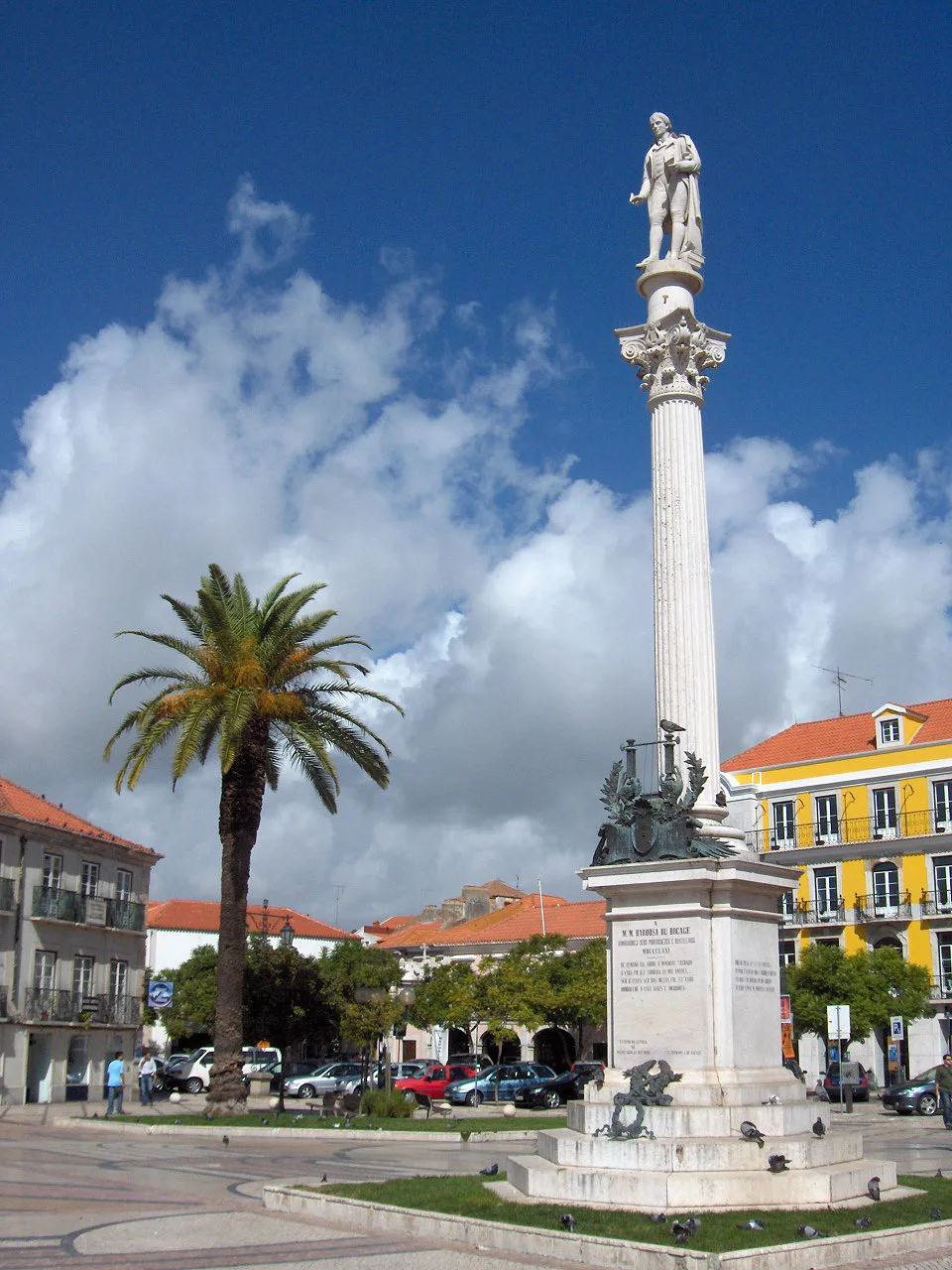
Statue of Bocage (1871)
At the very heart of Setúbal, in Praça do Bocage, rises the monument that has become the city’s emblem — the Estátua de Bocage, honoring the poet Manuel Maria Barbosa du Bocage. The statue was ceremonially unveiled on 21 December 1871, the 66th anniversary of the poet’s death.
Sculptor Pedro Carlos dos Reis designed the monument, while stonemason Germano José de Sales executed the stonework. The structure stands approximately 12 meters tall: the figure of the poet, roughly 2 meters in height, is mounted on a massive white marble Corinthian column with an octagonal base and four steps. Bocage is depicted in the costume of his era — holding a quill in his right hand and sheets of manuscript in his left.
Funds for the monument were raised through public subscription among admirers of the poet in both Portugal and Brazil — a testament to Bocage’s international renown in the Portuguese-speaking world. The young Eça de Queirós, then an aspiring writer who would go on to become one of Portugal’s greatest novelists, attended the inauguration ceremony.
A curious detail: nine days before the unveiling, the quill in the statue’s right hand broke off. The damage had to be hastily repaired with cement — a temporary fix that became permanent.
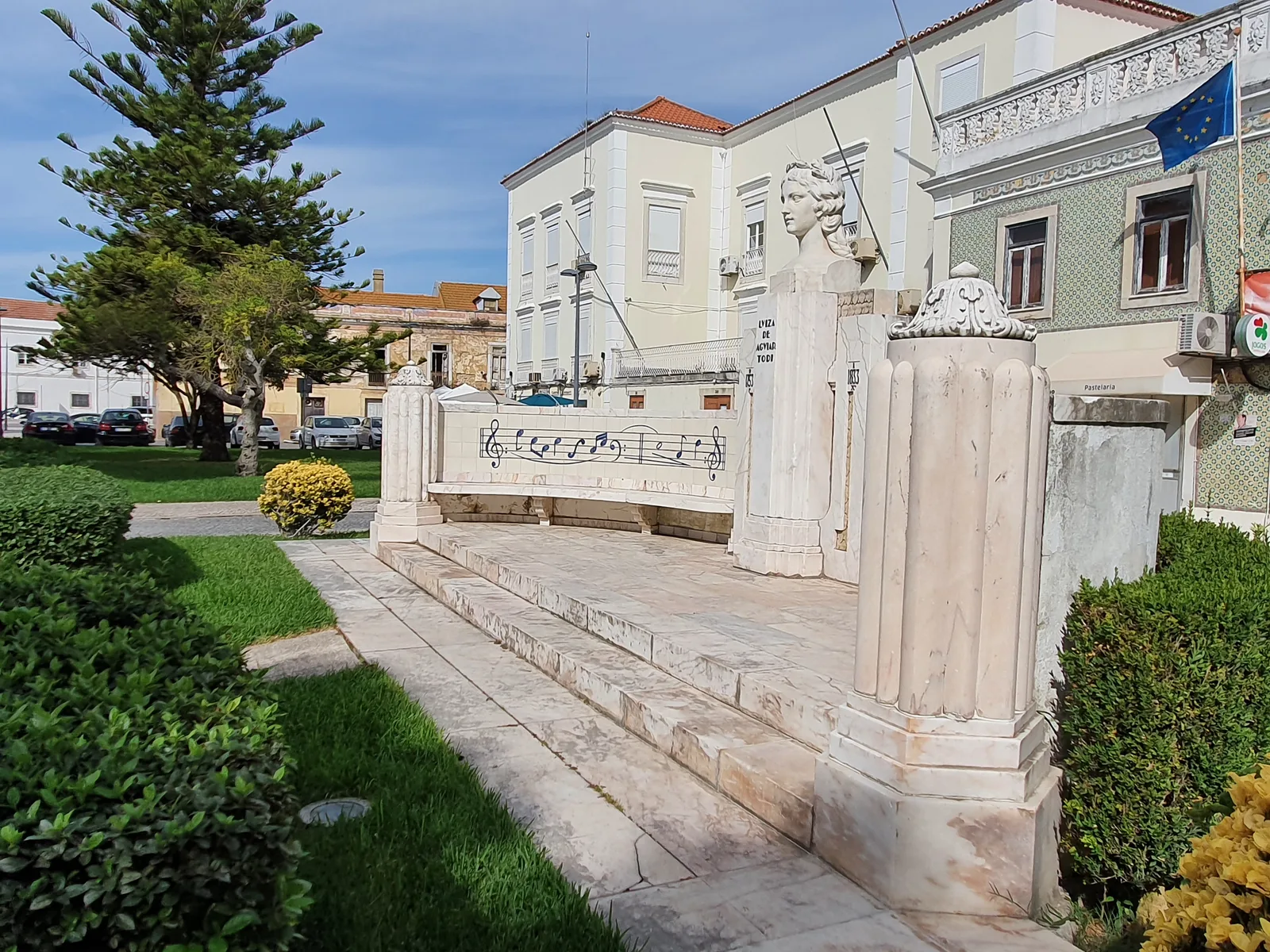
Monument to Luísa Todi (1933)
On Avenida Luísa Todi — the main thoroughfare of the historic city center — stands the Monumento a Luísa Todi, honoring the great opera singer. The monument was inaugurated on 1 October 1933, marking the centenary of Luísa Todi’s death (1753–1833).
The monument takes the form of a glorieta — a decorative rotunda or canopy — designed by architect Abel Pascoal. The bust of the singer was sculpted by Leopoldo de Almeida, one of the foremost Portuguese sculptors of the 20th century and author of numerous monumental works throughout the country. Construction was carried out by builder Abílio Salreu.
The monument was originally erected at a different location; in 1938 it was moved to its present site on Avenida Luísa Todi, where it fits organically into the boulevard’s landscape.
Monument to the 25th of April and the Nationalizations (1985)
On the Praça de Portugal roundabout in the São Sebastião parish stands one of the city’s most striking monuments — the Monumento ao 25 de Abril e às Nacionalizações. Unveiled on 1 October 1985, it is dedicated to the Carnation Revolution of 1974 and the wave of nationalizations that followed.
The monument was designed by architect Rodrigues Ollero, with the sculptural work executed by Virgílio Domingos and António Trindade. The composition features red steel “blades” rising 13 meters high, symbolizing the revolutionary impulse, alongside a blue cube 6 meters wide. The entire structure weighs approximately 30 tons.
The story of its creation is remarkable: the monument was built by workers of the Setenave shipyard — Setúbal’s largest shipbuilding enterprise. Construction required approximately 3,000 hours of voluntary labor. The monument was a gift from the workers to the city — a material expression of solidarity and the revolutionary ideals that were especially strong in Setúbal, historically a bastion of the Portuguese left.
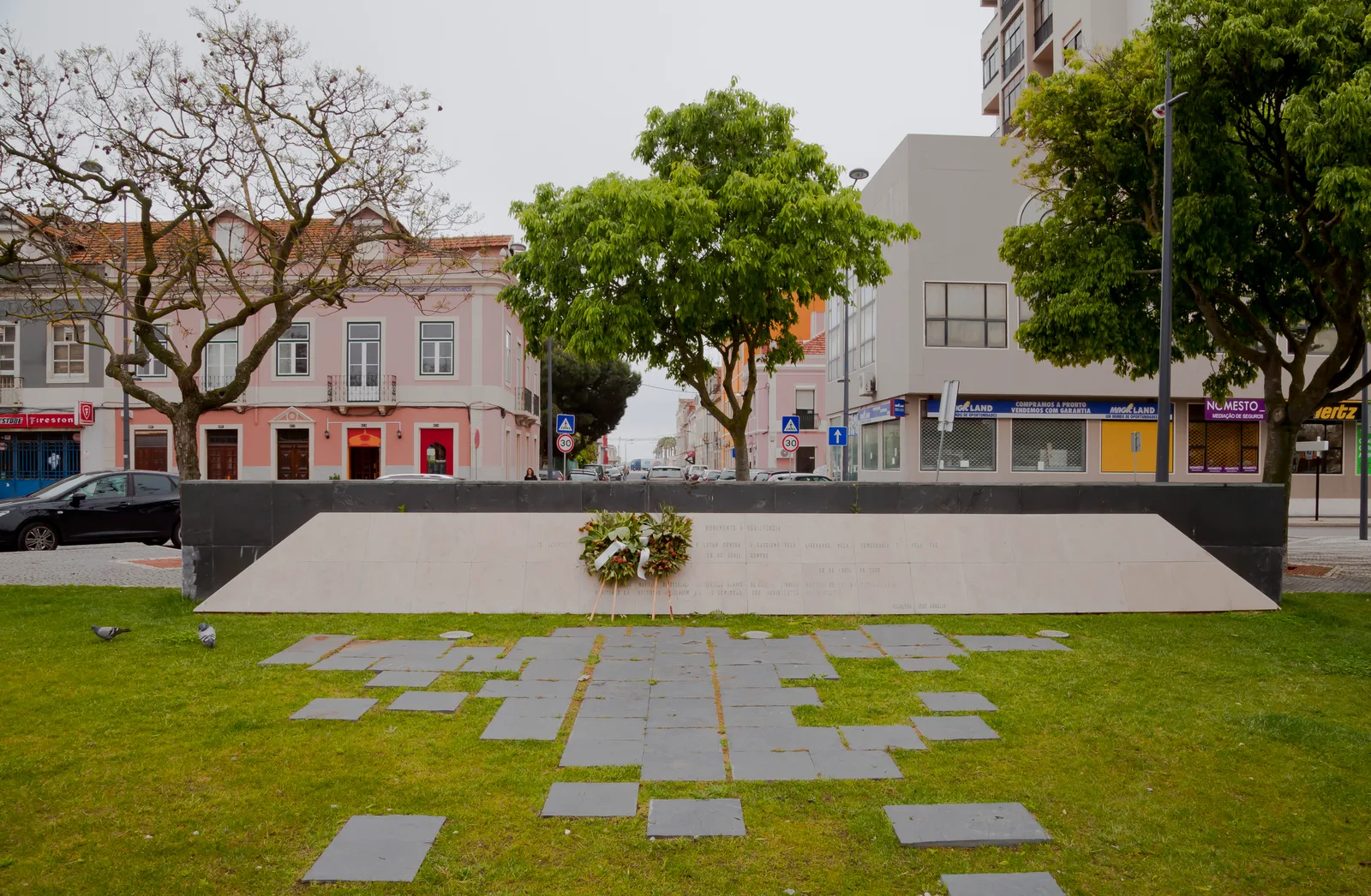
Monument to the Anti-Fascist Resistance (2005)
On Avenida Luísa Todi stands the Monumento à Resistência Antifascista, unveiled on 25 April 2005 — the 31st anniversary of the Carnation Revolution. The sculptor is José Aurélio, one of Portugal’s most prominent contemporary artists.
The monument is imposing in scale: 10 meters tall, with a base diameter of 10 meters and a total weight of 12 tons. The structure is made of steel on a concrete base. Its abstract form provoked mixed reactions among the city’s residents: some saw in it a symbol of the indomitable human spirit, while others criticized it for excessive modernism and for clashing with the surrounding architecture of the avenue.
Nevertheless, the monument has become an important element of the city’s memorial landscape, serving as a reminder of the decades of the Estado Novo dictatorship (1933–1974) and of those who fought for freedom.
Mariana Torres — Remembering the Workers’ Struggle (2016)
In the Largo da Fonte Nova stands the Estátua de Mariana Torres, carved from white marble by sculptor Jorge Pé-Curto. The statue was ceremonially unveiled in March 2016, as part of the “Março Mulher” (March for Women) program, timed to coincide with International Women’s Day.
Mariana Torres was a worker killed on 13 March 1911 during a workers’ demonstration in Setúbal. Her death became a symbol of the struggle for labor rights during the early years of the First Portuguese Republic (proclaimed 5 October 1910). The erection of a monument more than a century after the tragedy attests to the fact that the memory of the labor movement remains a vital part of the city’s identity.
Pasmadinhos do Bonfim — Folk Characters
In the Jardim do Bonfim — Setúbal’s public garden — stands a series of vibrant and distinctive sculptures known as the Pasmadinhos de Setúbal. These are large-format (approximately 3 meters each) ceramic figures depicting characteristic characters from the city’s history and culture.
The project is based on the collection of ceramic miniatures from the Maria Pó Collection, created by ceramicist Elsa Rodrigues. The enlarged sculptures were produced by Hélder Silva. Among the characters represented are Bocage, Luísa Todi, Frei Martinho (founder of the Monastery of Jesus), Maria Baía, and other figures significant to local culture.
The first three sculptures were installed in 2016; by 2022 the collection had grown to ten figures. The bright, colorful “pasmadinhos” have become one of Setúbal’s most recognizable and photographed attractions — a kind of folk pantheon in the form of naive art.
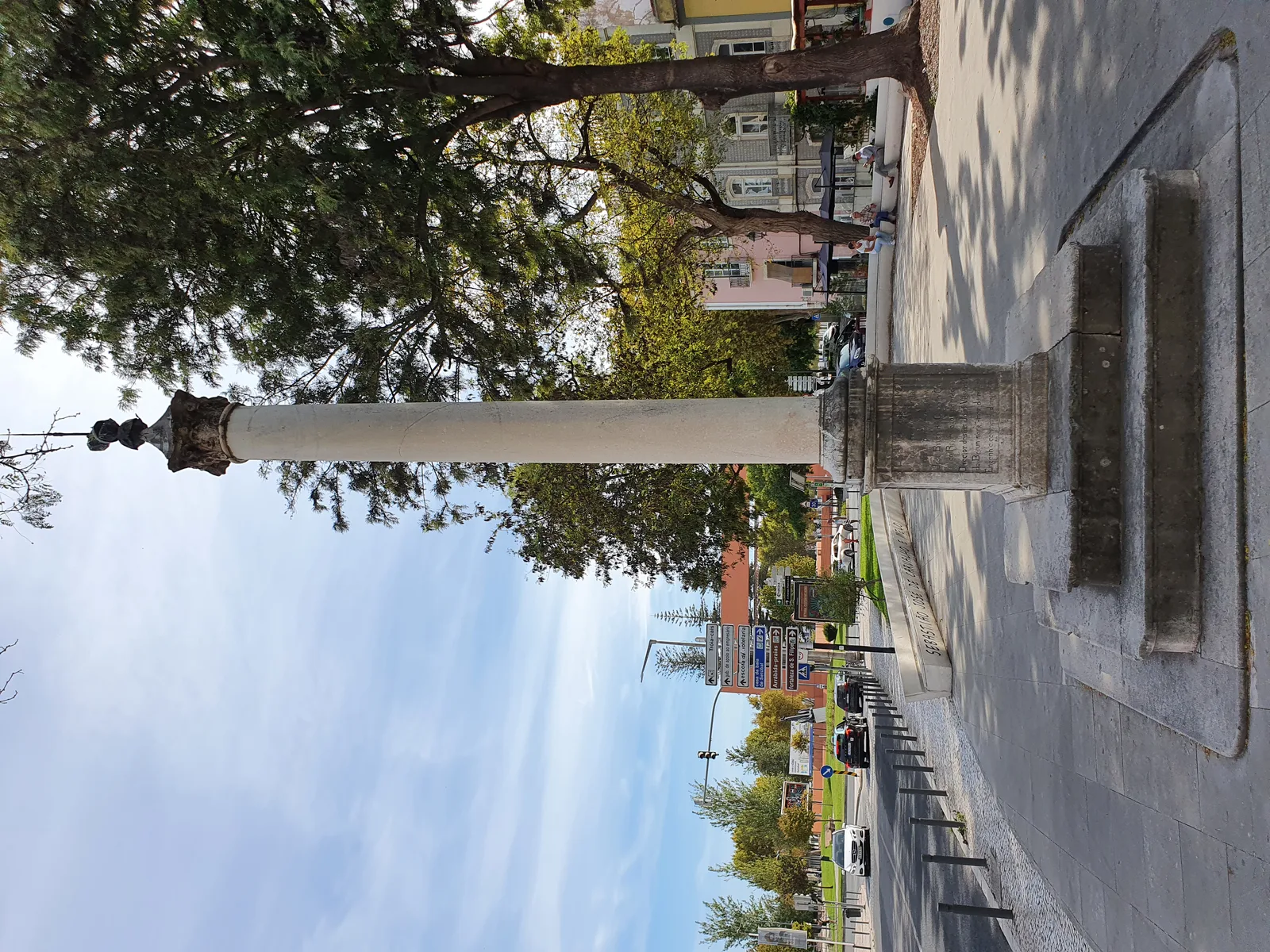
Padrão de Santo Agostinho
On the Setúbal waterfront stands the Padrão de Santo Agostinho — a granite column that is a replica of one of the padrões (stone marker pillars) that Portuguese navigators erected on the lands they discovered during the Age of Exploration.
The original padrão was erected by navigator Diogo Cão on the West African coast in the late 15th century. The replica on Setúbal’s waterfront serves as a reminder of the city’s role in the Age of Discoveries: it was from the mouth of the Sado River that many expeditions set sail, and Setúbal served as a vital port for equipping and dispatching ships.
📷 Image credit
Photo: GualdimG / Wikimedia Commons / CC BY-SA 4.0
📷 Image credit
Photo: GualdimG / Wikimedia Commons / CC BY-SA 4.0
📷 Image credit
Photo: Diego Delso / Wikimedia Commons / CC BY-SA 3.0
See Also
- Praça do Bocage
- Bocage — Poet of Setúbal
- Luísa Todi — Prima Donna of European Stages
- Avenida Luísa Todi
- Carnation Revolution in Setúbal
- Monastery of Jesus
If this article was useful — help us write the next one.
☕ Support on Ko-fi