Praca do Bocage
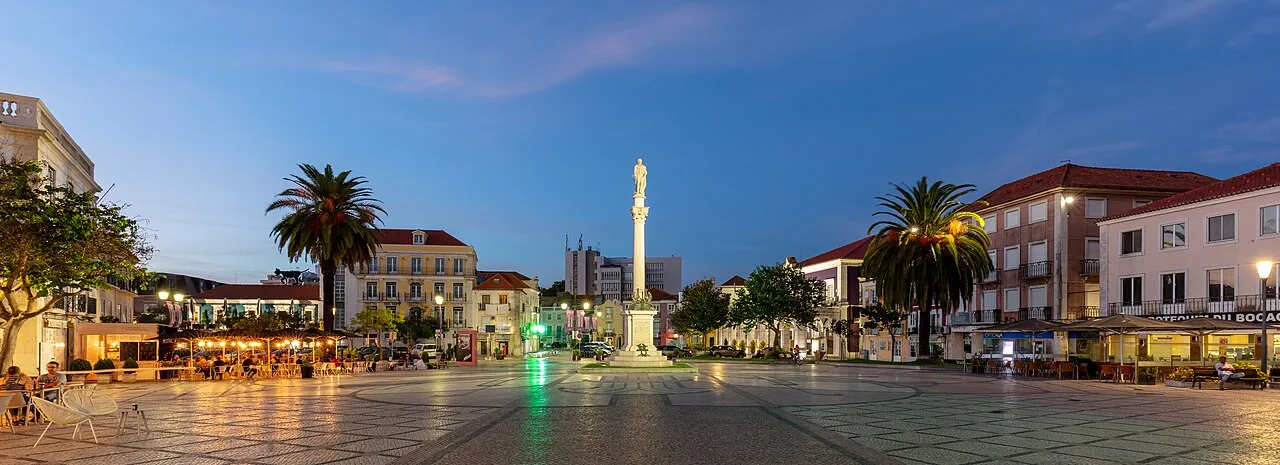
Praca do Bocage is the central square of Setubal, named after the poet Manuel Maria Barbosa du Bocage. For centuries, this space has remained the focal point of the city’s civic, cultural, and administrative life.
History
Ancient Roots
The history of the site on which the square stands reaches back to deep antiquity. In the 1st century AD, a Roman fish-salting factory (cetaria) operated here, remaining active for approximately two centuries. The presence of Roman production at this location testifies to the importance of Setubal’s coastal strip for the economy of the province of Lusitania.
The Middle Ages and Praca do Sapal
In the 15th–16th centuries, the space was known as Praca do Sapal (“Salt Marsh Square”), a name that reflected the character of the terrain near the bank of the Sado. In 1487, under King Joao II, a fountain fed by a newly built aqueduct was installed on the northern side of the square. This infrastructural improvement marked the beginning of the square’s development as an organised urban space.
The 18th Century: A New Layout
The square’s present-day appearance took shape in the 18th century, when a major redesign was carried out. During the same period, the Church of São Julião (Igreja de São Julião), which stands on the southern side of the square, was rebuilt. The square acquired the regular proportions characteristic of the Enlightenment era and became the city’s principal public space.
Renamed in Honour of Bocage
In 1871, the square received its current name – in honour of Manuel Maria Barbosa du Bocage (1765–1805), the celebrated poet born in Setubal. A monument to the poet was erected at the centre of the square, definitively establishing this site as a symbol of the city.
Architecture and Description
The Monument to Bocage
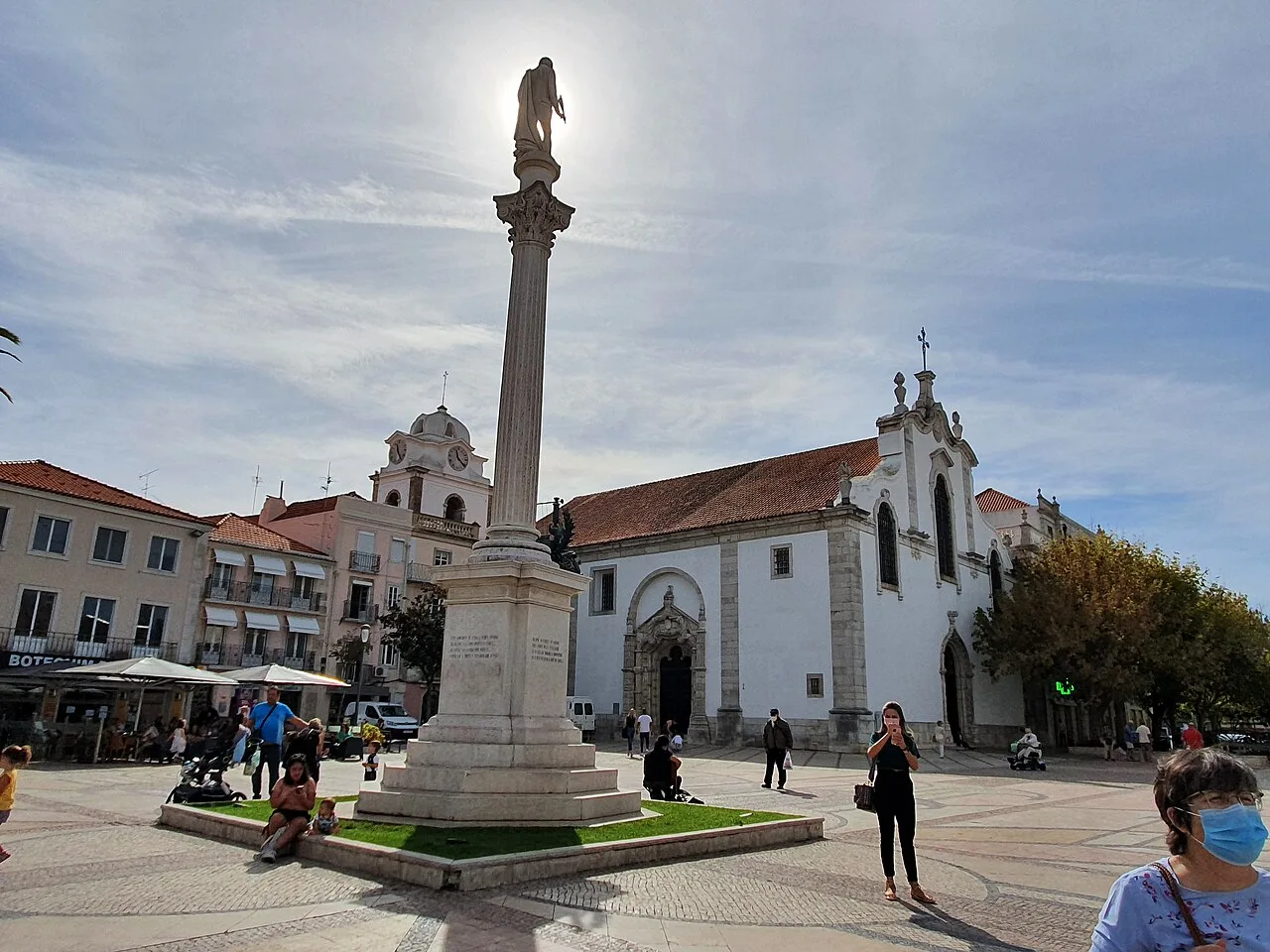
The centrepiece of the square is a marble monument to Bocage, solemnly unveiled on 21 December 1871 (the 66th anniversary of the poet’s death). The sculptural design was executed by Joao Carlos dos Reis, with the stonework carried out by the master craftsman Germano Jose de Sales.
The monument stands approximately twelve metres in total height. A two-metre figure of the poet is mounted on a substantial Corinthian column with an octagonal base of four steps. Bocage is depicted in the costume of his era: in his right hand he holds a quill, in his left, pages of a manuscript. The statue is carved from white marble.
The funds for the monument were raised by subscription among admirers of the poet in Portugal and Brazil – a testament to Bocage’s international renown in the Portuguese-speaking world of the 19th century.
The Municipal Building
The square is home to the Camara Municipal de Setubal – the city hall. The present building was inaugurated in 1939 to a design by the architect Raul Lino, one of the most significant Portuguese architects of the 20th century, known for his concept of the “Casa Portuguesa” (the house in the national style). The building is an example of restrained Portuguese modernism with elements of the national tradition.
The Church of Sao Juliao
To the south of the square, some 40–50 metres away, stands the Church of Sao Juliao (Igreja de Sao Juliao), founded in the second half of the 13th century and rebuilt on the orders of King Manuel I between 1516 and 1520. The church serves as an important architectural accent to the square.
Greenery
The square is planted with acacias and jacarandas, which in the summer months provide welcome shade. Fountains complement the ensemble, continuing the water tradition established by the 15th-century aqueduct.
Significance
Praca do Bocage fulfils several roles that define its importance for Setubal:
- Administrative centre – the city hall is located here, and the square serves as the venue for official events.
- Cultural symbol – the monument to Bocage makes the square a reminder of the city’s literary heritage. Manuel Barbosa du Bocage is the foremost poet of Setubal and one of the great lyricists of Portugal, whose sonnets have been compared to those of Camoes.
- Social space – the cafes and restaurants surrounding the square make it a place of everyday gathering for the city’s residents. Unlike many tourist-oriented squares in Portugal, Praca do Bocage retains a genuinely urban character – it is here that the people of Setubal meet and relax.
- Historical palimpsest – from a Roman fish-salting factory through a medieval salt marsh to an Enlightenment-era square and a 19th-century Romantic monument – the square carries within it all the historical layers of the city.
Practical Information
- Address: Praca do Bocage, 2900 Setubal
- Coordinates: 38.5243 N, 8.8926 W
- Access: open public square, accessible around the clock
- Getting there: the square is located at the very heart of Setubal’s historic quarter, within walking distance of the bus station and railway station
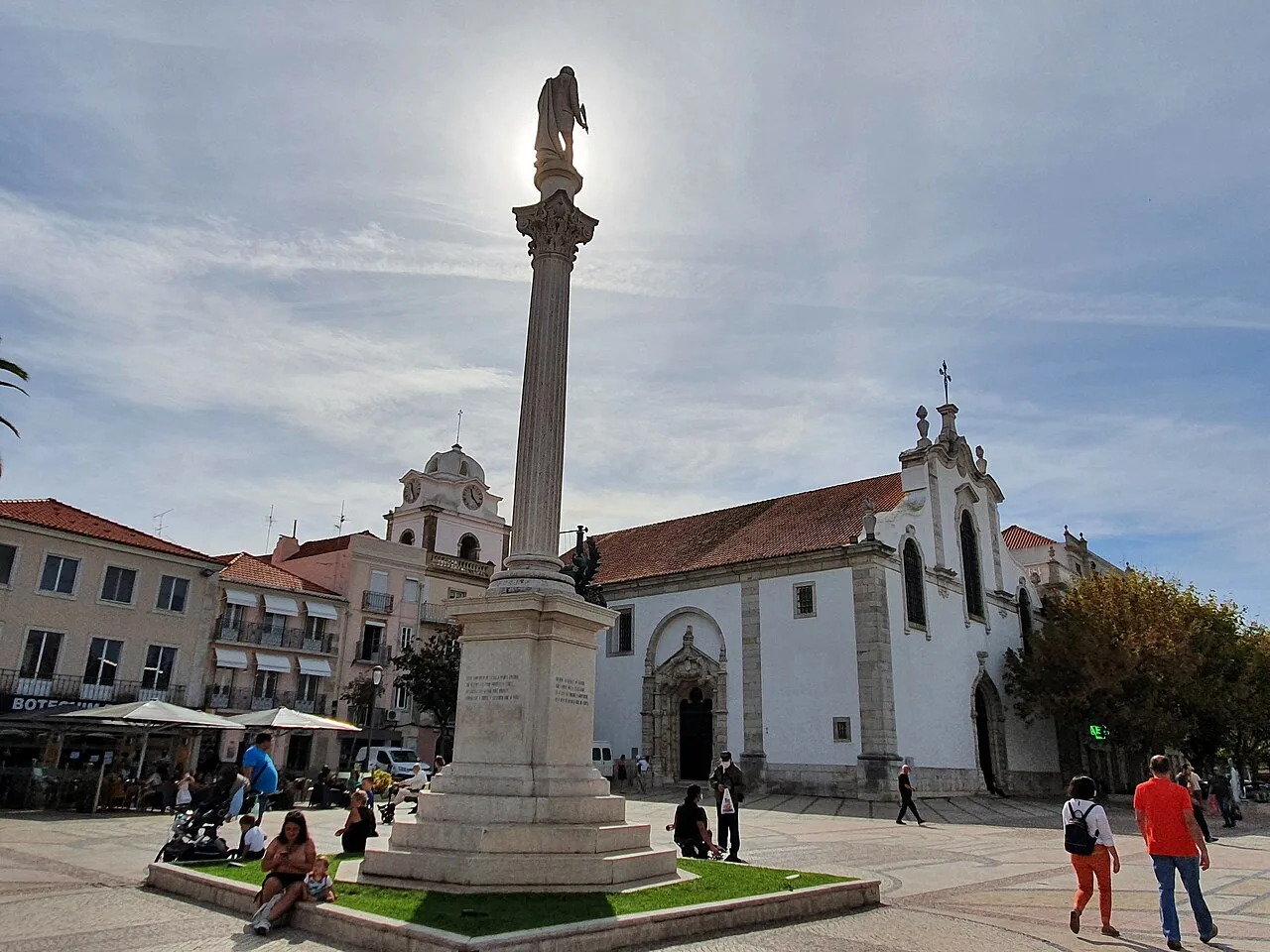
Image sources
- praca-panoramic.webp — Panoramic view of Bocage Square. Author: Diego Delso. License: CC BY-SA 4.0. Source
- praca-monument.webp — Monument to the poet Bocage. Author: GualdimG. License: CC BY-SA 4.0. Source
- praca-square-view.webp — View of Bocage Square and surrounding buildings. Author: GualdimG. License: CC BY-SA 4.0. Source
See also
- Monastery of Jesus – the foremost architectural monument of Setubal, a few minutes’ walk from the square
- Livramento Market – the historic market, one of the finest in Portugal
- Fort of Sao Filipe – the fortress that towers over the city
If this article was useful — help us write the next one.
☕ Support on Ko-fi