Roman Ruins of Troia
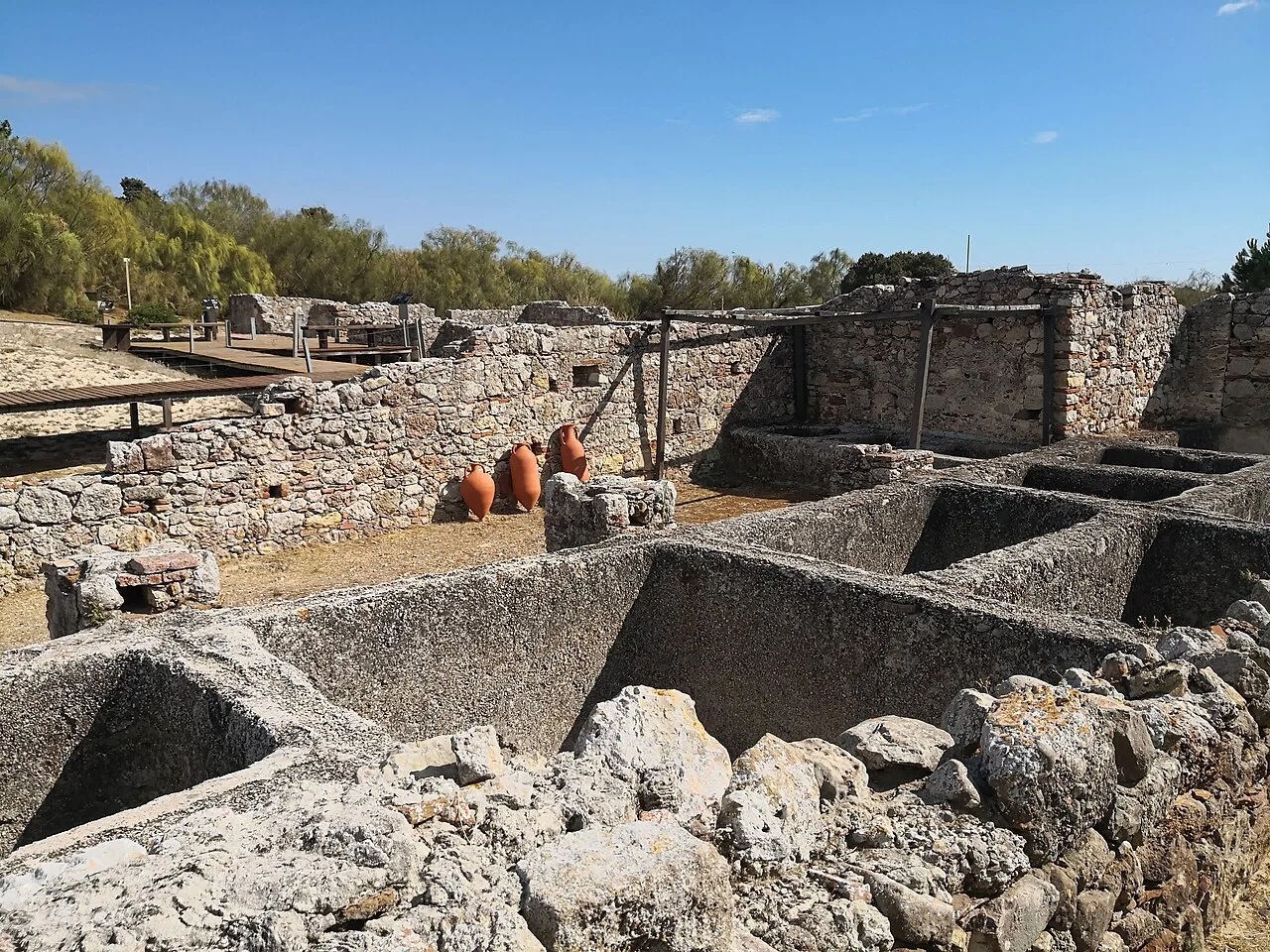
The Roman Ruins of Troia (Ruinas Romanas de Troia) constitute the largest fish-salting and garum production centre known in the ancient world, active from the 1st through the 6th century AD. The archaeological complex on the Troia Peninsula is classified as a National Monument of Portugal and is a candidate for inscription on the UNESCO World Heritage List.
Connection with Cetobriga
The complex is traditionally associated with Cetobriga — a Roman settlement that existed in this region. According to historical sources, Cetobriga was destroyed by a powerful earthquake and subsequent tsunami in 412 AD. However, archaeological evidence indicates that production on the Troia Peninsula continued after this catastrophe, persisting into the 6th century.
[DISPUTED] The precise location of Cetobriga remains a matter of scholarly debate. Some researchers place it on the opposite (right) bank of the Sado River, on the site of modern Setubal, regarding the Troia ruins as its industrial suburb.
Garum Production and Fish Salting
Scale of Production
According to UNESCO’s assessment, Cetobriga represents an exceptional architectural ensemble of production facilities illustrating the fish-salting and fish-sauce industry from the 1st through the 6th century AD on a scale unparalleled anywhere else in the Roman world.
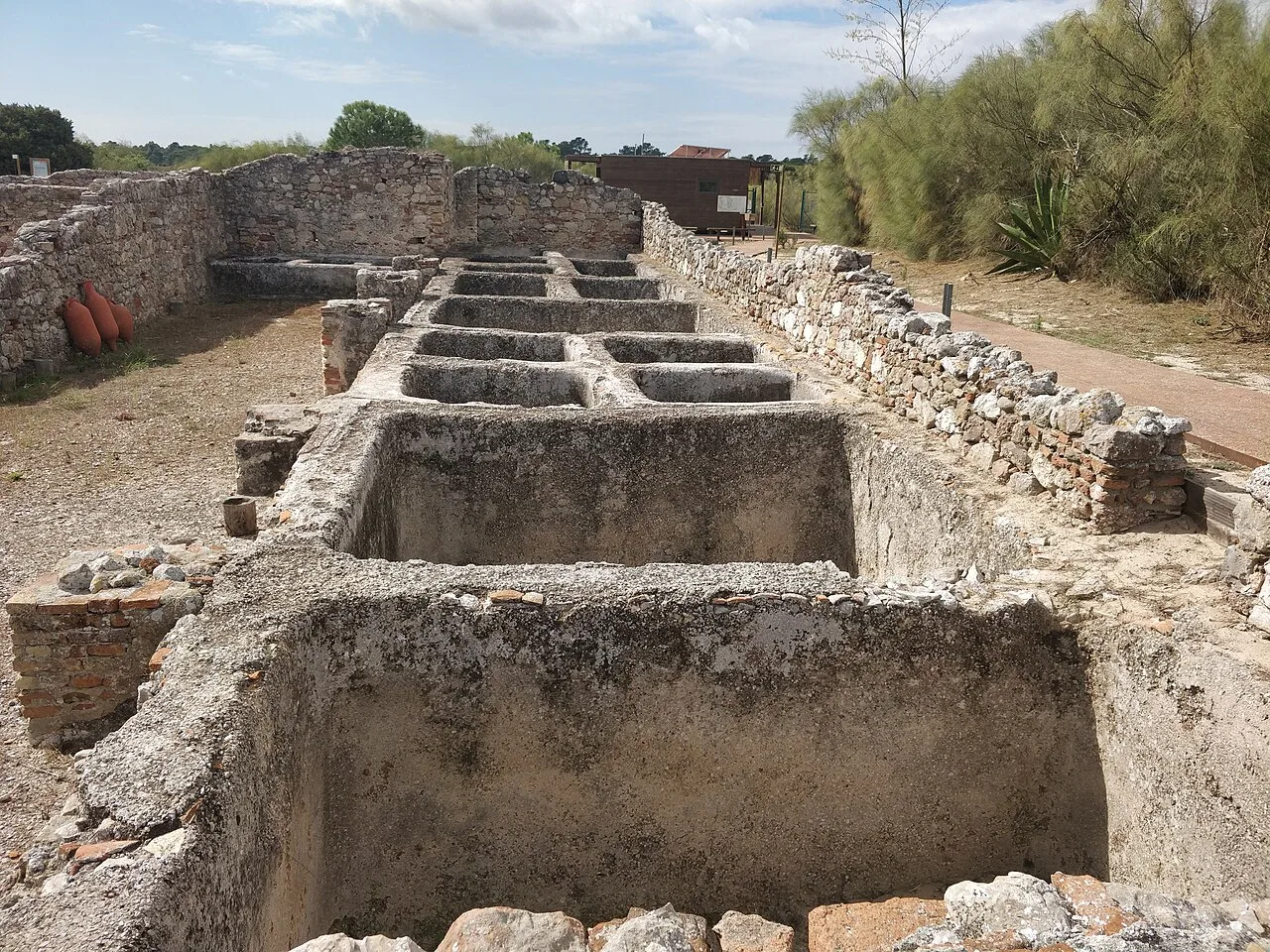
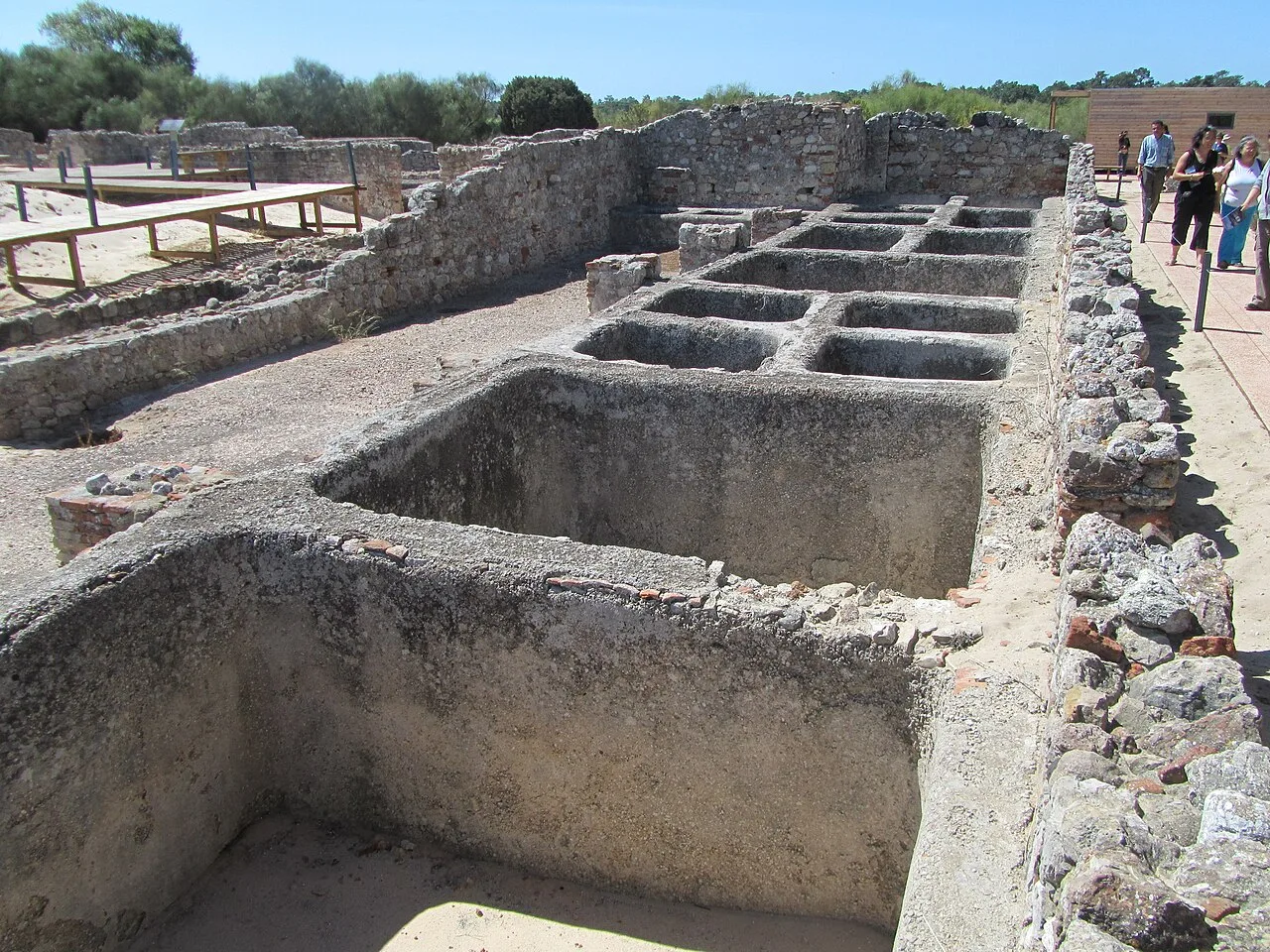
Archaeologists have identified between 20 and 25 workshops containing a total of 182 square vats (Latin: cetariae) used for salting and fermenting fish. The workshops were organised around central courtyards — a layout typical of Roman fish-processing operations.
Garum
Garum was a fermented fish sauce highly prized throughout the Roman Empire. It was produced by fermenting fish and fish entrails with salt in stone vats under the open sun, a process that lasted several weeks or months.
Garum from Troia was exported across the Roman Empire and represented one of the settlement’s principal sources of wealth. In addition to garum, the complex also produced other fish products: whole salted fish and fish paste.
Archaeological Features
Baths
The complex includes Roman baths with a floor area of approximately 450 square metres:
- Apodyterium — changing room
- Frigidarium — cold-water hall
- Tepidarium — warm-water hall
- Caldarium — hot pool heated by a hypocaust (underfloor heating system)
Necropolis
The burial zone consists of four separate burial areas, including:
- A mausoleum with a columbarium — wall niches for storing the urns of the cremated
- Burials from different periods, reflecting the evolution of funerary practices from pagan to early Christian
Early Christian Basilica
In the late 4th to early 5th century, a palaeochristian basilica was built on the site of an abandoned fish-processing workshop. This bears witness to the gradual transformation of the settlement from a purely industrial centre into a more diverse urban community.
Mosaics and Decorative Elements
During excavations in 1850, walls with painted decoration and mosaic floors were discovered in the area known as the “Casas da Princesa” (Houses of the Princess). By the present day, however, most of these decorative elements, including the mosaics and frescoes, have been lost to weathering and decay.
Heritage Status
The ruins have been classified as a National Monument (Monumento Nacional) since 1910. The complex is included on the UNESCO Tentative List as a candidate for World Heritage inscription.
Practical Information
- Address: Estrada Nacional 253, Troia
- Coordinates: 38.4914° N, 8.9003° W
- Admission:
- Full price: 7.50 euros
- Reduced price (Troia Resort guests, students, seniors 65+, groups): 5.00 euros
- Children under 14: free
- Tickets are purchased at the entrance 15 minutes before the session begins
- Guided tours with an archaeologist: walking routes covering the Roman port and salting workshops; extended routes beyond the standard area (2 hours, 10 euros per person, minimum 10 participants)
- Contacts: tel. +351 265 499 400; email: arqueologia@troiaresort.pt
- Duration of visit: approximately 1 hour
- Getting there: ferry from Setubal to the Troia Peninsula (approximately 20 minutes), then along the N253 road
The archaeological site’s opening schedule varies by season and is subject to change. The grounds are open and largely unsheltered — in summer, visitors are advised to bring a hat and sunscreen.
Image sources
- ruins-general-view.webp — General view of the Roman ruins on Troia. Author: Sanjorgepinho. License: CC BY-SA 4.0. Source
- ruins-fish-tanks.webp — Fish processing tanks at the Roman Ruins. Author: Roundtheworld. License: CC BY-SA 4.0. Source
- ruins-cetarias.webp — Cetariae (salting tanks) at the ruins. Author: CorreiaPM. License: Public domain. Source
See also
- Cetobriga — A Roman City — the history of the Roman settlement
- Troia Peninsula — the geography and natural environment of the peninsula
- Forte de Sao Filipe — the fortress on the opposite bank of the Sado with views toward Troia
- Arrabida Natural Park — the protected area in the vicinity
- Sado Estuary — the waterway that supplied fish to the Roman complex
- Fishing Culture — the continuation of the ancient fishing tradition
All our knowledge is free. Creating it is not.
☕ Support on Ko-fi