Vitória FC -- The Soul of Setúbal
📷 Image credit
Photo: GualdimG / Wikimedia Commons / CC BY-SA 4.0
Vitória Futebol Clube is not merely a football team. It is the collective identity of an entire city, a mirror of its triumphs and defeats, its pride and its pain. For the people of Setúbal, who call themselves “sadinos” – the people of the Sado River – Vitória means as much as the river itself.
Foundation and Early Years (1910–1934)
Vitória Futebol Clube was founded on 20 November 1910 in Setúbal. The date is symbolic: the club appeared just one month after the proclamation of the Portuguese Republic on 5 October 1910. The spirit of change sweeping the country found expression in sport as well – young men of Setúbal came together to create a club that would become the symbol of their city.
The first decades of the club’s existence were a formative period: building an organisational structure, finding training grounds, competing in regional tournaments. Football in early 20th-century Portugal did not yet have a unified national league.
In the 1934/35 season, the first Portuguese football championship was organised. Vitória de Setúbal became one of the founding clubs of the national championship – a fact the city takes pride in to this day. This means that Vitória stood at the origins of organised Portuguese football alongside giants such as Benfica, Sporting and Porto.
The Golden Era: The 1960s
Vitória’s golden age arrived in the 1960s – a period when the club from a small city on the banks of the Sado challenged the titans of Portuguese and European football.
Portuguese Cups
The principal trophies in the club’s history:
| Season | Tournament | Result |
|---|---|---|
| 1964/65 | Taça de Portugal (Portuguese Cup) | Won |
| 1966/67 | Taça de Portugal | Won |
| 2004/05 | Taça de Portugal | Won |
The first two Portuguese Cup victories – in 1965 and 1967 – marked the culmination of the golden era. In those years, Vitória assembled a squad capable of competing at the highest level and twice triumphantly lifted the cup.
The club also won the first-ever Portuguese League Cup (Taça da Liga) in the 2007/08 season. The final took place on 22 March 2008 against Sporting: after a 0–0 draw in regular time, Vitória triumphed on penalties thanks to loanee goalkeeper Eduardo, who saved three spot kicks.
Jacinto João – The Greatest Player
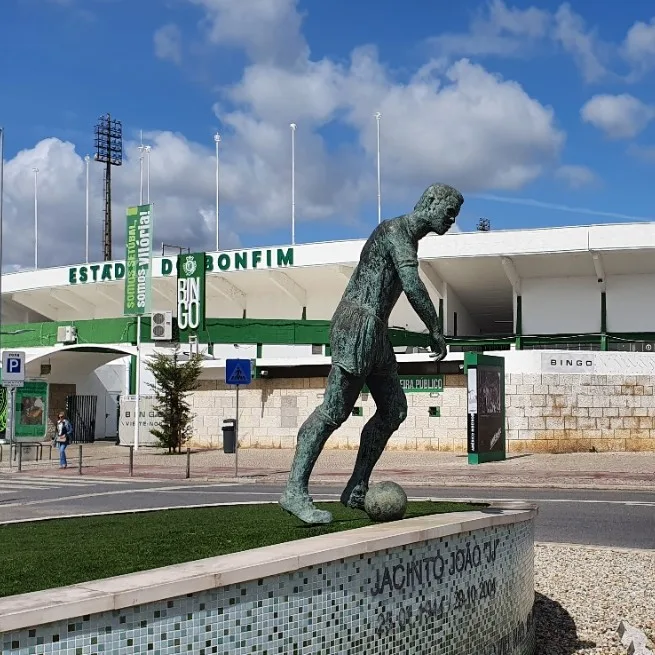
The symbol of the golden era was Jacinto João, a left winger who spent 14 seasons at Vitória and scored 66 goals in 268 matches. His pace, dribbling, and ability to create chances out of nothing made him a club legend. Jacinto João was a key player in both cup triumphs of the 1960s. For Vitória supporters he remains the benchmark – a player who embodies the spirit of the club: talent, devotion, and loyalty to one team throughout an entire career.
European Sensation: Liverpool Knocked Out (1969/70)
The most resounding chapter in Vitória’s European history was written in the 1969/70 season in the Inter-Cities Fairs Cup (the predecessor of the UEFA Cup and today’s Europa League).
In the 2nd round of the tournament, the draw paired Vitória de Setúbal with Liverpool – one of the strongest clubs in England, European Cup winners, and a formidable force from Anfield. The result stunned European football: the modest club from a Portuguese port city sensationally knocked Liverpool out of the competition. In the first leg in Setúbal, Vitória won 1–0; in the return at Anfield they lost 2–3, but advanced on aggregate (3–3) thanks to the away goals rule.
The victory entered club history as proof that Vitória could compete at the highest European level. For Setúbal it was a moment of immense pride – the entire city celebrated the triumph as a shared victory.
Estádio do Bonfim – Vitória’s Home
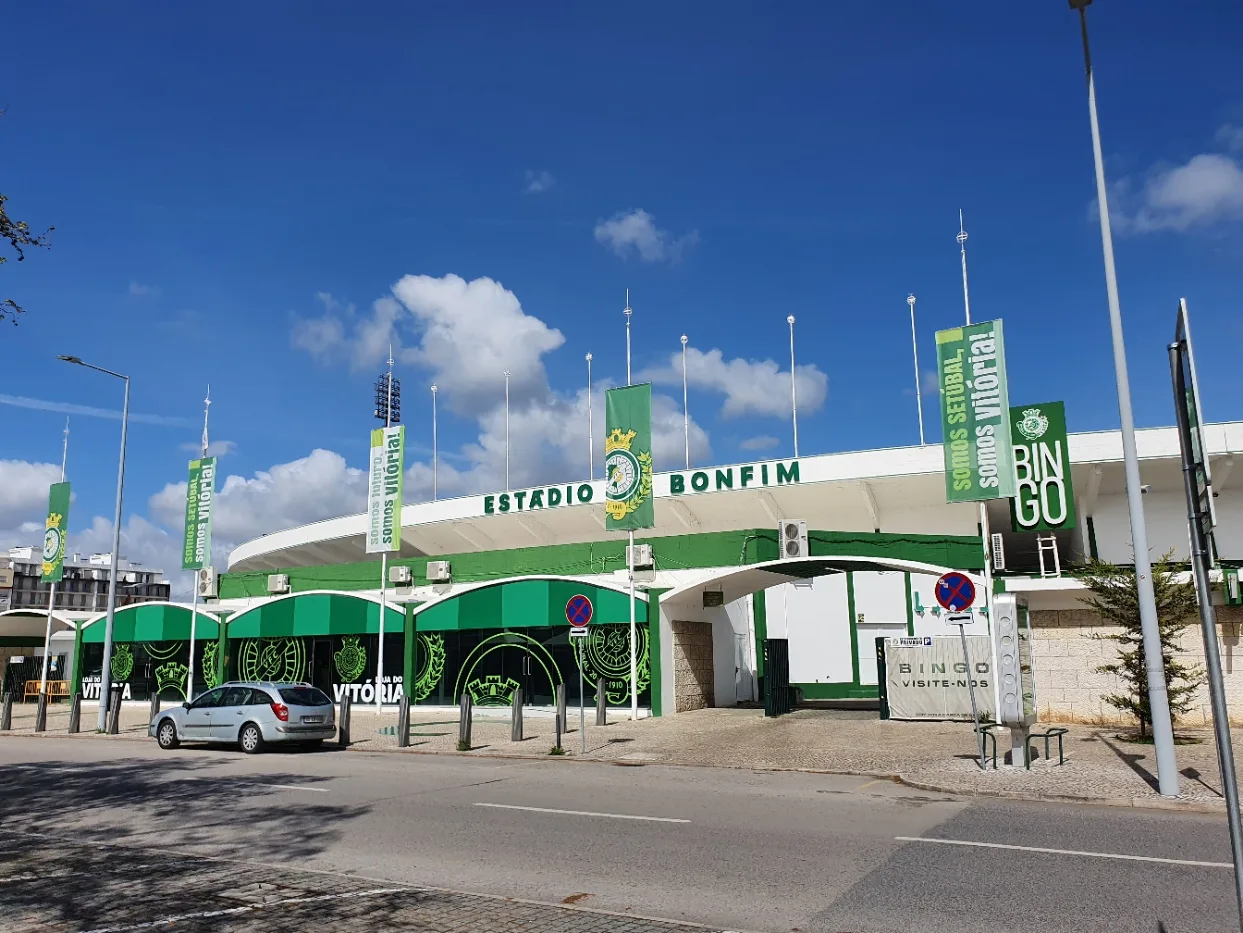
Estádio do Bonfim is Vitória’s home ground, opened in 1962. The stadium is named after the Bonfim hill on which it stands, overlooking the city and the Sado River.
- Current capacity: approximately 15,500 (formerly 18,694, before upper tiers were closed and conversion to all-seater completed)
- Record attendance: approximately 40,000 — at a UEFA Cup match against Moscow Spartak on 4 November 1971, when standing terraces were still permitted
Bonfim is more than a stadium. It is a place of memory where generations of Setúbal’s people have shared joy and sorrow together. The atmosphere at Bonfim on big match days is described as electric: Vitória’s supporters are known for their passion and loyalty to the club even in difficult periods.
The Mourinho Connection
The history of Vitória is inseparable from the Mourinho family. Félix Mourinho, father of the future great manager, was a goalkeeper and later sporting director of the club. Félix played numerous matches for Vitória during the golden era and became one of the club’s legends.
His son, José Mourinho, grew up in the atmosphere of Vitória – quite literally at the stadium and in the dressing room. From the age of five, young José accompanied his father to training sessions and matches, absorbing the tactics, discipline and passion of professional football. It was within these walls that “The Special One” was born – the manager who would transform world football.
In Mourinho’s own words: “Setúbal taught me to be a fighter. This is not Lisbon, not the capital. Here you must prove yourself every day.”
The “Sadinos” Identity
The nickname of Vitória’s supporters – “sadinos” – derives from the Sado River (Rio Sado), which flows through Setúbal and empties into the ocean, forming a vast estuary. “Sadinos” refers not only to the football club’s fans but also serves as a self-designation for the inhabitants of Setúbal as a whole. Vitória is the sporting expression of this regional identity.
Notably, Vitória’s traditional rival is Sporting, not Benfica, despite both Lisbon clubs being relatively nearby. This is explained by the geographical and cultural proximity of Setúbal to the southern bank of the Tagus and historical ties to areas that gravitate towards Sporting.
Difficult Times
In recent years, Vitória de Setúbal has endured one of the most challenging periods in its century-long history. Financial difficulties have led to debts, problems paying players’ wages, and threats of administrative sanctions from the league.
The club has faced relegation battles – a situation unthinkable in the golden era of the 1960s. For a city that identifies with its team, every defeat and every step down the table is experienced as a collective trauma.
Yet Vitória’s supporters have remained loyal. The stands at Bonfim do not empty entirely even in the most difficult seasons. For the “sadinos,” supporting Vitória is not a question of results but a question of identity.
The Third Cup: The 2005 Triumph
Between the golden era and the modern crisis there was one more brilliant flash. In the 2004/05 season, Vitória won their third Taça de Portugal – nearly 40 years after the second. The victory reminded all of Portugal that Vitória de Setúbal is a club with a great history and a living tradition, still capable of extraordinary feats.
Significance for Setúbal
Vitória Futebol Clube is a cultural institution that extends far beyond sport. The club unites the city: on match days, fishermen and workers, shopkeepers and teachers become one on the terraces of Bonfim. The club’s history is the history of Setúbal itself: from ambitions and triumphs to crises and hopes of revival.
In the city they say: “Ser de Setúbal é ser do Vitória” – “To be from Setúbal is to be for Vitória.”
📷 Image credit
Photo: GualdimG / Wikimedia Commons / CC BY-SA 4.0
See also
The light is on for free. But someone has to clean the lantern.
☕ Support on Ko-fi