Fish Auctions (Lotas)
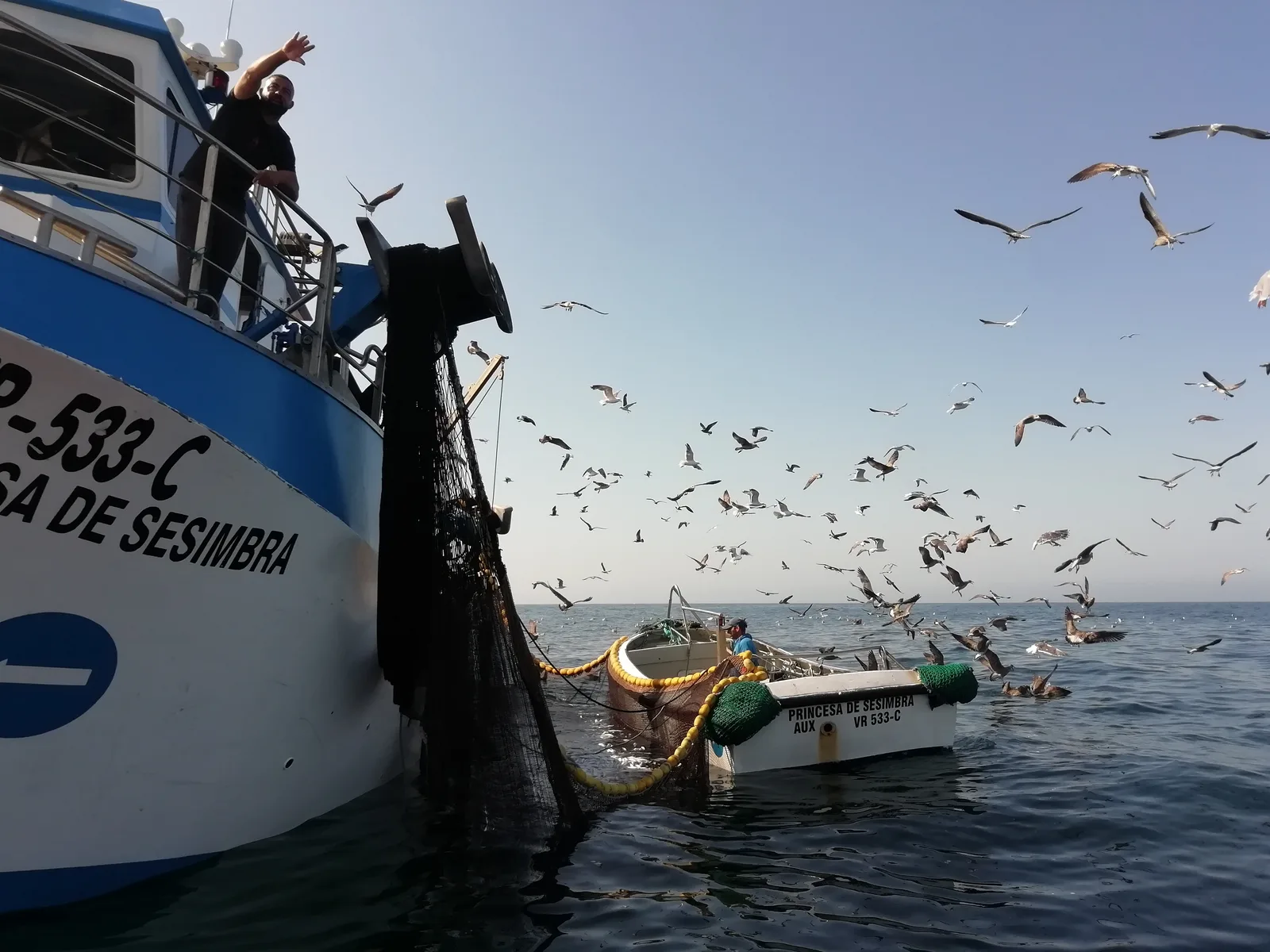
📷 Image credit
Photo: McLupy / Wikimedia Commons / CC BY-SA 4.0
Every morning at 7:00, the Dutch auction begins at the lotas of Setúbal and Sesimbra: the price on the screen falls, the buyer presses a button — and the lot of fish leaves the conveyor belt. This is the only legal mechanism for the first sale of fresh fish in Portugal. The Setúbal District accounts for roughly one-third of the national volume.
What is a lota?
A lota is the site of the first sale of fresh fish in Portugal. By law, all fresh fish must pass through a Docapesca auction before reaching retail or restaurants. The system operates on the Dutch auction (leilão descendente) principle: the price starts high and falls until a buyer intervenes.
How the auction works
- Fish arrives at the lota from 6:30 am; the auction begins at 7:00
- Lots of fish are placed on a conveyor belt in trays
- A clerk identifies the fish: the screen shows vessel name, weight and starting price (with a +40% markup)
- The price falls automatically (Dutch clock system)
- The buyer presses a button on an infrared remote (or online) to purchase the lot
- The purchase is tagged and removed from the belt
Only registered professionals — restaurants, wholesalers and market traders — may buy at auction.
Docapesca — Portos e Lotas, S.A.
Docapesca is the state-owned company managing all fish auctions in mainland Portugal. It was established by Decreto-Lei No 107/90 of 27 March 1990.
| Indicator | Value |
|---|---|
| Auction sites (lotas) | 26 |
| Sales posts | 35 |
| Share capital | €7,531,848.25 |
| Ministry | Agriculture and the Sea |
Predecessors
Under the Estado Novo, the fishing sector was controlled by corporative guilds: the Grémio dos Armadores de Pesca da Arrasto (1939), Grémio dos Armadores da Pesca da Sardinha (1942) and Junta Central da Casa dos Pescadores (1968). All were dissolved between 1974 and 1976 after the Carnation Revolution.
The electronic system
- August 1987 — new regime for the first sale of fresh fish
- May 1989 — start of sales via electronic and computerised system
- 2005 — updated regime (Decreto-Lei No 81/2005)
- Online auction — buyers can participate remotely from multiple lotas simultaneously
- December 2020 — launch of “Lota em Casa” — a consumer-facing website
The Lota of Setúbal
Building and location
The current lota building was constructed in the summer of 1987 and is located in the Doca dos Pescadores (Fishermen’s Dock), along Avenida Luísa Todi. Before the formalised lota, fishermen sold their catch directly on the waterfront for centuries.
Types of auctions
Three types of trading take place at the Setúbal lota:
- Artisanal (artesanal) — small-scale coastal fishing
- Trawl (arrasto) — demersal species
- Purse seine (cerco) — pelagic species (sardine, mackerel)
Main species
- Sardine (sardinha) — historically the main species
- Horse mackerel (carapau)
- Mackerel (cavala)
- Cuttlefish (choco) — the gastronomic symbol of Setúbal
- Octopus (polvo) and squid (lula)
Volumes
In 2018, the Setúbal District (including Sesimbra, Setúbal, Sines, Costa da Caparica) handled ~32,000 tonnes worth €46.5 million — roughly 32% by weight and 23% by value of all lota turnover nationwide. In 2024, the average price at the Setúbal lota rose by +16%.
The Lota of Sesimbra
Portugal’s largest fish auction
Sesimbra is the largest by volume fish auction in mainland Portugal.
| Year | Volume (tonnes) | Value (€ million) | Ranking |
|---|---|---|---|
| 2019 | 29,968 | — | 1st by volume |
| 2023 | 25,860 | 32.5 | 1st by volume, 2nd by value |
| 2024 | 22,800 | 33.2 | 1st by volume, 2nd by value |
In 2023, Sesimbra accounted for 70% of the Central-South Docapesca delegation catch and nearly 24% of the national volume.
Black scabbardfish
Peixe-espada preto (Aphanopus carbo) is the most valuable species by revenue in Sesimbra. Since 2008, the port has provided over 95% of the total catch of this species in mainland Portugal. It is caught by deep-sea longline (palangre de profundidade) at depths of 1,000–1,500 m. The technique came to Sesimbra from Madeira in the early 1980s.
Swordfish
Espadarte (swordfish) is the symbol of Sesimbra. The first catch in European Atlantic waters: 30 October 1954 — Manuel Frade landed a specimen weighing 153 kg.
National statistics
Volumes and value
| Year | Value (€ million) | Average price (€/kg) |
|---|---|---|
| 2019 | 212.3 (record) | — |
| 2023 | 250.2 | ~2.27 |
| 2024 | 247.7 | ~2.39 (+5.4%) |
Top 5 lotas by volume, 2024
| Rank | Lota | Volume (000 tonnes) | Value (€ million) |
|---|---|---|---|
| 1 | Sesimbra | 22.8 | 33.2 |
| 2 | Matosinhos | 19.1 | 29.5 |
| 3 | Peniche | 14.5 | 38.4 (1st by value) |
| 4 | Figueira da Foz | 8.1 | — |
| 5 | Aveiro | 5.5 | — |
Fleet and fishermen
| Indicator | Value |
|---|---|
| Registered fishermen (2023) | 14,125 |
| Registered vessels (2023) | 6,856 |
| Licensed vessels (2023) | 3,728 (54.4%) |
| Vessels in 1994 | 12,299 |
The long-term trend is a steady decline in fleet and fisher numbers, although the Setúbal Peninsula recorded a +3.3% increase in 2023.
Tourism: can you visit?
- Sesimbra lota — free guided tours on Thursdays at 3:30 pm (advance booking required)
- Setúbal lota — free visits through the Educational Service of the Setúbal Museums
- Ordinary visitors cannot buy at auction — only registered professionals
Cultural significance
The lota is not merely a trading floor but a daily ritual of the fishing community. Fish from the morning auction reaches restaurants and the famous Mercado do Livramento the same day. Sesimbra has hosted the “Sesimbra é Peixe” festival since 2019; Setúbal holds the “Semana da Sardinha e do Carapau”.
Fishermen traditionally do not work on Sundays — which is why Monday fish is less fresh. Connoisseurs buy fish from Tuesday to Saturday.
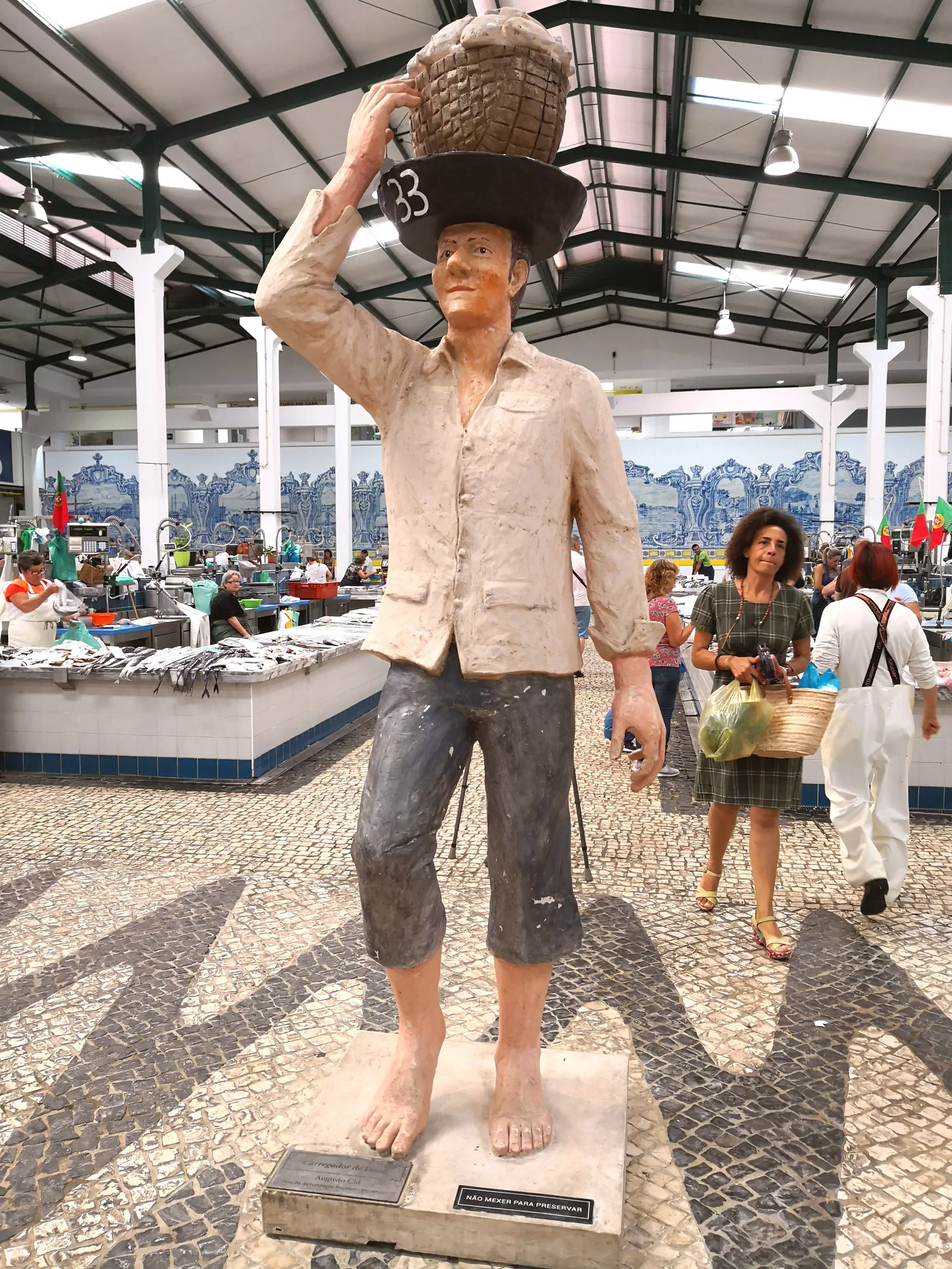
📷 Image credit
Photo: Sanjorgepinho / Wikimedia Commons / CC BY-SA 4.0
See also
All our knowledge is free. Creating it is not.
☕ Support on Ko-fi