The Salt Pans of the Sado Estuary
📷 Image credit
Photo: Diego Delso / Wikimedia Commons / CC BY-SA 4.0
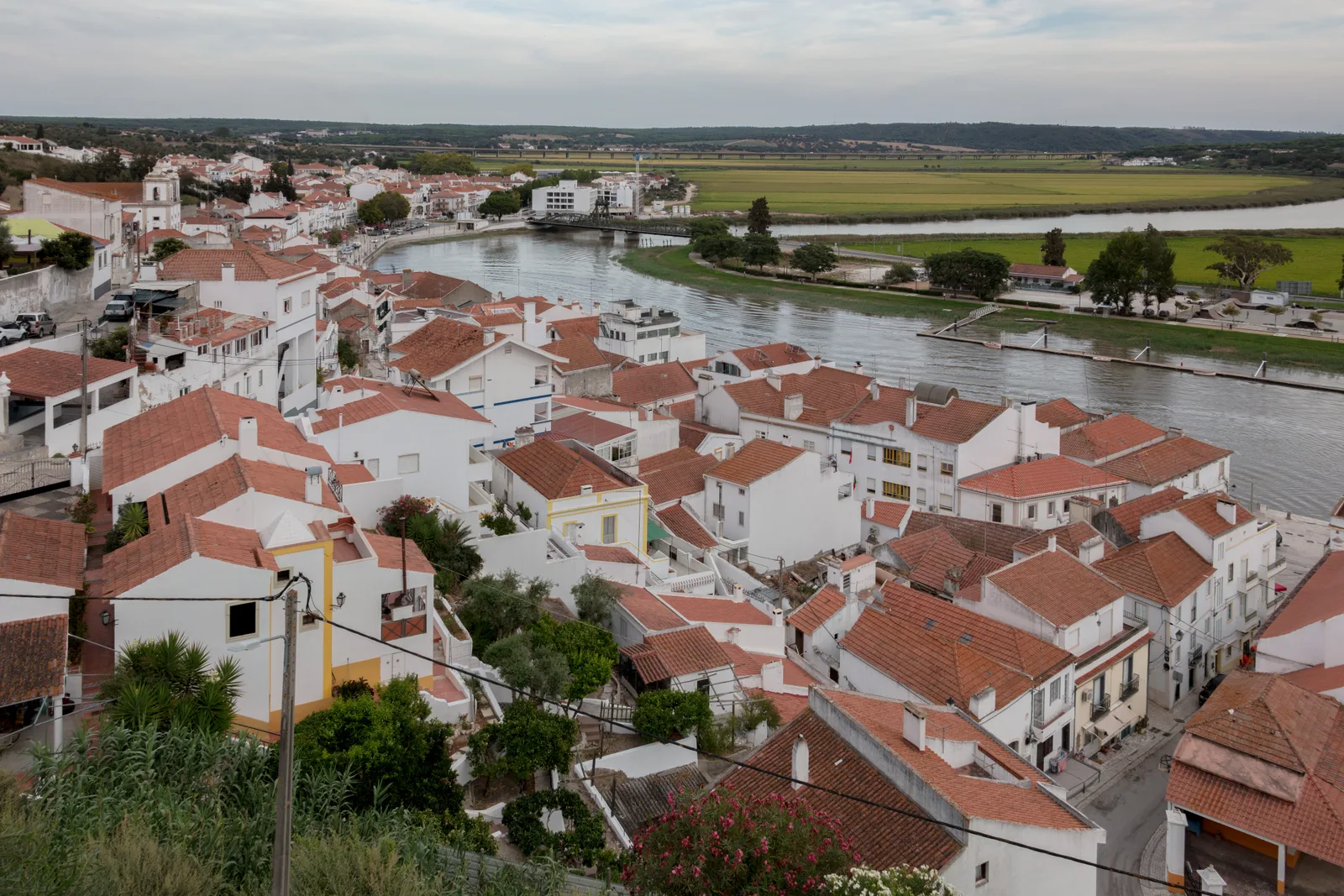
At their peak, over 400 salt pans lined the banks of the Sado. Today fewer than a dozen remain active — but those that survive produce artisanal flor de sal with organic certification and sustain one of Europe’s most important bird ecosystems. The town of Alcácer do Sal literally carries salt in its name.
A name written in salt
Alcácer do Sal is one of the few cities in the world whose name directly refers to salt:
- Alcácer — from Arabic al-qasr (“fortress”)
- do Sal — from Latin Salacia (“city of salt”)
The Roman name was Salacia Urbs Imperatoria, honouring Salacia, Neptune’s consort. Human presence here dates back over 40,000 years (Mesolithic).
From Phoenicians to empire
The Phoenicians founded a settlement over 3,000 years ago. The Romans (from the 2nd century BC) turned it into a centre for salt and wool production. On the Tróia peninsula, opposite Setúbal, stood the largest fish-salting complex in the Roman Empire: 182 tanks (cetariae) in 20–25 workshops.
In the 15th–17th centuries, the Sado salt pans reached their peak: over 400 salt works, one of Europe’s largest export centres. Salt from the bay of St. Ubes (the old name for Setúbal) was shipped to Northern Europe, the Baltic and Scandinavia; by the 19th century, as far as Australia.
Technology: how salt is harvested
Types of basins
A traditional Portuguese salina includes four types of compartments:
- Viveiro / algibés — intake reservoirs (receiving seawater)
- Caldeiros, talhos, cabeceiras — evaporation basins (progressive concentration)
- Condensadores — intermediate stage
- Cristalizadores — final salt crystallisation
The annual cycle (March–September)
- March: preparation — repairing dykes, cleaning basins after winter flooding
- Spring–summer: seawater flows through the basin system, concentrating under sun and wind
- When the volume is reduced to 1/10 — transfer to crystallisers
- NaCl crystallisation at salinity of 220 ppt (volume reduced to 1/40)
- Salt harvest: every 3–4 weeks from the bottom of the crystallisers
- September: end of season; salt pans are flooded for winter
The marnoto: master of salt
A marnoto (or marnoteiro, salineiro) is a specialised salt-pan worker. Their tools:
- Rodo — a long wooden handle with a crossbar for scraping salt from the bottom
- Canastra — a basket for carrying salt
- Work from dawn to dusk, March to September; other employment in winter
Flor de sal: the flower of salt
Flor de sal is the finest crystalline layer that forms on the surface of the brine under a gentle northerly breeze. A premium product, harvested exclusively by hand.
| Property | Flor de sal | Regular sea salt |
|---|---|---|
| Where it crystallises | On the surface | On the bottom |
| Harvest | Daily | Every 3–4 weeks |
| Texture | Delicate flakes | Crystals |
| Colour | Whiter than French fleur de sel | Grey or white |
| Price | Hundreds of times more expensive than table salt | Mid-range |
Active producers
Carlos Bicha & Filhos / O Sal de Alcácer
- Founded in 1950 by Carlos Augusto Bicha
- Salt known as the “white gold of Alcácer” (ouro branco de Alcácer)
- Salt pans located in the buffer zone of the Sado Estuary Natural Reserve
Flor do Sado / Alegreme
- A project to revive traditional salt-making
- Organic certification: PT-BIO-03 (KIWA-SATIVA)
- Products: Sal do Sado Integral, flor de sal with organic herbs
- Artisanal hand-harvesting
Overall, fewer than a dozen salt pans remain active in the Sado estuary. Active salt-pan area: 385.83 hectares.
Decline and revival
| Period | Status |
|---|---|
| 15th–17th c. | Peak: over 400 salt pans |
| From the 1950s | Over 30% abandoned |
| 2000s | Over 50% decline across Portugal |
| Today | Fewer than 12 active in the Sado |
Causes of decline: expansion of rice paddies, growth of aquaculture, competition from industrial salt.
Signs of revival: organic certification, rising demand for gourmet products, ecotourism, the international MedArtSal project (IUCN).
Biodiversity
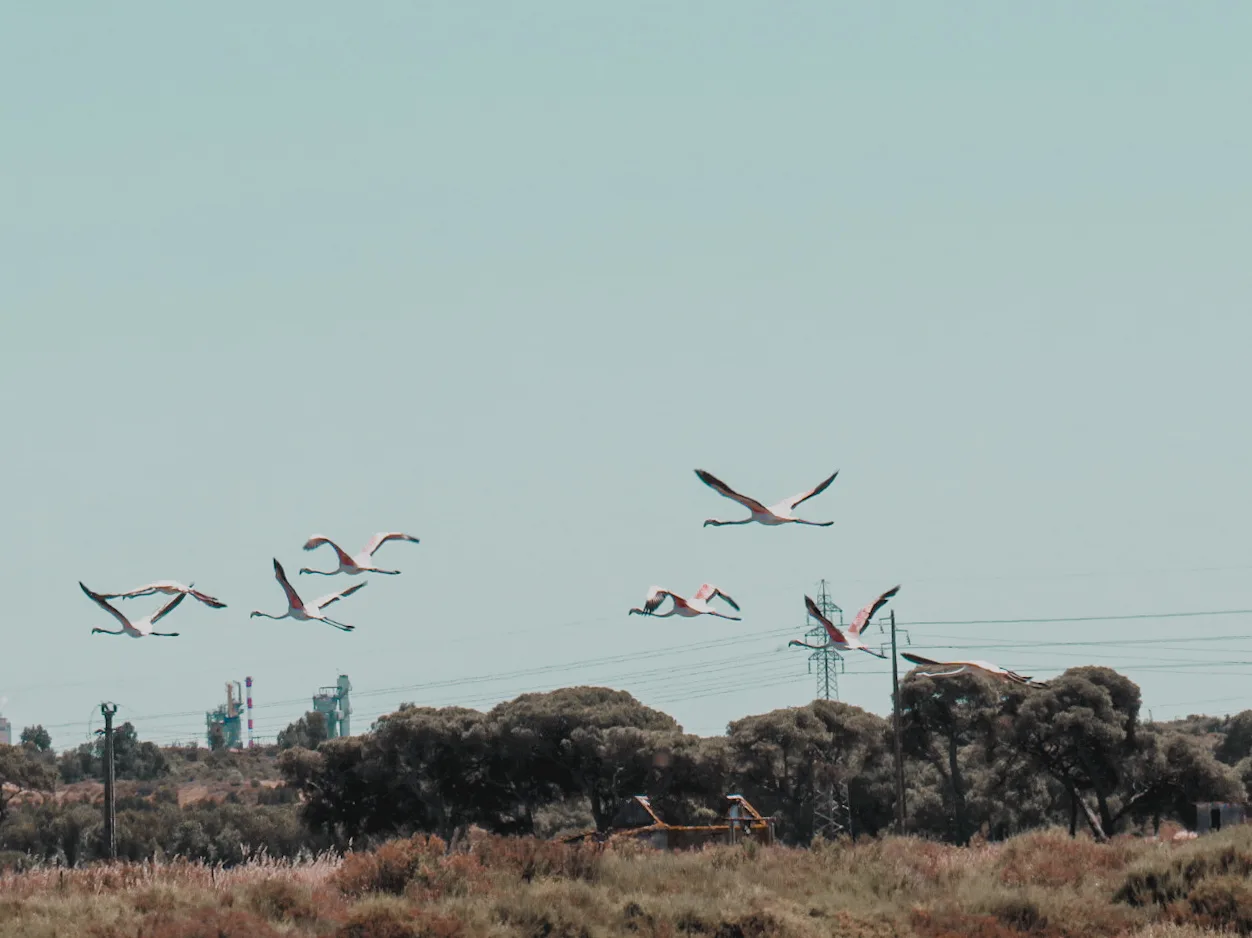
Salt pans are a critical habitat for birds in the Sado estuary:
- 261 vertebrate species in the reserve
- 211 bird species
- Flamingos (Phoenicopterus roseus) — a symbol of the estuary (November–March)
- Avocets, black-winged stilts, cormorants, herons, storks
- ~30 bottlenose dolphins (Tursiops truncatus) — one of only three dolphin colonies in European estuaries
The conversion of former salt pans into fish farms creates conflict: nets over ponds cause bird mortality.
What to visit
- Cripta Arqueológica do Castelo de Alcácer do Sal — the country’s largest archaeological crypt, 27 centuries of history (opened 18 April 2008)
- Museu Municipal Pedro Nunes — archaeological collection from prehistory to the present
- Moinho de Maré da Mourisca — tidal mill, visitor centre
- Roman Ruins of Tróia — the largest fish-salting complex in the Roman Empire
- Rotas do Sal — boat tours of the estuary, dolphin watching
Portugal’s five salt-producing regions
| Region | Location |
|---|---|
| Aveiro | Ria de Aveiro |
| Figueira da Foz | Figueira da Foz |
| Tagus | Tagus estuary |
| Sado | Setúbal + Alcácer do Sal |
| Algarve | Southern Portugal (~95% of national volume) |
📷 Image credit
Photo: LuisMAfonso / Wikimedia Commons / CC BY-SA 4.0
See also
If this article was useful — help us write the next one.
☕ Support on Ko-fi